CORRUPTION IN PLAIN SIGHT
The rot we've learned to step around.
Manila, for me, is like LA: you just bring a car everywhere. When foreign friends would visit, they’d often ask, “why don’t we just walk?” I’d pause every time. It wasn’t that I didn’t know what they meant; I’ve lived abroad, I’ve walked cities that actually made sense. It’s that back here, the instinct shuts down almost immediately. Manila has a way of training it out of you.
Today, I remembered why.
I walked along C5 going to Eastwood. It was a bad experience from start to finish. First, the fumes. I knew there was pollution, but I didn’t know it was that bad. I had to clear my nose when I got back to the office. And then, on the stretches where pedestrians are supposed to walk, there are obstacles at every turn. But what makes this most unnerving is who put them there.
The government did.
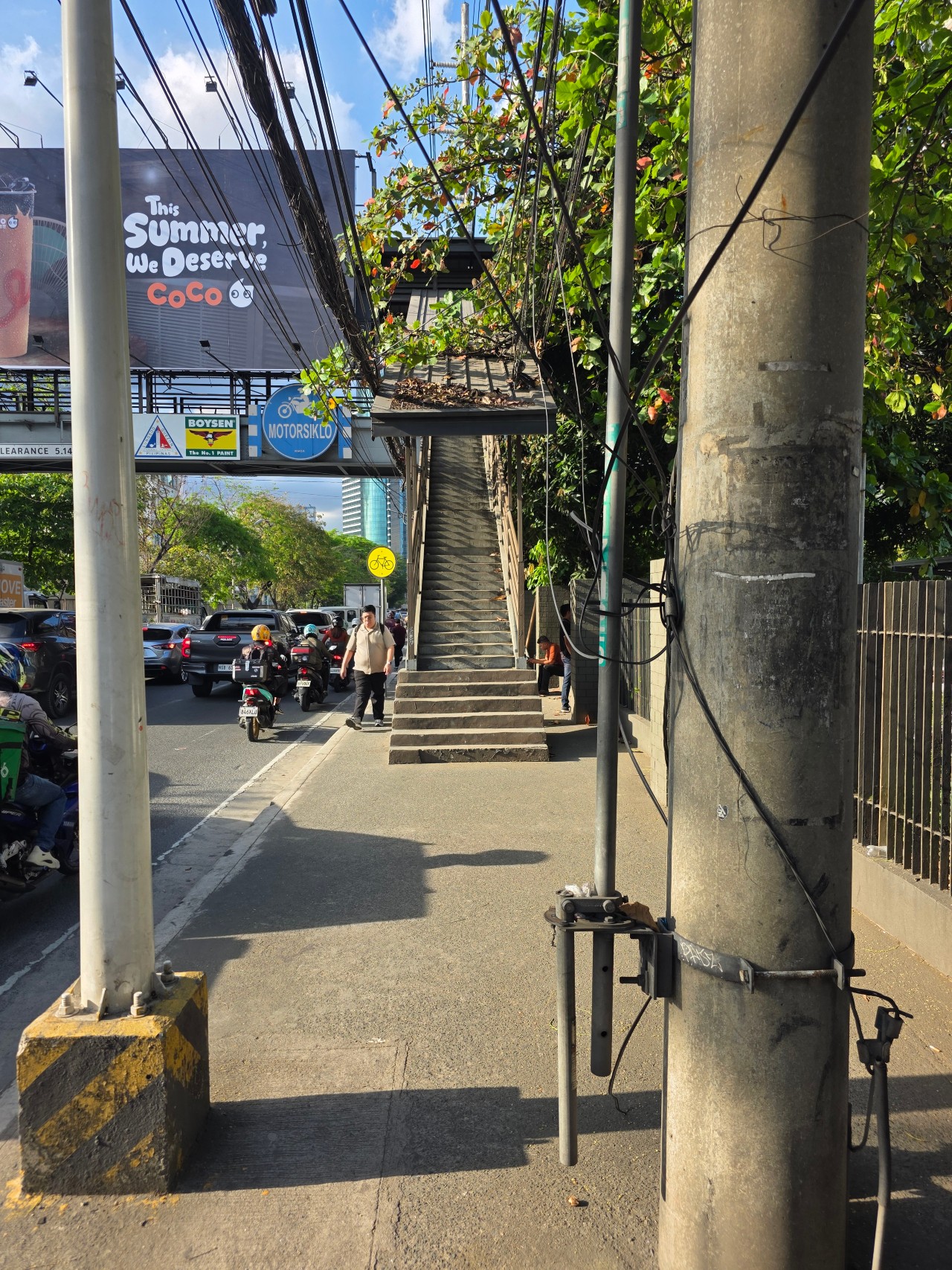
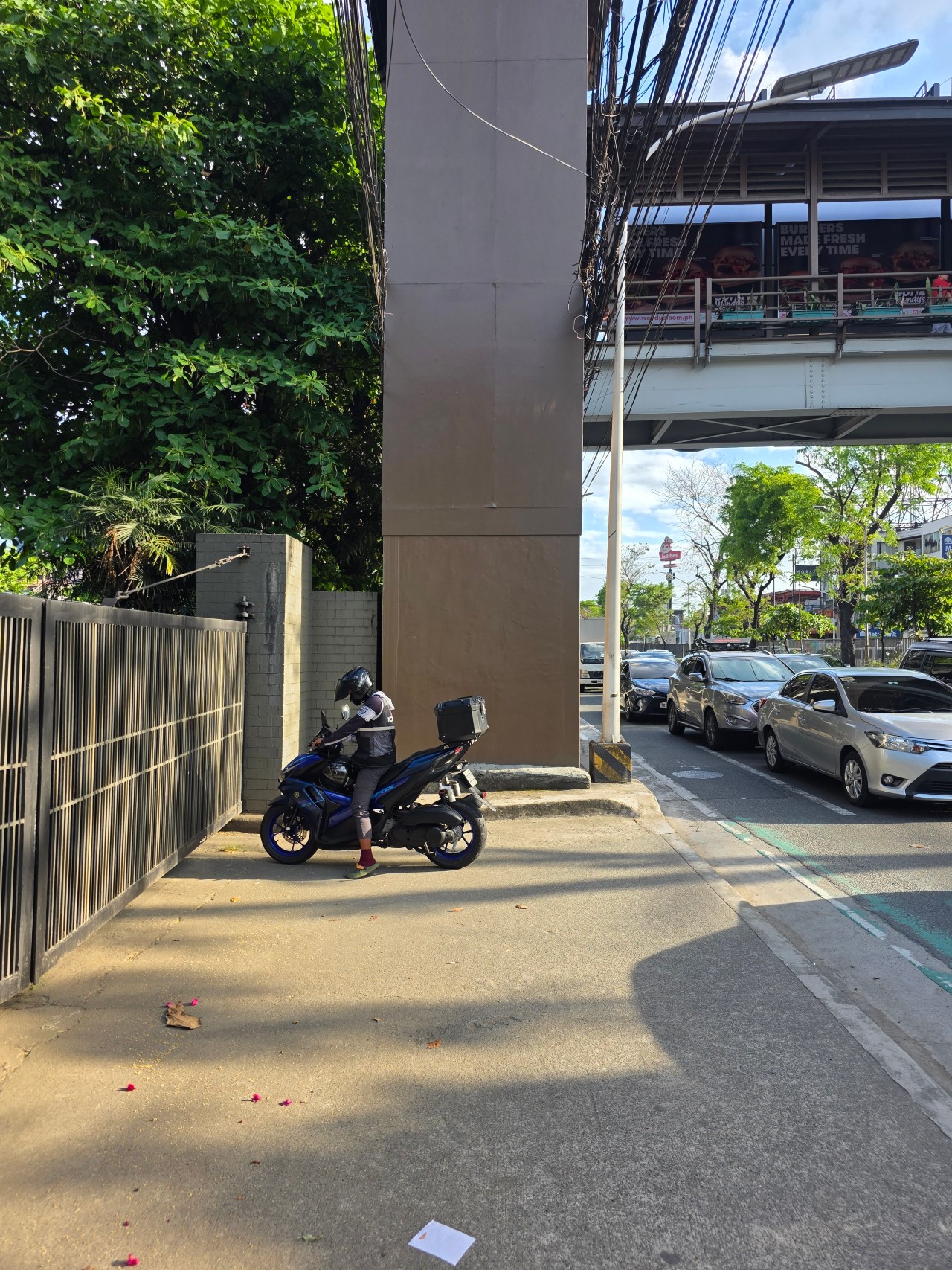
Take the pedestrian overpass. A good thing, right? People can cross the highway safely. So where do they put the base of the structure? Across the full width of the pedestrian path. Which means every single person who uses that overpass has to step off the sidewalk and onto the road, where motorcycles whiz past at full speed during rush hour. There is a photo of this. A man in a polo shirt walking calmly on the vehicle lane because there is no other place to go. That is not an accident. Someone designed this, approved the budget for it, and collected payment.
Then there are the bike racks. I see them everywhere, along EDSA, along C5, the major thoroughfares. Rows of U-shaped metal pipes bolted into concrete, rusting, massive, planted right in the middle of the already-narrow sidewalks. I’ve never once seen a bicycle locked to any of them. No one has. They serve no purpose, except one: they cost money. And somewhere in a procurement record that no one can easily access, someone made a decision about the price per unit, the supplier, and the quantity. These are not mistakes. These are decisions. And they are sitting in plain sight on every major road in this city, ignored so thoroughly we’ve stopped seeing them.
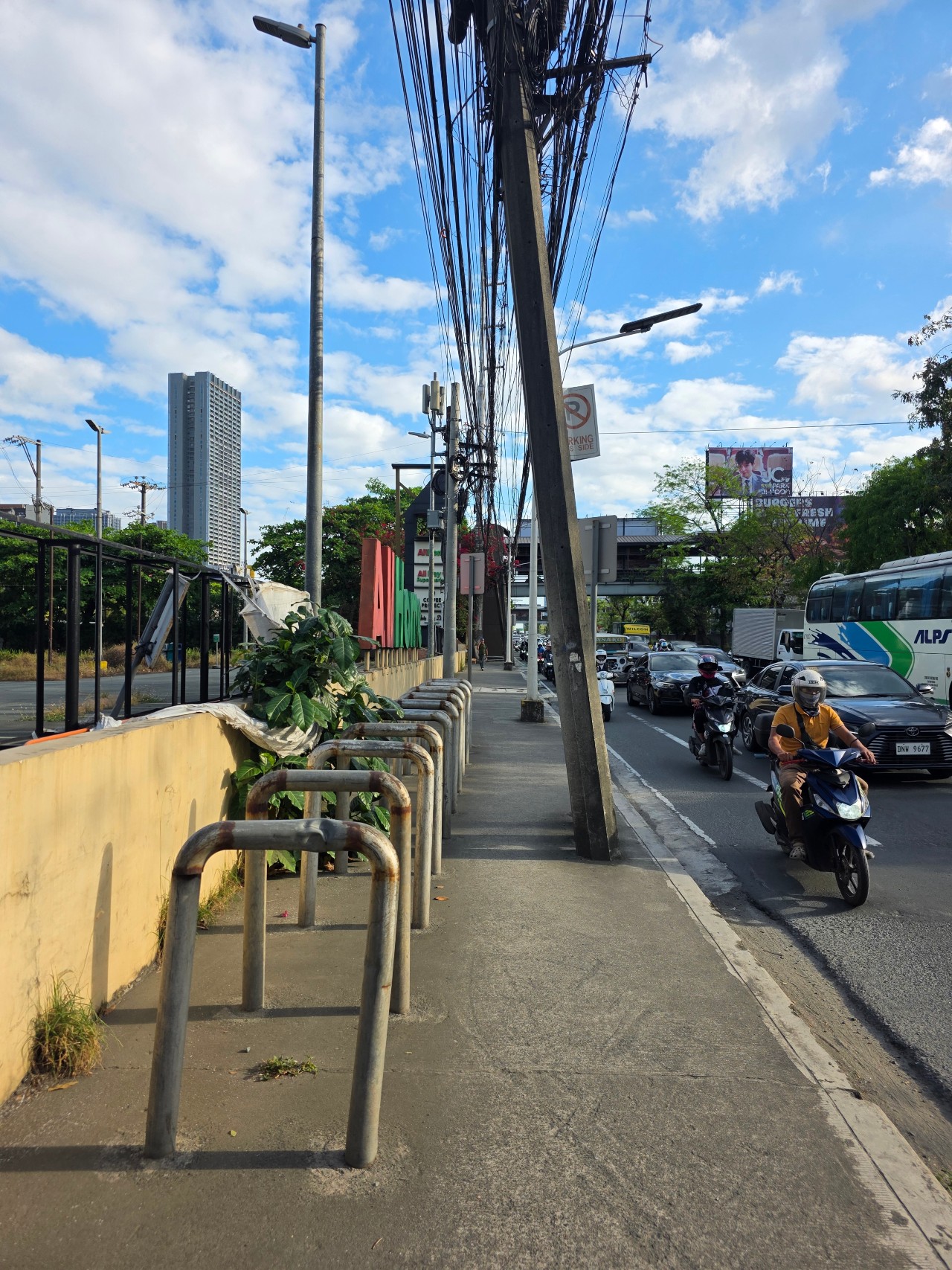
We’ve accepted them. We walk around them, onto the road, into traffic. And we move on.
Here’s what makes this worse. There are already laws that say none of this should be happening. The DPWH’s own design standards require a minimum sidewalk width of 1.2 meters in urban areas. The National Building Code sets it at 1.5 meters along major thoroughfares. C5 is a major thoroughfare. Look at those photos and try to find 1.2 meters of clear walking space anywhere near that overpass base, or between those bike racks and the road. You can’t.
And the bike racks have their own guidelines too, also written by the DPWH, specifying exactly how far back they must be placed to preserve pedestrian clearance. Those standards exist. They are simply not followed. Not by contractors, not by the agency that commissioned the work, not by anyone whose job it was to inspect and approve the finished project.
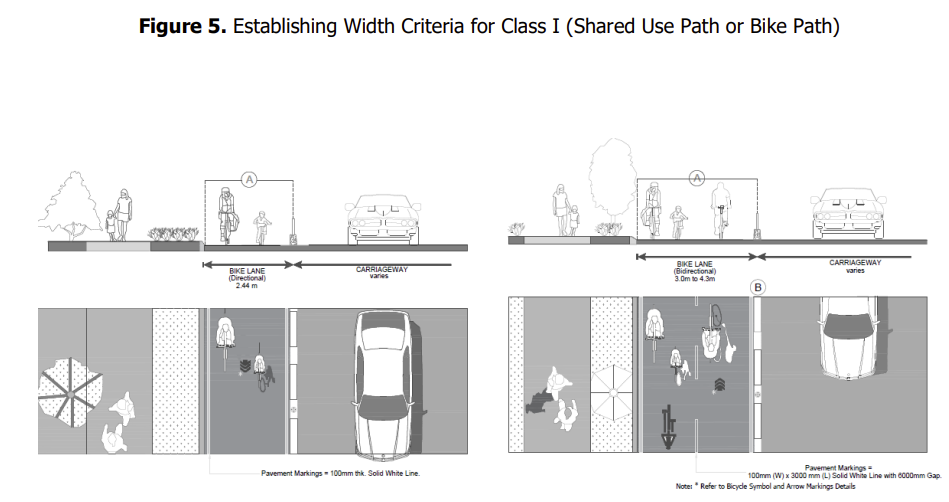
The only places you reliably see these standards applied are private developments. BGC. Ayala Center. Nuvali. The malls and townships built by developers who treat the DPWH guidelines as a design floor, not an aspiration. The government writes the rules, the private sector follows them, and the public streets, the ones that belong to everyone, are where the rules go to be ignored. That adds a particular kind of insult to the injury. The standards exist. They just don’t apply to the people who wrote them.
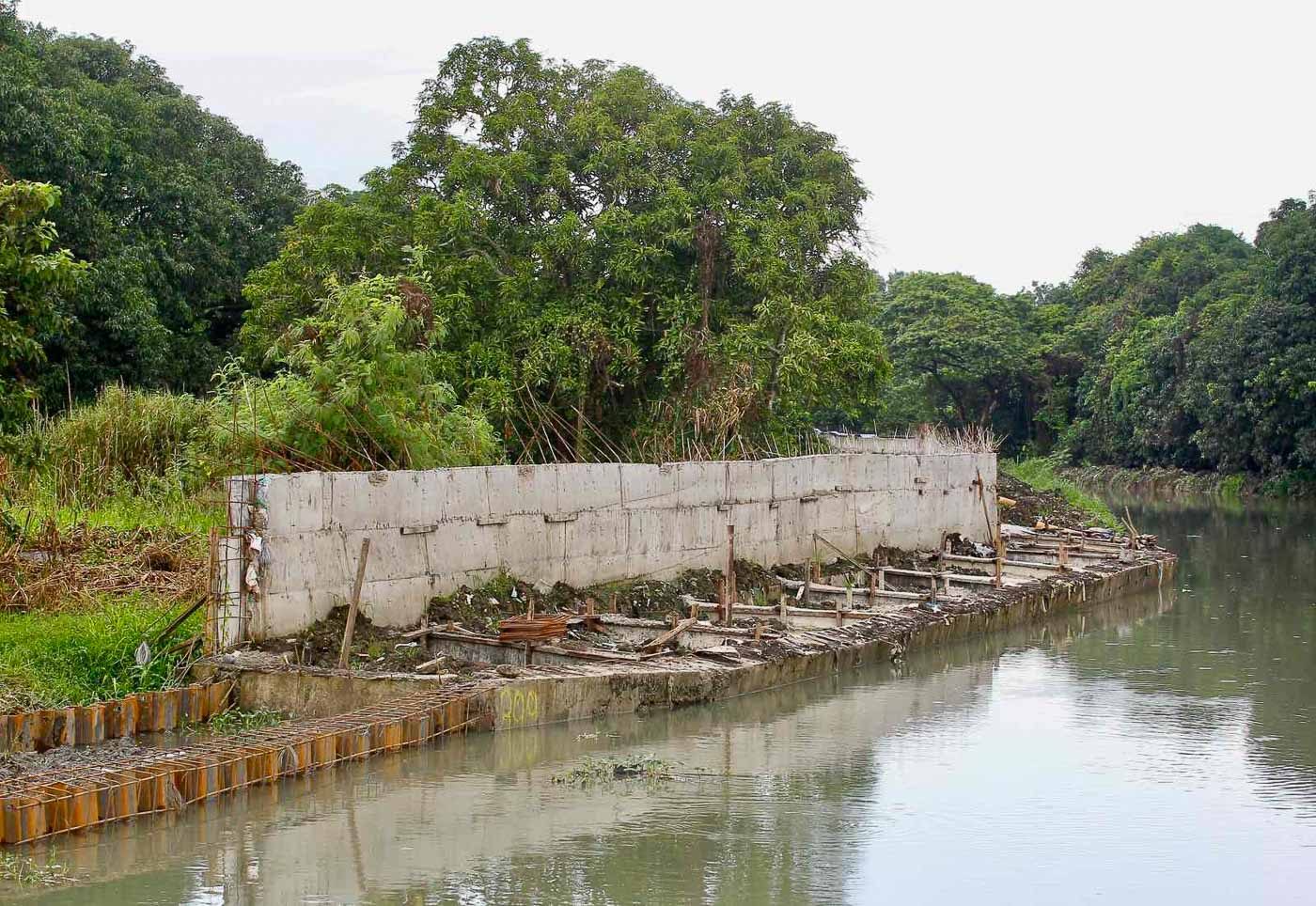
The ongoing flood control scandal has finally gotten Filipinos to look at how government money moves, or disappears. Ghost projects, inflated contracts, funds disbursed to nothing. I hope we don’t lose momentum. More honestly: I hope we gain momentum, because right now we’re moving slowly. The flood control corruption is bad enough that it had to be hidden. Ghost projects, by definition, don’t exist. But what about corruption you can see? What about the things that thousands of Filipinos walk past every single day?
The overpass base is a government project. The bike racks are government-procured. Someone got paid for those. The question of how much, paid to whom, and why those specific designs won the contract: that should be answerable. Today, it isn’t.
There is a bill moving through Congress right now that could change this. Senator Bam Aquino’s CADENA Act, which the Senate passed unanimously in December 2025, would place the entire national budget on a blockchain: every allocation, every disbursement, every procurement record, publicly accessible and tamper-proof in real time. The House counterpart is still pending. The critics have a fair point: if corrupt data is entered into the system, the ledger just becomes a cleaner-looking record of the same corruption. Digitalization problems need to be fixed first. But the principle is sound, and the direction is right. I’ll write more on this separately.
There’s another, simpler reform worth naming. A law that says no government project, building, road, or public infrastructure can bear the name of any person still living, or who died within the last fifty years. This sounds modest. It isn’t. The naming of public works after politicians, sitting or recently retired, is one of the most visible rewards of corruption. It is legacy-laundering. Strip that out, and you strip one of the reasons these projects matter so much to the people who fund them.
Pasig City is already doing this. Mayor Vico Sotto has made it a point to name government buildings after historical figures rather than living politicians, and his entire Giting ng Pasig slate agreed, as a condition of membership, to keep their names and faces off public projects. It works. The problem is that it works because Vico Sotto is mayor. He’s on his final term and has confirmed he won’t run in 2028. What happens to that practice when he’s gone? A mayor’s personal commitment is not a law. This is exactly why it needs to be one.
I’ll give credit where it’s due: parts of EDSA have been rehabilitated. The road is smoother. It looks like someone cared. But then I drive along C5, the same route, every day, through the potholes and the uneven asphalt and the patches on top of patches, and one thought keeps coming back. Eh kaya naman pala. They could do it. They knew how. They had the budget, the contractors, the equipment. They just didn’t do it here. And we never asked why. We woke up every morning, drove the same broken road, and filed it under “that’s just how it is.” That’s the most dangerous place we can be, not angry, not demanding, just… used to it.
And yes, I am aware of where I’m standing when I write this. I own a car. I don’t walk along C5. I am not exposed to this daily. I am exposed enough to the world, to what justice and rights look like elsewhere, that I cannot let things like this slide. That’s a privilege. I know that.
But to the millions of Filipinos who deserve more, and truly, each Filipino deserves more, please do not perpetuate our collective mistakes. Lahat tayo ‘to. Ganyan ang kultura natin e. Pero di na ‘to pwede. We deserve better; we deserve more. The government works for us. Whether you pay taxes or not, the government works for you.
The bike racks are still there. The overpass base is still there. They’ll be there tomorrow. The question is whether we keep walking around them, or whether we finally stop and ask who put them there, and make sure it costs someone something.
16,563 Ballots Were Shaded Before Anyone Voted
Nobody had to break a rule to reach the pre-shaded ballots in Maluso. The rule put them there. The Omnibus Election Code was written two months before EDSA, and Comelec's 963-page fix is still waiting.
Read more →
₱457 Million in Cash, and Nobody Asked
The bank filed the report. The AMLC said it had too many to read. Part 4 of 4 on anti-corruption with teeth.
Read more →
If you're above 40, this is the 2nd Iran Oil Crisis in Your Lifetime.
In 1980, a crisis in Iran pushed oil to $149 a barrel in today's dollars. Saudi Arabia had warned that prices that high would push the world to find something else, and it did. In 2026 it is Iran again, and this time the something else is already in our driveways.
Read more →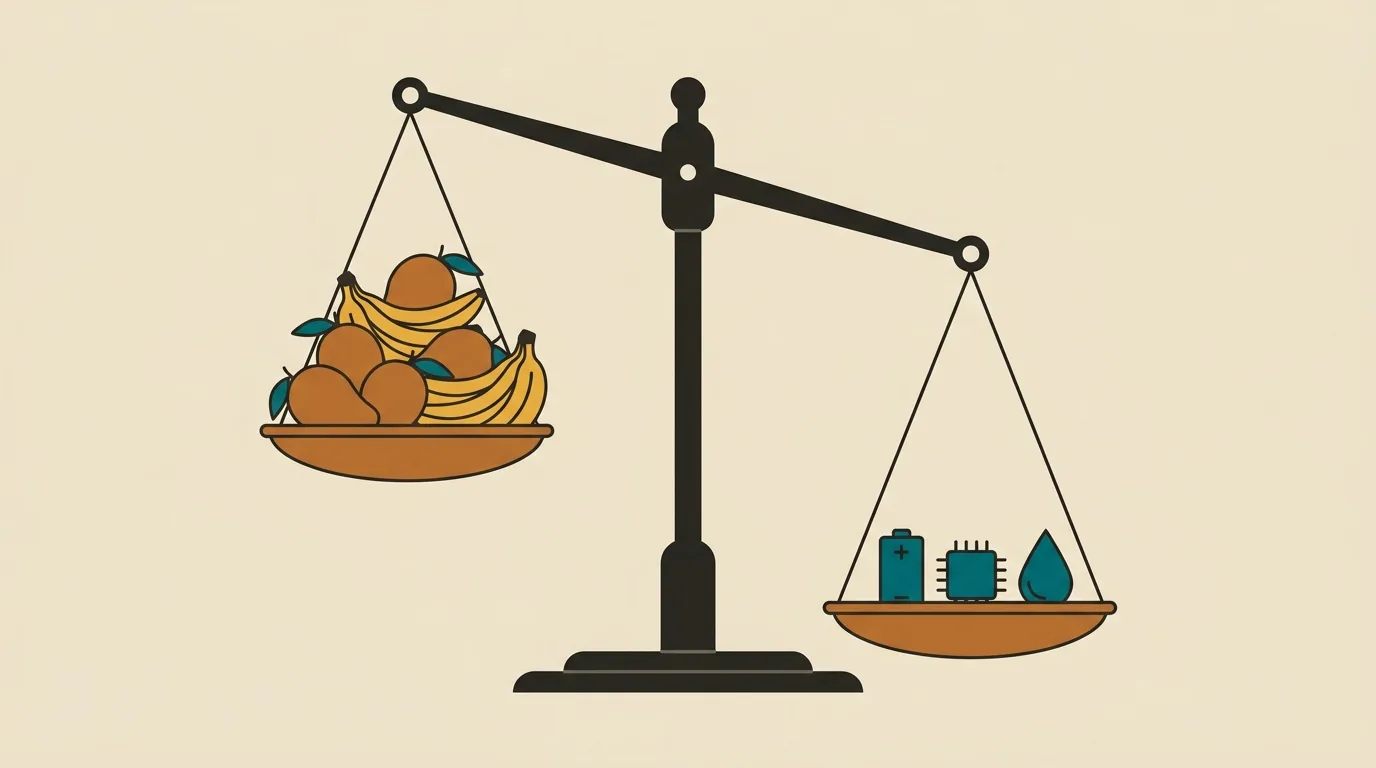
What does the world need from the Philippines? Right now, nothing it can't get somewhere else.
China refines 91% of the world's rare earths. Taiwan makes over 90% of its most advanced chips. We import 98% of our garlic and ship our nickel out as raw ore. What could the Philippines own that the world can't do without?
Read more →