Train Dreams Review: A Quiet, Beautiful Meditation on Life and Time
Joel Edgerton's breakthrough performance in one of Netflix's most underseen films of 2025 (Now Streaming on Netflix)
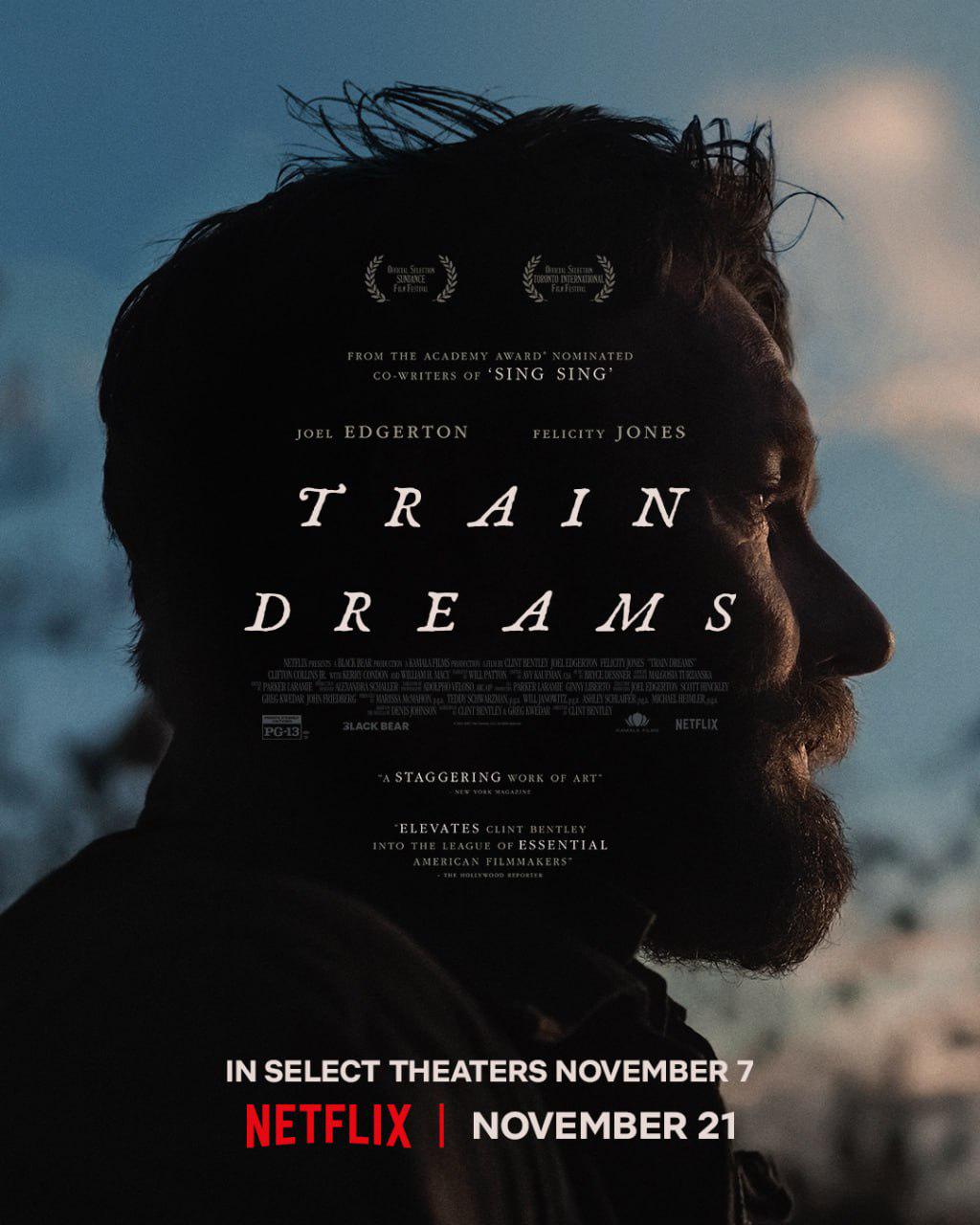
We heard good things about this film but kept skipping it for a while. We knew it was a drama. We knew it was set in the early 20th century. It felt like the kind of film you had to be emotionally prepared for.
What grabs you almost immediately is how beautifully shot it is. The film understands temperature: warm in the home life; cold out in the wild. At times, I thought of Wes Anderson, simply because the shots are framed with such intention and care. Frames feel composed like photographs, patient and deliberate. Colors turn vivid and saturated when they need to be. This would probably be stunning to watch in 8K.
The storytelling is gentle, carried by a light musical backdrop that knows when to step back.
Costume design and props are equally strong, carrying a tactile sense of olden goods, worn and purposeful. It genuinely made me want to buy artisanal things. A few well-made pieces. Quality apparel. The movie made me want to wear a hat. Haha. It made me want a good pair of boots. You get the drift. Strong artisanal energy throughout. It stirred a kind of nostalgia for a life I never actually lived, a simpler, self-sufficient existence, imagined rather than remembered.
Joel Edgerton delivers a breakthrough performance: restrained, internal, deeply felt. Felicity Jones gives another quiet transformation, melting into the character until performance gives way to presence. Their child is also beautifully cast, her openness almost brushing against the fourth wall. It works because Joel Edgerton’s candor anchors those moments, making you believe that his time with his family truly were the best days of his life.
The film slowly reveals itself as a reflection on life and its quiet beauty. Grandeur, desperation, misery, and joy sit side by side, sometimes within the same moment. It becomes a meditation on life, time, and our place within it.
In tone, it reminded me at times of The Secret Life of Walter Mitty in how it frames the beauty of the world, though without the comedy. My wife was reminded of Synecdoche, New York, though this is far less strange and more straightforward. It also brought to mind The Life of Chuck in how it presents a snapshot of a single life, and everything that comes with it. No grand thesis, just accumulation.
The train metaphor holds everything together. You find yourself on it and eventually submit to the journey. Life moves the way it moves. You look out the window, watch the scenery change, watch life pass. You take what you can along the way. In the end, you are a speck in the vastness of it all, carried forward toward a fixed destination.
My wife anchored more on the “dreams” part of the title. The entire film felt like a dream to her: the editing, the storytelling, the way it unfolds as one long reverie. In the grand scheme of things, the length of a life barely matters. You’re a blip.
That insight lingered. We wouldn’t normally know this character’s story. He lived largely alone; the people who knew him cannot fully tell his story. This becomes a story for someone who would otherwise go unheard. A quiet life, briefly illuminated. It reminded my wife of that old adage: if a tree falls in a forest, does it make a sound. The film listens anyway.
If you’re ready to sit with thoughts about mortality and your place in the world, or if you simply want to feel something without being told what to feel, this might be a good film to check out.
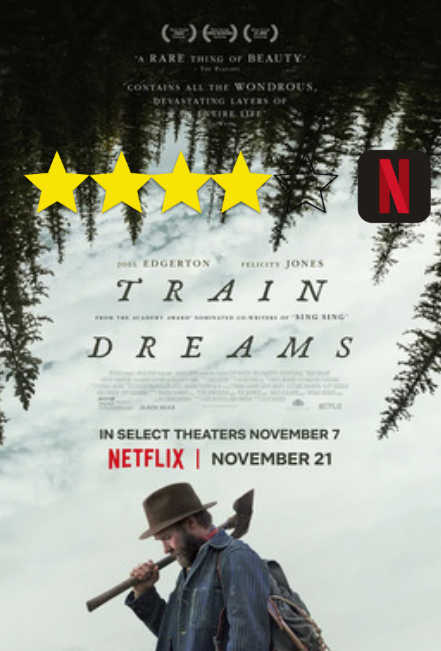
She scored it ★★★★★. I landed at ★★★★☆. Final rating: ★★★★☆.
Film Diary: September 2026
Every film we watched in September 2026, ranked best to worst, good and bad, both our ratings.
Read more →
One Night Only (2026) No Spoiler Review: Monica Barbaro and Callum Turner Are Great, the Premise Just Isn't
Monica Barbaro and Callum Turner have real chemistry in this high-concept rom-com, but the movie and the cast are wasted on a premise that never needed to be this complicated.
Read more →
The Best Movies We Saw in Q3 2026
Everything that averaged four stars or higher between us in Q3 2026, ranked.
Read more →
Alex Eala Doesn't Owe Us Anything
But she showed up anyway.
Read more →