Literal Power to the People
The Philippines has the projects, the capital, and the demand. What it lacks is speed, coordination, and the political will to let its own people generate power.
My wife and I were at a resort in Davao de Oro a few weeks ago. We were strolling around the property after breakfast, wandering past the pool, the villas, and then we turned a corner and found it: a massive solar farm. Rows and rows of panels, angled toward the sun, quietly generating the electricity that was keeping the lights on, the air conditioning running, and the kitchen cooking our food.
My wife asked me how the island has electricity. What was the solar farm for.
I told her the truth: most Philippine islands generate their own power. Sometimes that means a small power plant. Sometimes it means a diesel generator running a few hours a day. And sometimes, like here, it means someone decided to invest in solar because there was no other reliable option. The resort we were standing in had essentially built its own power source because the grid doesn’t reach this far.
She thought about that for a second. “So every island is basically on its own?”
More or less, I said. And it’s more common than people think.
We spent the rest of that walk talking about it. I told her about the islands where electricity costs four or five times what we pay in Metro Manila, because the only option is a diesel genset hauling fuel by boat. About how the Philippines has over 7,600 islands and three separate power grids that weren’t even connected to each other until last year. About how one of the biggest islands in the country, one you can see from your airplane window, still isn’t connected to the national grid and burns imported fuel for most of its electricity.
She asked the question that I think a lot of Filipinos would ask if they knew what I was telling her: “Why hasn’t anyone fixed this?”
The more I dug into the answer, the more I realized the problem isn’t what most people think it is.
7,641 islands, three grids, and a lot of diesel
The Philippines operates three main power grids: Luzon, Visayas, and Mindanao. These grids cover the major island groups, but “cover” is generous. Hundreds of smaller islands remain completely off-grid. Researchers have identified over 1,900 populated islands outside the main power grid, home to more than 734,000 people. Many of these communities still rely on diesel generators as their primary electricity source, with some residents getting only two to four electrified hours per day. On privately operated generators, the cost to the end consumer can run as high as P50 to P70 per kilowatt-hour. For context, a typical Metro Manila household pays around P13.80.
The three main grids weren’t even connected to each other until very recently. In January 2024, President Marcos led the ceremonial switch-on of the P51.3-billion Mindanao-Visayas Interconnection Project, a 184-kilometer submarine cable with a 450-megawatt transfer capacity linking Mindanao and Visayas through Zamboanga del Norte and Cebu. That moment marked the first time in the country’s history that the three major grids were physically linked. The Philippines has been an independent nation since 1946. It took until 2024 to connect its three major power grids.
And we’re still not done. Mindoro, the seventh-largest island in the Philippines, is still not connected to the national grid. Mindoro is not a small, remote atoll. It has a land area of over 10,000 square kilometers, bigger than all of Metro Manila, Laguna, Cavite, Rizal, and Bulacan combined. You see it from your airplane window every time you fly from Manila to Cebu. And it runs on an isolated grid still dominated by diesel and bunker fuel, with rates that hit P15.67 per kWh last June. Its internal transmission lines are only 69kV, weaker than anywhere else in the country. It has a small wind farm and a hydroelectric facility, but during dry months when the wind drops and water reserves fall, the island defaults to imported fossil fuels for almost everything.
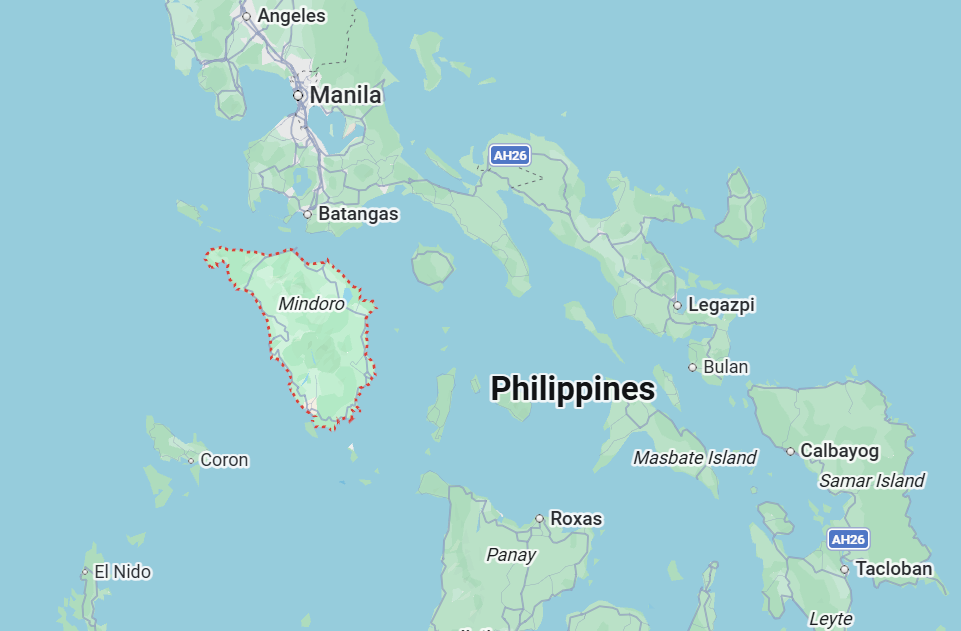
NGCP announced in March 2026 a P23.9-billion project to lay submarine cables from Batangas to Mindoro, with a target completion of January 2028. The Department of Energy has certified it as an energy project of national significance. Once complete, the connection is expected to stabilize supply, bring rates closer to Luzon levels, and open the island up to renewable energy development. But right now, as of this writing, one of the largest islands in the country is still cut off from the national grid, paying more for electricity than Metro Manila, and burning imported fuel to keep the lights on.
Why we pay more than almost everyone in ASEAN
Filipino households pay among the highest electricity rates in Southeast Asia. As of mid-2025, the average residential rate sits around USD 0.21 per kWh. Thailand pays roughly USD 0.13. Indonesia pays about USD 0.08. Vietnam hovers around USD 0.07 to 0.08. Malaysia comes in at approximately USD 0.05 to 0.06. Only Singapore, a wealthy city-state with a much higher cost of living, pays more.
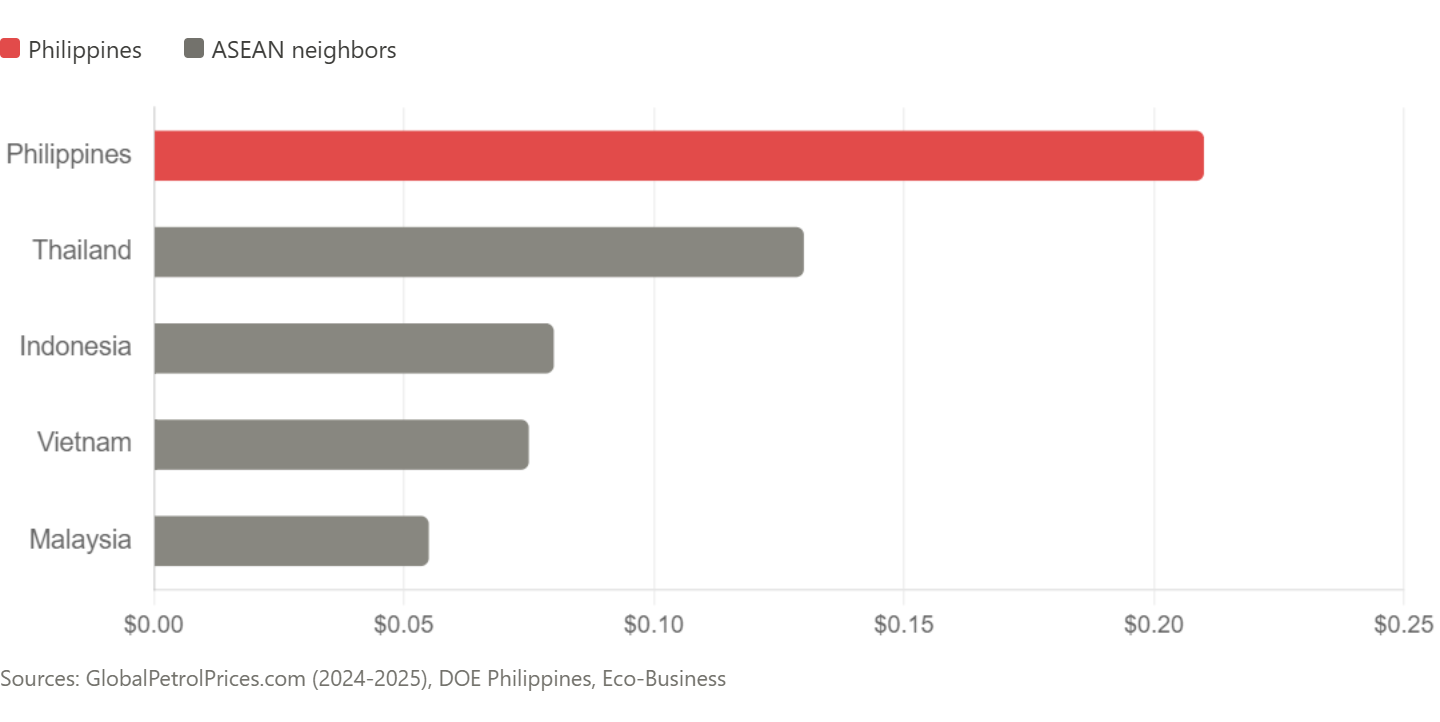
This isn’t just a household problem. It’s an economic competitiveness problem. When a multinational is deciding where to put a factory in Southeast Asia, electricity is one of the biggest operating costs on the table. If labor rates in the Philippines are roughly comparable to Vietnam or Indonesia, but electricity costs two to three times more, the math stops working in our favor. The Philippines loses investment not because it lacks talent or infrastructure, but because the cost of keeping the lights on makes the whole operation more expensive than the country next door.
The explanation most people hear is that we import too much fuel. That’s true. The Philippines imports about 95% of its oil, and roughly 79% of its electricity comes from fossil fuels. When global fuel prices spike, the cost gets passed directly to consumers through the generation charge on your bill. No buffer. No subsidy.
But fuel dependency alone doesn’t explain everything. The deeper issue is structural.
Most of our ASEAN neighbors subsidize electricity at rates between 36% and 60%. The Philippines does not. Under the Electric Power Industry Reform Act (EPIRA) of 2001, the full cost of producing and delivering electricity is passed through to the consumer. The idea was that privatization and competition would bring prices down. Two decades later, 11 families control about 74% of generation capacity, and competition remains limited.
Then there’s the geography. Powering a nation spread across 7,641 islands requires over 21,000 kilometers of transmission lines, including specialized high-voltage submarine cables. The maintenance costs are enormous, and every typhoon season puts the infrastructure at risk. Those costs show up in your transmission charges.
Too many agencies, not enough accountability
Here’s something most Filipinos don’t realize about their electricity system: no single government entity is responsible for making sure power gets delivered on time, at scale, at a reasonable cost. The Department of Energy handles policy and planning. NGCP owns and operates transmission. The Energy Regulatory Commission approves rates. Local government units issue permits. The DENR handles environmental compliance. Courts process TROs and disputes. Distribution utilities handle procurement.
Each entity does its job. But nobody owns the outcome.
This creates a coordination problem that shows up most painfully in right-of-way, the process of acquiring the land needed to build transmission lines. In the Philippines, acquiring right-of-way for a transmission line requires approvals from the barangay level up through the city, the province, and national agencies. Eminent domain exists on paper, but enforcement is weak. Landowners can and do file temporary restraining orders that halt construction for years. Developers bear the burden of negotiating individually with every property owner along a planned route. Delays of five to ten years on transmission projects are common. And NGCP itself has been called out: the DOE has noted that almost all NGCP projects between 2016 and 2024 were delayed, some by over nine years.
Compare this with how our neighbors handle the same problem. Thailand has a centralized authority that manages right-of-way acquisition. Eminent domain is enforceable and fast. Compensation is standardized. Legal disputes do not halt construction. In Singapore, the process is centralized, formula-based, and final. Vietnam follows a similar model with state-led acquisition and minimal delay. In all three countries, energy infrastructure is treated as a national priority. In the Philippines, it is treated as a negotiable project.
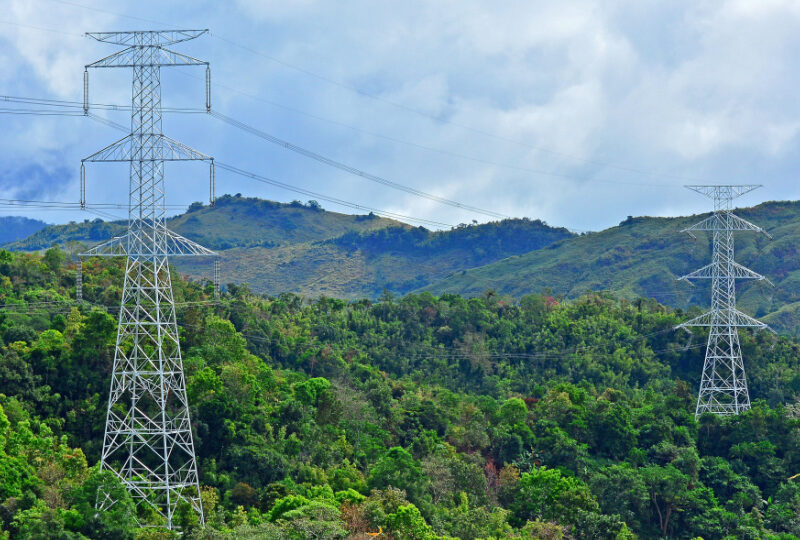
This is the real bottleneck. A power plant can be funded, built, and technically ready to deliver electricity. But if the transmission line connecting it to the grid is stuck in a right-of-way dispute, that plant sits idle. Projects stall. Financing dries up. Supply stays constrained. Prices stay high.
And there is no shortage of planned capacity. The DOE’s pipeline includes roughly 118 GW of total proposed projects, about 110 GW of which is renewable energy. There is no shortage of investor interest. The shortage is in converting plans into operational power. The obstacle is the gap between generation approvals and actual grid capacity.

Malampaya: a lifeline, extended
Amid all of this, a piece of genuinely good news arrived on March 26, 2026. President Marcos announced the successful drilling of the Camago-3 well under the $893-million Malampaya Phase 4 campaign. The well can produce up to 60 million standard cubic feet of gas per day, and it holds an estimated 2.5 times more recoverable gas than the earlier Malampaya East-1 discovery. Together, the two wells are projected to extend the life of the Malampaya gas field by about six years, with first gas delivery targeted for Q4 2026.
The cost comparison tells you everything.
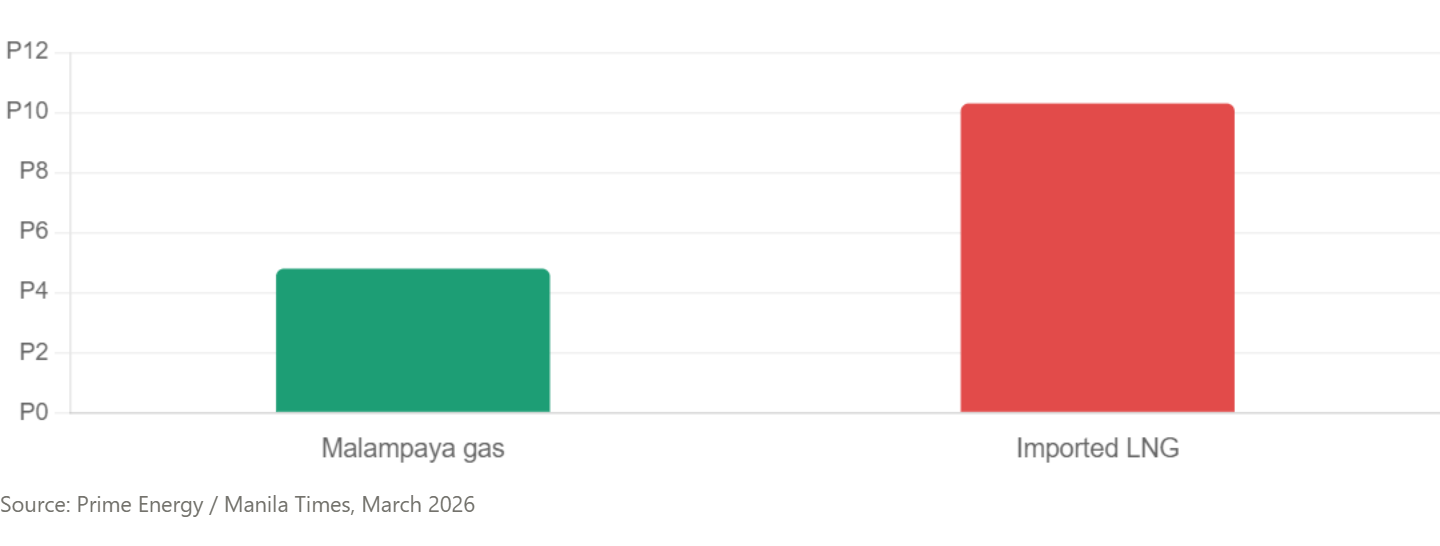
Every unit of power generated from Malampaya instead of imported fuel directly lowers the generation charge on your electricity bill. Malampaya, located offshore Palawan, supplies up to 20% of Luzon’s electricity requirements and remains the country’s only indigenous source of natural gas. The announcement also included the installation of new subsea pipelines for the first time since 2000, and the government has signaled a next well called “Bagong Pag-asa” about 30 kilometers north of Malampaya.
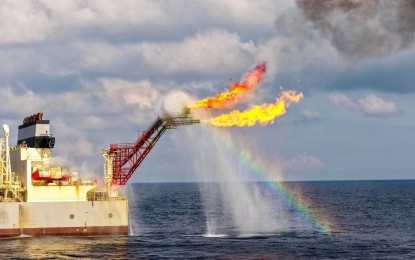
This matters enormously right now. The war involving the United States, Israel, and Iran has disrupted global oil supply chains and pushed prices to levels not seen in years. The Philippines imports the vast majority of its oil from the Middle East, and with the Strait of Hormuz effectively blocked, the country is scrambling for alternative sources. Every kilowatt generated from domestic gas instead of imported fuel is one less unit exposed to the chaos of global geopolitics.
What your barangay can actually do about electricity
Here’s the part of this story that more people need to know about.
There is a program called the Retail Aggregation Program, or RAP, that allows businesses, communities, and even villages within the same distribution utility area to pool their electricity demand and negotiate their own power rates. Under EPIRA, consumers who hit a threshold of 500 kilowatts of combined monthly peak demand can enter the contestable market and choose their own electricity supplier. They’re no longer stuck with whatever rate their distribution utility charges.
This already works. Manila Water became the first company to use RAP, consolidating ten of its sewage treatment plants to meet the threshold and negotiate directly with a licensed supplier. BPI became the first bank to adopt it, transitioning 70 branches to renewable energy through a partnership with ACEN RES. MR.D.I.Y. used RAP to switch 28 stores and facilities to 100% renewable energy.
And it’s about to get much more accessible. The ERC has announced that starting June 26, 2026, the eligibility threshold drops from 500 kW to 100 kW. That opens the door to far more businesses, commercial complexes, and organized communities.
Think about what this means in practice. A condominium association can combine the energy consumption of individual units and common areas to qualify as a single entity. A group of neighboring businesses in a commercial district can pool demand. An industry association or cooperative can aggregate its members’ consumption. Even MSMEs can team up. Once they qualify, they can choose their supplier, negotiate contract terms, pick pricing models (fixed, variable, or hybrid), and even specify that they want their power sourced from renewables.
Businesses that have switched through the contestable market report savings of 10% to 15% on generation charges. That’s real money coming off real bills every single month.
On top of RAP, there’s a separate program for communities that host energy projects. Under ER 1-94, updated in January 2026, communities with power plants in their area receive about P0.03 per kWh of electricity generated and sold. Those funds go to healthcare, education, livelihood programs, and environmental protection. And here’s the detail that should catch every local government’s attention: if those funds go unused for two consecutive years, they automatically reduce local electricity rates.
Every barangay captain, every city councilor, and every provincial board member should know these programs exist. This is not theoretical. The infrastructure for community-level action on electricity costs is already in place.
Solar, meters, and Meralco’s homework
For individual homeowners, solar net metering remains the most direct path to lower electricity bills. The math is increasingly compelling. Utility-scale solar in the Philippines now costs about USD 0.044 per kWh, making it the cheapest source of new generation capacity. A well-sized residential system can pay for itself in four to six years, with a useful life of 25 years.
But there’s a problem, and it sits squarely on the distribution utility side.
When you install solar panels and apply for net metering, Meralco (or your local cooperative) needs to replace your existing meter with a bidirectional one that measures both the electricity you consume from the grid and the excess you export back to it. Without that meter swap, any surplus power your panels generate can be read by your old meter as additional consumption. Your bill goes up instead of down.
The net metering application process involves submitting up to 15 documentary requirements in some areas, coordinating with Meralco for a Distribution Impact Study, securing electrical permits from your LGU, passing an ERC application, and then waiting for the bidirectional meter to be installed. The typical timeline from application to energization is 45 to 75 days, though many homeowners report waiting three to six months. In some cases, Meralco simply does not have meters in stock.
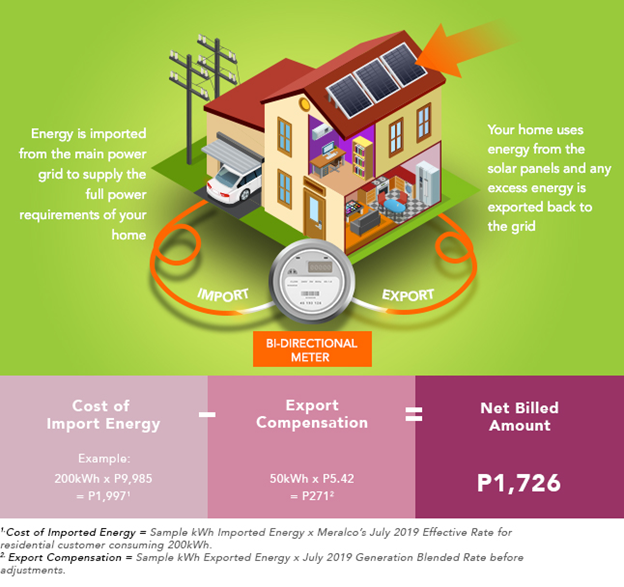
The ERC pushed back on this in late 2025. Under the amended net metering rules, distribution utilities are now required to complete the interconnection process within 20 working days from receipt of a complete application. Failure or unjust refusal to implement the program is subject to penalties and fines. Net metering credits no longer expire at the end of the year; they now roll over indefinitely. And the ERC has made renewable energy certificate meters optional, removing one of the extra cost barriers.
Energy Secretary Sharon Garin put it plainly when the DOE convened agencies to address the backlog: “Every day we delay is another day Filipino consumers lose the chance to reduce their electricity bills and earn from their own clean energy production.”
Meralco has pledged to streamline through digitization, installer accreditation, and equipment standardization. Whether that pledge translates into action is something every current and prospective solar homeowner will be watching.
The long game: policy that actually moves the needle
The structural reforms that would make the biggest difference are the hardest to push through. But several are already in motion.
The ERC’s decision to lower the RAP threshold to 100 kW in June 2026 is one of the most significant near-term changes. If the government follows through with awareness campaigns and streamlined registration, this could meaningfully shift the balance of power away from distribution utilities and toward consumers.
Republic Act 11646, signed in 2022, provides a framework for microgrid development in unserved and underserved areas. This law creates a pathway for private developers to build small-scale renewable microgrids and sell power to the hundreds of off-grid island communities where diesel remains the default.
The removal of foreign ownership restrictions on solar, wind, biomass, and ocean energy in 2022 has already produced results. The DOE reported record-breaking renewable energy capacity additions in 2024, with 794 MW added in a single year, exceeding the combined additions of the three previous years. The Green Energy Auction Program has awarded over 10 GW of capacity across four rounds, pushing the national development pipeline above 36 GW.
Executive Order No. 110, the energy emergency declaration from March 2026, includes provisions for accelerating renewable energy development and expanding electric vehicle adoption in mass transport. Republic Act 12316, signed on March 25, 2026, grants the president authority to suspend or reduce fuel excise taxes until 2028. These are short-term responses to the current crisis, but the renewable acceleration mandates embedded in them have long-term implications if they’re actually enforced.
What remains missing is the structural layer. Strengthening right-of-way laws so that energy projects can proceed without decade-long disputes. Limiting the use of TROs against nationally significant infrastructure. Standardizing compensation frameworks so landowner negotiations don’t stall every new transmission project. Creating a single authority that owns the full outcome of getting power from source to consumer, instead of scattering responsibility across DOE, NGCP, ERC, LGUs, DENR, and the courts.
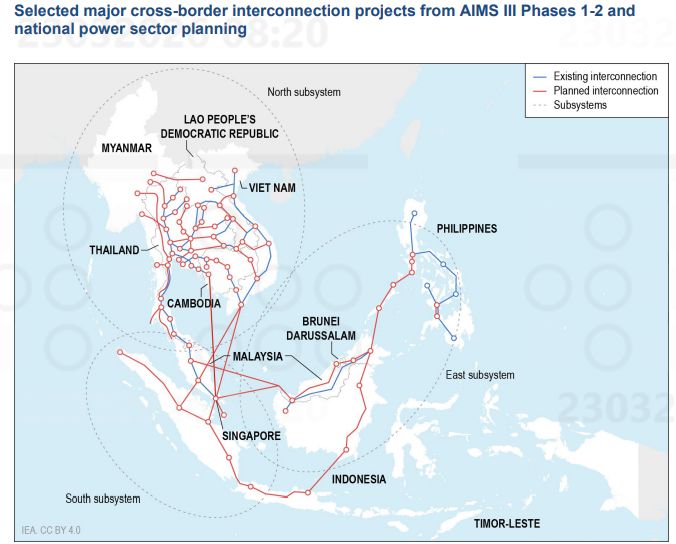
There’s also a broader initiative called the ASEAN Power Grid that aims to connect the electricity networks of all ten ASEAN member countries by 2045. The ADB and World Bank have established a financing initiative for cross-border interconnections, and the Philippines assumes the ASEAN Chairmanship in 2026, which puts it in a leadership position on regional energy cooperation. But let’s be honest about where the Philippines sits in this picture: it and Brunei are the only two ASEAN members with no operational cross-border power interconnections. Before we talk about buying power from Laos, we need to finish connecting Mindoro. The ASEAN Power Grid is a worthwhile vision. For the Philippines, it’s a generation away.
Until the structural changes happen at home, the Philippines will keep building power plants that can’t connect to the grid, approving projects that can’t break ground, and importing fuel at prices its consumers can’t afford.
What that solar farm in Davao de Oro was telling us
The numbers on renewables point in only one direction. The Philippines’ solar energy market is projected to grow from 4.25 GW in 2025 to 18.49 GW by 2031. The DOE’s own simulations show that with full renewable dispatch, Luzon wholesale spot prices could drop from P4.95 per kWh in 2026 to P0.28 per kWh by 2050. The Malampaya extensions buy the country critical time: six more years of domestic gas supply at less than half the cost of imported LNG.
And the current crisis, as painful as it is, is doing something that decades of policy papers and advocacy could not. It is making the case for energy independence in terms that every Filipino who pays an electricity bill can understand. When your fuel supply depends on a shipping lane in the Middle East that can be shut down by a war you have no part in, the argument for solar panels on your roof, for community microgrids, for domestic gas, for connecting your islands to each other instead of to foreign oil markets becomes impossible to ignore.
The Philippines has the solar resources. It sits in the tropics with seven to ten hours of sunlight daily across most of the country. It has the policy frameworks. It has the investor interest. It has 118 GW of projects in the pipeline.
What it needs is the same thing it has always needed: speed, coordination, and the political will to treat energy infrastructure like the national priority it is.
That resort in Davao de Oro didn’t wait for the government to connect it to the grid. It built a solar farm because that was the practical answer. Across the country, businesses, communities, and homeowners are starting to do the same thing. The tools exist. The programs exist. The sunlight exists.
The next time you fly from Manila to Cebu and look down at Mindoro, an island the size of a small country, remember: it’s still cut off from the national grid, burning imported fuel, paying more per kilowatt-hour than you do. And whether that changes by 2028 or 2035 will tell you everything you need to know about whether the Philippines is serious about solving this.
16,563 Ballots Were Shaded Before Anyone Voted
Nobody had to break a rule to reach the pre-shaded ballots in Maluso. The rule put them there. The Omnibus Election Code was written two months before EDSA, and Comelec's 963-page fix is still waiting.
Read more →
₱457 Million in Cash, and Nobody Asked
The bank filed the report. The AMLC said it had too many to read. Part 4 of 4 on anti-corruption with teeth.
Read more →
If you're above 40, this is the 2nd Iran Oil Crisis in Your Lifetime.
In 1980, a crisis in Iran pushed oil to $149 a barrel in today's dollars. Saudi Arabia had warned that prices that high would push the world to find something else, and it did. In 2026 it is Iran again, and this time the something else is already in our driveways.
Read more →
What does the world need from the Philippines? Right now, nothing it can't get somewhere else.
China refines 91% of the world's rare earths. Taiwan makes over 90% of its most advanced chips. We import 98% of our garlic and ship our nickel out as raw ore. What could the Philippines own that the world can't do without?
Read more →