Malamig Brew Bonus: Cold Brew Blind Tasting — Ethiopia, Brazil, Starbucks Pike Place Compared
What tasting four very different coffees side by side taught me about blends and contrast
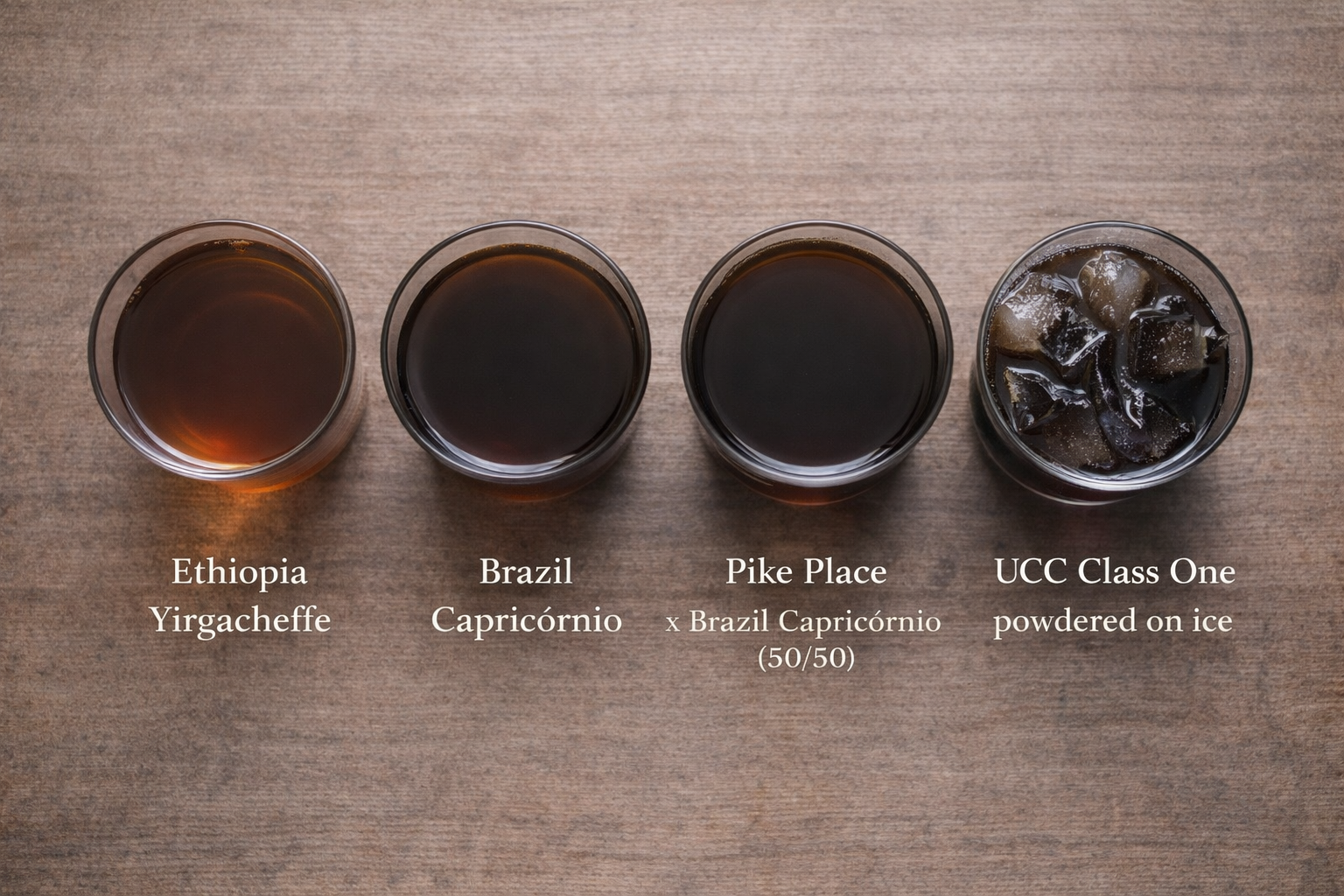
Over the weekend, we did a side-by-side tasting of four very different coffees: the Ethiopia Yirgacheffe, the Brazil Capricórnio, a 50/50 mix of Starbucks Pike Place and Brazil Capricórnio, and, just for the heck of it, UCC Class One powdered coffee on ice.
As expected, the Ethiopia Yirgacheffe was in a class of its own. Very different. Very expressive. Fruity, floral, musky. It still feels interesting rather than comforting. I haven’t tried it as a latte yet, but that’s on the plan for next weekend.
Then, for contrast (and partly for fun), we made a cup of UCC Class One on ice. Our usual way of drinking this is simple and honestly excellent: the powder mixed straight into full-cream milk, a teaspoon of muscovado, lots of ice. That’s our perfect quick weekend latte. I would recommend that 100%.
But in the context of this tasting, the UCC Class One on ice was just awful. It was a solid block of bitterness. From the nose to the mouth to the finish. Just bitterness.
And oddly enough, that helped.
We went back to the Brazil Capricórnio after that, and all of a sudden it felt expressive. The floral notes were much more noticeable. It suddenly had texture. Before, I struggled to find much of anything. That wall of bitterness from the instant coffee made the otherwise muted Brazil Capricórnio stand out more clearly.
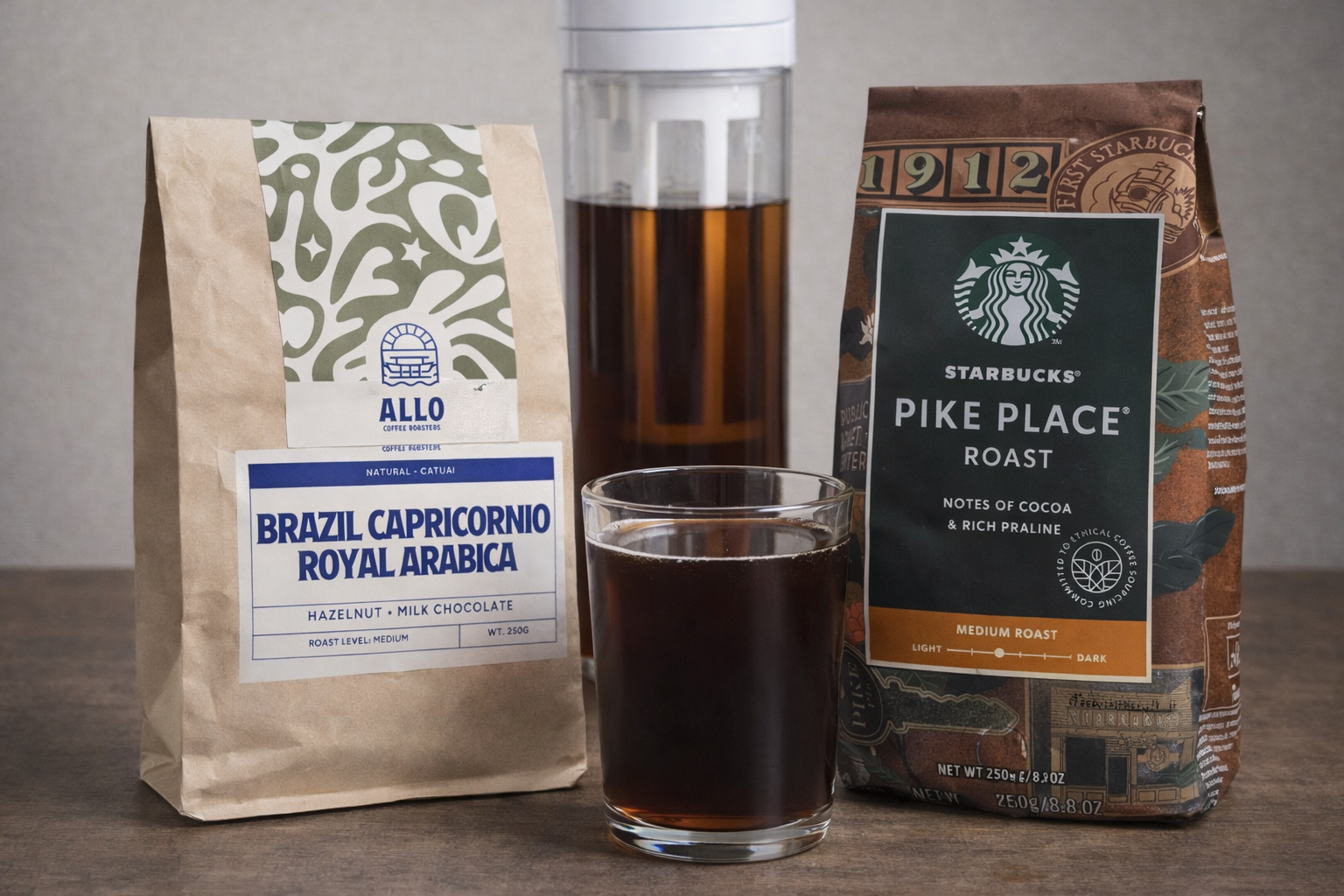
Another experiment we tried was a 50/50 cold brew of Starbucks Pike Place and Brazil Capricórnio. This felt logical, especially after learning that Brazil beans are often used in blends. I fully expected the Pike Place to overpower the Brazil, to end up with a richer, fuller, Starbucks-forward cup.
That didn’t happen.
The Brazil Capricórnio actually persisted, almost taking over parts of the blend. It mellowed out the Starbucks profile. It softened it. It added dimension. My wife even ranked this as the second-best cup of the tasting; her top pick was the Brazil Capricórnio on its own.
I enjoyed the blend quite a bit. The Brazil gave the Starbucks more shape. The finish suddenly had a floral note. Cocoa was still there. The nose leaned slightly musky, probably pulling from the roasted grain and dark cocoa notes of the Pike Place. The body carried milk chocolate, turning to something toastier toward the end. There was a sweetness that reminded me of molasses.
It felt like a gentler, more interesting Pike Place.
This ended up being a really nice mini-cupping. Maybe it was unfair to throw instant coffee into the lineup, but it helped me “find” the Brazil notes more easily. And the Pike Place x Brazil experiment was genuinely eye-opening.
I finally understand how Brazil Capricórnio Arabica works. Not as a star on its own, but as something that elevates, supports, and adds dimension to other beans.
And that, I think, was the real lesson of the weekend.
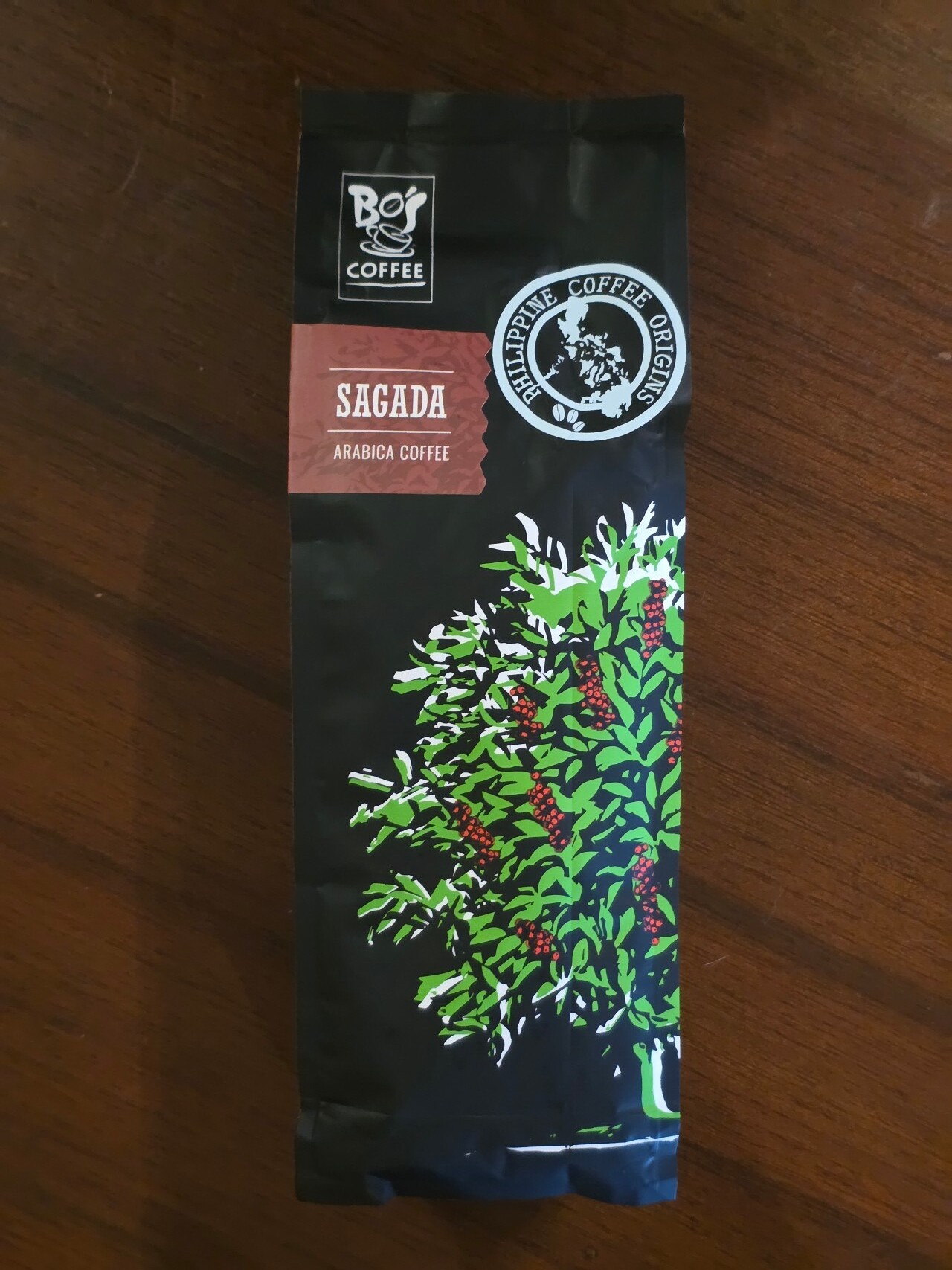
Malamig Brew Episode 9: Bo's Coffee Sagada Arabica Cold Brew Review Philippines
A cocoa-forward Cordillera Arabica that earns the daily driver label
Read more →
Malamig Brew Bonus: Coffee Bean & Tea Leaf Cold Brew Review Philippines — Or Was It an Iced Americano?
How to tell cold brew from iced Americano — and why it matters for what ends up in your cup
Read more →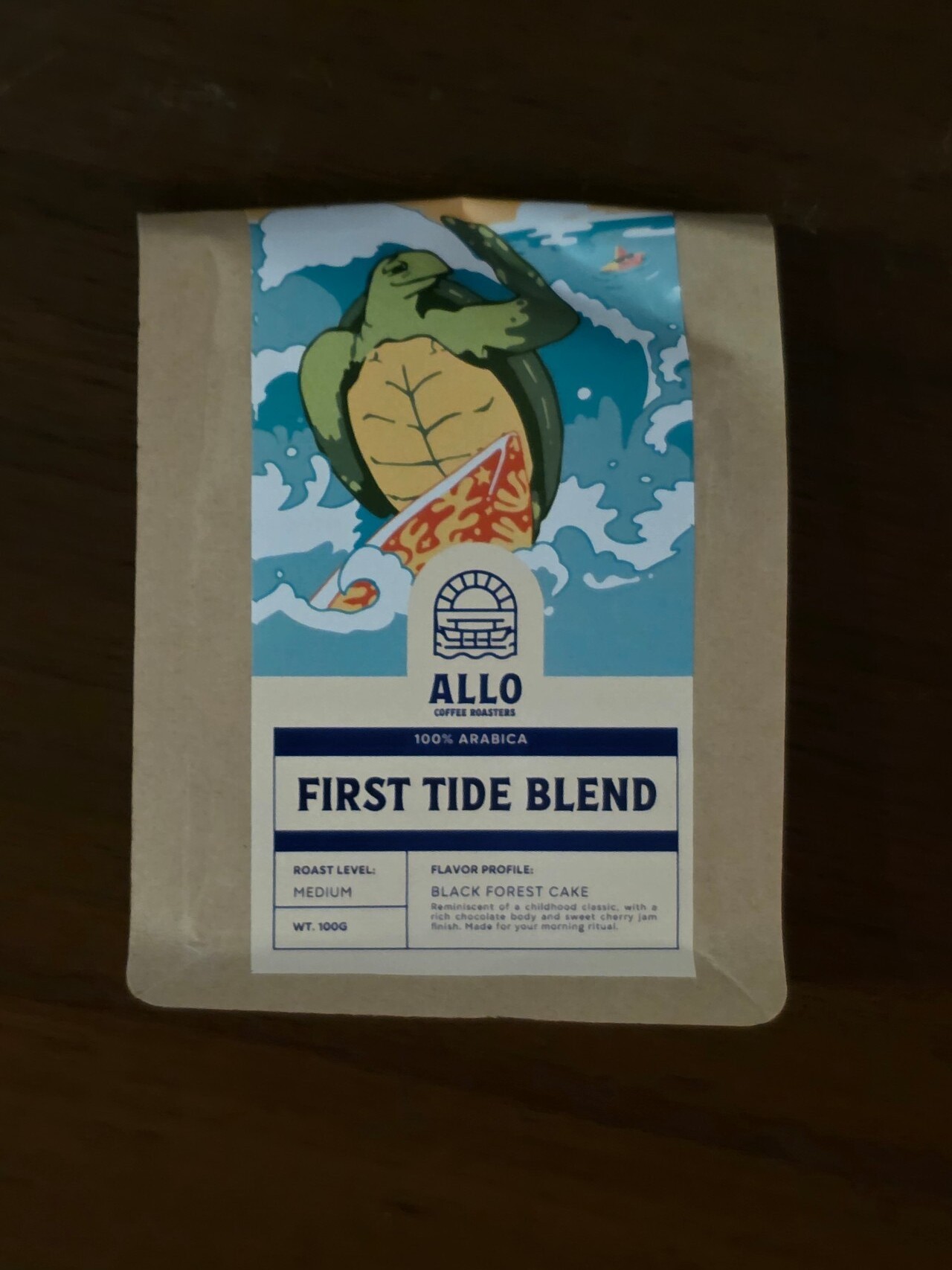
Malamig Brew Episode 7: First Tide Blend Cold Brew Review — Allo Coffee Roasters Philippines
A local roaster's bold, fermented-fruit blend that tastes like wine transformed into coffee
Read more →
What does the world need from the Philippines? Right now, nothing it can't get somewhere else.
China refines 91% of the world's rare earths. Taiwan makes over 90% of its most advanced chips. We import 98% of our garlic and ship our nickel out as raw ore. What could the Philippines own that the world can't do without?
Read more →