The Altman Problem: What One CEO’s Very Public Collapse Teaches All of Us
Sam Altman is becoming the next Zuckerberg, and the lesson isn't just for tech executives.
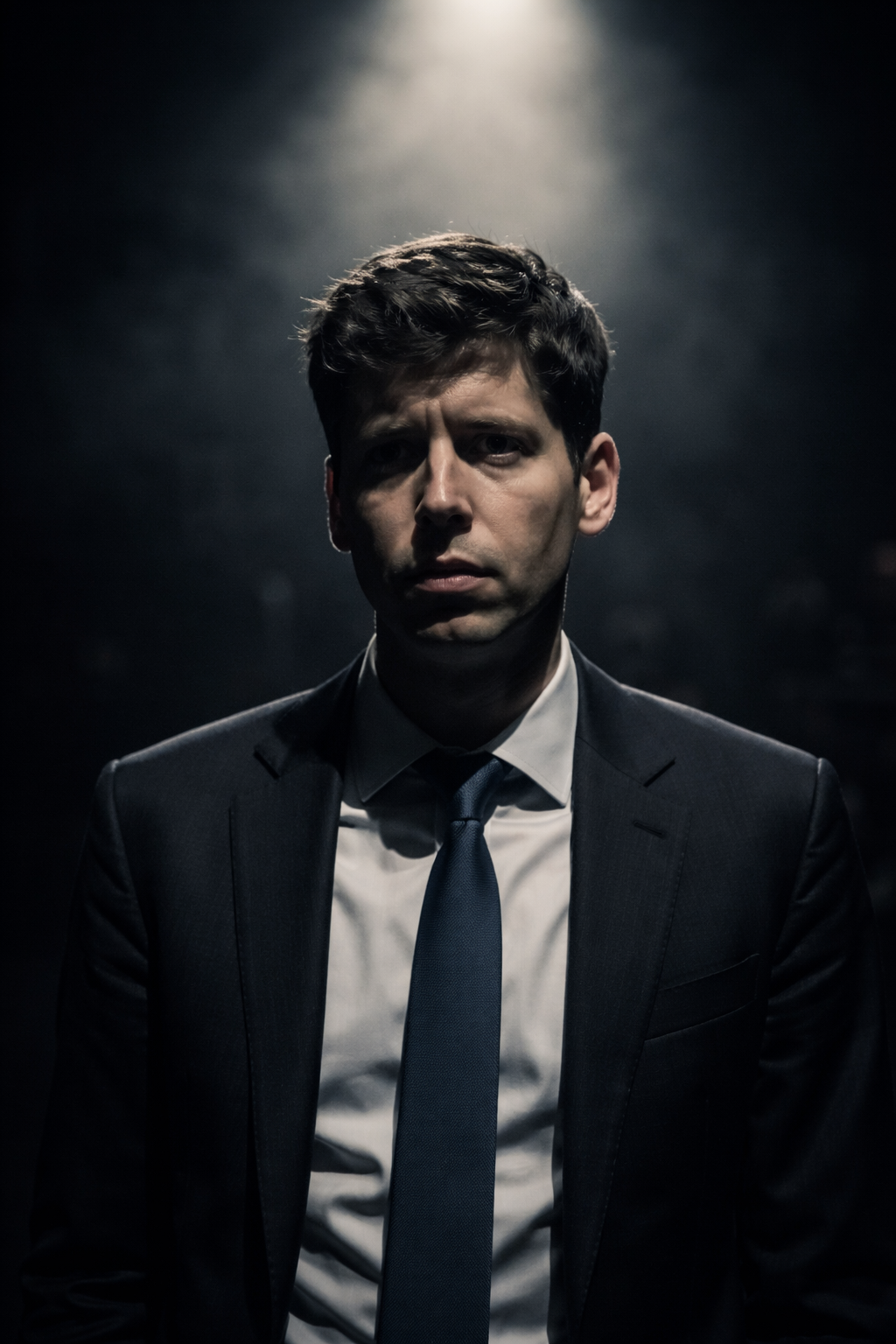
There are tech CEOs who are everywhere, on stage, in headlines, on podcasts, and we like them just fine. Then there are tech CEOs who are everywhere, and we’ve started to cringe every time we see their name.
Sam Altman has crossed into the second category. And watching it happen in real time is actually instructive, not just for executives, but for anyone who has a job, a reputation, and people around them who are paying attention.
What Just Happened
Last week, Anthropic CEO Dario Amodei said publicly that he “cannot in good conscience” give the US Department of Defense unrestricted access to Claude for mass surveillance or fully autonomous weapons. The Pentagon responded by banning Anthropic from all US government agencies and labeling it a “supply chain risk,” a designation historically reserved for foreign adversaries, not American companies.
Hours later, Sam Altman announced on X that OpenAI had struck its own deal with the Pentagon. OpenAI would step in to fill the gap Anthropic had left.
The backlash was immediate and brutal. ChatGPT uninstalls jumped 295% in a single day. One-star reviews surged 775% over the weekend. A movement called QuitGPT claimed over 1.5 million people had canceled subscriptions or signed their pledge. Claude, previously ranked 42nd in the App Store, climbed to number one, overtaking ChatGPT. Since the start of 2026, free users on Claude have grown over 60%, and daily sign-ups have quadrupled.
Altman later acknowledged the deal was rushed. His word, at a staff all-hands: “sloppy.”
He Did Not Read the Room
The announcement landed on a Friday night, posted on X personally by Altman, hours after Anthropic had publicly refused the same deal on moral grounds. The public was still processing Anthropic’s stance, which read as principled, even brave given the political climate, when Altman stepped forward and effectively said OpenAI would take the contract instead. There was no cooling-off period, no space for nuance to enter the conversation, no buffer between the two events. Anyone watching could draw a straight line from what Anthropic had just refused to do and what he had just agreed to.
The Friday night X post is worth sitting with on its own. The CEO of one of the most powerful AI companies in the world, a company dealing with months of reputational damage, announced a politically charged military deal on a social media platform, late on a Friday night, with no press release, no prepared context, no institutional framing. Just a post.
What does that tell us? At minimum, it tells us that no one talked him out of it. At some point in the decision to announce this deal, in that way, at that moment, there were either no advisors in the room or there were and he ignored them. Neither reading is reassuring. It also reveals something about how Altman sees himself: as someone who moves fast, speaks directly, and trusts his own read of situations. That self-image served him when his instincts were good and the public was with him. It is now working against him.
Then there is the company he chose to align with publicly. By accepting the Department of War deal, Altman associated himself with Pete Hegseth and with an administration that has become deeply polarizing. This is worth saying carefully: OpenAI is not responsible for US military operations abroad, and nothing in this article suggests otherwise. But perception does not work on careful distinctions. As of this writing, the United States and Israel have struck Iran. The Department of War is at war. Altman shook hands with it publicly, personally, days before. People are making associations, and those associations are sticking to him regardless of what the contract actually says.
The Credibility Account Was Already Overdrawn
The Pentagon deal would have been a hard week for any CEO. For Altman, it landed on top of years of accumulated doubt.
He built his public persona on a specific claim: that he was the responsible adult in the AI room. He testified before Congress about AI risk. He spoke with apparent seriousness about existential stakes. He positioned OpenAI as the company that understood the danger of what it was building, and was building it carefully because someone had to.
That is a credibility-intensive position. It requires your private behavior to match your public posture, consistently.
It turned out it did not always. He had withheld information from OpenAI’s own board, the board charged with safety oversight. The Scarlett Johansson voice controversy suggested that moving fast and asking forgiveness was still the operating mode. Safety researchers left. Then came GPT-5, the product Altman himself had spent years building into a historic milestone, promising the leap from GPT-4 to GPT-5 would be “similar” to going from GPT-3 to GPT-4. Instead the backlash was so severe that OpenAI had to restore the previous model within 24 hours and Altman himself admitted they “totally screwed up” the launch. Each of these disappointments hit harder because of the specific promises he had made. He set the bar himself, in public, repeatedly. The bar is now being used to measure him.
The Technology Is Not the Villain. The Decisions Are.
Jensen Huang, CEO of Nvidia, is arguably the most powerful person in AI right now. His chips are inside virtually every AI system being built. His company is worth more than Apple. He was on Trump’s Middle East trip. He is deeply embedded in military and government technology.
Nobody is boycotting Nvidia.
Huang makes the infrastructure. He talks about chips and compute and capability. He does not run ads about being the ethical choice. He does not testify about AI risk and then cut deals that seem to contradict that testimony. He does not position himself as the person deciding how the technology should be governed.
The technology, the raw advancement, the capability: that is not what people are angry about. People are still signing up for AI tools in record numbers. What’s unpopular is the sense that the people setting the rules, claiming the moral high ground, are doing it selectively and conveniently. We don’t fault the engineer who builds the road. We fault the person who decides who gets to use it, at what toll, for what purpose, and then insists the decision was about safety all along.
There is a principle worth extracting here. The question of who gets access to powerful technology, who can afford it, who gets left out, and what it gets used for: those are the questions that make people angry. Not the technology itself. The people who claim authority over those questions had better be prepared to stand behind their answers.
The Zuckerberg Case (A Study in Adjusted Temperature)
Mark Zuckerberg spent years as the internet’s easiest villain: the robot in the hoodie who sold your data, let foreign actors manipulate elections on his platform, and stood before Congress either not understanding the questions or pretending not to.
And then he adjusted.
He grew out his hair. He got into MMA. He appeared at a Senate hearing on child safety, and when families of victims were in the room, he turned and apologized in the moment, not in a prepared statement. He released a wakeboarding video on the Fourth of July. Someone added a beard to a still from one of his videos and it went viral because he suddenly looked surprisingly, disarmingly human. The cultural temperature on Zuckerberg has come down noticeably. We talk about his Ray-Bans now.
Here is the important part though: the underlying machinery of Facebook has not fundamentally changed. The algorithm still promotes outrage and division because outrage and division drive engagement. It still creates echo chambers where people only see what confirms what they already believe. Researchers have documented extensively how these dynamics contributed to the rise of authoritarian movements, how they have influenced elections, how they have amplified extremism in countries not equipped to absorb it. Those systems are largely still running.
Zuckerberg did not solve the problem. He understood something Altman has not yet demonstrated he understands: you can reduce the temperature on yourself without resolving the underlying tension, and sometimes that is enough to survive. Altman is still running hot.
What This Means for the Rest of Us
Strip away the billions and the drama, and there are things in this story that apply to anyone who shows up to work and has a reputation to maintain.
The most important one is simple. Your reputation is not what you say about yourself. It is the distance between what you say and what you actually do. When those two things match, people trust you. When they don’t, people remember. Not always immediately. But they remember.
Altman told people for years that he understood the stakes of AI better than anyone, that safety was the priority, that he was the responsible one in the room. Every compromise since then has been measured against that exact claim. He set the standard himself. The same thing happens at a smaller scale in every workplace, every team, every professional relationship. The person who makes a big show of their values and then gets caught doing the thing they criticized loses credibility in a way that is very hard to recover. Don’t be that person.
The second thing is about timing. Most of us have had the impulse to fire off a message when we are activated, to respond in real time when something is still hot, to move fast when slowing down would have served us better. The Friday night X post is a lesson in what it looks like when nobody, including yourself, pumps the brakes. If you know you are about to do something that touches on other people’s emotions or involves a contested situation, the question worth asking first is: is right now actually the right moment? Most of the time, it is not.
And the third thing is about who you are publicly seen with and what you are publicly seen supporting. You absorb some of what the people and institutions around you carry. That is not always fair and it is not always permanent, but it is real. Choose those associations deliberately.
The Altman story is not over. OpenAI is still enormous. ChatGPT still has hundreds of millions of users. Reputations have been rebuilt from worse positions, and Zuckerberg’s trajectory shows it is possible even when the underlying issues remain unresolved.
But right now, there is a clarifying data point sitting in the numbers from last weekend. A company that said no to a government deal, that lost a major contract and got branded a national security risk, ended up number one in the App Store.
People noticed who said no. People noticed who said yes. And they voted with their phones.
Mig Molina writes about media, culture, and the technology that’s changing both.

The Position Is Not the Person
I ran into a former leader in a mall. Someone from a company I used to work with. I made sure I said hi. I went out of my way, I made sure he saw me, I did the whole thing. Then I walked away and felt the ick.
Read more →
Communication Can Outrun Intelligence
One of the most valuable skills in business, and the same skill can march a company off a cliff. Both are true.
Read more →
Develop Your People Anyway
The CFO's question is real. So is the CEO's answer. Twenty years on both sides of the training budget taught me which fear to respect.
Read more →
Alex Eala Doesn't Owe Us Anything
But she showed up anyway.
Read more →