Why Your Branding Is All Over the Place
Why your branding is all over the place — and what your org chart is hiding.
The Queue
Before strategy. Before stakeholder meetings. Before campaign planning. There is the queue.
A set of artworks waiting for feedback, every morning, with corrections that are almost always the same. Logo too small. Wrong font. Color doesn’t match brand standards. CTA buried. Too many elements fighting for attention. Text unreadable over that background. Layout unbalanced. Message unclear.
If you run brand and communications for an organization, you probably know exactly what this feels like. The question worth asking is whether the people responsible for preventing that queue from reaching you are actually doing their jobs.
What a Proper Creative Structure Actually Looks Like
A kitchen analogy works better here than an org chart, so bear with it.
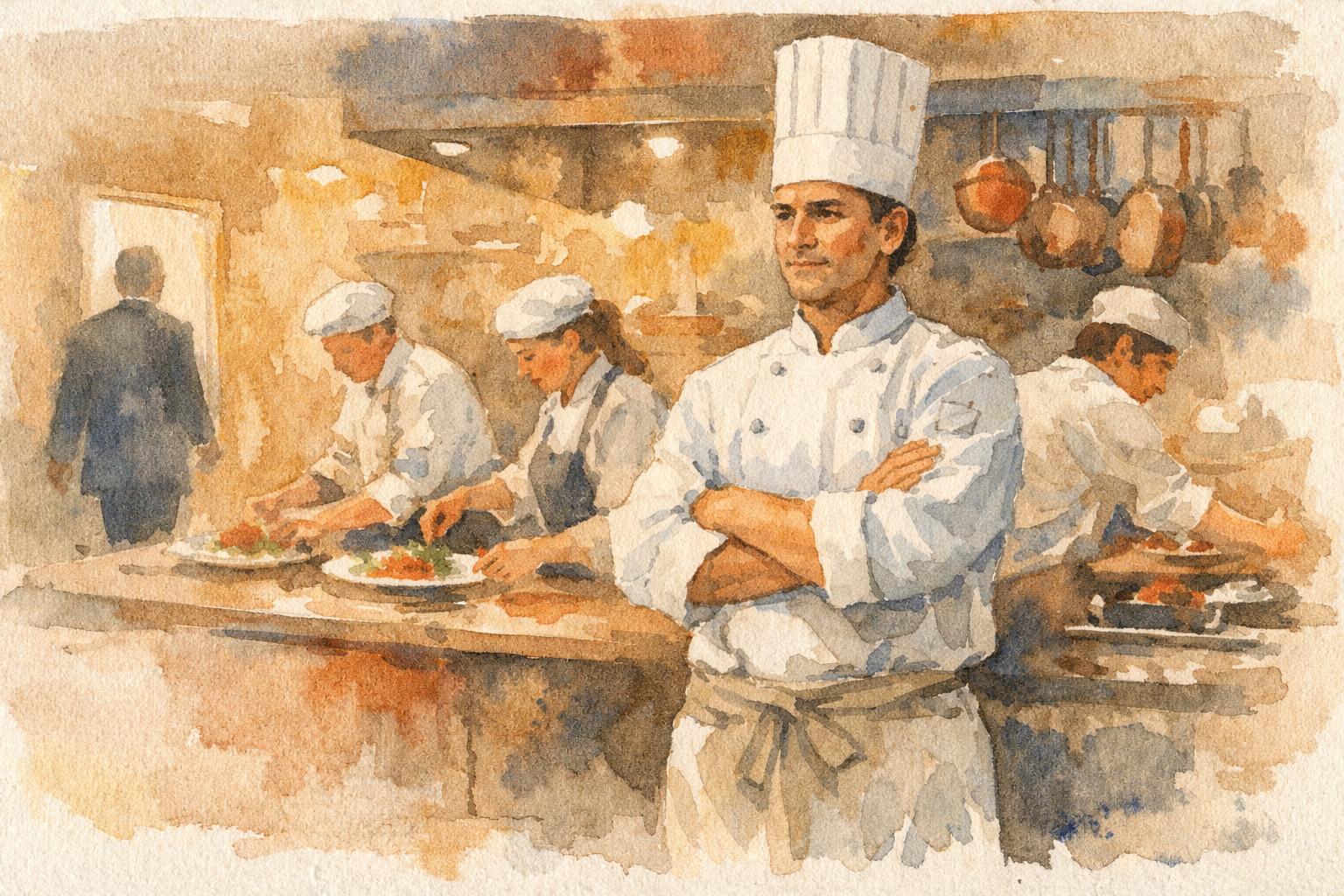
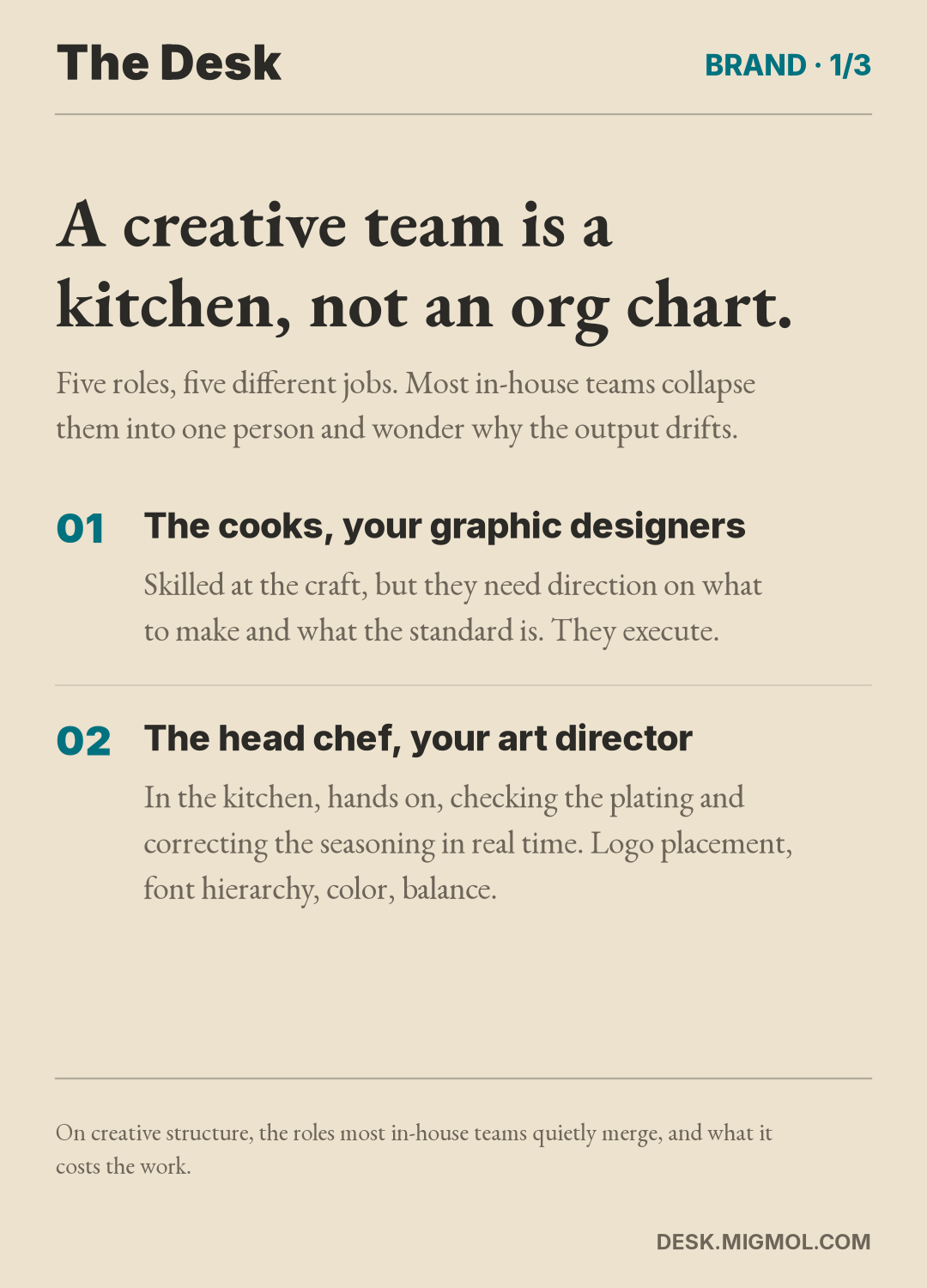
Graphic Designers are the cooks. Skilled at their craft, but they need direction on what to make and what the standard is. They execute.
The Art Director is the head chef. In the kitchen, hands-on, making sure every dish that goes out meets the standard. Checking the plating. Correcting the seasoning in real time. Logo placement, font hierarchy, color usage, visual balance: that is Art Director territory.
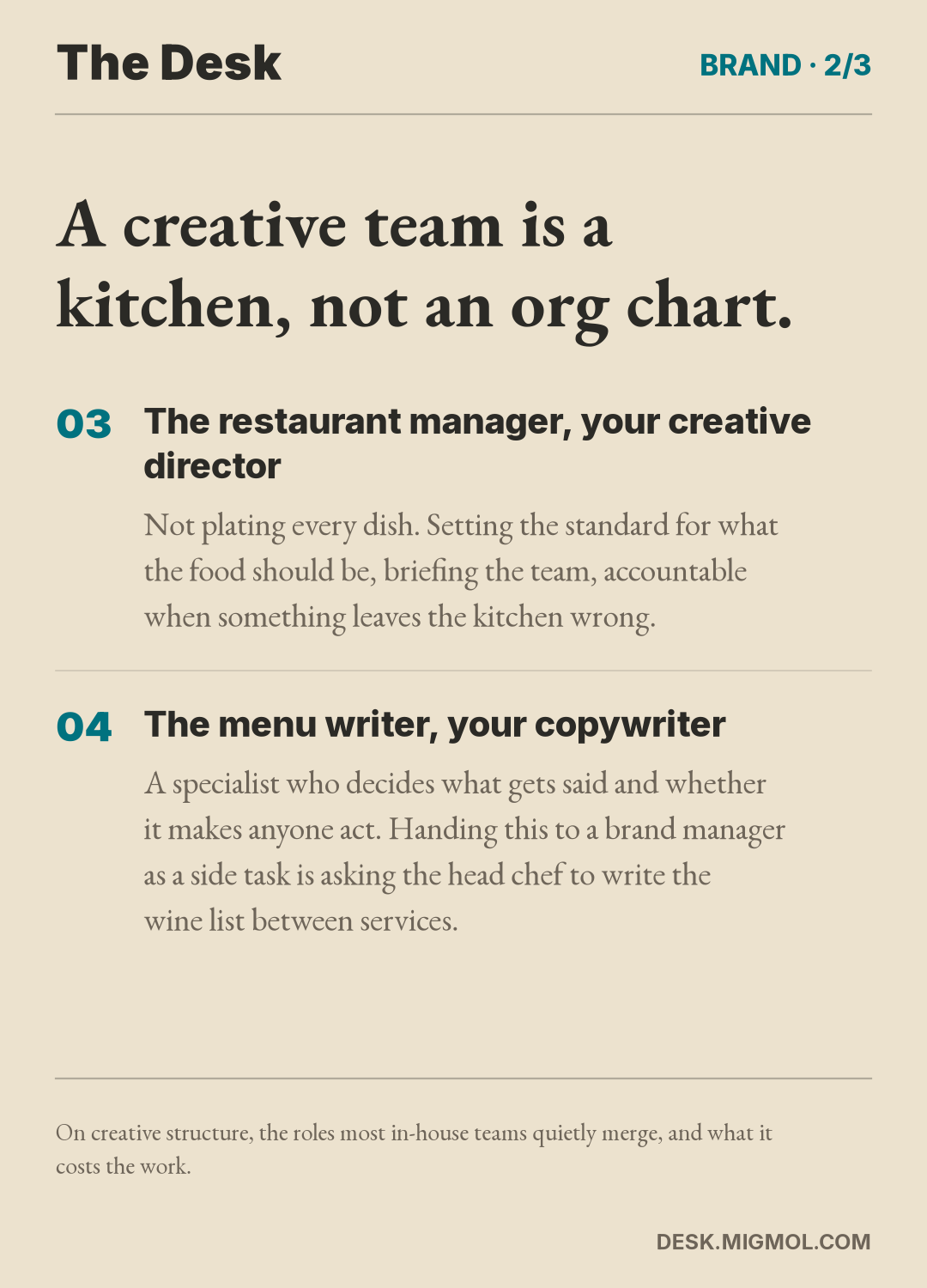
The Creative Director is the restaurant manager. Not plating every dish, but setting the standard for what the food should be. Briefing the team. Ensuring the output is coherent. Accountable when something leaves the kitchen wrong. In an in-house setup, this is what a Head of Creatives should own, end to end.
The Copywriter is the menu writer. A specialist. Someone whose entire job is deciding what gets said, how it gets said, and whether it makes people want to act. Delegating this to brand managers as a side task is the equivalent of asking your head chef to also write the wine list between services.
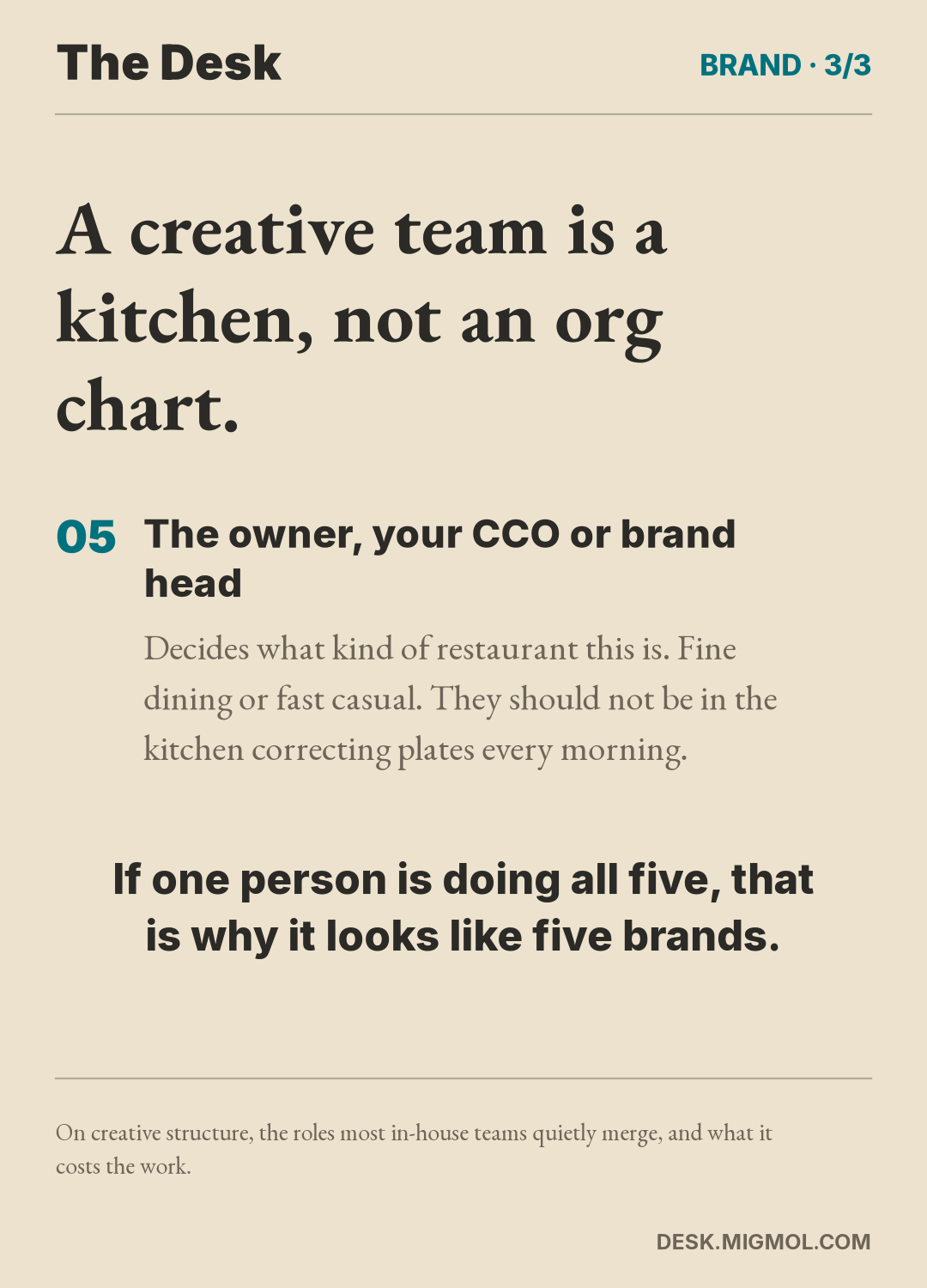
The CCO or Brand Head decides what kind of restaurant the brand is. Fine dining or fast casual. What the cuisine is. What experience guests should walk away with. This person sits with business leadership and ensures that all creative output connects back to strategy and positioning. They should not be in the kitchen correcting plates every morning.
The Honest Asterisk
Real world teams are messier than org charts.
Sometimes a talented graphic artist steps up and functions like an Art Director. Sometimes the marketing manager becomes the de facto Creative Director because nobody else is doing it. In lean in-house teams, this happens constantly, and sometimes it works beautifully.
But that is the exception, not the architecture. When it works, it usually works because of one exceptional person carrying more than their role requires, often without the title, the authority, or the compensation to match.
Organizations need to be honest about when they are relying on the exception. Because when that person leaves, or burns out, the whole system collapses. And leadership is usually surprised, even though they built a structure that was one person away from failure.

Building Systems Instead of Absorbing the Work
A lot of senior brand leaders quietly absorb the execution gap. They tell themselves it is faster to fix it than to explain why it is wrong, and sometimes that is even true, in the short term.
The alternative is to build the systems that eventually close the gap.
Upskilling the team on visual hierarchy and brand standards. Running workshops on what “on-brand” means in practice, not just in a deck. Setting documented expectations so feedback becomes calibration rather than surprise. When a team has a shared language and a shared standard, they stop guessing and start referencing.
The daily correction queue shrinks. Not because the team became perfect, but because the standard became clear enough to follow without constant supervision.
Brand Guidelines: The Silent Creative Director
A well-built brand bible or brand guidelines document is the best Creative Director most in-house teams will ever have. Always available, no bad days, no salary review.
When the guidelines exist and are properly enforced, logo size stops being a judgment call. Color stops being a debate. Font hierarchy, spacing, tone of voice, CTA format: all of it becomes instruction rather than interpretation.
This connects to the single most foundational principle in brand building: consistency. Every execution that goes out off-brand chips away at the equity you have spent time and money building. Consumers rarely notice when you are consistent. They absolutely notice when you are not.
If your brand looks different across your stores, your socials, your packaging, and your above-the-line materials, that is a standards problem. The fix is documentation, not talent.
When the Guidelines Can Answer Questions You Would Have Answered Yourself
Brand guidelines as a PDF are a good start. But a PDF does not answer questions. It does not tell a designer at 9pm whether a particular shade of blue works for a promotional banner, or whether the brand voice allows humor in a product launch caption.
Training an AI engine on brand guidelines takes this further. The team queries it directly and gets directional answers grounded in documented standards, without waiting for a person to weigh in. Questions that would have generated a message thread, a follow-up call, and a revised brief now resolve in seconds.
What this reveals is that most creative back-and-forth exists because standards are not clear enough to be self-executing. When the standards are clear, the questions stop. When they are clear and accessible, the questions stop faster.
Why Your Branding Is All Over the Place
To the business leader who does not come from a creative or marketing background, the GM, the CEO, the founder who built a great product and now has a marketing team they cannot quite see into:
Marketing is not one thing. There is brand marketing, which builds long-term equity and perception. There is trade marketing, which drives sell-through at the shelf or the platform. There is the creatives function, which translates strategy into visual and written output. There are activations and events, which create live brand experiences. There is HR marketing, which determines the caliber of people who want to work for you.
These are different disciplines. Different skill sets, different briefs, different KPIs, different people.
If you still think of marketing as a single box on your org chart, a catch-all function that handles everything from a TVC brief to a store signage correction, ask yourself: why does your branding look different every time someone sees it? Why do your campaign visuals not match your packaging? Why do shareholders keep raising the brand in board meetings? Why do your best marketing people keep leaving?
Understanding creative structure is a business architecture decision. It belongs in the same conversation as headcount, budget, and growth strategy. A leader’s job is to understand the business they are running, and this is a part of the business worth understanding.
The kitchen does not run itself. And it does not run well when the person who is supposed to be deciding what kind of restaurant you are is the one fixing the plating every morning.
───
Mig Molina writes about brand, marketing structure, and digital commerce on Substack. Follow at migmol.substack.com.

Pax Silica: Much Ado About Nothing
Pax Silica has no confirmed investor and no tenant, yet everyone is fighting over it. A lesson in owning the narrative, and why a semblance of a plan is not a plan.
Read more →
Diversity Marketing Is Working
Gap's KATSEYE ad moved denim sales while the louder campaign next door moved a stock price. Three years of Gap campaigns say the same thing about reading the room.
Read more →
Samsung's Petty Genius
They named their new foldables to box in Apple before Apple even ships. I'm a Samsung guy, and I'm here for it.
Read more →
Alex Eala Doesn't Owe Us Anything
But she showed up anyway.
Read more →