You Were Hired to Decide

I worked with a business unit head at Nestlé who had this habit. Every presentation, he’d ask for revisions. Then more. His team was exhausted and confused, and the frustrating part was that nobody could figure out what he actually wanted, because he didn’t know either. He didn’t have enough data to feel comfortable making a call, so he kept going back and forth, buying himself more time, asking for more decks.
In a company like Nestlé, where presentations are practically a second language, that behavior gets expensive fast. His team kept producing. They had no idea where they were going.
I’ve seen a different version of this more recently. A company head where there was a lot of activity, a lot of people moving. But when I talked to people inside the organization, the picture got more complicated. Employees were making decisions on their own, cascading them to other departments, and the other departments just assumed it was right. The head wasn’t checking, wasn’t guiding, wasn’t setting the direction. Good on the staff for having initiative, but initiative without direction isn’t progress. It’s a lot of energy going in a lot of different places, and the organization ends up with more work and less movement.
Then there’s the company I know where most of the workforce was LGBTQ. The head knew this. But he didn’t want to touch it, didn’t want to make a statement, didn’t want the company to stand for anything in that space, even when it would have made complete sense. That company could have built a real identity serving underserved communities: seniors, people with disabilities, LGBTQ. But that would have required a decision about what they wanted to be. And that call never came. The company missed an identity and a position in the market it could have owned.
I see the same thing in the country right now. We have a head of state sitting on the fence, not wanting to offend anyone, not moving people to act when action is clearly needed. This isn’t caution. It’s the same problem. Not knowing what you stand for, or knowing but not having the spine to act on it. Leadership isn’t about flexing. It isn’t about making arrests to prove a point. It’s about having a position, and acting from that position, especially in a crisis. The moment you most need clarity is exactly when paralysis costs the most.
All three situations look different. One is operational. One is about brand identity. One is political. But the failure is the same: a leader who doesn’t know what they want, or does know and won’t commit to it. And the cost is always the same. The people below absorb the confusion and keep moving, keep producing, keep waiting.
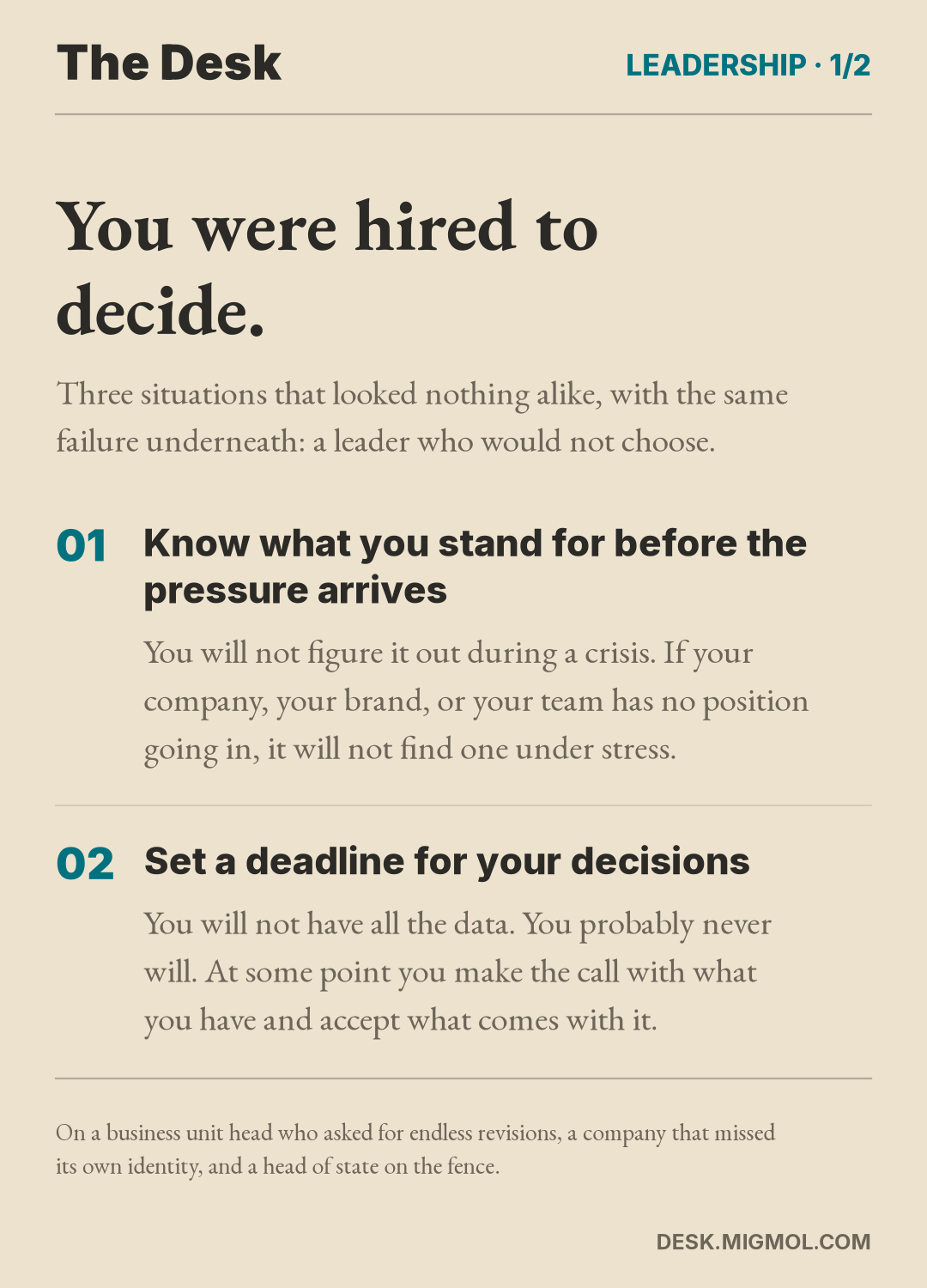
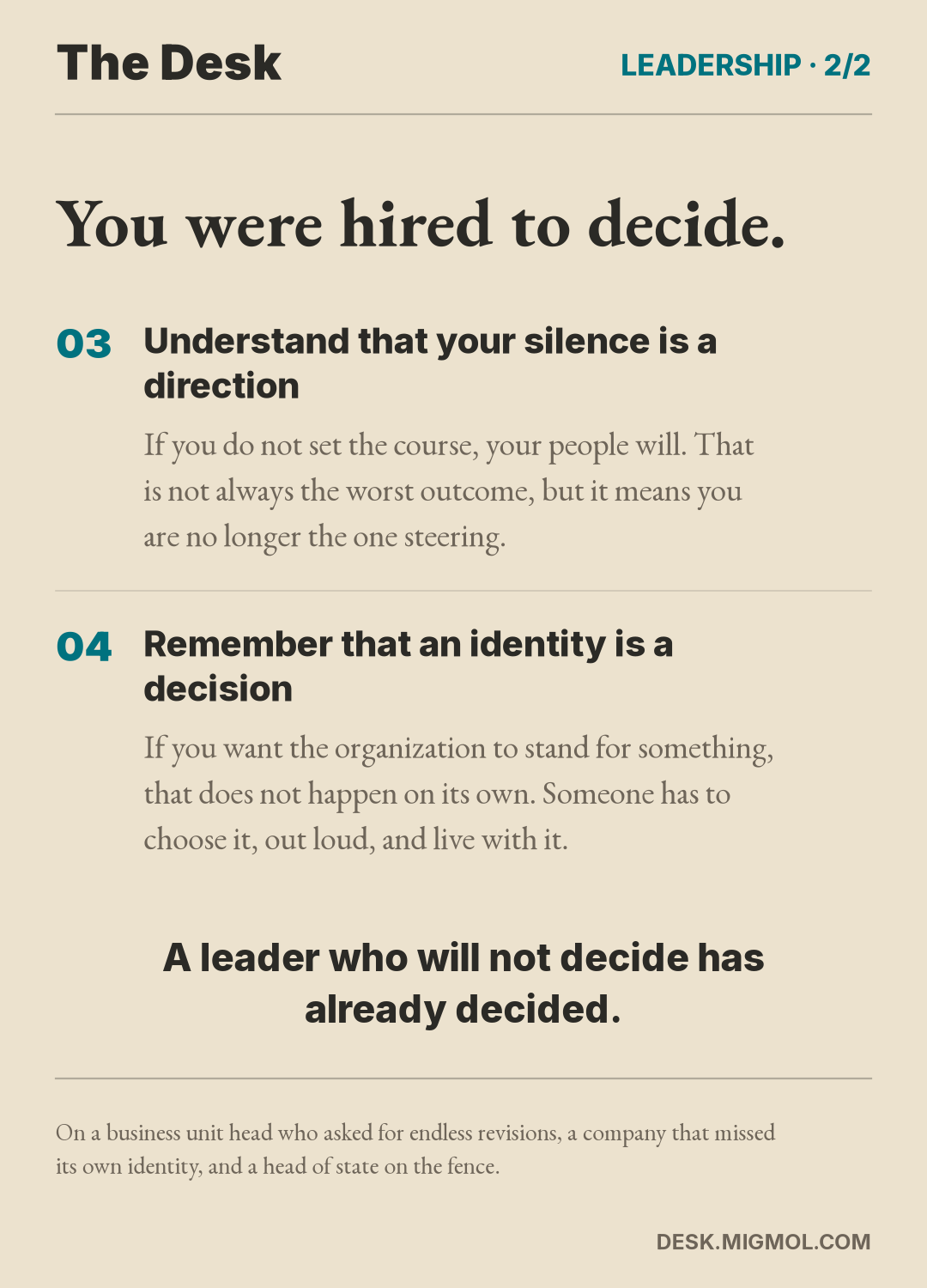
For heads, some simple things worth asking yourself.
Know what you stand for before the pressure arrives. You won’t figure it out during a crisis. If your company, your brand, your team doesn’t have a clear position in the quiet moments, it won’t have one when everything is moving fast.
Set a deadline for your decisions. You won’t have all the data. You probably never will. At some point you make the call with what you have and adjust as you go. Endless revision isn’t thoroughness. At some point it’s fear.
Understand that your silence is a direction. If you don’t set the course, your people will. That’s not always the worst thing, but it means you’ve handed leadership to whoever acts first.
And remember that an identity is a decision. If you want your organization to stand for something, that doesn’t happen on its own. Someone has to decide it, and mean it.

The Position Is Not the Person
I ran into a former leader in a mall. Someone from a company I used to work with. I made sure I said hi. I went out of my way, I made sure he saw me, I did the whole thing. Then I walked away and felt the ick.
Read more →
Communication Can Outrun Intelligence
One of the most valuable skills in business, and the same skill can march a company off a cliff. Both are true.
Read more →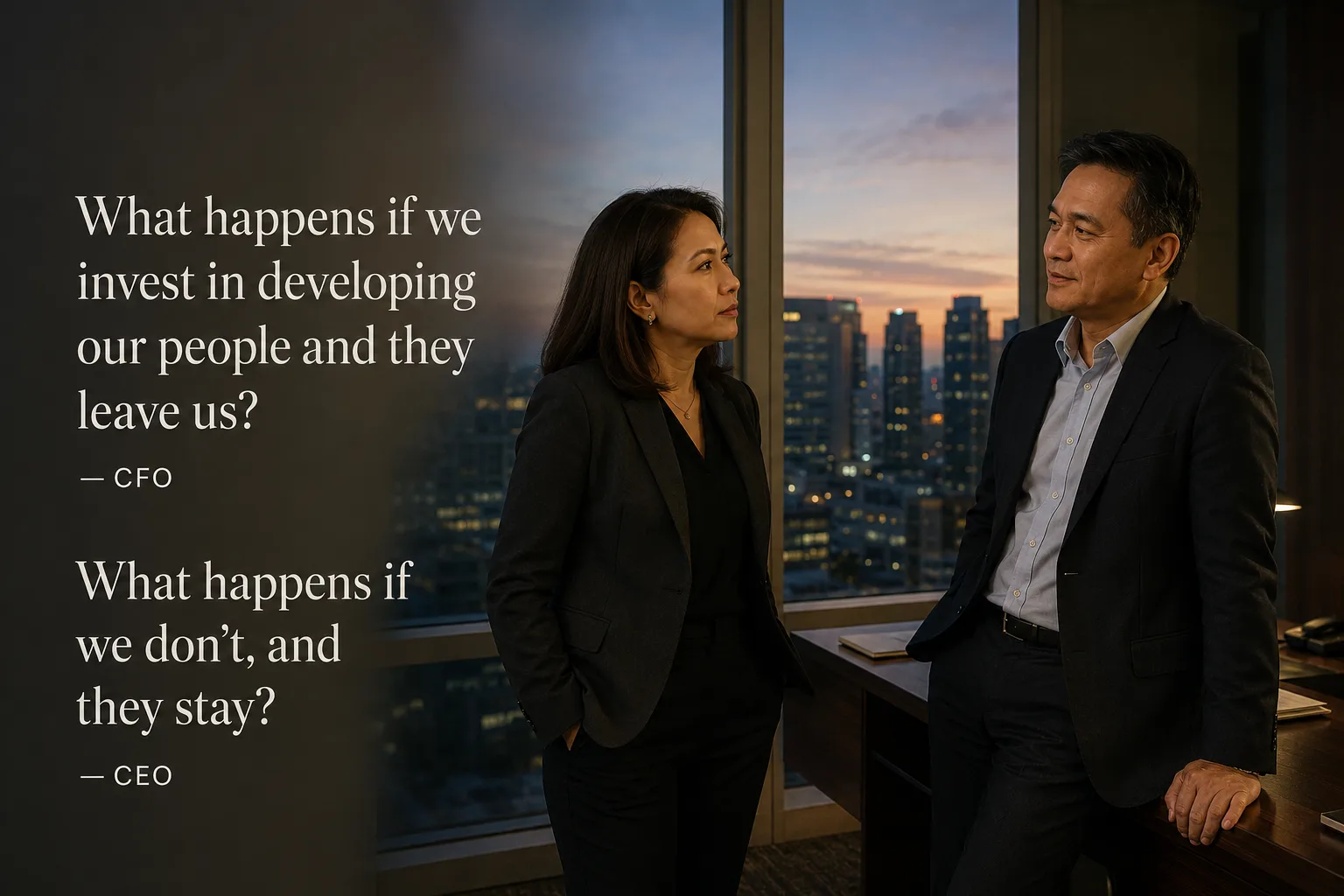
Develop Your People Anyway
The CFO's question is real. So is the CEO's answer. Twenty years on both sides of the training budget taught me which fear to respect.
Read more →
Alex Eala Doesn't Owe Us Anything
But she showed up anyway.
Read more →