We Only Claim You After You've Won
On Independence Day: two Fil-Ams in the NBA Finals, the 'halfies' fight, and how arguing about who counts as Filipino keeps us from admitting we never built the rails to grow our own.
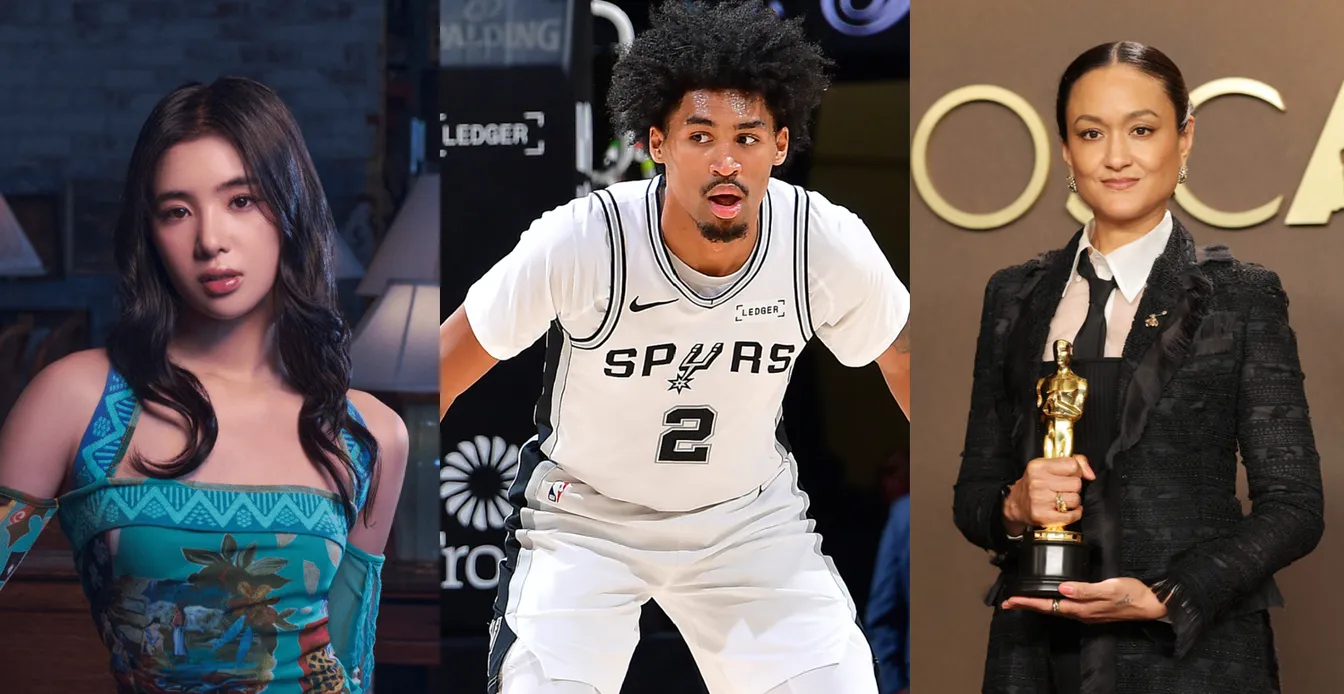
This week, two players with Filipino blood are in the NBA Finals. Dylan Harper for the Spurs, his mom is from Bataan. Jordan Clarkson for the Knicks, his grandmother is from Pampanga. And right on cue, the feeds light up. “Uy! Pilipins!” Suddenly they’re ours.
I’m not knocking the pride. Clarkson has worn Gilas across his chest, we’ve loved him for years, and Harper is a rookie who only just got here, so nobody was sleeping on him. What I notice is the volume, and when it arrives. We know these players exist. Jalen Green has a Filipina mom, fans here follow him closely, he’s even come to visit. Jared McCain is Fil-Am too, though fewer people could tell you that. But knowing they’re there and actually celebrating them are two different things, and the celebrating doesn’t really start until someone lands in a headline. The pride runs on a switch, and the switch is the win.
There are these unspoken rules about when we decide to be proud of someone, and the longer you look at them, the less sense they make. Almost magical, the way they appear and disappear. Let me walk through a few, because once you see the pattern you can’t unsee it.
Start with BINI and Coachella. BINI made history, the first Filipino group to play the festival, and they earned it. But watch the headline. “First pure Filipino band at Coachella.” Pure. That word is already doing something. Because on that same festival, the same weekend, KATSEYE was performing, and KATSEYE has Sophia Laforteza, a Filipina who grew up here. And KATSEYE is no small act we’d be doing a favor by claiming. They’re one of the biggest new groups in the world right now. This year alone they pulled two Grammy nominations, including Best New Artist and Best Pop Duo or Group Performance for “Gabriela.” At the American Music Awards in May they walked away with three, New Artist of the Year, Best Music Video, and Breakthrough Pop Artist. Add a VMA on top of that. Laforteza is one of them, right in the thick of it. At Coachella, KATSEYE drew a prime evening slot on the Sahara stage. BINI played an afternoon set on the smaller Mojave stage, a little after four in the daylight. By billing, KATSEYE had the bigger moment. And KATSEYE isn’t even an obvious “Philippine” group. It’s an international group, members from different countries and cultures, and Laforteza holds her own in the middle of all that global talent. If anything that’s worth celebrating more, a Filipina standing shoulder to shoulder with the best in the world. But she doesn’t get the flag, because the cleaner, “purer” story got the headline.
Then watch how fast we move for the ones who already made it in America. H.E.R. has a Filipina mom, an Oscar, and five Grammys. Earlier this year, Autumn Durald Arkapaw won the Oscar for Best Cinematography for Sinners, the first woman ever to win that category. The local headline ran proud: first woman of Filipino descent to win it. We claimed her in a heartbeat. And I’ll be honest about this one. Arkapaw grew up in California, raised inside a big, warm Filipino-American family, aunties and cousins and parties with too much food. She talks about it beautifully in interviews, you can tell it shaped her. But she didn’t grow up in the Philippines. And cinematography isn’t a craft she inherited from being Filipina. She’s an American artist with deep Filipino roots, and the moment she won, she was ours.
Now hold that up against Leylah Fernandez. Half Filipina, her mom is Filipino-Canadian. A US Open finalist in 2021. Right now she’s ranked No. 25 in the world. And we barely claim her. Why? She grew up in Canada, around Canadians, she may not know much about Filipino culture. Fair enough. You represent the people around you. But that’s exactly Arkapaw’s situation too, diaspora, raised abroad, formed somewhere else, and Arkapaw we grabbed without hesitating. So which rule are we using? We can’t demand a deep cultural connection from Leylah and then turn around and claim an American cinematographer the second she’s holding a trophy. The rule moved. It always moves.
And I’ll put my own bias on the table here. I’m a huge Alex Eala fan. I watch all her matches. She’s our homegrown girl, the first Filipino into the WTA top 100, and I want her to win every single time she steps on a court. But even as a fan, there’s something I can’t pretend away. Alex Eala became Alex Eala by leaving. She moved to Spain at thirteen to train at the Rafa Nadal Academy. The coaches, the sparring partners, the sports science, the daily standard that turns a talented kid into a world-beater, all of it was there, not here. And in April, at Stuttgart, she lost to Leylah Fernandez, the other half-Filipina, the one we don’t talk about, 6-1, 6-4. Our homegrown pride, built abroad, beaten by the diaspora kid we ignore. Sit with that one for a second.
And then, right as I’m writing this, Brandon Espiritu said the quiet part out loud. He’s a former Mister Supranational bet for the Philippines. Asked why he and a fellow Fil-Am didn’t sing in Tagalog while representing the country, he wrote, “tell that to all the front-runners for the Philippines. This country wouldn’t have a chance on the national stage without us halfies.” It’s a catty, callous thing to say, and I don’t defend it for a second. But strip away how ugly he said it, and there’s a grain of truth underneath that we don’t enjoy looking at. Our own national football team is something like ninety percent halfies. Do we mind? Not at all. We’re proud of them. Most of them barely speak Filipino, and it has never once bothered us, because they wear the flag and they win.
So tell me the rule. Pure beats halfie, until the halfie wins for us. Heritage counts, unless you’re Leylah in Canada. Homegrown is the realest thing, except our homegrown hope lost to a diaspora kid trained in Spain. The standard never holds still. The only thing it ever truly tracks is whether claiming you, today, makes us feel good. And notice how often the magic word is “pure.” We love “pure.” A “pure” Filipino did this. We cling to it because, deep down, masyado tayong bilib sa sarili. Masyado tayong mayabang. We want to believe the blood itself is the achievement, that being Filipino is the talent. We claim the win and we call it pride.
Now let me step back, because I’ve spent most of this piece doing the exact thing I want to call out.
All this arguing over who’s pure and who’s a halfie, who’s homegrown and who’s diaspora, who’s in and who gets to decide, it’s loud and it feels important and it is a distraction. A very good one. Because while we sort each other into tribes, we get to avoid the thing that’s actually true and actually hard. We are a third world country, and we have not built the rails to grow our own. Not the infrastructure, not the grassroots, not the pipeline. At least not now, and at least not in these fields. The talent is obviously there, it’s scattered all over the planet. What isn’t there is the ground for it to grow in at home.
Take the clearest case we have. Basketball. Here, basketball is a religion. Every barangay has a court, every kid has a ball, the whole country stops for a Finals. It isn’t even our official national sport, by the way. That’s arnis now, since 2009, and before that it was sipa, sometimes called sepak takraw, the kicking game a lot of us grew up calling the national sport. Basketball was never the official one. It didn’t need a law. We just know. And after a century of this devotion, there has never been a single pure Filipino in the NBA. Not one. Plenty of Fil-Ams, going all the way back to Raymond Townsend in the seventies, and now Clarkson, Green, McCain, Harper. But a full, homegrown Filipino? Zero. There’s that word again. We love “pure,” right up until we go looking for a pure one on the world’s biggest stage, and the cupboard is empty.
Why? The infrastructure isn’t here. The PBA is dying. And that’s its own special cruelty, because the PBA was the first professional basketball league in all of Asia, founded in 1975, the second-oldest pro league in the world after the NBA itself. We were first. And now the KBL in Korea and the B.League in Japan are passing us, and our own best players are leaving to go play in them, for more money and, more than that, for more system. We do this a lot, actually. We get there first and then we let the lead rot. First pro basketball league in Asia. First airline in Asia, Philippine Airlines, 1941. The first international rice research institute in the world sits in Los Baños. We have a real gift for being first, and an equal gift for letting it slip, until our glory days are something we talk about instead of something we’re living in.
And the players prove the same point the singers and the cinematographer and the tennis players already proved. For years we kept waiting for the one. Kiefer Ravena. Bobby Ray Parks. Kai Sotto, the seven-footer, the freak of nature, surely him. And we watched every one of them leave, to Japan, to Australia, to the KBL and the B.League, just to get better. Plenty of Chinese and Japanese players have made the NBA. Not us. It’s the same thread running through this whole article. Eala had to go to Spain. Leylah was built in Canada. H.E.R. and Arkapaw and Clarkson and Harper were built in America. Every single name we are proud of had to leave, or be born somewhere else, before they became someone worth claiming. The talent was here the whole time. The soil never was.
And we don’t fix it because masyado tayong bilib sa sarili. We only ever look inward. We’ve decided we’re already the best, already good enough, that talent is our birthright and the blood will carry us. It won’t. Where’s the training, the discipline, the science, the real competition that actually builds a world-class anything? Wala. We expect to be great as if it’s simply owed to us, and we call that pride. It’s a lot closer to delusion.
And if that’s how we treat basketball, the thing we love most, our actual religion, the one arena where we have every reason and every ounce of passion to be world-class, and we still can’t build it, then what chance does anything harder have? That’s the thought that should keep us up. If we can’t fix basketball, the fun thing, the thing we’d happily pour our whole hearts into, then of course we can’t fix the hard things. Of course this is how we approach politics. The same exact pattern. We wait for a savior instead of building a system. We protect whoever’s already on top. The budget that should have built the gym, the academy, the league gets eaten somewhere along the way, and we shrug, bahala na. Our elected officials, and I refuse to use the word leaders, because leadership means building something, and mostly what we do is guard what already exists. Basketball is just the version of the problem we can see clearly, because we love it enough to watch it closely.
Today is Independence Day. We’ve been free on paper since 1946. We declared it back in 1898. And here we are, more than a century on, still scanning American award shows and European academies for a name we can recognize, so we can feel proud of ourselves for an afternoon. So why does it matter if you’re pure or a halfie, homegrown or born abroad? Honestly, I don’t have a clean answer, and I don’t trust anyone who says they do. Maybe it doesn’t matter at all. Maybe Leylah and Alex and Jordan and Kai and Sophia and H.E.R. and Autumn are all ours, or none of them are, and the line we keep redrawing was never really about them. I just notice we move it to wherever makes us feel best that week, and we’ll move it again the next time somebody wins.
But while we argue about the line, the real work sits there untouched. The grassroots we never fund. The corruption that quietly eats whatever was meant to build them. The plain, humbling discipline of measuring ourselves against the world instead of against ourselves. And we can’t even pretend we don’t know better, because we’ve seen it. Filipinos are everywhere now. We work in every country on earth. We ride trains in other cities that come on time, every time. We walk through airports and transit systems that actually move people, and we see, plainly, what a country can build when it decides to. And then we fly home and shrink back into our own little world, our own standards, and tell ourselves it’s fine. It’s enough. Pwede na.
The world isn’t far anymore. We are an archipelago, but we should stop thinking that we’re an island.
None of Our Best Players Play Here
Sotto and Ramos play in Japan. Tamayo and Quiambao play in Korea. Four of our best players have all found somewhere better to work, and every reason why is structural.
Read more →
Do Our Basketball Leagues Make Sense?
China beat us by 44 points and ended our Asian Games title defense in the group stage. The reason has almost nothing to do with the twelve men on the floor.
Read more →
Yabang, High; Basketball IQ, Low
The last Philippine team to win the FIBA Asia Cup did it in 1985, coached by an American. We produce players at a rate no country can match. We have never produced coaches.
Read more →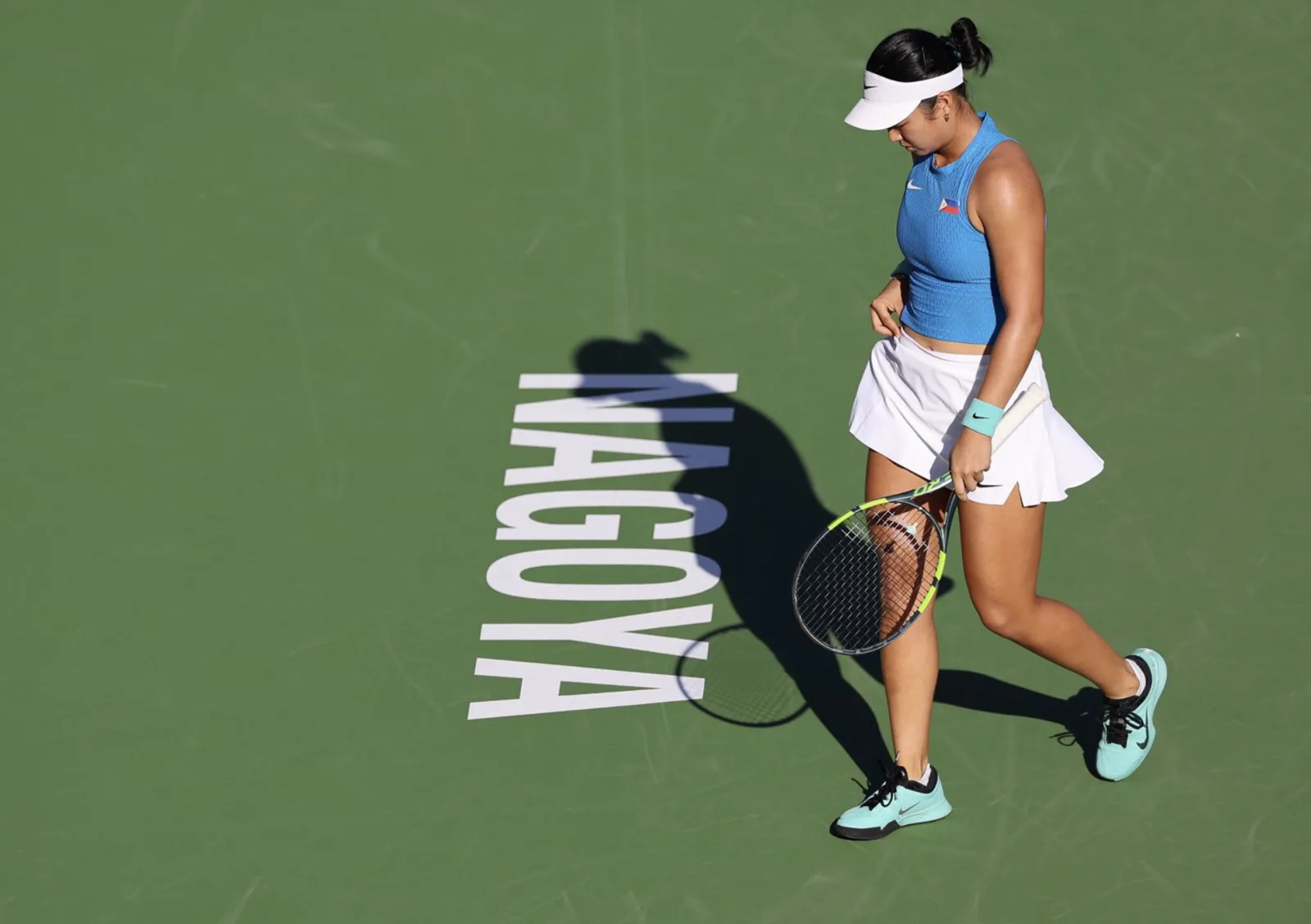
Alex Eala Doesn't Owe Us Anything
But she showed up anyway.
Read more →