"I'm Okay" Is Not an Answer
Why the best managers keep asking, especially in the Philippines.

There’s a kind of manager who thinks the job is done the moment they’ve asked. They walk over, say “everything good?”, get an “I’m okay,” and walk away satisfied, like they’ve just checked a box. Congratulations. You’ve had a one-second conversation with the surface of a person.
Especially here, that’s a problem. In the Philippines, “I’m okay” is almost never the real answer. It’s the reflex. You ask someone if they’re okay and they’ll say “okay lang,” or “okay naman,” because they don’t want to be a burden, they don’t want to make it awkward, they don’t want to complain to the boss. You have to ask again. Sometimes a third time. And only when they can tell you actually noticed something will they tell you what’s really going on.
If you’re a foreigner working here, this is one of the most useful things you’ll ever learn. The first “I’m okay” is a formality. Don’t take it to the bank. And if you’re Filipino and you’re managing Filipinos, you have no excuse, because you already know this. You’ve done it yourself. You’ve said “okay lang” to someone while quietly drowning.
I had a staff member once who was quiet. Kept her head down, did her work, no drama. But over the course of a week I noticed her face was always crumpled, a small frown that seemed to follow her around all day. So I called her and asked what was up. First few seconds, she’s okay. I asked again. Still okay. I asked a third time, and this time I told her exactly what I’d been seeing all week. That’s when it came out. It was the workload, and it was some of the people she was working with. Once it was in the open, I could actually help her through it. We ended up doing good work together, because I caught it early enough to do something about it.
None of that happens if I take the first “I’m okay” and walk away.
And this is where I lose patience. A manager who can’t be bothered to really look at their people, who stays on the surface and treats “I’m okay” as the end of the conversation, isn’t leading anyone. You can be the smartest person in the building. If you’re not paying attention to the people doing the work, you’re not fit to lead them.
People will tell you plenty if you’re watching. They just won’t always tell you with words.

The Position Is Not the Person
I ran into a former leader in a mall. Someone from a company I used to work with. I made sure I said hi. I went out of my way, I made sure he saw me, I did the whole thing. Then I walked away and felt the ick.
Read more →
Communication Can Outrun Intelligence
One of the most valuable skills in business, and the same skill can march a company off a cliff. Both are true.
Read more →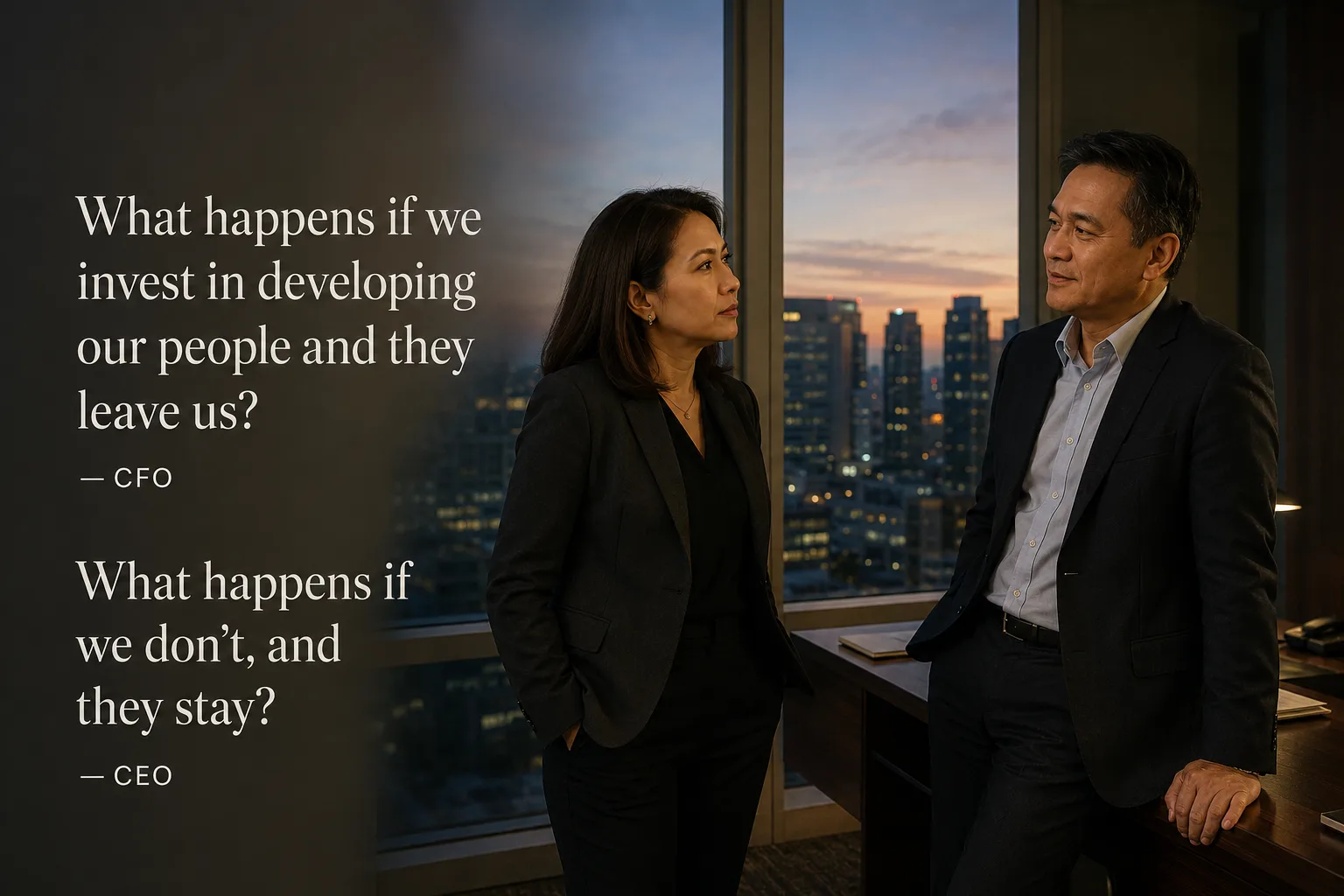
Develop Your People Anyway
The CFO's question is real. So is the CEO's answer. Twenty years on both sides of the training budget taught me which fear to respect.
Read more →
Alex Eala Doesn't Owe Us Anything
But she showed up anyway.
Read more →