Develop Your People Anyway
The CFO's question is real. So is the CEO's answer. Twenty years on both sides of the training budget taught me which fear to respect.
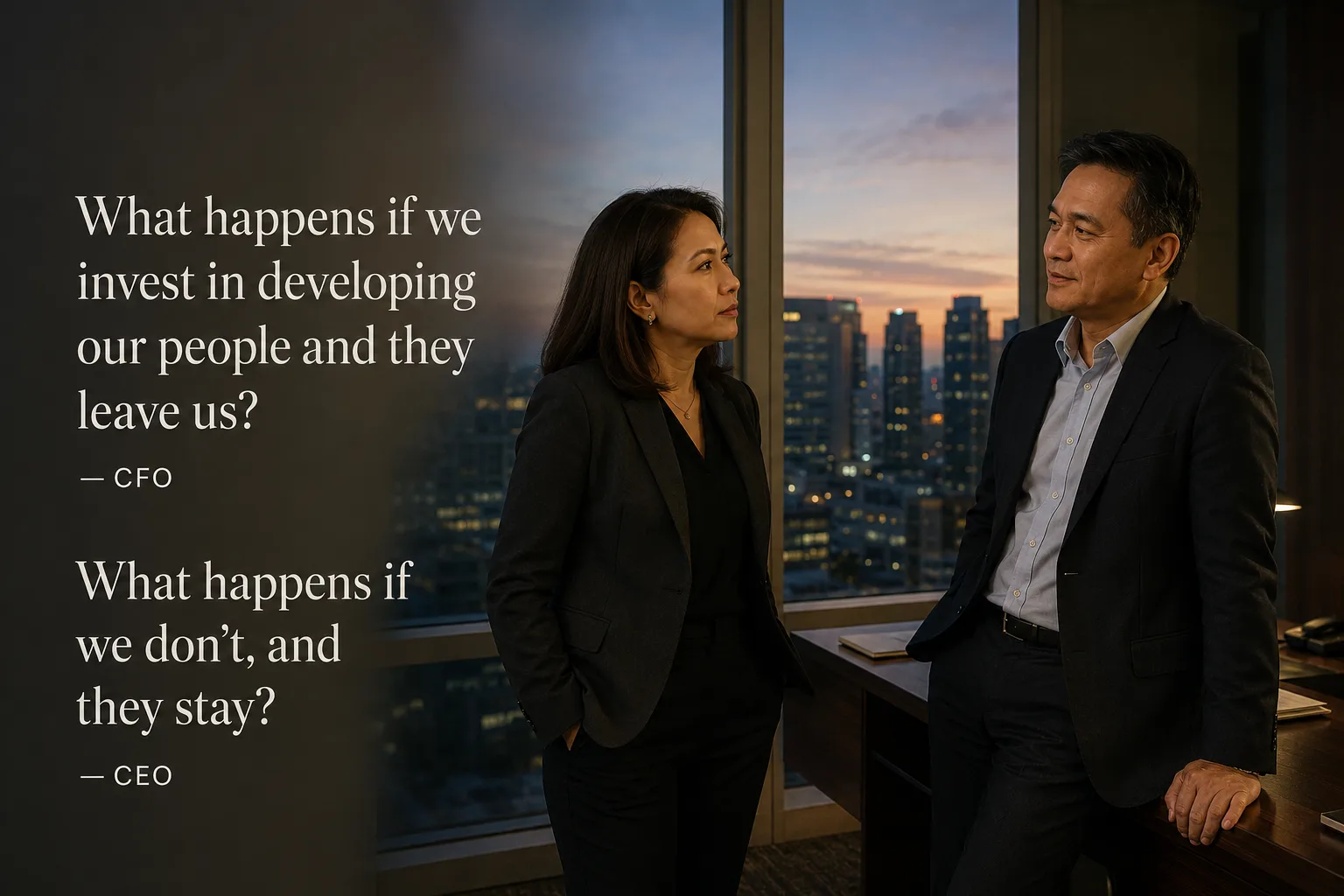
That old exchange is making the rounds again. The CFO asks the CEO, “What happens if we invest in developing our people and they leave us?” And the CEO answers, “What happens if we don’t, and they stay?”
It resurfaces every year, and every year people share it like it’s new. I think it keeps coming back because both people in that conversation are real, and most of us have worked for both.
I get the CFO. Anyone who’s sat through enough budget seasons knows that training is a line item, and when the quarter goes bad, it’s one of the first lines to get cut. Development is expensive. The payoff is slow. And the person you develop can resign and take all of it to a competitor. On a spreadsheet, the CFO is being responsible. The fear is rational. It’s also aimed at the wrong thing.
I’ve watched a lot of good people leave organizations over twenty years, and the development they received was almost never the reason. The ceiling was.
I wrote before about going where the ceiling is higher. Talent doesn’t grow in a vacuum. It grows where it has room and where it fits. When someone outgrows their role and the organization has nowhere for them to go, they leave. The training didn’t push them out the door. The low ceiling did. The same person, in a place that kept giving them room, stays and compounds. Development under a hard ceiling is just a very good going-away gift.
Now look at the other side, the one the CEO is pointing at. What does a company keep when it refuses to develop anyone?
I’ve been in organizations that ran this experiment without meaning to. The strongest people read the situation and left for places that would grow them. The ones who stayed were often the ones with nowhere else to go. And a person with nowhere else to go doesn’t spend their energy growing the role. They spend it guarding it. Same job, done the same way, for ten years. Processes nobody is allowed to question, because questioning them threatens the only person who knows how they work. I’ve seen this play out slowly enough that nobody in the building calls it a crisis. There’s no line item for it. It surfaces as double work, work that leads nowhere, a company getting more careful and less capable at the same time.
A job is a fair trade. You give work, they give pay. I’ve written that before and I hold onto it, because it cuts through a lot of sentimentality about what companies and employees owe each other. But a fair trade has to stay fair over time. People get better, markets move, skills go stale. Development is how the company keeps its side of the trade honest as the years pass. When a company stops investing in its people but still expects the same loyalty, the trade has quietly gone bad, and your best people can do that math faster than any CFO.
For years now I’ve been telling my teams the same thing, almost at the end of every team meeting: know your worth, do good work, and do it for yourself. Your skills are yours. They travel with you from this company to the next one, and no reorg or bad quarter can take them back.
You’d think a leader saying that out loud would speed up resignations. Encouraging people to build portable value sounds like the CFO’s nightmare done on purpose. My experience has been the opposite. When people know you’re growing them for their own sake, and they know they could leave, staying becomes a choice they’re making rather than a trap they’re stuck in. A team that stays by choice works differently. There’s no bitterness simmering underneath, none of the quiet resentment of people who feel owned.
So, to the CFO’s question: yes, some of them will leave. That was always going to happen, with or without the training budget. Some will outgrow what you can offer, and if you did your job, they leave well, speak well of you, and send good people your way for years.
The rest stay, and they stay because they’re growing. Develop your people anyway. The cost of not doing it is bigger. It just never arrives as an invoice.

The Position Is Not the Person
I ran into a former leader in a mall. Someone from a company I used to work with. I made sure I said hi. I went out of my way, I made sure he saw me, I did the whole thing. Then I walked away and felt the ick.
Read more →
Communication Can Outrun Intelligence
One of the most valuable skills in business, and the same skill can march a company off a cliff. Both are true.
Read more →
I Closed the Book Too Early
A few months ago I wrote LeBron off. Now the entire NBA is frozen, waiting on one 41-year-old to decide where he plays. That is what owning the narrative looks like, and why relevance is the only real leverage.
Read more →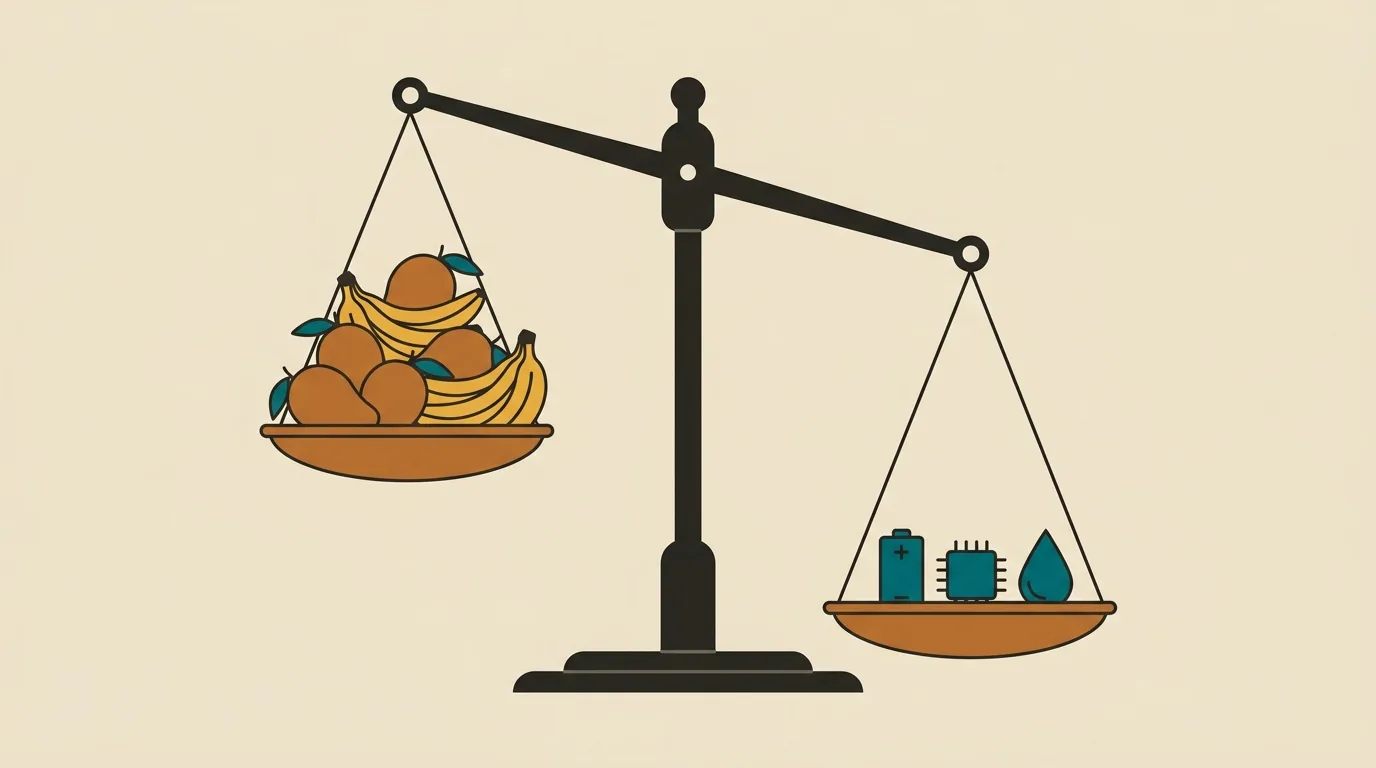
What does the world need from the Philippines? Right now, nothing it can't get somewhere else.
China refines 91% of the world's rare earths. Taiwan makes over 90% of its most advanced chips. We import 98% of our garlic and ship our nickel out as raw ore. What could the Philippines own that the world can't do without?
Read more →