Samsung's Petty Genius
They named their new foldables to box in Apple before Apple even ships. I'm a Samsung guy, and I'm here for it.
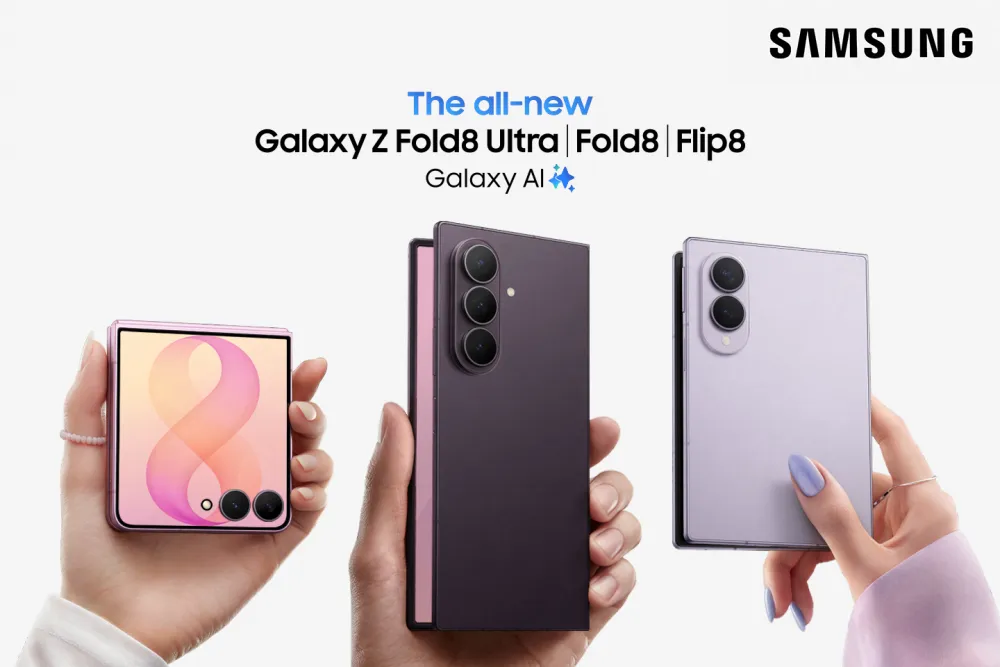
Samsung has always been petty toward Apple, and I love it.
For years they’ve been one-upping Apple, throwing shade, timing the jokes for maximum sting. It’s a backhanded compliment, really. You only needle the thing that’s bigger than you, and Samsung knows Apple is the brand everyone measures against.
I’m a Samsung and Google person, so take my bias as read. Five Samsung phones over the years, plus the watch, the ring, the foldable, the Ultra. Part of that is the products. Part of it is that Samsung just wins on local distribution here. But I’ve also watched Samsung get to the future first, again and again, while Apple shows up a year or two later with a cleaner version and a keynote that makes it feel invented.
Run the list. Big-screen phones, Samsung did it with the Note in 2011, Apple went big in 2014. Home-screen widgets, Android had them for a decade before iOS caught up. Water resistance, built-in wireless charging, fast charging, high-refresh screens, under-display cameras, a smart ring in 2024, AI glasses this year. Foldables in 2019. Apple’s first foldable lands in 2026, seven years later. Samsung shipped all of it first.
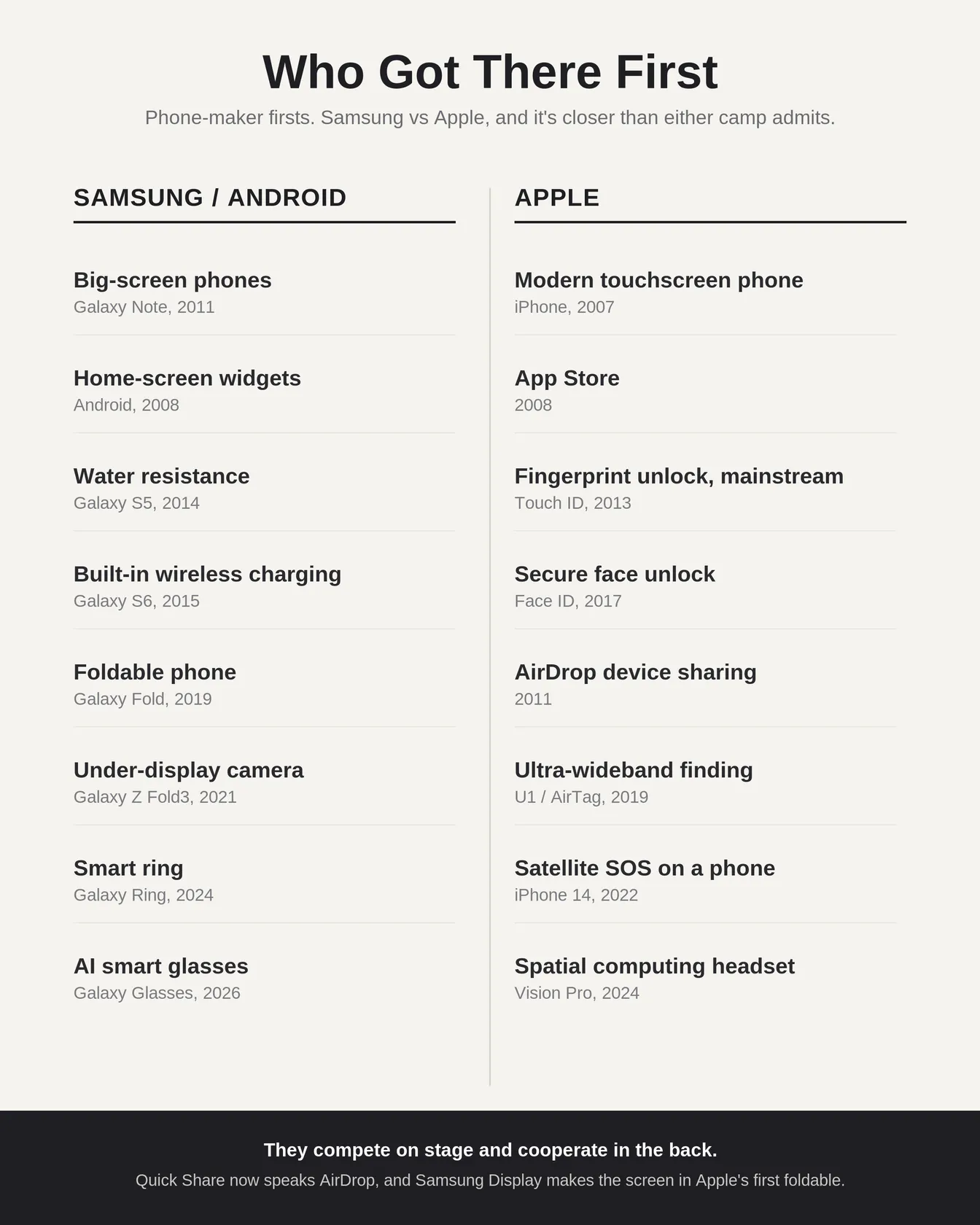
And yet Apple people still call Apple the innovator. I get why. That’s twenty years of brand doing exactly what it’s built to do, teaching people that “first” and “best” are the same word, and that Apple owns the second one.
At Unpacked in London, Samsung revealed the new lineup: the Z Flip 8, their clamshell aimed at the younger, Gen Z crowd, the Z Fold 8, and for the first time, a Z Fold 8 Ultra. How they named the phones immediately raised my eyebrows.
Apple’s foldable reportedly comes out in September in a wide 4:3 passport layout, shorter and squarer than the tall foldables we’ve had for years. Three months earlier, Samsung ships the same form factor and calls it the baseline Z Fold 8. Then it takes its traditional tall foldable, the design it’s refined for years, and crowns it the Ultra. The pinnacle, priced to match, at the top of the range. The first Ultra the Z series has ever had, borrowing the name straight from the S line.
Some leaks say Apple might even call its foldable the iPhone Ultra. So before Apple ships a single unit, Samsung has named the wide format as the baseline and claimed “Ultra” for the top. When Apple arrives, the wide shape already reads as the entry-level foldable, and Ultra already means Samsung’s tall one.
It’s a little bit petty. It’s a little bit genius. It’s both.
Positioning is mostly a naming game. Whoever names the category first gets to decide what counts as the floor and what counts as the ceiling. Samsung named it first, so Apple either fights that frame or lives inside it, and fighting a frame costs more than setting one.
And it’s a win-win for Samsung. They probably know Apple’s foldable will sell like pancakes. A crease-free iPhone in that wide passport shape is going to move, and by leaning into the same form factor with its base Fold 8, Samsung gets to ride that wave and sell more of its cheaper model off the back of Apple’s launch. Either way they win. They flank Apple on one side and their own customers on the other, the wide format waiting at the entry level and the tall Ultra held at the top, so wherever a buyer leans, Samsung already has the phone.
Does it convert a single Apple person? No. Brand loyalty runs deeper than a naming chart. The Apple crowd will look at the Fold 8, shrug, and wait for the keynote that tells them the wide foldable was the real breakthrough all along.
And they’re not pure rivals, either. Samsung’s Quick Share now speaks AirDrop, so Galaxy phones and iPhones can finally throw files at each other. AirDrop was Apple’s idea; Samsung just taught its phones the language. And the screen on Apple’s foldable iPhone? Samsung makes it. Samsung Display has the exclusive deal to supply the folding OLED for the next three generations. They fight on the stage and do business in the back.
So props to Samsung. If I were them, I’d have made the same call. You name the room before the guest arrives, especially when the guest is the one brand that’s spent two decades naming rooms for everybody else.

Pax Silica: Much Ado About Nothing
Pax Silica has no confirmed investor and no tenant, yet everyone is fighting over it. A lesson in owning the narrative, and why a semblance of a plan is not a plan.
Read more →
Diversity Marketing Is Working
Gap's KATSEYE ad moved denim sales while the louder campaign next door moved a stock price. Three years of Gap campaigns say the same thing about reading the room.
Read more →
Norwegian Air Bet British Airways on the World Cup. The Real Story Is Who Said Yes
Most trend-jacking is a miss. The ones that land come down to whether someone in the room was willing to approve the risk, and whether the math actually works.
Read more →
What does the world need from the Philippines? Right now, nothing it can't get somewhere else.
China refines 91% of the world's rare earths. Taiwan makes over 90% of its most advanced chips. We import 98% of our garlic and ship our nickel out as raw ore. What could the Philippines own that the world can't do without?
Read more →