You Don't Have to Be an Asshole to Be a Good Leader
We looked at the cruel ones who won and decided the cruelty was the reason. It never was.

The business world loves a certain story about genius. That the people who built the things we can’t put down were difficult, impossible, cruel even, and that the cruelty was part of the magic.
You’ve heard the story. Steve Jobs berated his engineers, told people their work was garbage, made grown adults cry in meetings, and out of that pressure came the iPhone. The accounts are not exaggerations. Colleagues described him as brutally honest to the point of intimidation, and no one, not even his closest people, was safe from it. He used fear to pull work out of people that they didn’t know they had in them.
Elon Musk runs a version of the same playbook. When he took over Twitter he sent a 2 a.m. email telling everyone to be “extremely hardcore,” long hours at high intensity, or take severance and go. He laid off around half the company. He reportedly fired an engineer who corrected him on a technical point, in public, on the platform itself. He had people comb through private Slack messages and fired the ones who had criticized him. And still, people line up to work for him, because the man builds rockets that land themselves.
And it isn’t only the tech founders. Jack Welch fired the bottom 10% of his people at GE every single year, earned the nickname “Neutron Jack,” and business schools taught his playbook for decades. Travis Kalanick built Uber into a giant while getting caught on camera berating one of his own drivers, until the culture turned so toxic the board pushed him out. The pattern is always the same. The results get remembered and the wreckage gets filed under the cost of greatness.
So the logic writes itself. These people were ruthless, and these people won, so the ruthlessness must be the engine. If you want to build something great, you have to be willing to be the asshole in the room.
I don’t have to reach for famous names to know how this goes. I lived a smaller version of it.
I once worked in a big multinational where there was a leader who made waves for the company. She was treated as a star. But she had behavioral issues. She would gaslight her staff, back when most people didn’t even know the word for it. She would throw office supplies at her staff’s heads. She would berate people in public. And the company allowed all of it, because she performed.
Truth be told, I left because she eventually became my boss, and when the warning signs started to show, I knew I didn’t want to be part of it. I was doing well there. I have a lot of what-could-have-beens from that decision. But that’s in the past, and I charge it to experience. Eventually she was eased out of the company anyway. At what expense, though?
Oddly, the people in her good favor defended her. They supported her. I don’t know if it’s some kind of Stockholm syndrome, because I felt a version of it myself in the beginning. In the first few months I was proud that I knew how to tame the beast, proud to be close to her power and influence, so I get it. It turns into a narrative of, oh, you just weren’t good enough to be on her good side. But when the gaslighting started, that was it for me.
The logic breaks in a simple place. Whether it’s Steve Jobs or the star who threw staplers at people’s heads, we look at someone who succeeded while being cruel and decide the cruelty was the reason. Nobody stops to ask whether they won because of it or in spite of it. Correlation gets promoted to cause, and a whole generation of managers gets permission to be terrible and call it high standards.
Because for every leader like that, there is someone just as effective who runs the opposite way.
Take Jensen Huang, who built Nvidia into one of the most valuable companies on earth. He is not soft. He criticizes constantly, and he has said his people can’t go a day without hearing some correction from him. But there is a line he doesn’t cross. He doesn’t humiliate people and he doesn’t fire them the second they stumble. He says he’d rather “torture them into greatness,” which is his blunt way of saying he invests in people instead of discarding them. The proof is in who stays. Nvidia’s turnover was 2.5% in a year when the rest of the industry was bleeding talent. One in five of his people have been there a decade or more. You don’t get numbers like that out of fear.
That distinction is the whole argument, so it’s worth sitting on. Demanding is not the same as being an asshole. Huang is demanding. He has impossibly high standards. What he isn’t is cruel. The standard is about the work. Cruelty is about the person. You can hold the line on one without ever touching the other, and the best leaders I’ve watched do exactly that.

Look at Satya Nadella. When he took over Microsoft it was a company of know-it-alls, sharp elbows, going nowhere. He didn’t come in swinging. He made empathy the actual operating principle, told everyone to stop performing certainty and start learning again, and grew a $300 billion company into a $3 trillion one. Empathy did that. He didn’t lower the bar; he made people feel safe enough to actually clear it.
Or Herb Kelleher, who built Southwest Airlines and said it plainly: “I’d rather have a company bound by love than a company bound by fear.” He treated his people like family and ran one of the most consistently profitable airlines in the country for decades. Indra Nooyi wrote handwritten letters to the parents of her executives at PepsiCo, thanking them for raising the people she got to work with. Cheryl Bachelder walked into a dying Popeyes, led with what she called servant leadership, put her people first, and watched profits climb 40%.
These are not soft leaders who got lucky. They are killers, in the results sense. They just refused to believe that the way to win was to make the people around them smaller.
And when you actually measure it, the kind ones aren’t only matching the cruel ones. They’re beating them.
Google spent two years studying what made their best teams best. They looked at 180 teams and ran 200 interviews. The number one factor, above talent, above seniority, above who was in the room, was psychological safety. Whether people felt safe enough to take a risk, ask a dumb question, admit a mistake without getting punished for it. The teams that had it were more productive, more innovative, and left less often. The single biggest driver of great work turned out to be the exact thing the asshole model destroys.
The cost runs the other way too. McKinsey found that a toxic culture is the strongest predictor of people quitting, ten times more powerful than pay. People don’t leave a bad boss for a bigger paycheck somewhere else. They leave because they can’t take it anymore. Every talented person a cruel leader burns through is a bill that comes due later, in the turnover, in the work that quietly stops happening, in the people who are still on the payroll but have already checked out.
There is a timing problem with the old model too. It belonged to an era when people had fewer options, stayed at one company for thirty years, and swallowed whatever the boss dished out because that was the deal. That world is mostly gone. The people you want to hire over the next ten, twenty years grew up with a different sense of what work is allowed to cost them. They will not white-knuckle through a screaming boss to protect a pension. They’ll leave, and they’ll tell everyone why on the way out.
So if you’re building anything meant to outlast the next quarter, this stops being a soft question and becomes a strategic one. The leader who still thinks fear is the tool is optimizing for a workforce that no longer exists. Being intentional about a safe workplace, writing it into your actual policies and the everyday calls you make when nobody is forcing you to, is how you keep the best people long enough to build something with them.
None of this means you go easy. Huang criticizes everything. Jobs cared about the work more than anyone in the building. The high bar stays. What changes is where you aim the pressure. You point it at the work and leave the person’s sense of worth out of it.
The leaders we mythologize didn’t succeed because they were cruel. They succeeded because they were relentless about the work, and a few of them happened to be cruel on top of it, and we got the causation backwards. You can keep the relentlessness. You can drop the rest. It was never the part that made them great.

The Position Is Not the Person
I ran into a former leader in a mall. Someone from a company I used to work with. I made sure I said hi. I went out of my way, I made sure he saw me, I did the whole thing. Then I walked away and felt the ick.
Read more →
Communication Can Outrun Intelligence
One of the most valuable skills in business, and the same skill can march a company off a cliff. Both are true.
Read more →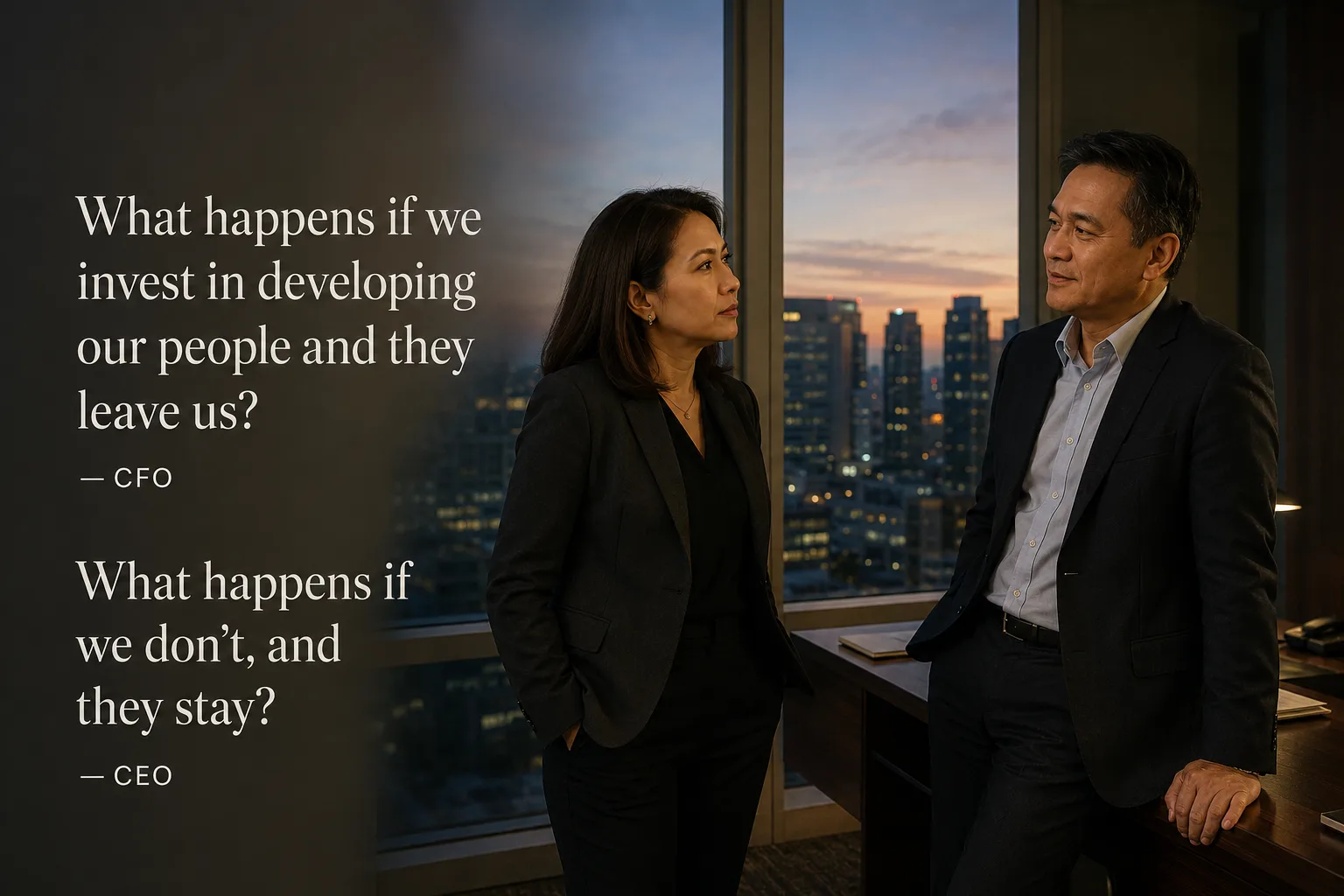
Develop Your People Anyway
The CFO's question is real. So is the CEO's answer. Twenty years on both sides of the training budget taught me which fear to respect.
Read more →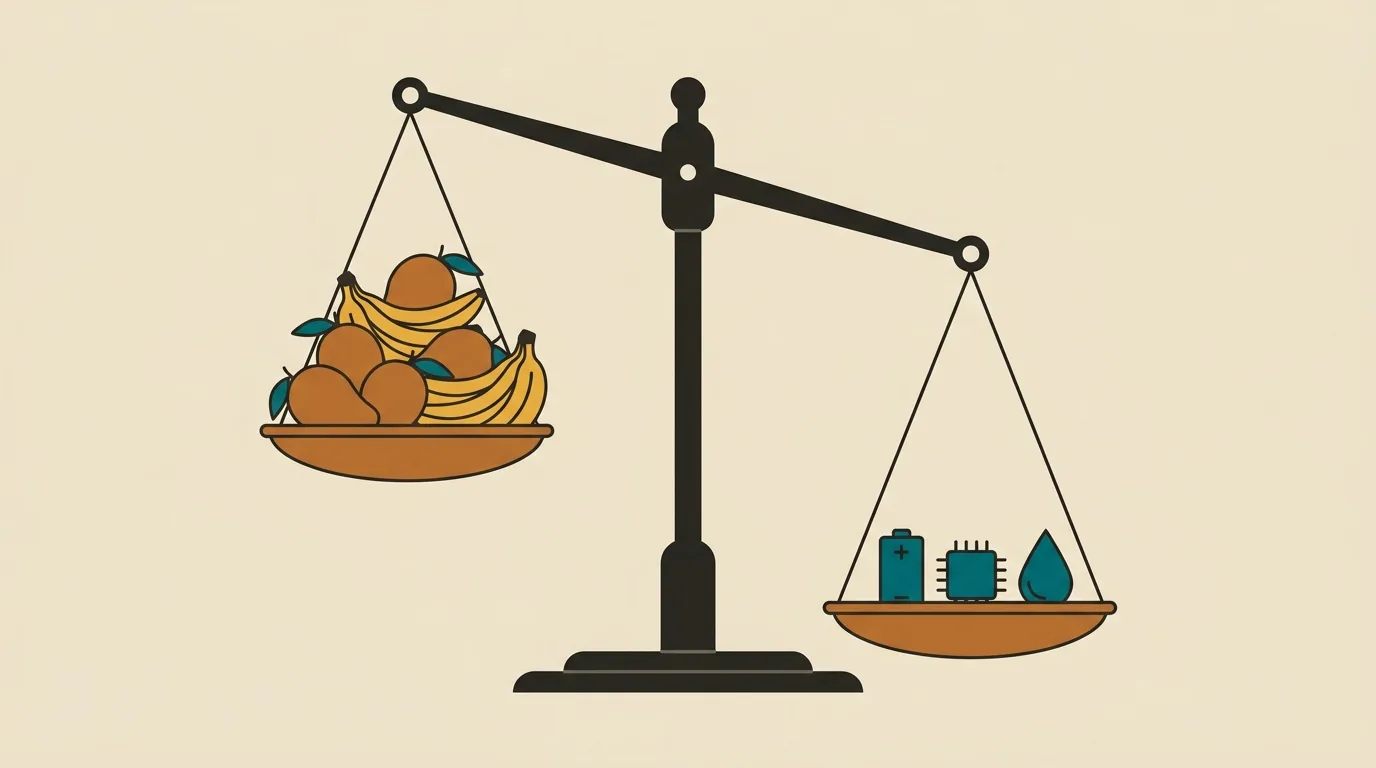
What does the world need from the Philippines? Right now, nothing it can't get somewhere else.
China refines 91% of the world's rare earths. Taiwan makes over 90% of its most advanced chips. We import 98% of our garlic and ship our nickel out as raw ore. What could the Philippines own that the world can't do without?
Read more →