The Government Already Knows Who You Are. So Why Are You Still Filling Up Forms?
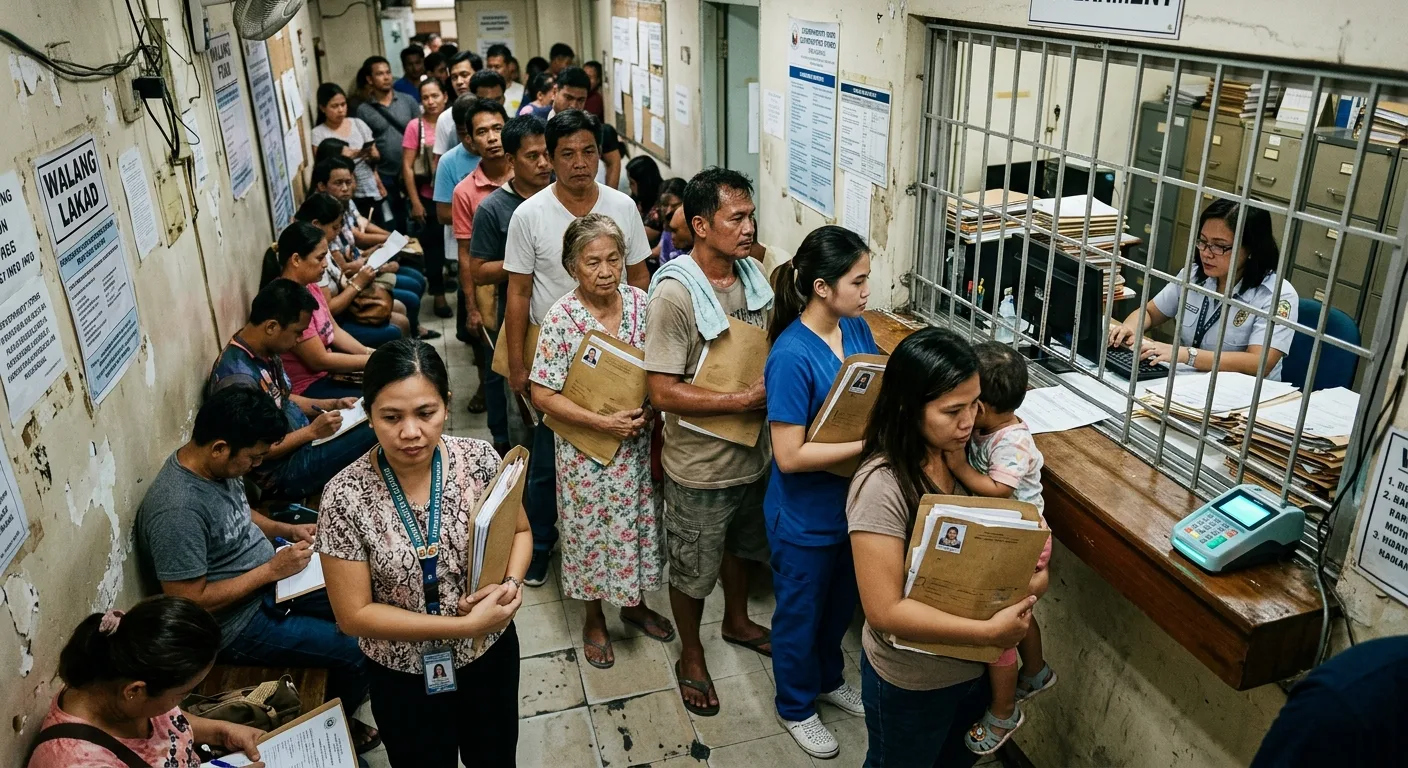
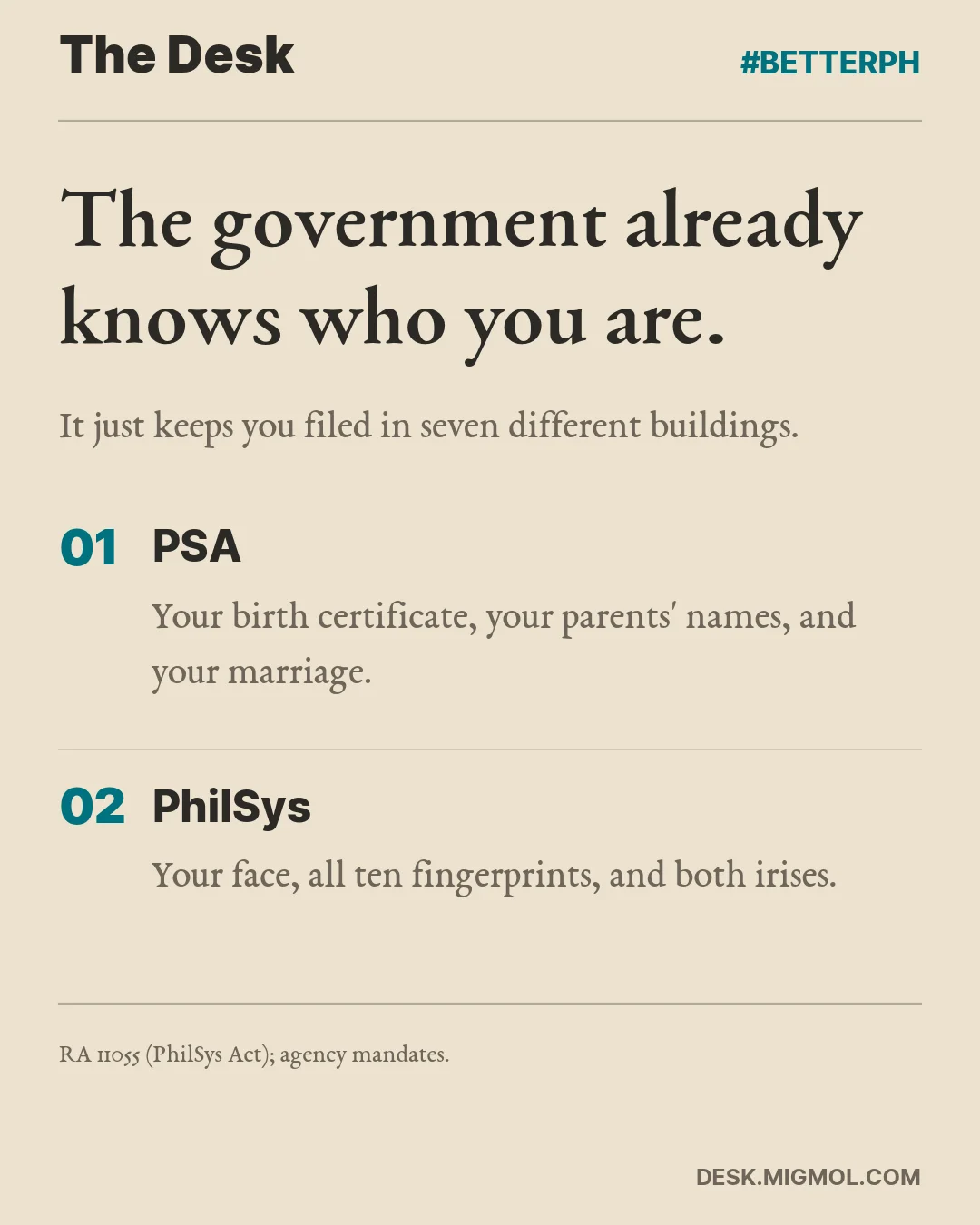
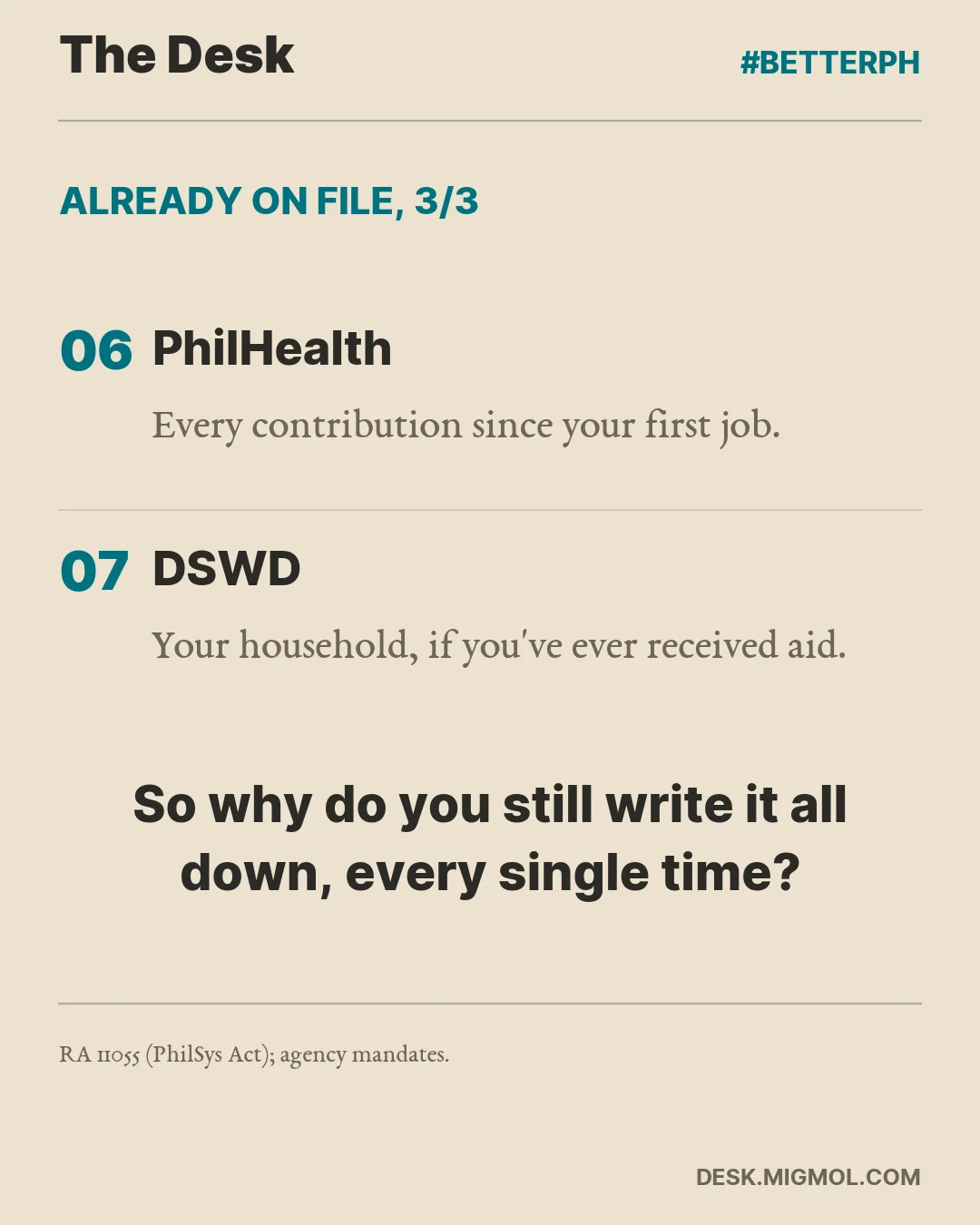
The government already knows where I live. It has my birthday, my parents’ names, my blood type, my fingerprints, and a record of every peso I’ve paid into PhilHealth since my first job. So why do I still write all of it down by hand, on a form, every single time?
That question is the whole article. Almost everything Filipinos hate about dealing with the state, the lines, the forms, the photocopies, the come-back-tomorrow, comes from the same place. The information already exists. It just sits in separate buildings that don’t talk to each other.
Being first is the only advantage there is
With AI, being early is the advantage. That’s really all it is. Once a capability is available to everyone at the same price it stops being an edge and turns into a floor, and using it doesn’t make you clever, it just means you aren’t behind. Every country is going to have these tools. The gap will open between the ones who built the plumbing while it was still hard and the ones who waited until it was easy.
We were early once. PH was called the text capital of the world, sending more SMS than almost anywhere on the planet, and we turned that into nothing. No platform, no company, no standard that anyone else had to adopt. We were the biggest users of a technology and the owners of none of it. Being first to use something isn’t the same as being first to build on it, and that’s the mistake worth not repeating.
Palantir doesn’t do magic
Palantir is one of the most valuable software companies in the world and what it actually does is unglamorous. It takes data that different U.S. institutions had already collected, joins it, and lets people ask questions across all of it at once. Nobody collected anything new. The joining is the product.
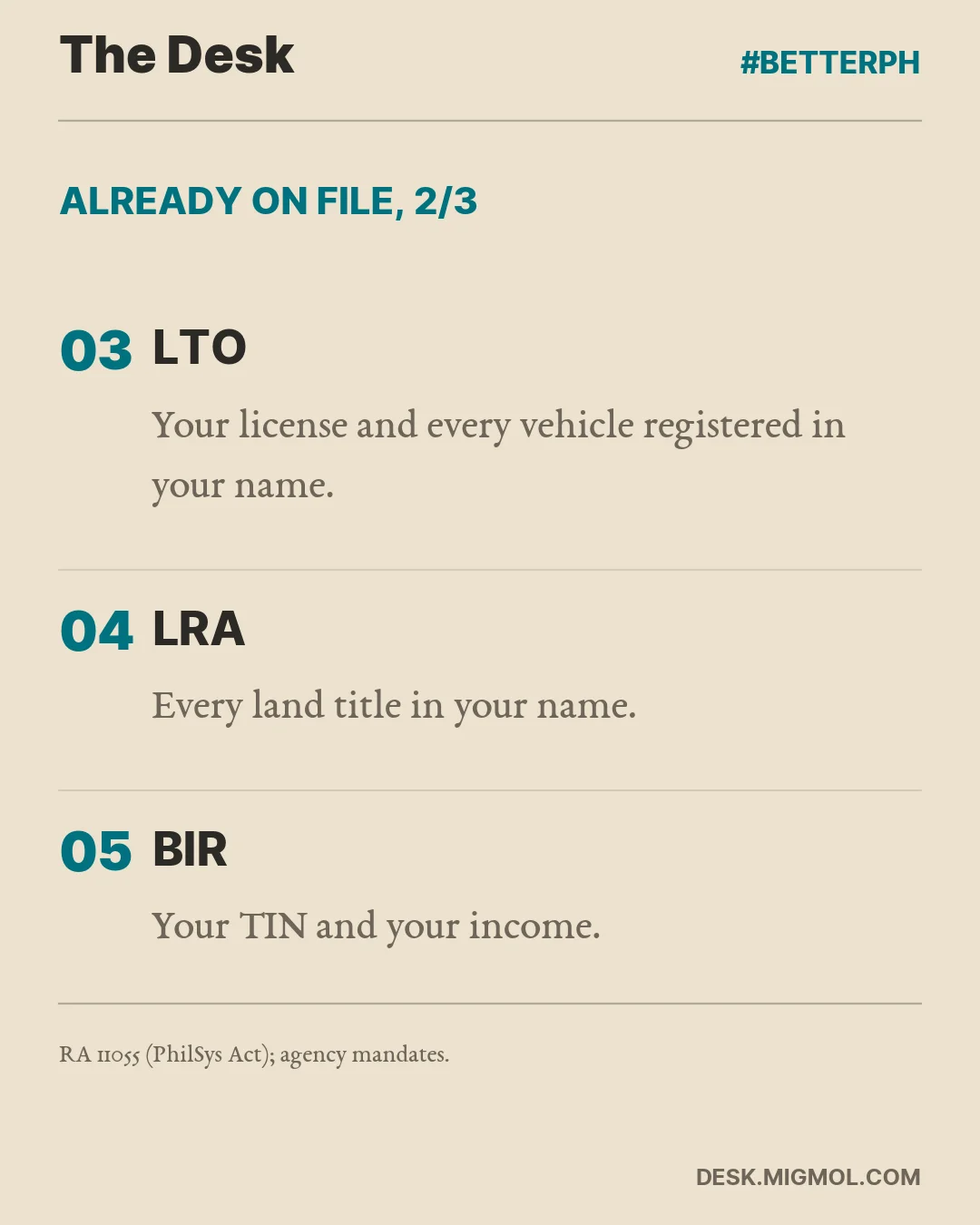
PH already has every piece Palantir would need. The Philippine Identification System (PhilSys), the Land Transportation Office (LTO), the Land Registration Authority (LRA), the Bureau of Internal Revenue (BIR), PhilHealth, and the rest each hold real records on real people, each in its own system, and none of them look at each other.
So an investigator can’t easily see that the man with no declared income owns four vehicles and three land titles. The records aren’t missing. They’re in four buildings, and nobody holds the key to all four.
One tap
Imagine a world where you need something from the government, you tap your ID, and you get it. You land at NAIA, tap, and walk out. At the hospital you tap and your PhilHealth contributions are already on the screen. At the counter for ayuda ni Mayor you tap and walk out with the rice. Your address, how many years you’ve lived there, your contact number, none of it gets written down again, because none of it changed since the last time you wrote it down. The lines get shorter because the forms are gone.
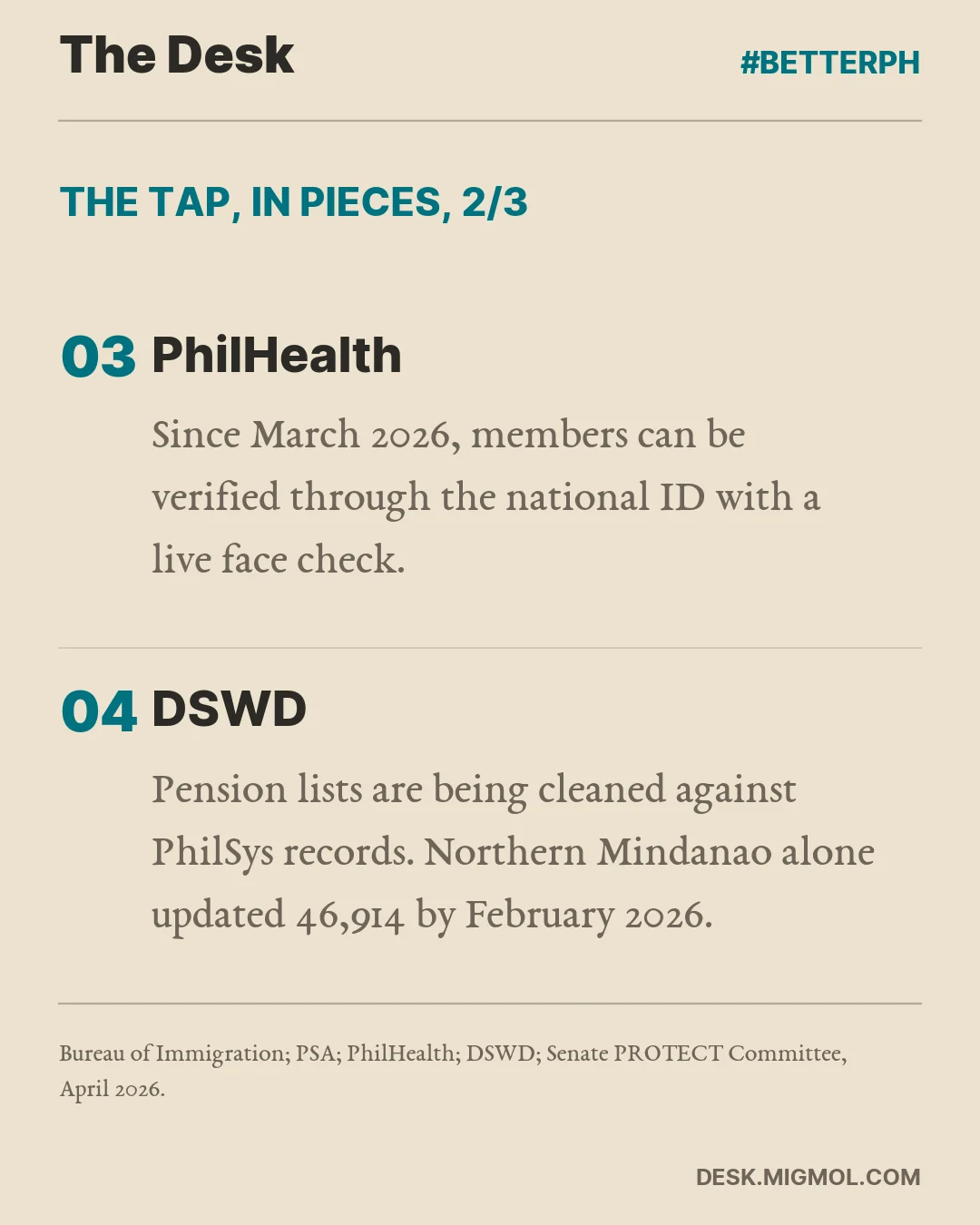
Most of that already exists, in pieces. Filipinos coming home through NAIA can use the immigration e-gates, which read your passport, match your face, and open. PhilHealth signed with the Philippine Statistics Authority (PSA) in March to verify members through the national ID with a live face check. The Department of Social Welfare and Development (DSWD) has been checking its beneficiary lists against PhilSys since 2021.
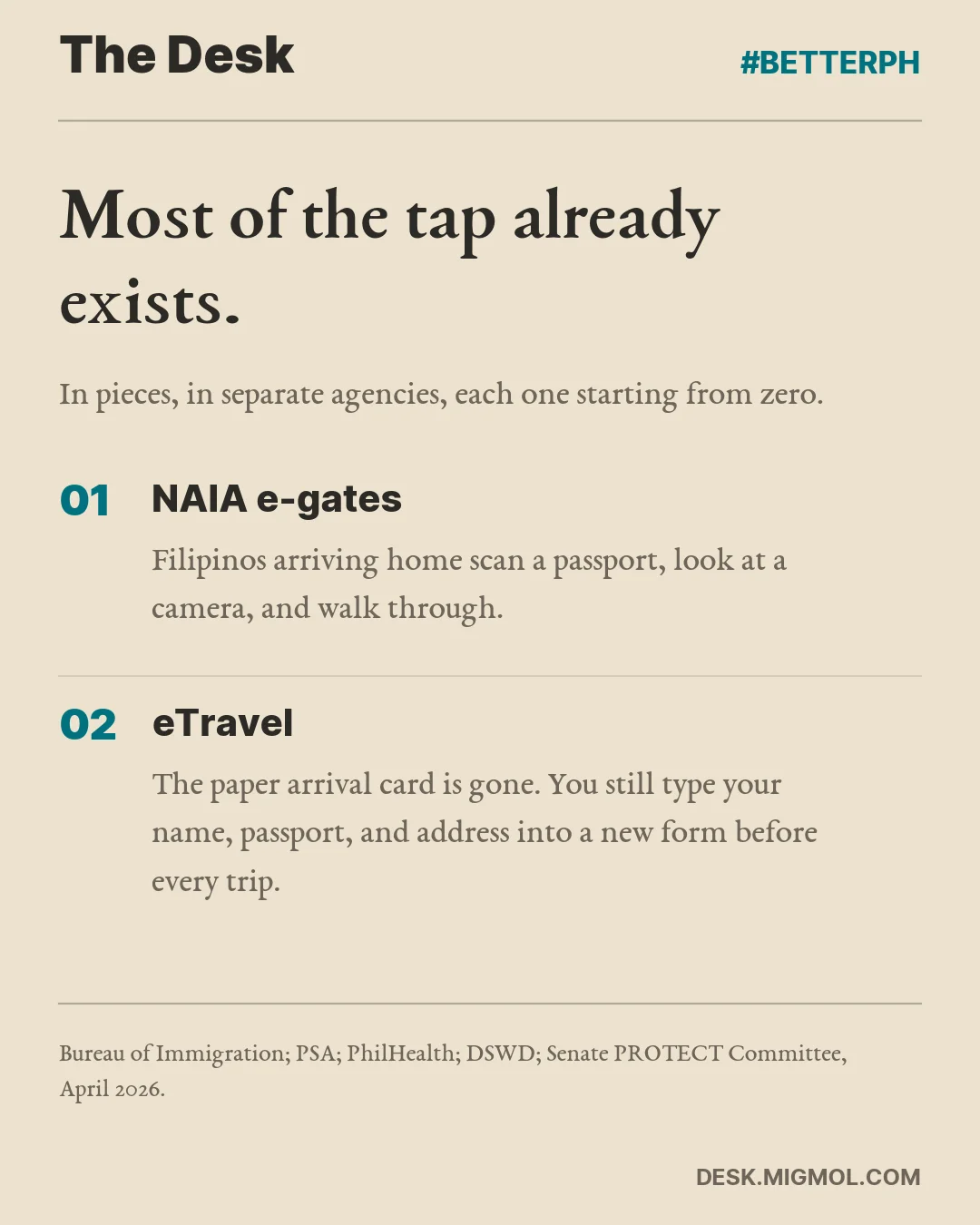
The e-gate still won’t open unless you’ve done eTravel, which asks for your name, passport number, birthday, flight, and address before every single trip. We moved the arrival card onto a phone and kept the arrival card. Every agency built its own portal and every portal starts from zero, so the tap comes at the end of the process instead of replacing it.
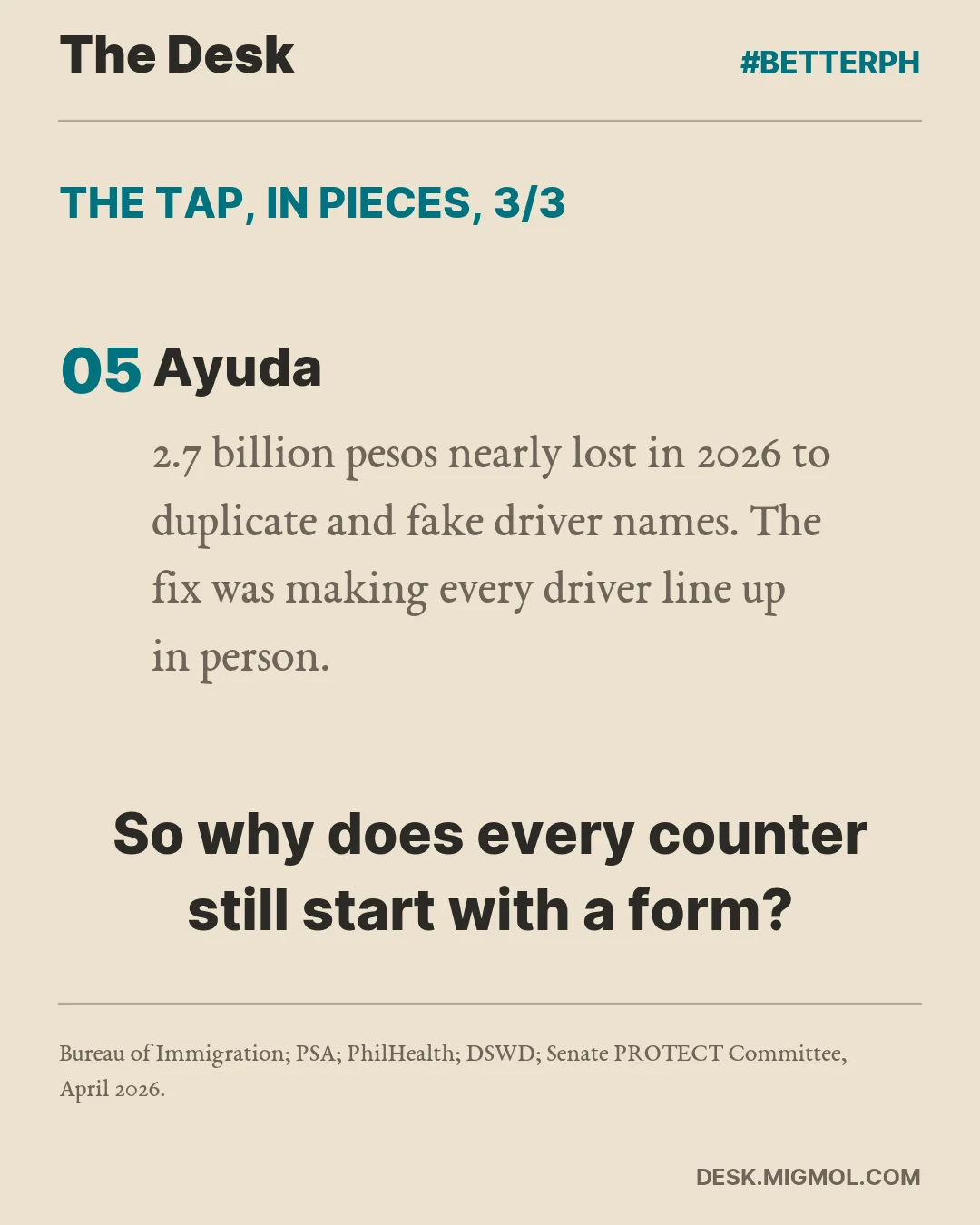
Ayuda shows what that costs. In April, DSWD Secretary Rex Gatchalian told a Senate committee that the lists of drivers submitted for transport aid came back full of duplicates and triplicates, the same names repeated with a “Jr.” added to pass as a different person, plus drivers whose licenses had expired or who never had one. If DSWD had sent the money straight to e-wallets on the strength of those lists, he said, the government would have lost ₱2.7 billion. So every driver had to show up and claim it in person. Without an identity everyone trusts, the fraud check is the line.
Payments ride on the same tap. If QR Ph is tied to it, then it’s just tap and go, no digging around for cash or a card, and ayuda goes straight to a verified person instead of to a list somebody certified. In fact we could have a government-funded wallet, so every peso of assistance can be traced from the budget to the person who received it.
Elections are the one everybody jumps to. Imagine voting at home, your identity confirmed, every vote accounted for. Maybe there’s a future where that can be done, but it’s the hardest one on this list, because ballot secrecy and proving the voter is who they say they are is where every attempt so far has broken. Sierra Leone’s 2018 vote was reported around the world as the first blockchain election, and its own election commission said it never used blockchain at all.
None of this is waiting on a technology we don’t have. The ID exists, the e-gates open, the face checks work, and the records are already on file. What’s missing is the decision to connect them. Every country will make that decision eventually, and the ones who make it first get to write the rules.
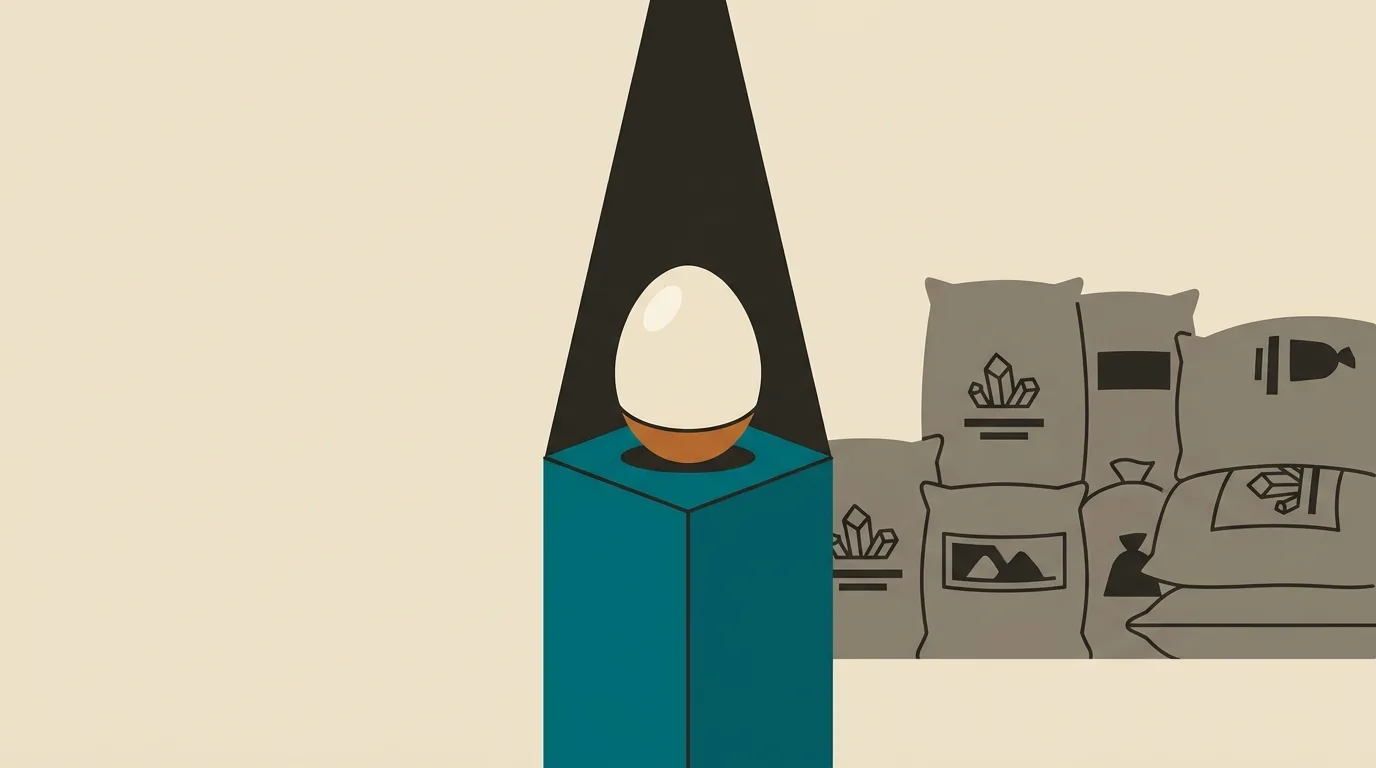
Salt is salt until someone decides it isn't. The Philippines makes world-class products and never gave them a name.
Korean bamboo salt sells for about 400 dollars a kilo. We have at least eight artisanal salts, most of them disappearing, and we import about 80% of the salt we use. What the Philippines is missing is the system that turns products into names.
Read more →
One Barangay Has 261,729 People. Another Has Two.
The barangay is a good idea for a village and a strange one for a city of a quarter million. It's also the base of every political machine, and its election keeps getting cancelled.
Read more →
I Thought Those Nights Were Romantic
I remember the brownout nights as warm. On 13 May 2026, 1.9 million Meralco customers lost power again. Part 1 of 2: why we are bad at judging risk, and what forty years of avoiding the nuclear question has cost.
Read more →
The Diplomat Season 4 No Spoiler Review: Still One of the Best Shows Ever Made, With a Season Ender That Will Take Your Breath Away
Four seasons in, The Diplomat is still one of the best shows to ever exist, and this time the President, the Vice President, and both their spouses are all in the game.
Read more →