If you're above 40, this is the 2nd Iran Oil Crisis in Your Lifetime.
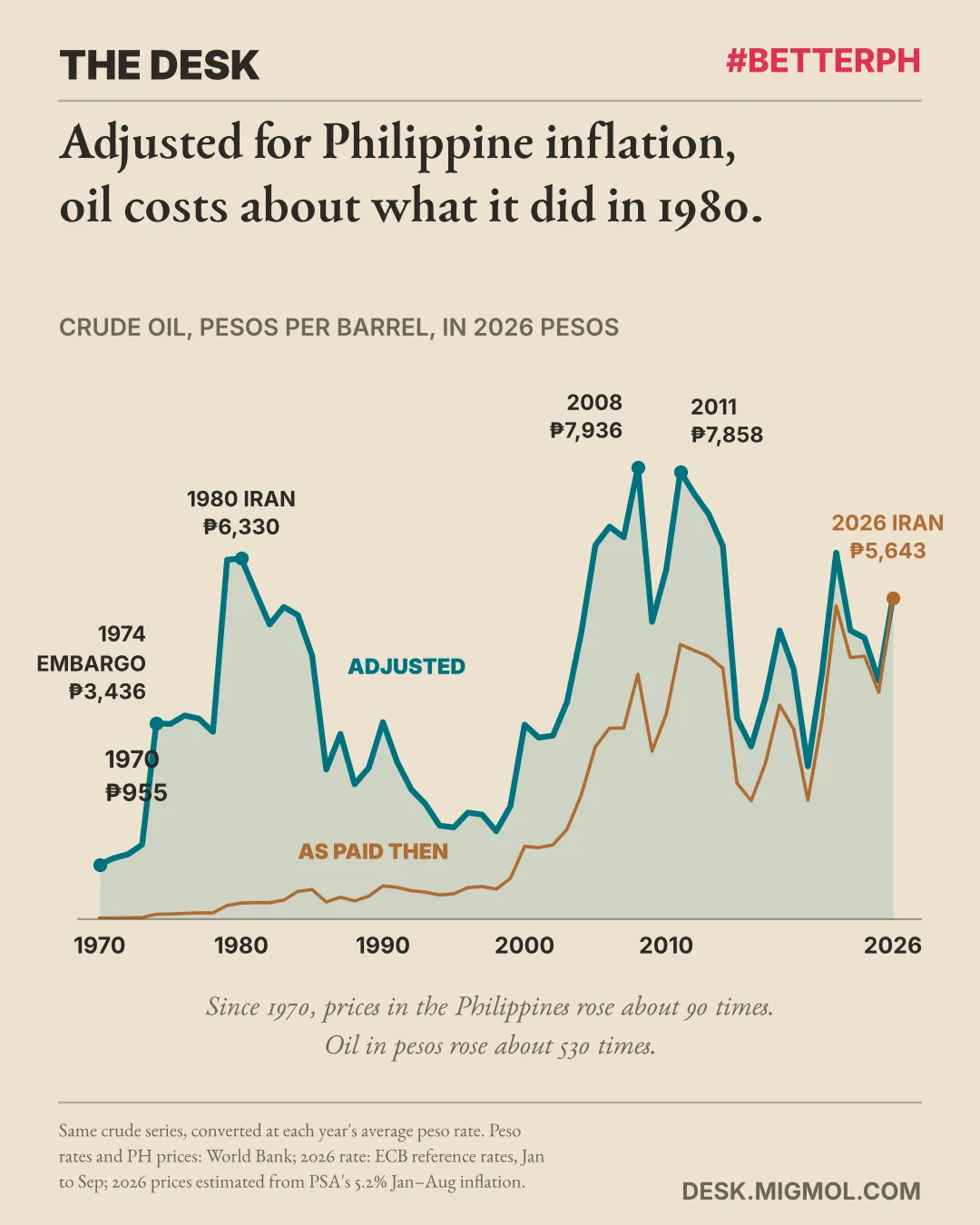
In 1980, a barrel of oil cost $37. In today’s dollars, that is $149, about one and a half times what we have paid on average this year. That was right before I was born, and it was Iran then too.
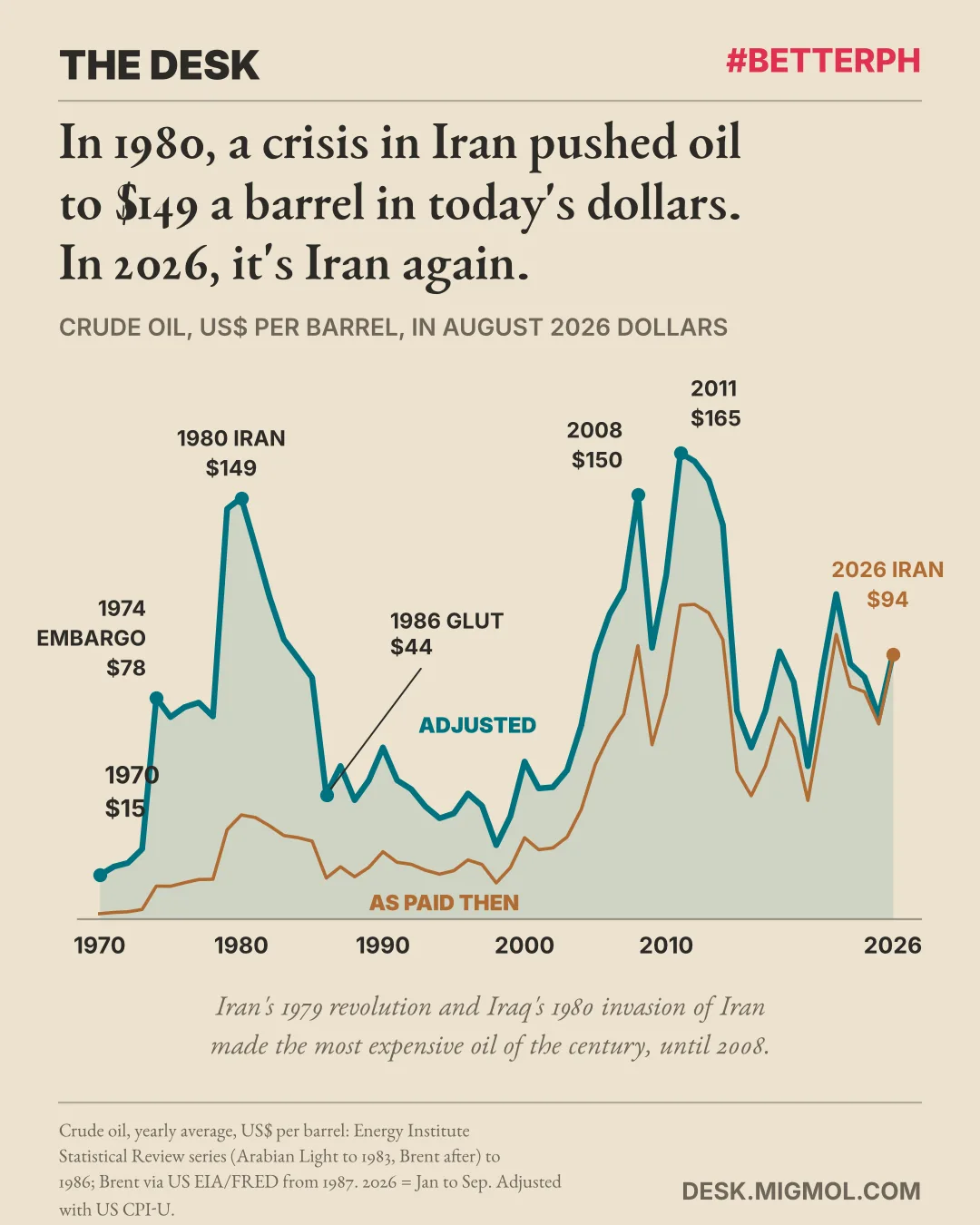
In 1970, a barrel cost $1.80. In October 1973, Arab producers cut supply over the Yom Kippur War. That December, at an OPEC meeting in Tehran, the Shah of Iran pushed for more than $20 a barrel. Saudi Arabia’s oil minister, Sheikh Ahmed Zaki Yamani, held the line at $11.65, which was still four times the price before the embargo. Then in 1979, Iran’s revolution took its oil off the market, and in 1980 Iraq invaded Iran. By 1980 oil had hit $37, and the war that followed dragged on until 1988.
Scroll sideways for the full timeline → Red dots mark the Iran moments.
For the Philippines, it was worse than for most. In 1973 we imported about 95% of our energy, and almost all of it was oil.
Saudi Arabia saw it coming
Through the 1970s, Saudi Arabia kept arguing for moderation, and kept clashing with Iran over it. Yamani’s warning was that prices rising too fast would hurt the world economy and weaken oil’s place in the world’s energy mix. In plain words: push the price too high and people will find a way to stop needing you. Years later he put it more memorably: “The Stone Age came to an end not because we had lack of stones, and the oil age will come to an end not because we have lack of oil.”
They understood. Iran couldn’t wait.
High prices brought new supply
Yamani turned out to be right. The world did exactly what he said it would.
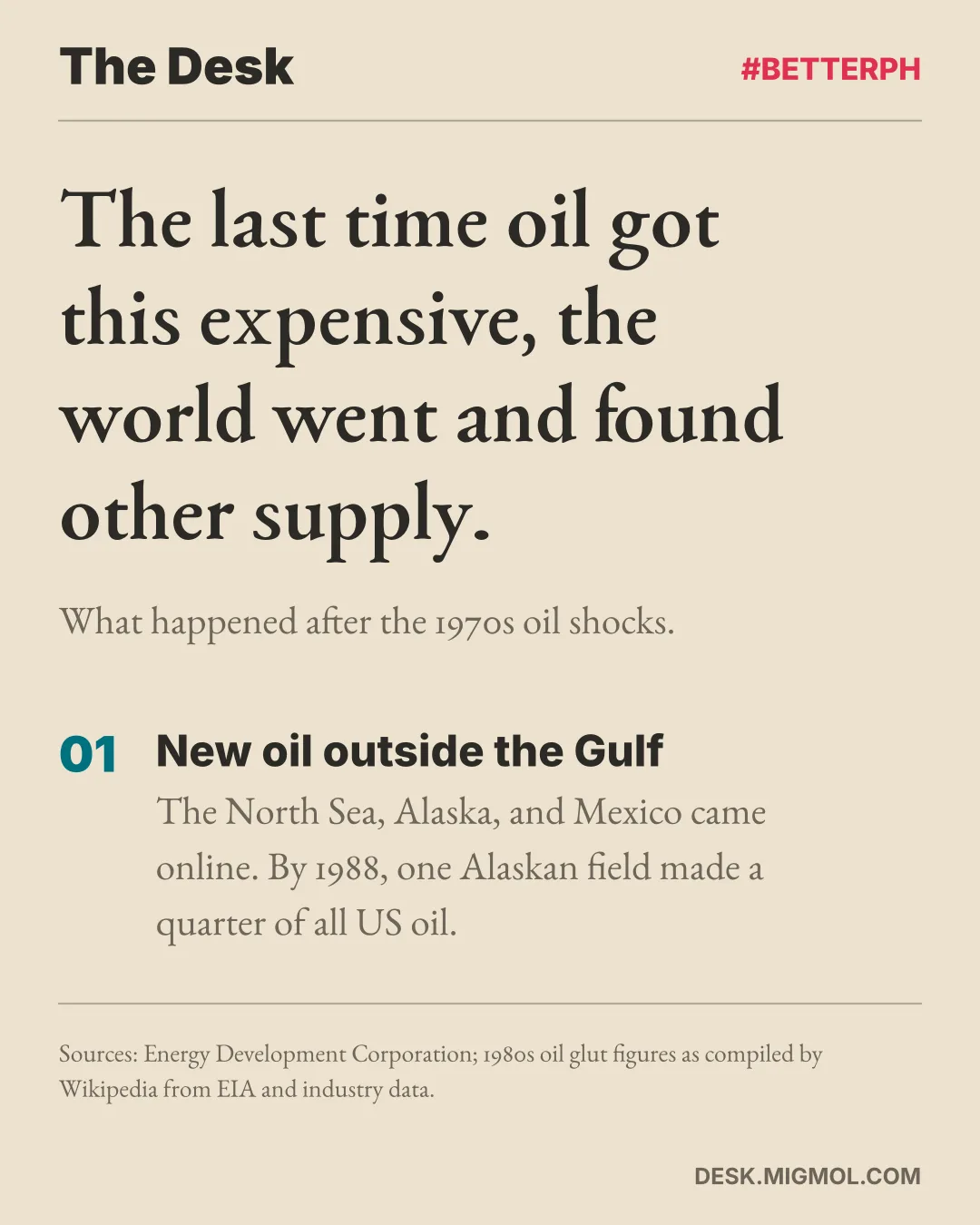
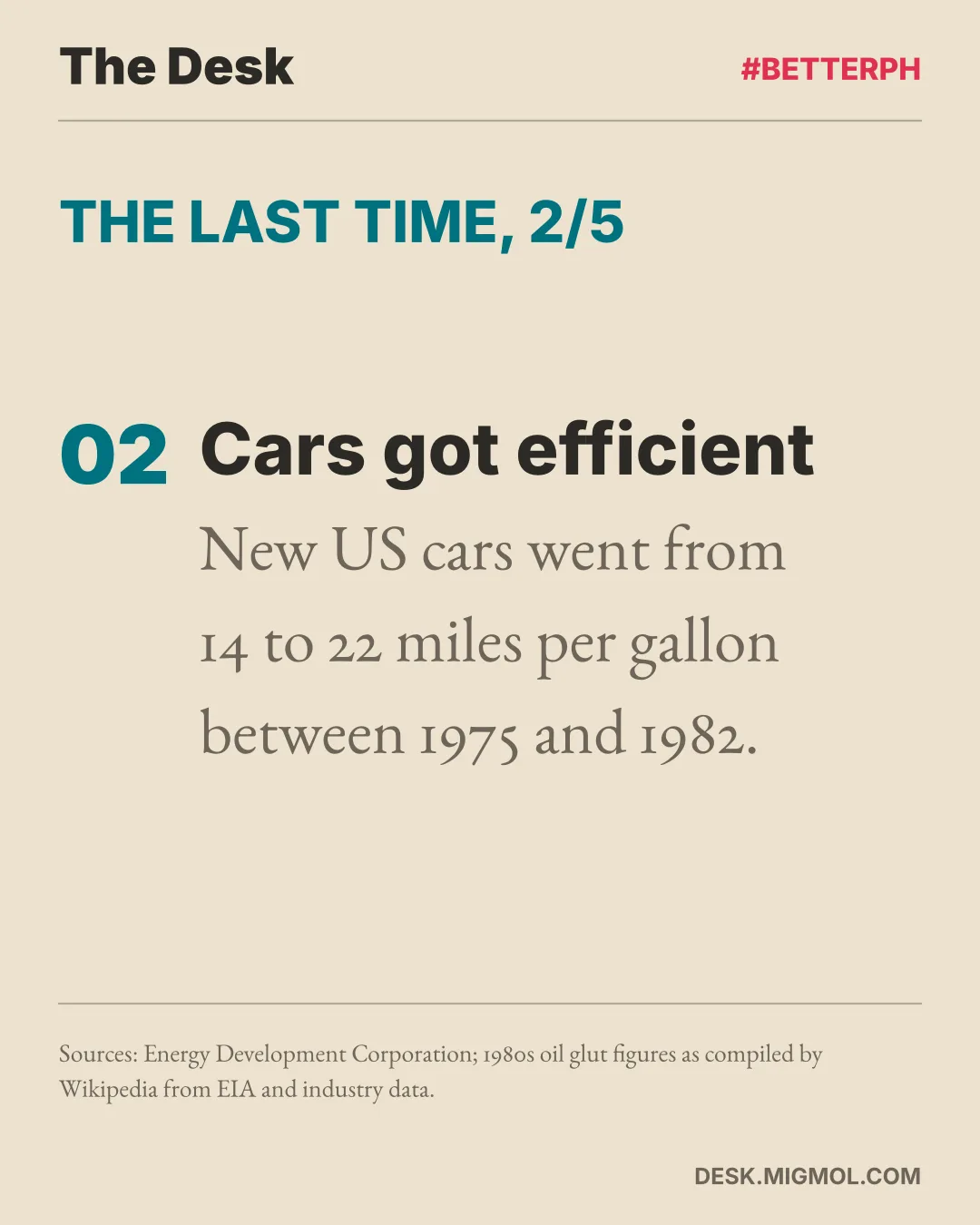
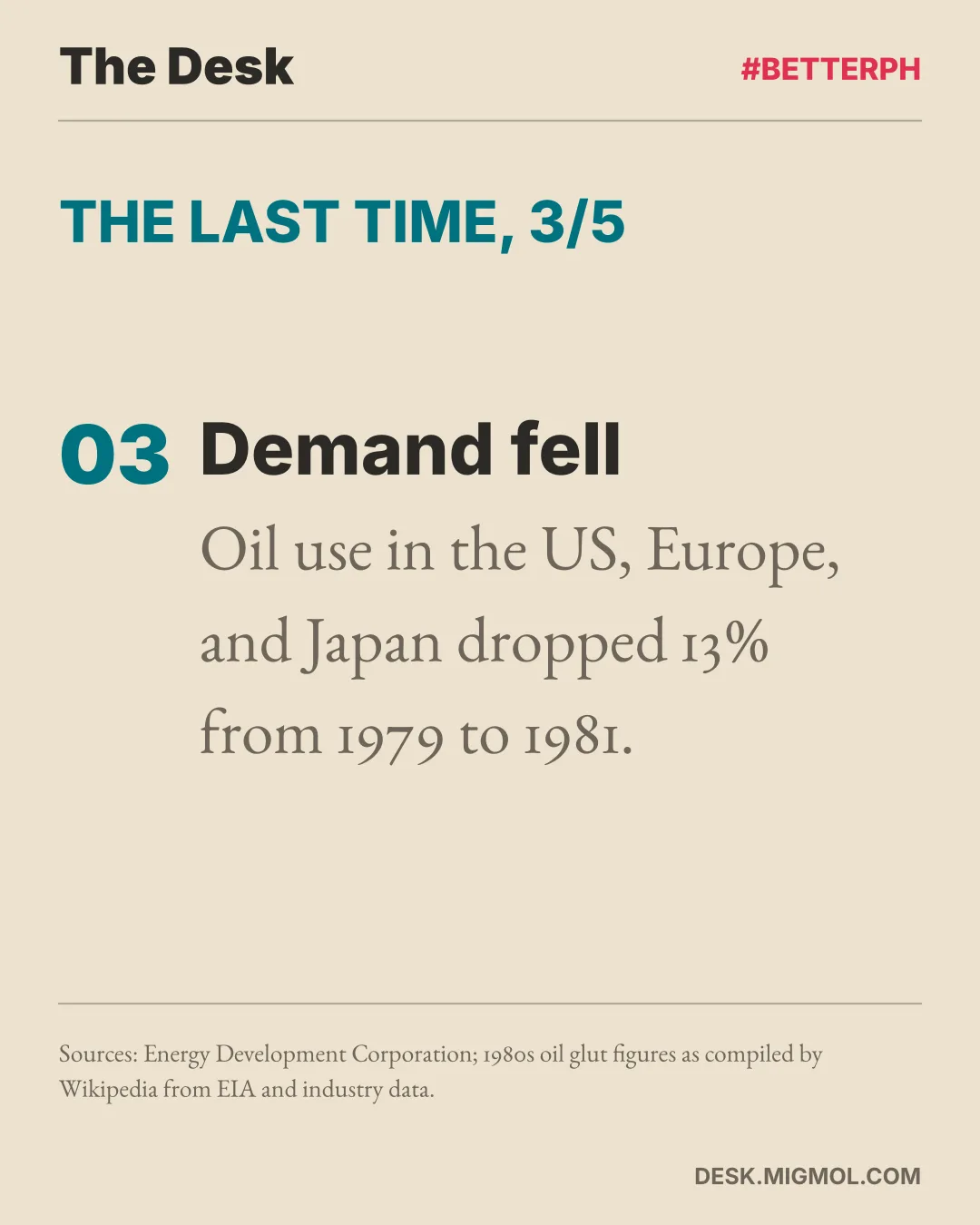
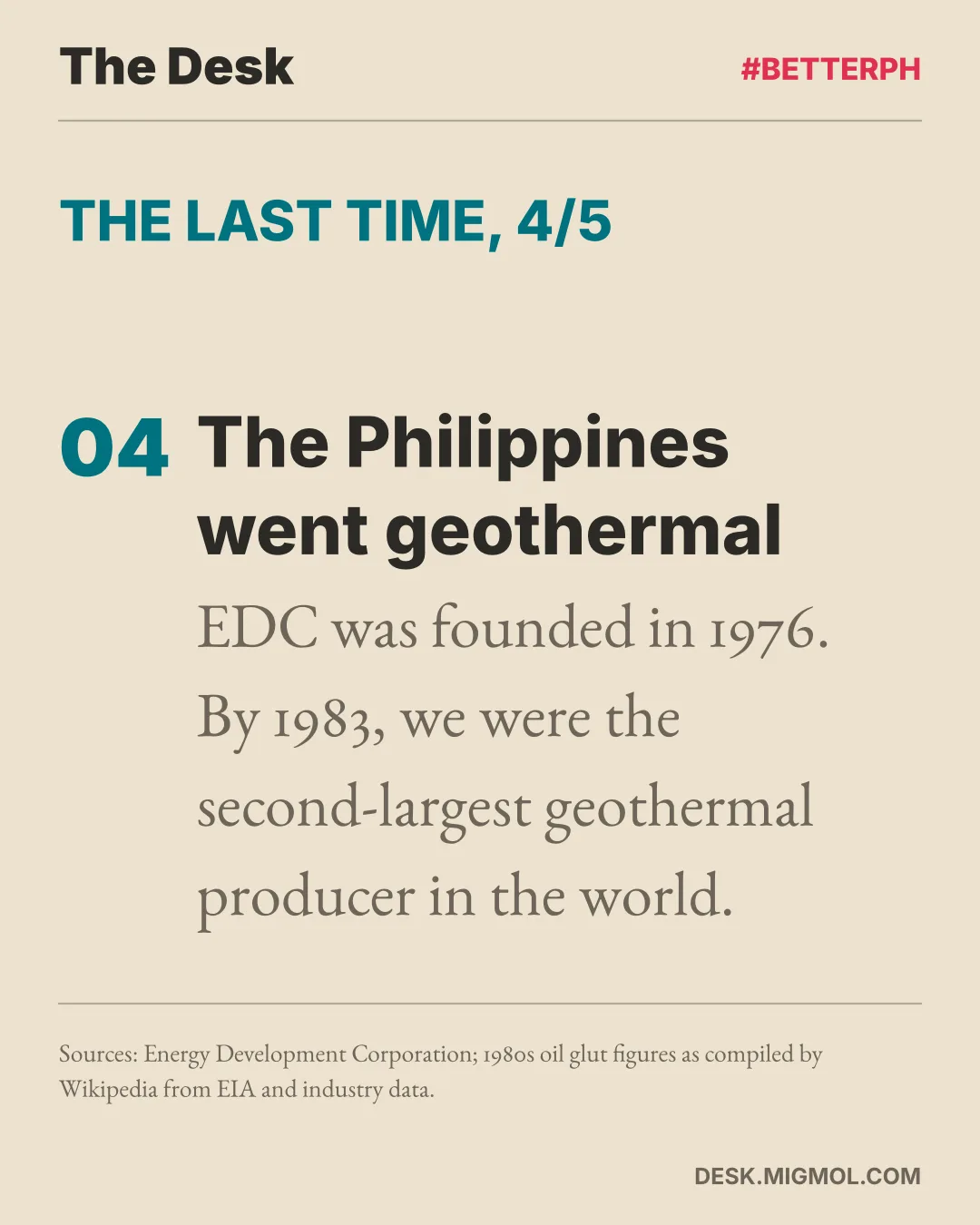
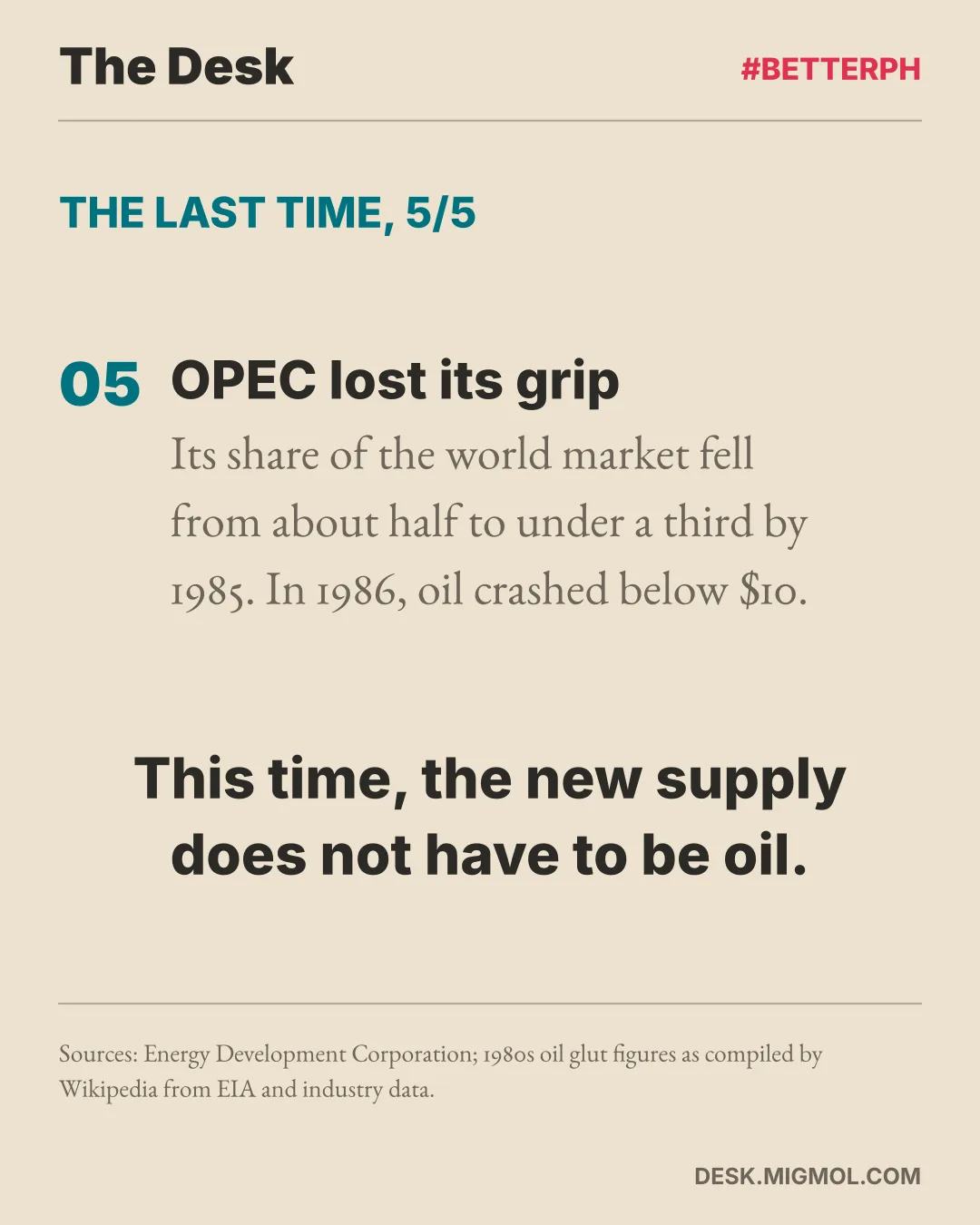
Oil was found outside the Gulf, in the North Sea, Alaska, and Mexico. Cars got more efficient, and oil use in the US, Europe, and Japan fell 13% in two years. OPEC went from about half of the world market to under a third. Saudi Arabia’s own output fell from around 10 million barrels a day in 1981 to around 3.5 million by 1985, and in 1986 the price crashed below $10.
We moved too. The Philippine National Oil Company (PNOC) was set up in November 1973, a month into the embargo. Its geothermal arm, now the Energy Development Corporation (EDC), followed in 1976, and by 1983 we were the second-largest geothermal producer in the world. We also built the Bataan Nuclear Power Plant, for $1.9 billion, and never switched it on. By 1990, we produced 61% of our own energy.
Then oil got cheap again, and we went back to importing. Today we produce less than half of what we use.
This time it’s not oil
This is exactly what I’ve been pushing for. We have to find new supply again, but this time it does not have to be oil. It can be the sun on our roofs, the heat under our volcanoes, and power that our own islands already make.
And it is already happening. One in four new cars sold worldwide in 2025 was electric, and in China it was close to 55%. Electric vehicles already displace about 1.2 million barrels of oil a day. Here, a quarter of the new vehicles sold from January to August this year were electrified, ours included.
What happens now
If the last crisis is any guide, the world will spend the next ten years making sure this one never happens again, and this time it already knows what to build.
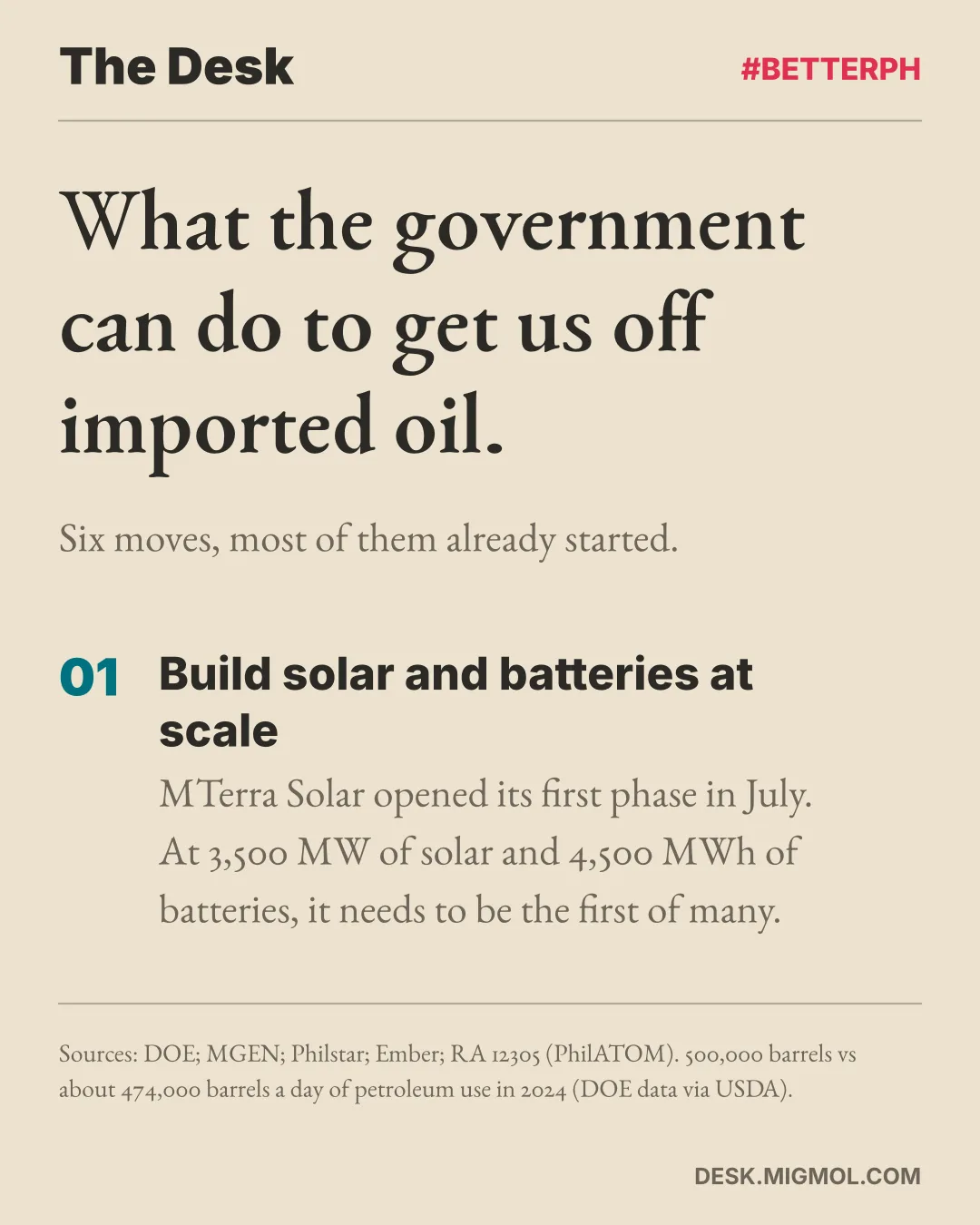
Solar and batteries are the new North Sea. They are cheaper every year, they go up in months instead of decades, and nobody can close a strait on sunlight. We are already building what is billed as the world’s largest solar-and-battery project. MTerra Solar opened its first phase in Nueva Ecija in July, and when it is finished it will have 3,500 MW of panels and 4,500 MWh of batteries.
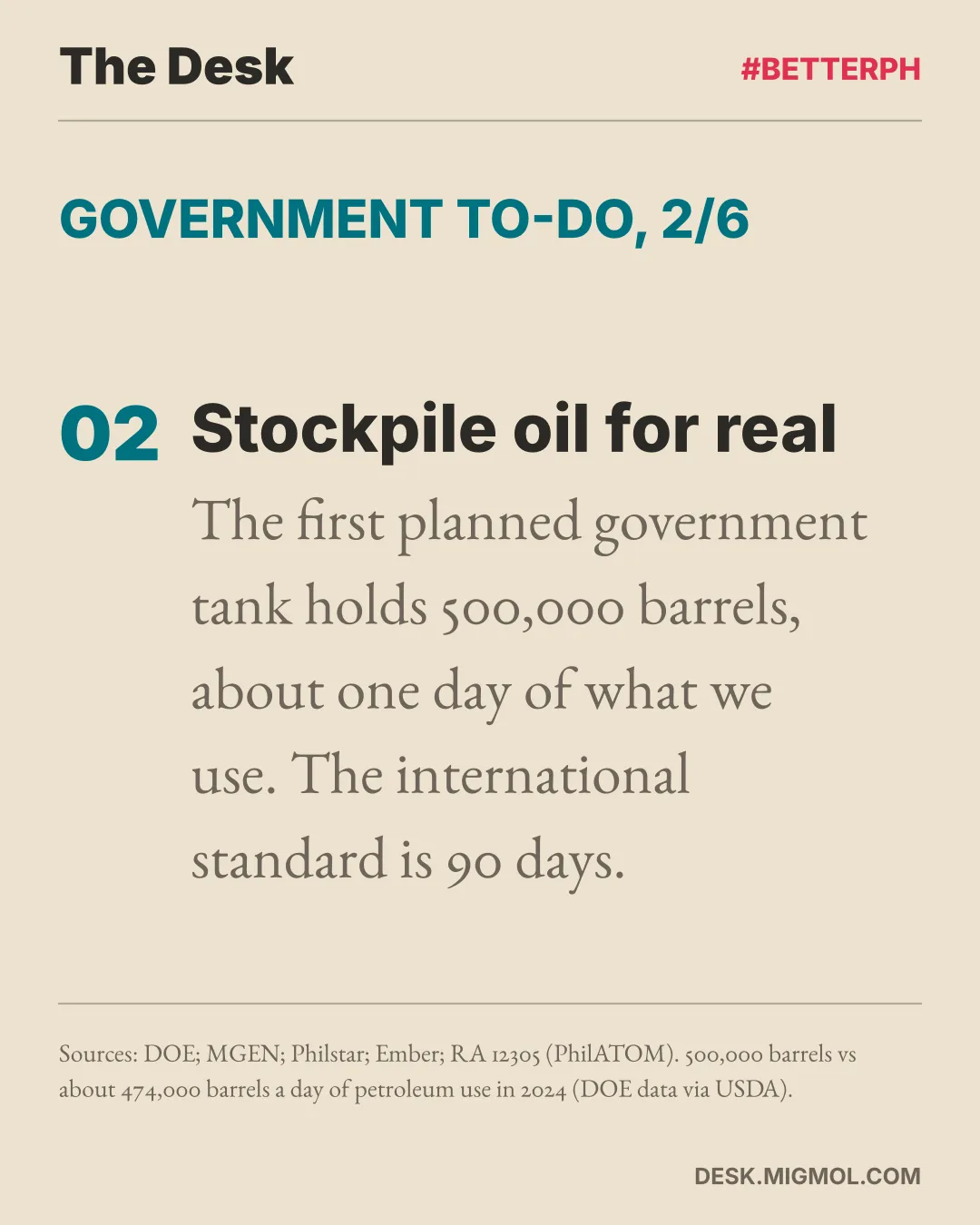
Oil will not disappear overnight, so we have to store it like we mean it. The first government oil tank, funded through the Maharlika fund, is planned at 500,000 barrels. That is about one day of what the country uses. The international standard is 90.
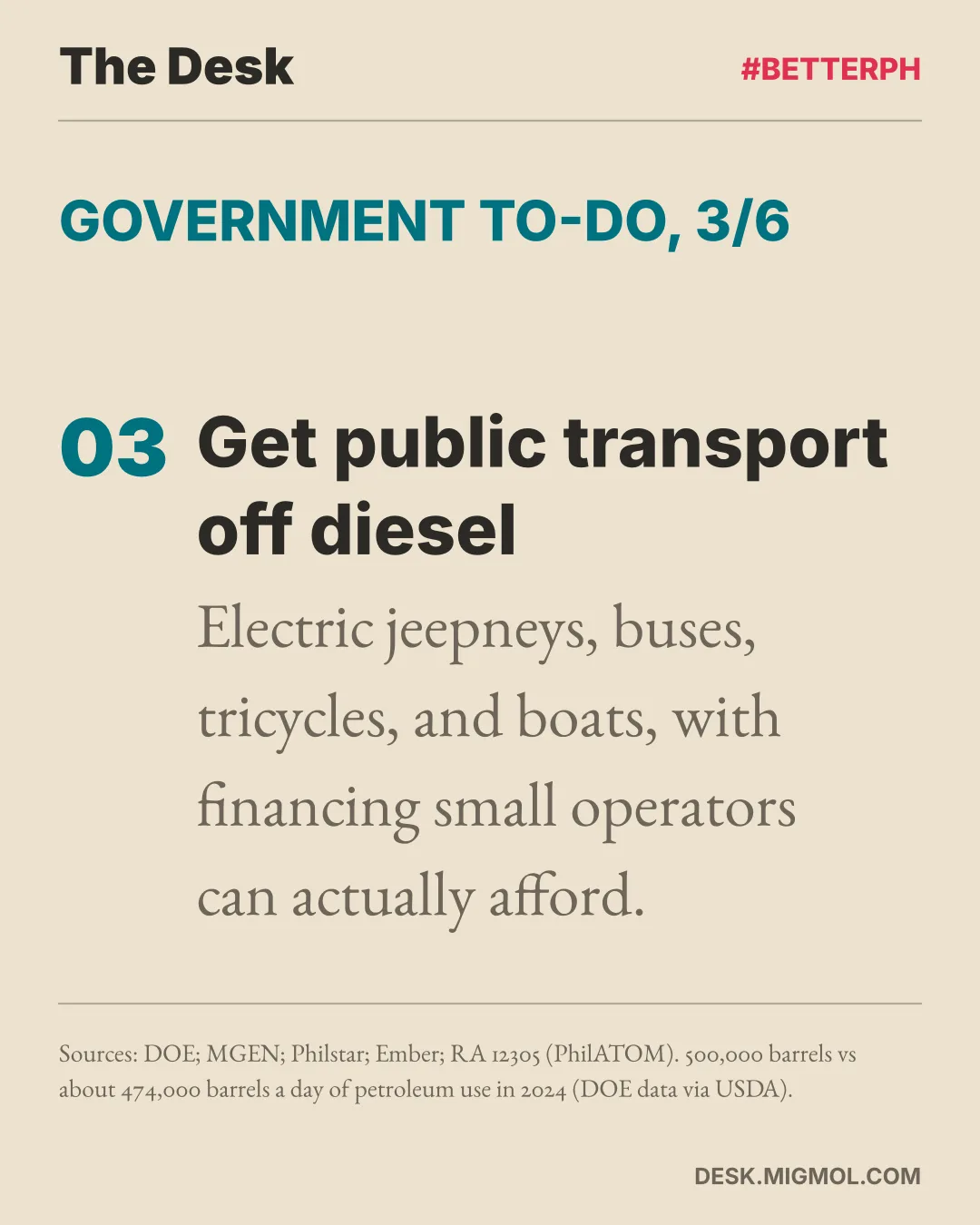
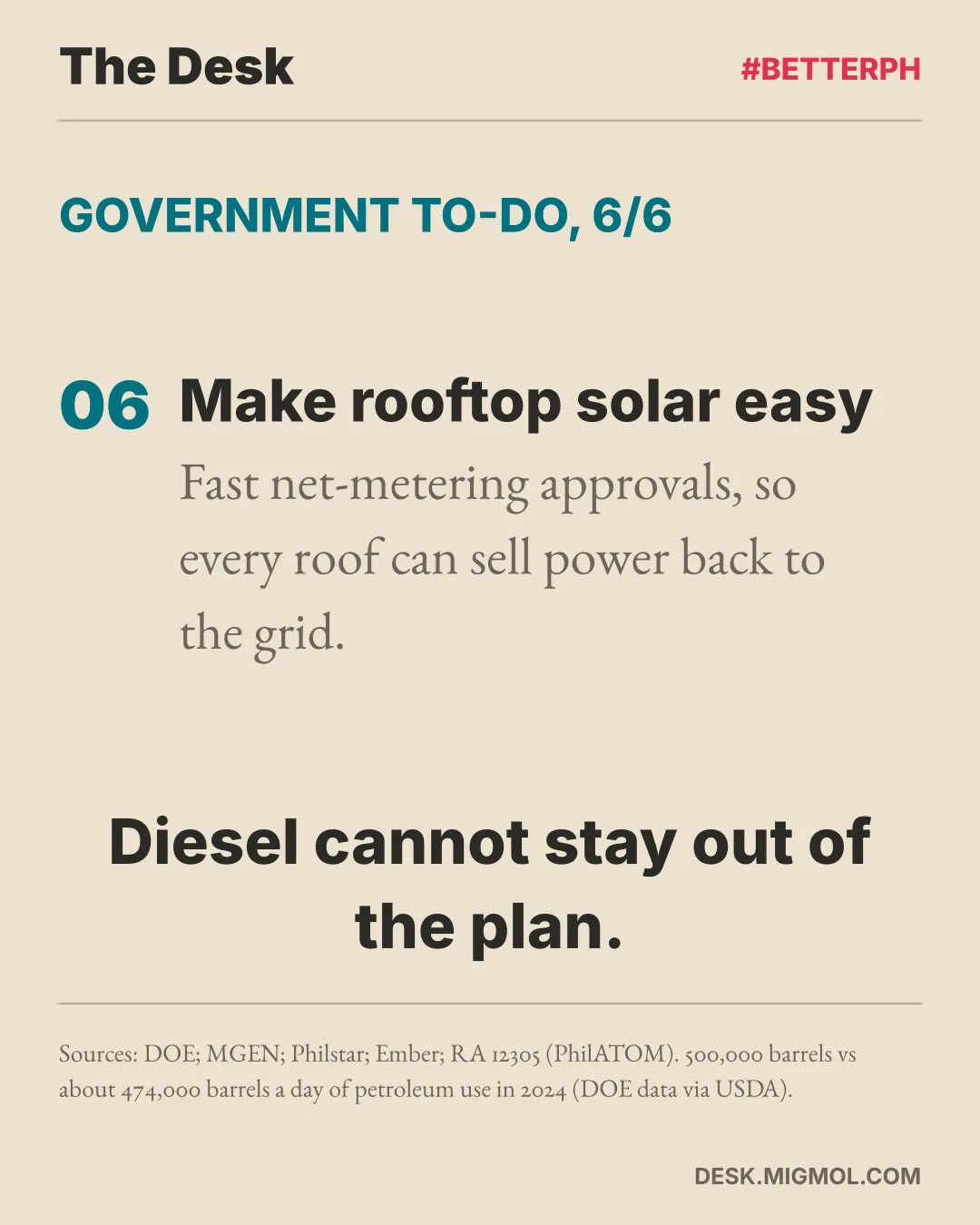
The biggest job is diesel. Diesel is 43% of the oil we burn, and it runs our jeepneys, buses, trucks, tractors, and boats. Electrifying public transportation, all of it, is how a country of commuters gets off imported fuel, and it is the part of the plan that is still missing.
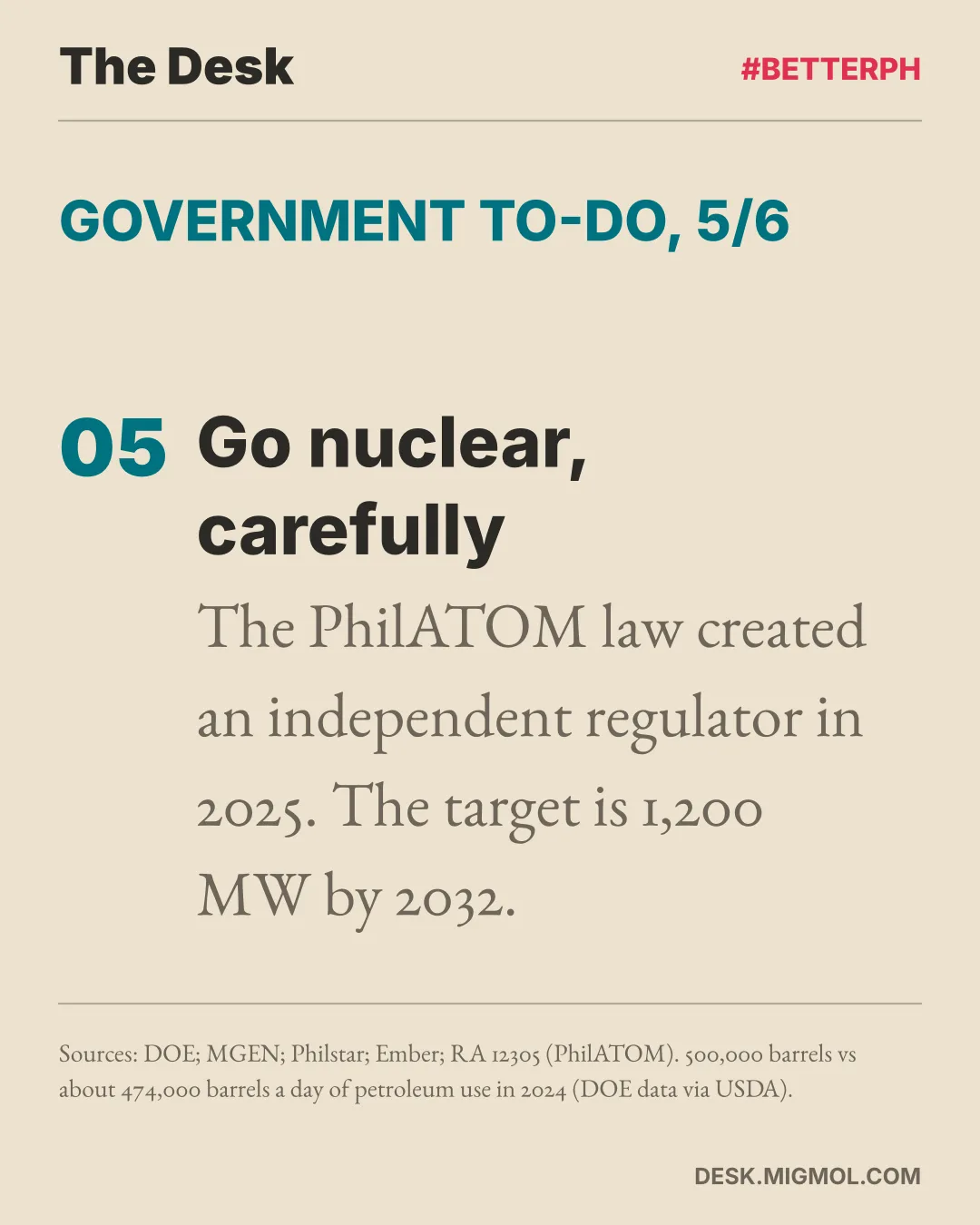
And yes, nuclear is back on the table. In 2025 we passed the PhilATOM law and created our first independent nuclear regulator, and the government is targeting 1,200 MW of nuclear power by 2032, more than 50 years after construction started on Bataan.
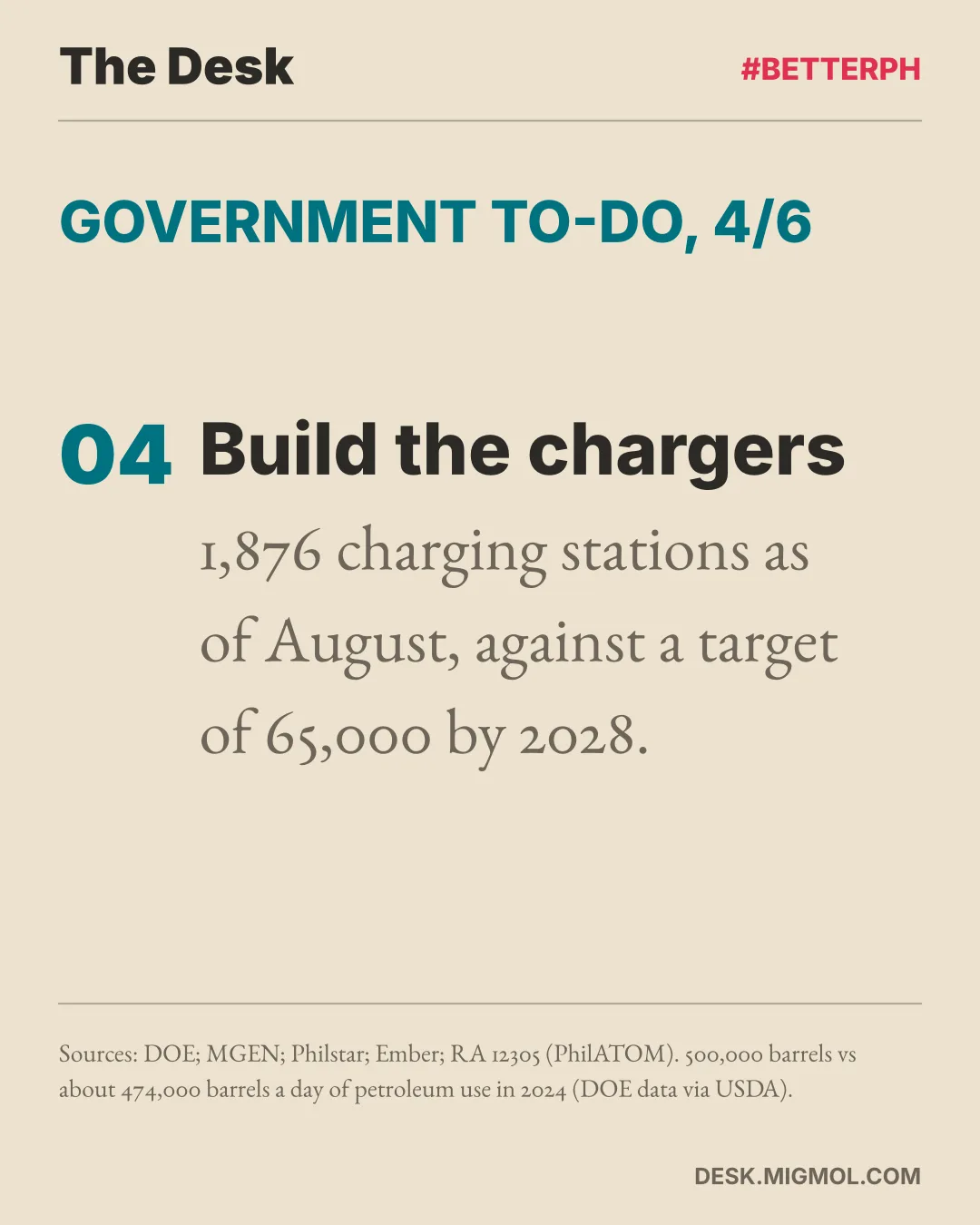
Saudi Arabia understood. Iran couldn’t wait. Now it is happening again, except this time there is a clear alternative, and people are already adopting it. Yes, history has repeated itself. Fool me once, shame on you. Fool me twice, shame on me. There will not be a third time. Hopefully.
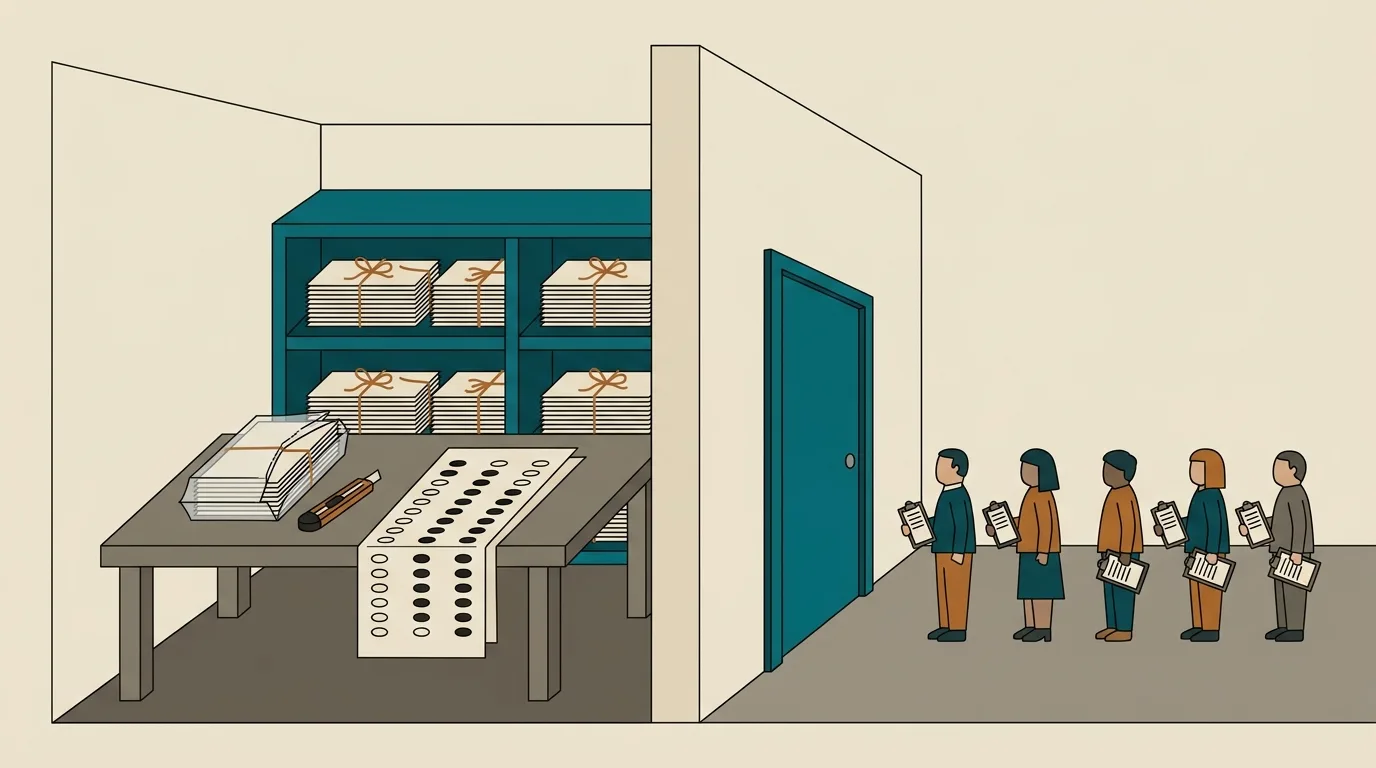
16,563 Ballots Were Shaded Before Anyone Voted
Nobody had to break a rule to reach the pre-shaded ballots in Maluso. The rule put them there. The Omnibus Election Code was written two months before EDSA, and Comelec's 963-page fix is still waiting.
Read more →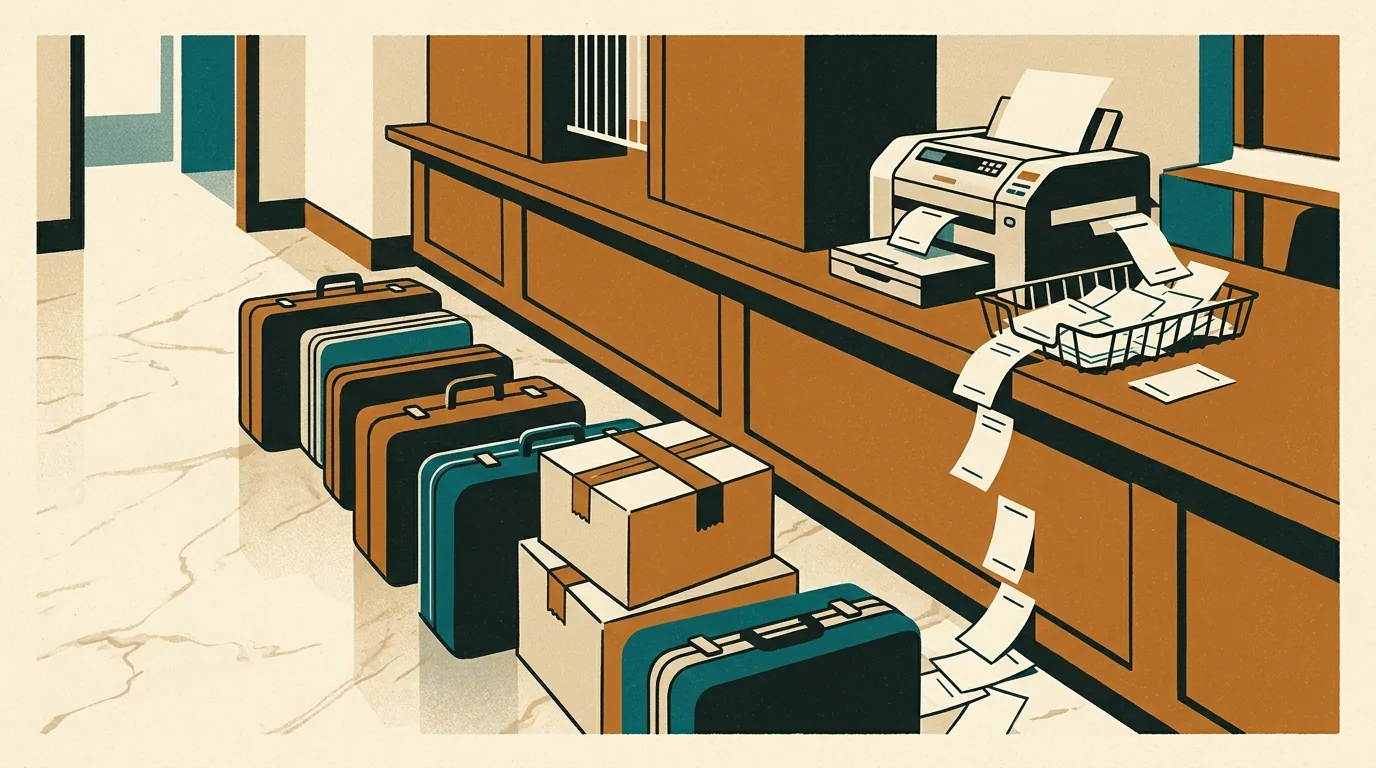
₱457 Million in Cash, and Nobody Asked
The bank filed the report. The AMLC said it had too many to read. Part 4 of 4 on anti-corruption with teeth.
Read more →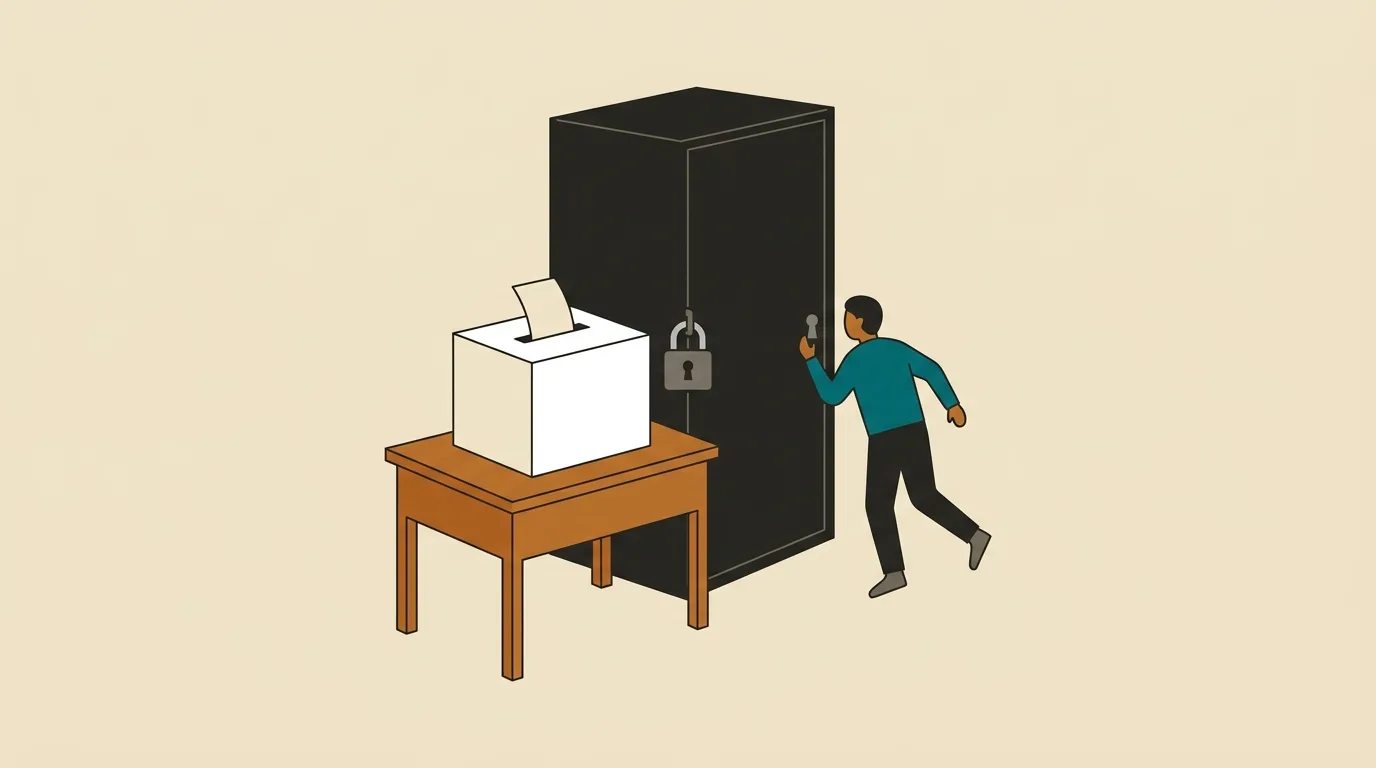
₱17.99 Billion, and We Can't See How It Counts
The counting machine reads marks and adds them up. Your cashier's terminal is harder to build. So why is the code that counts our votes still kept in a reading room in Makati?
Read more →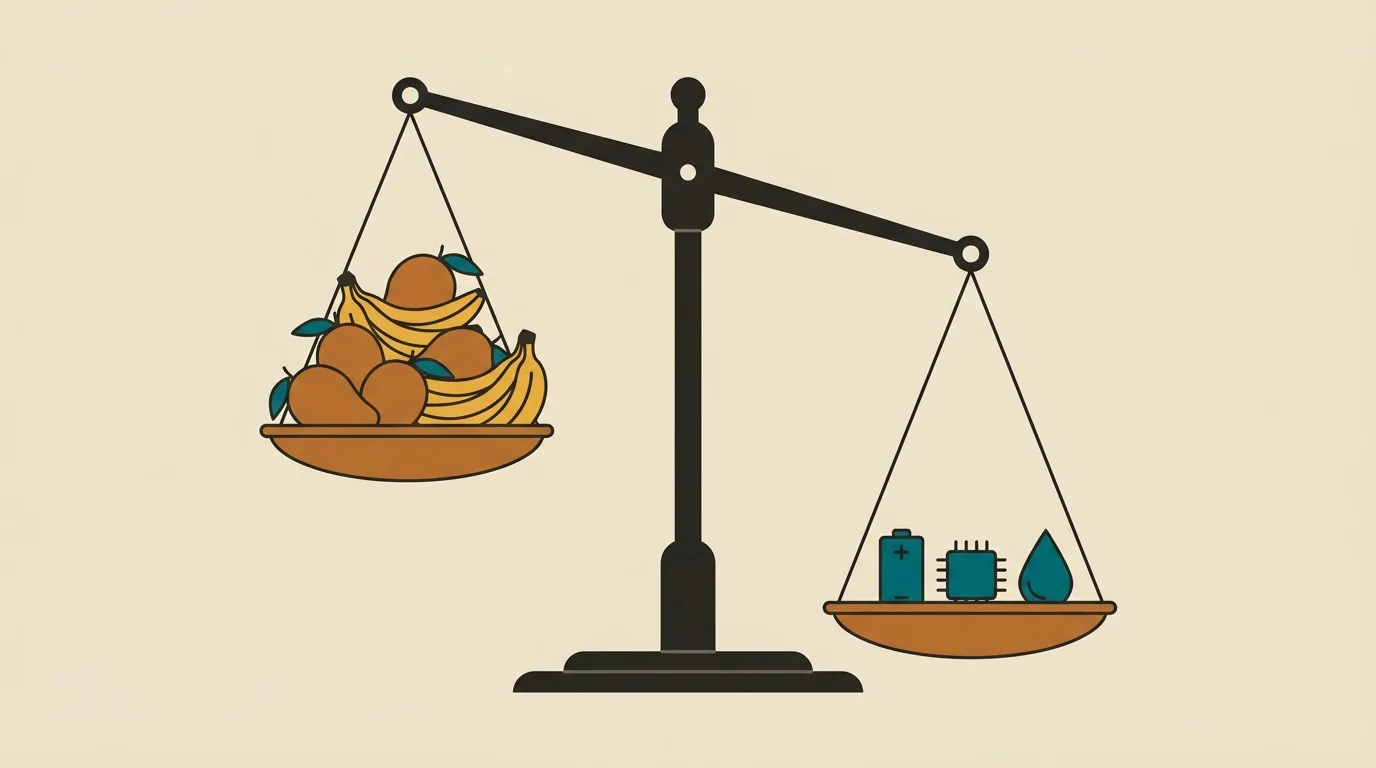
What does the world need from the Philippines? Right now, nothing it can't get somewhere else.
China refines 91% of the world's rare earths. Taiwan makes over 90% of its most advanced chips. We import 98% of our garlic and ship our nickel out as raw ore. What could the Philippines own that the world can't do without?
Read more →