1st Sport, 2nd Religion, 3rd World, and 40th Ranked
Let's Help Fix Philippine Basketball

We wear different colors, come from so many backgrounds, and are dispersed all over the world, but one thing that unifies a lot of Filipinos is basketball. It is undeniable. And while we shouldn’t put all our eggs in one basket (other sports deserve development too), basketball’s hold here isn’t going anywhere.
Over 40 million Filipinos play basketball, on courts in nearly every one of our 42,010 barangays, and yet we are ranked 40th in the world.
Basketball is like a second religion in this country. Europeans love football the way we love this game. They’re good at their sport; we’re not. In the third window of the World Cup Asian qualifiers this year, Australia beat us 92 to 49.
The usual and obvious answer is height. We’ll get to height, because it’s real and it deserves a better response than being just waved away, but height isn’t what this series is about. The gap between how much this country loves basketball and how good it is at basketball is the widest such gap in world sport, and it isn’t an accident of genetics. It’s the output of a system nobody cared enough to design properly.
Start with the country that should embarrass us.
Iran
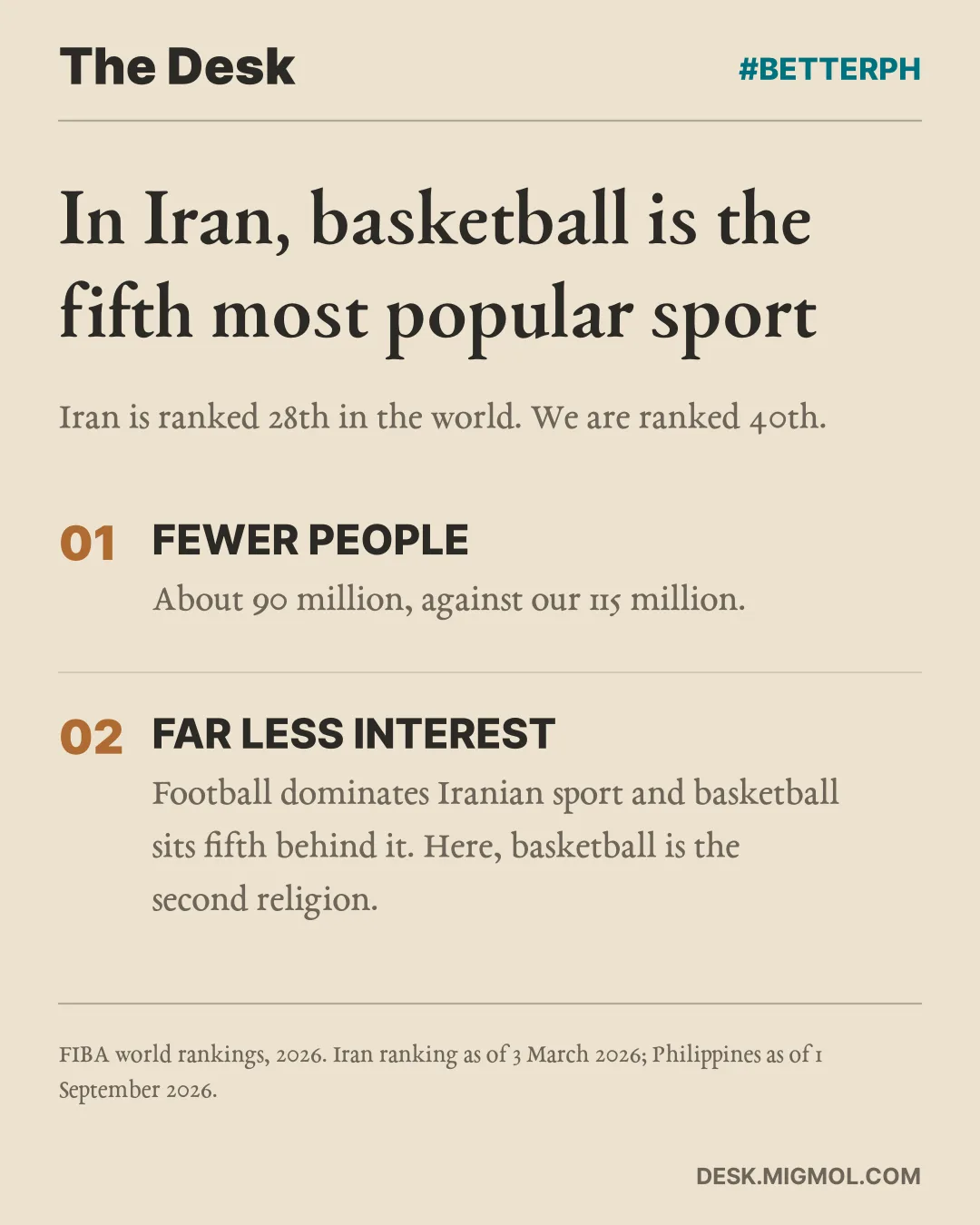
In Iran, basketball is the fifth most popular sport. Football runs everything there: the club rivalries, the national team, the regional tournaments. Iran qualified for the 2026 World Cup, their seventh.
Iran has about 90 million people vs our 115 million. They’ve spent two decades under sanctions and close to total sporting isolation, with real friction just getting athletes and coaches in and out of the world. (I couldn’t help but think about this in the last FIBA window in the Philippines. A part of me admired their dedication to their team and to representing their country. That can’t be said about some Philippine players, but that’s a different article.)
Iran is ranked 28th in the world; we’re 40th. They won the Asian championship in 2007, in 2009, and again in 2013. They are a basketball powerhouse. They don’t care about basketball, but they dominate it.
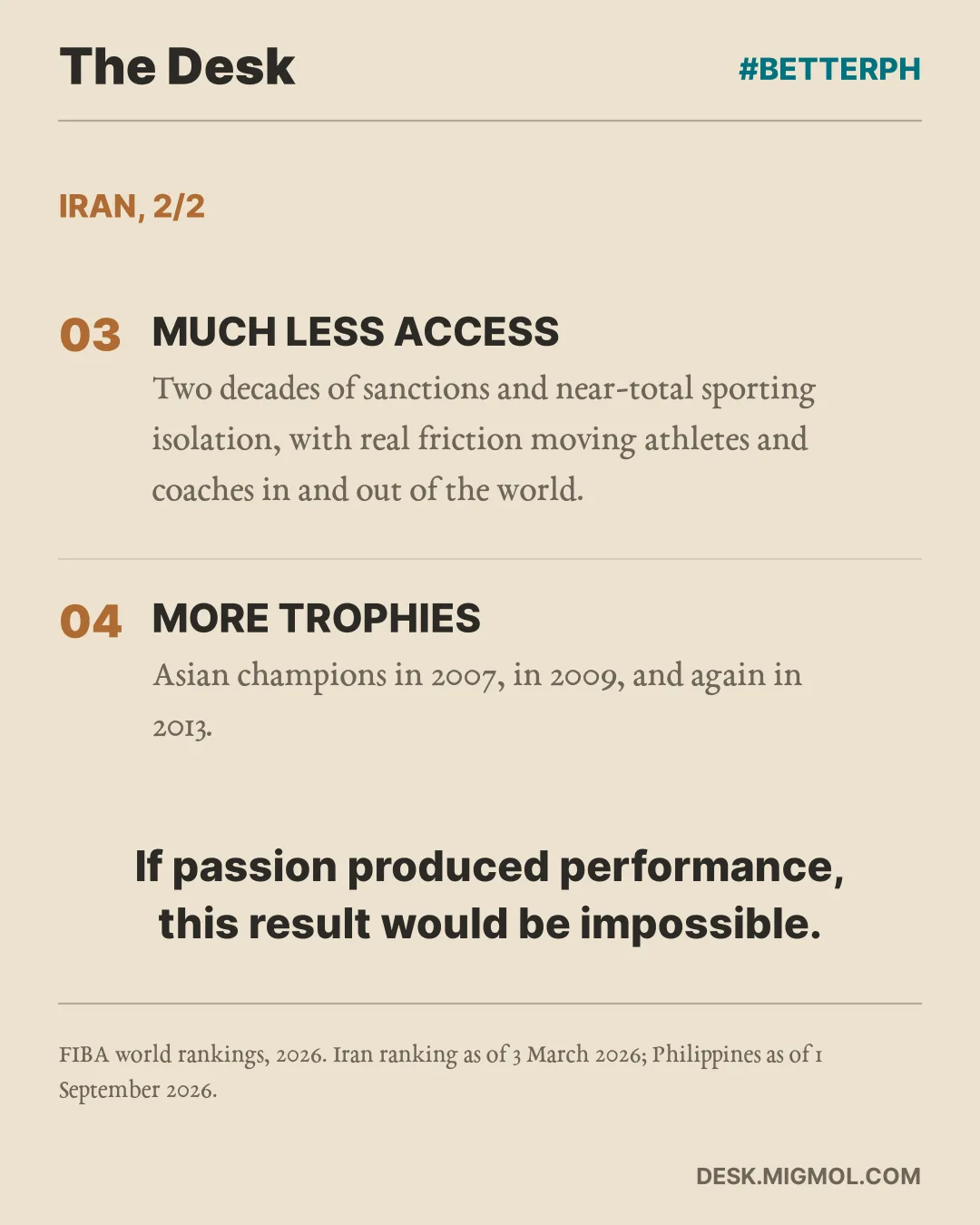
If passion produced performance, that result is impossible. And the Philippines contradicts that. Passion is not enough.
Australia can be explained. They’re rich, they have a real professional league, they have a pipeline into the NBA. They also have meat and dairy. Iran can’t be explained that quickly. There’s no excuse available, not money, not access, not even interest, because they have less of all three and they’re eleven places above us.
About height
Height is real. It’s not a myth and it’s not an alibi invented by people who don’t want to work. Basketball rewards size, and at the elite level it rewards it brutally. Anyone who tells you otherwise hasn’t watched a national team get switched onto a seven-footer and die there.
Height is a constraint. It is not a verdict.
Lithuania has under three million people. Slovenia has two million. Serbia has under seven. All three of them are ranked above us, ever since, and none of them got there by being taller. What they have that we don’t is a deep base of educated, experienced coaches, sports directors who stay in post, and a recognizable way of playing that a kid learns at nine years old and a national team still runs at twenty-nine.
We have a willing population and the passion. We’ve never bothered with the rest.
Height is also the only excuse on the list that requires nothing of anyone. Every other explanation for where we are implies a job somebody isn’t doing. Genetics implies nobody is at fault. That’s why it’s the first answer people reach for, and it’s why I want it named and set down early rather than left sitting at the back of the argument, unexamined, doing all this work.
Everything in the six parts that follow is designed to engineer around height rather than complain about it. Some of it is structural, some of it starts in a PE class, and one part of it is a format where being seven feet tall matters considerably less.
Which brings me to something that surprised me.
The team nobody funds
Four Philippine teams, four world rankings.
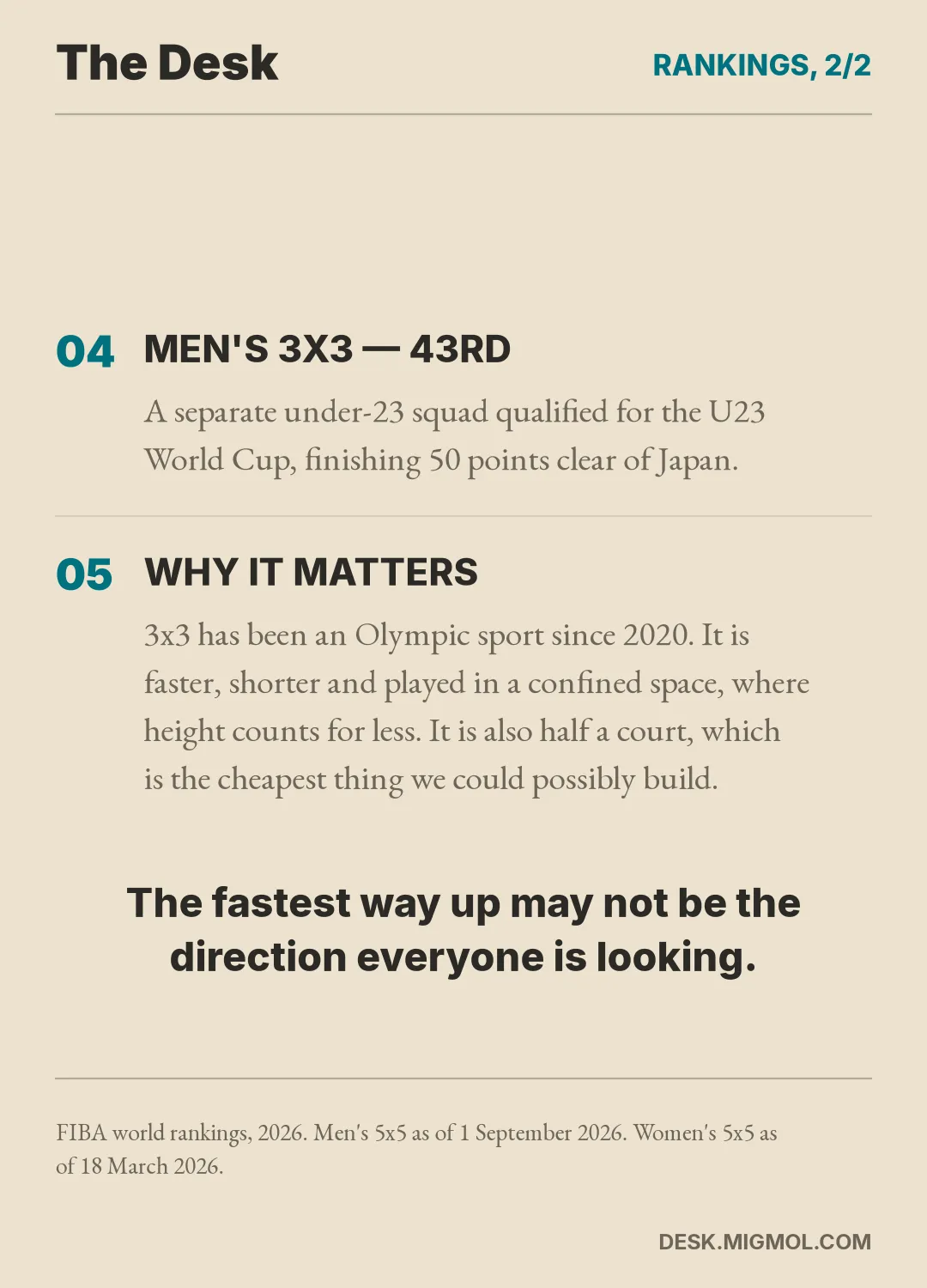
The men’s 5-on-5 team, the one the entire country watches, is 40th. The men’s 3x3 team is 43rd. A younger, under-23 squad separately qualified for the FIBA 3x3 U23 World Cup by finishing a qualifying series 50 points clear of Japan.
The women’s 3x3 team is 19th in the world. The Gilas Pilipinas Women’s team is ranked 30th and has far fewer resources than the men’s team. They are still playing in the Asian Games.
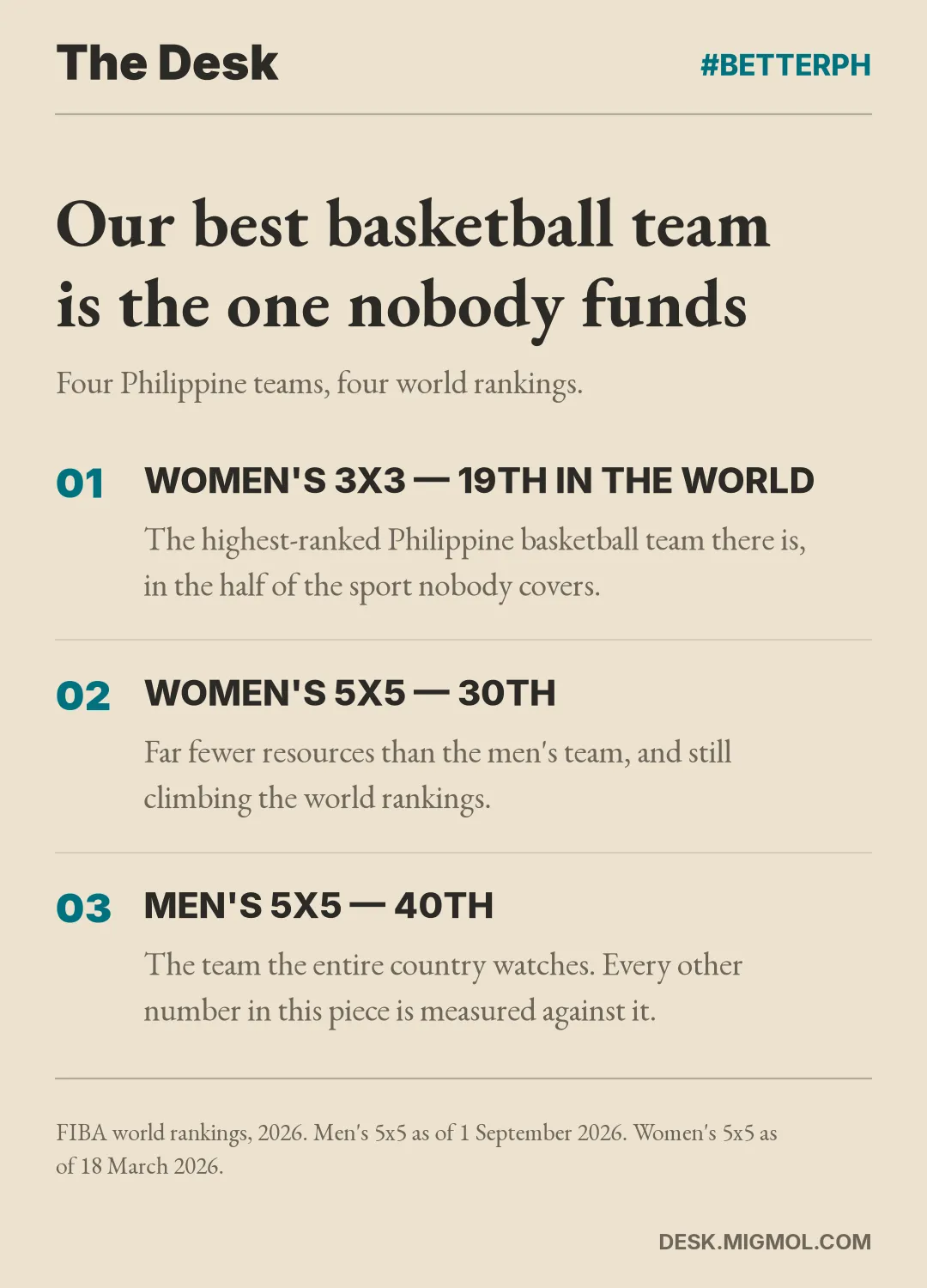
The best basketball team this country has is playing the format nobody funds, in the half of the sport nobody covers, twenty-one places above the team we organize our whole basketball conversation around.
3x3 has been an Olympic sport since Tokyo 2020. It’s faster, shorter, and played in a confined space where height counts for less than it does in the full game. It’s also half a court with one ring, which makes it the cheapest thing this country could possibly build.
So the fastest route up may not be the direction everyone is looking.
I’m not arguing we abandon the men’s team. We obviously can’t do that. I’m arguing that we’ve decided, without ever deciding, that Philippine basketball means twelve men on a full court, and that decision is costing us the one result we already have.
Three things to start with
Publish the numbers, and audit them. How much the government spends on basketball against how much the private sector does, and who actually calls the shots. Compare the total pesos spent on the men’s 5x5 team vs all the other teams combined. I’m sure the ratio of budget to global ranking will be totally lopsided. Who is in charge of what: the official teams, the training, the budget, the leagues. You can’t fix what you can’t see the full picture of, and whether any of it is performative only shows once somebody lifts the veil.
Fund the women’s 5x5 team and both 3x3 programs at the level their results already justify. Not as a gesture. As the plainest return on investment available in Philippine sport right now. Alex Eala, The Filipinas (women’s football), Alas Pilipinas (women’s volleyball): Filipinas can compete and dominate. We have to invest in them.
Stop accepting height as the answer. Name it, concede what’s true about it, and then ask what we’d do differently if it were the only thing standing in the way. The answer turns out to be a lot. Settling for “we lack height” ends the discussion right there. That’s what someone who doesn’t care about basketball says. But that’s not why I’m writing this, and it’s not why you’re reading it right now.
Hope is not a strategy. We need to strategize, plan, and execute.
Next: forty years since we won Asia, and the American who coached that team.



This is Part 1 of Pilipinas Basketball 2039, a seven-part proposal for rebuilding Philippine basketball. Target: top 10 at the 2039 FIBA Basketball World Cup, and a place at the 2040 Olympics earned on merit. Next: Forty Years Since We Won Asia.
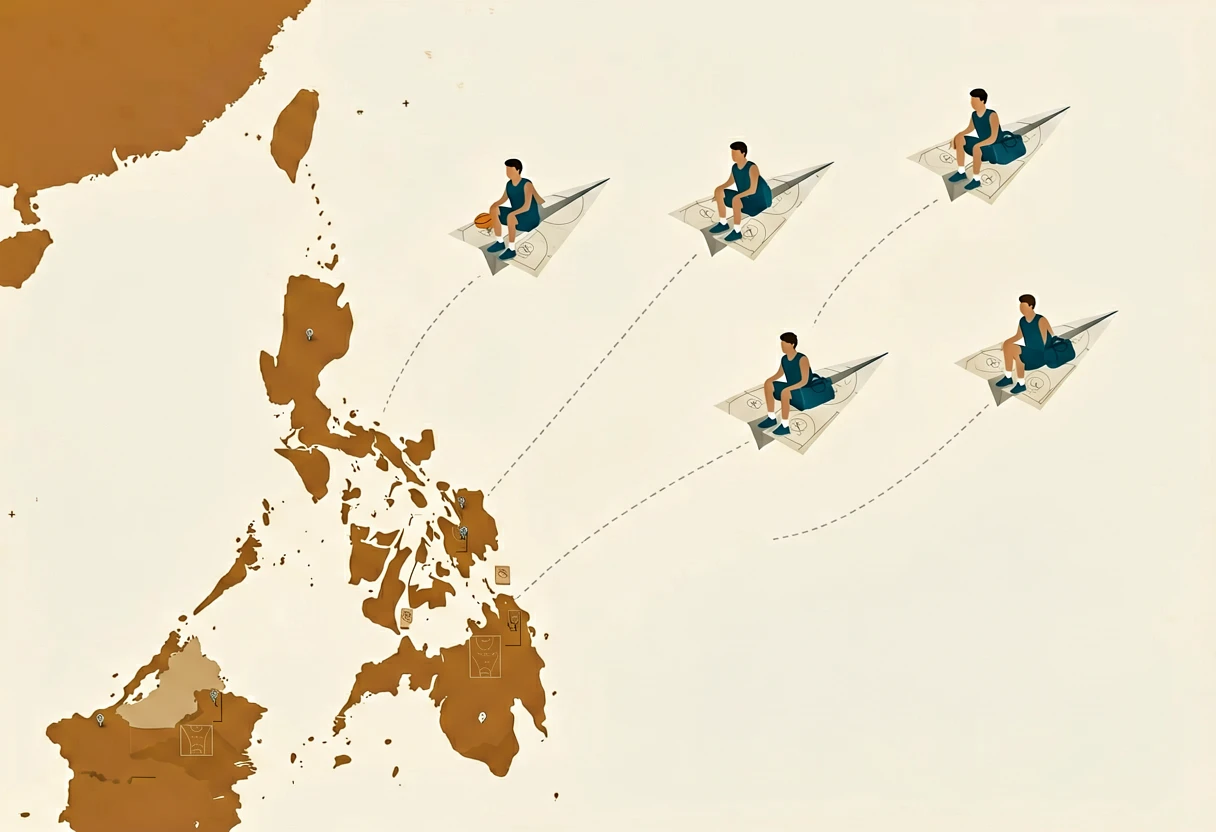
None of Our Best Players Play Here
Sotto and Ramos play in Japan. Tamayo and Quiambao play in Korea. Four of our best players have all found somewhere better to work, and every reason why is structural.
Read more →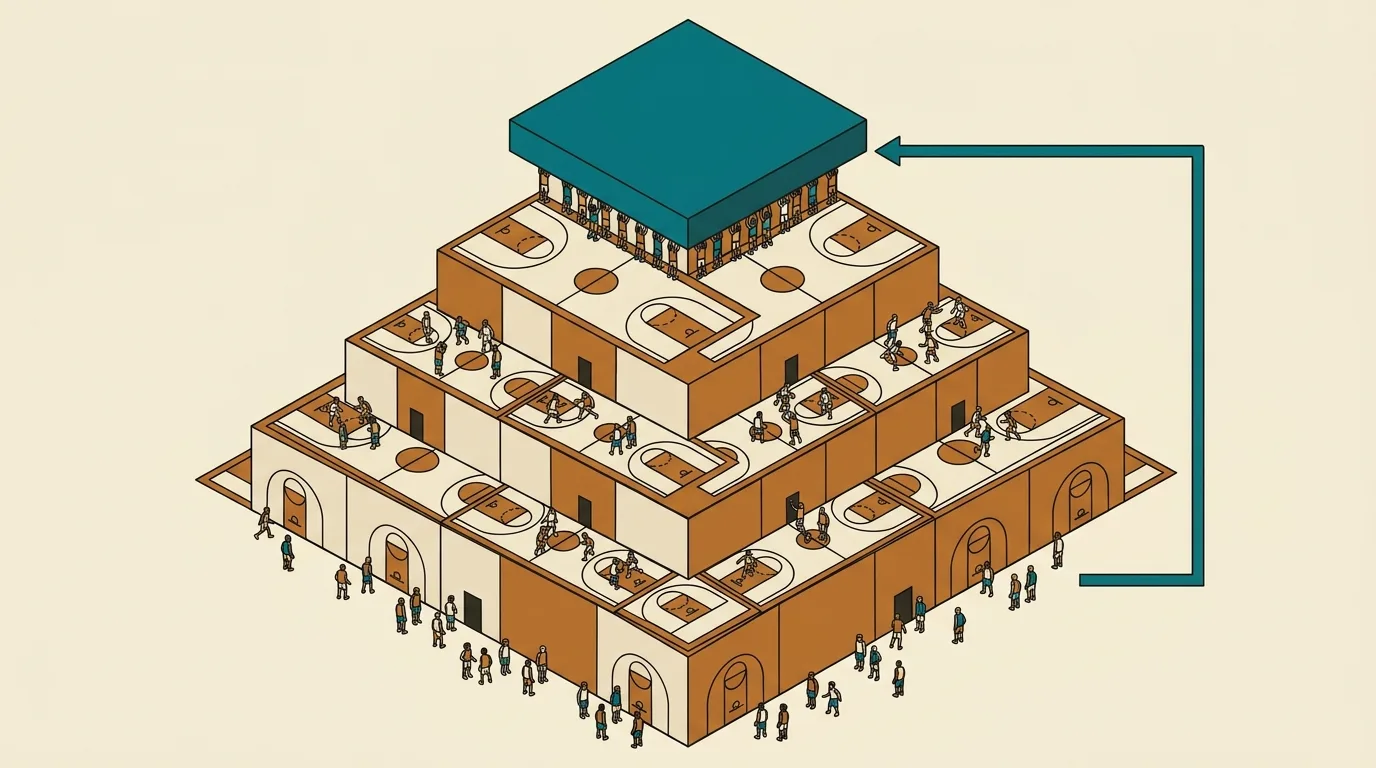
Do Our Basketball Leagues Make Sense?
China beat us by 44 points and ended our Asian Games title defense in the group stage. The reason has almost nothing to do with the twelve men on the floor.
Read more →
Yabang, High; Basketball IQ, Low
The last Philippine team to win the FIBA Asia Cup did it in 1985, coached by an American. We produce players at a rate no country can match. We have never produced coaches.
Read more →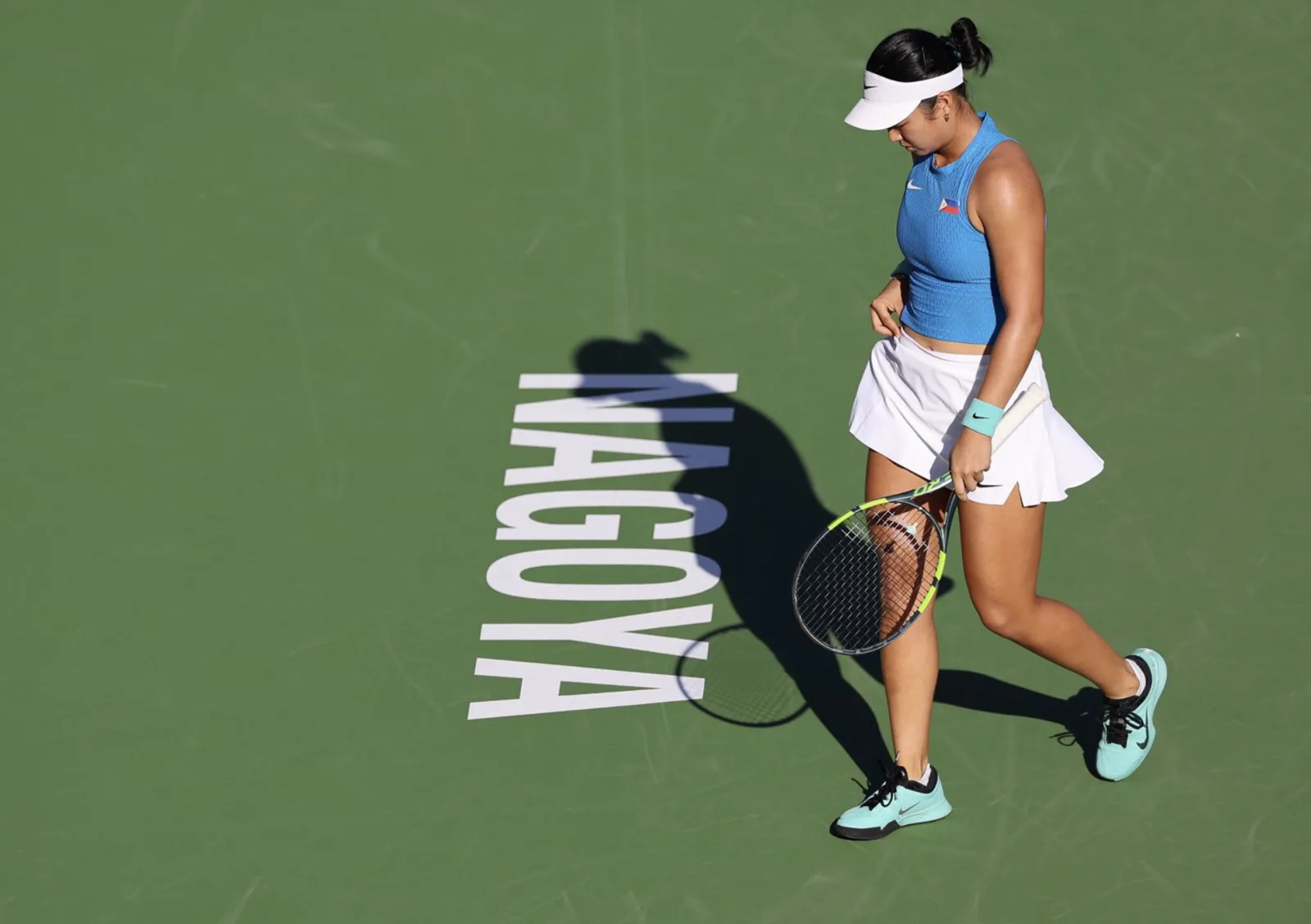
Alex Eala Doesn't Owe Us Anything
But she showed up anyway.
Read more →