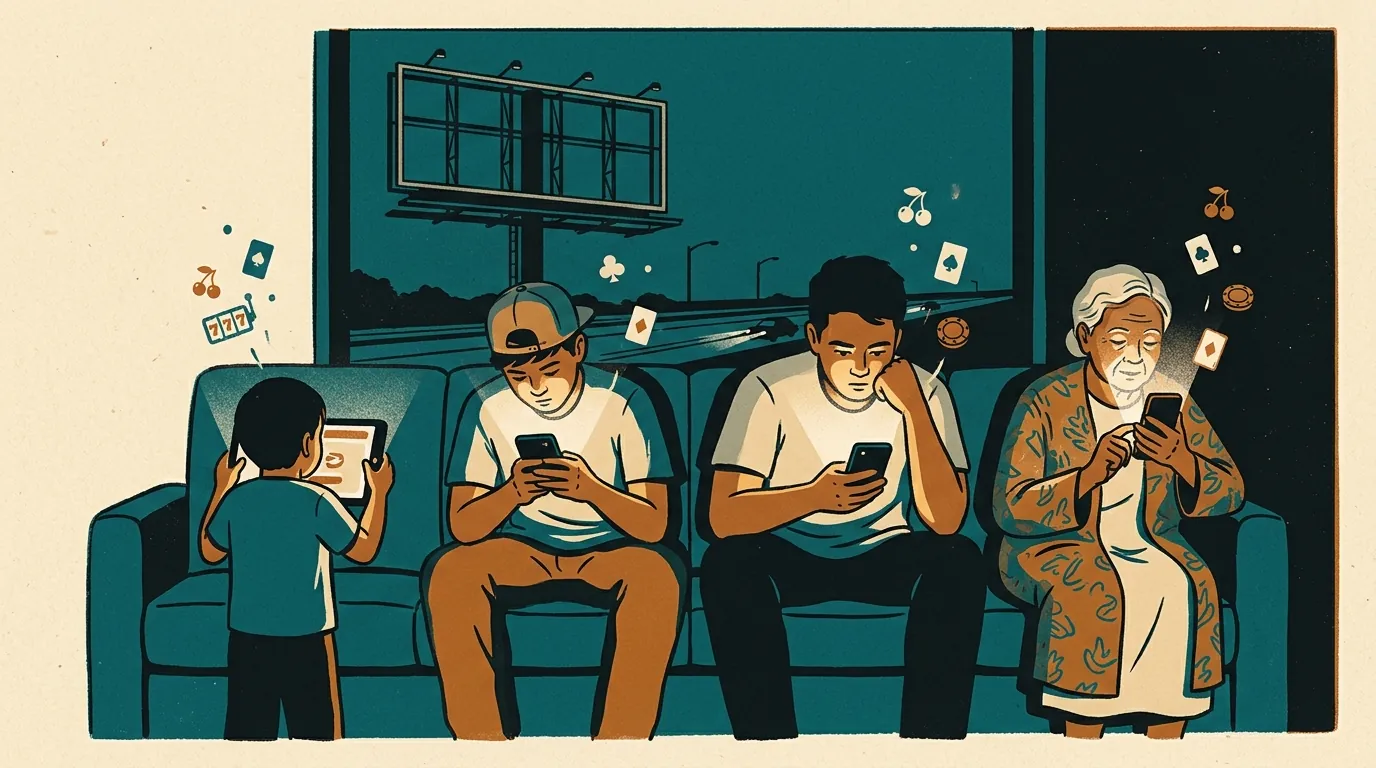
We are in a silent gambling pandemic, and it reaches Filipinos from 10 to 80
The gambling billboards came down in August 2025, and the industry promptly had its best year on record.
PAGCOR ordered it in July: every billboard, every wallscape, every ad on a bus, a jeepney, a taxi, or a train, stripped nationwide by the fifteenth of August. Then the numbers came in. Philippine gross gaming revenue hit ₱396.14 billion in 2025, up 6.39%, and for the first time the online side passed the casinos. E-games and online gaming brought in ₱201.12 billion, about 30% more than the year before and 50.77% of the whole industry. Licensed casinos fell 9.58% to ₱182.50 billion.
So taking the ads down did not slow anything. It took the evidence off the road.
That is what makes this one quiet. A pandemic you can see gets counted, argued about, and legislated against. This one moved into a phone, where nobody is counting, and the last visible symptom was scraped off EDSA a year ago.
It starts at ten
Long before anyone asks for an ID, the loop is already being taught.
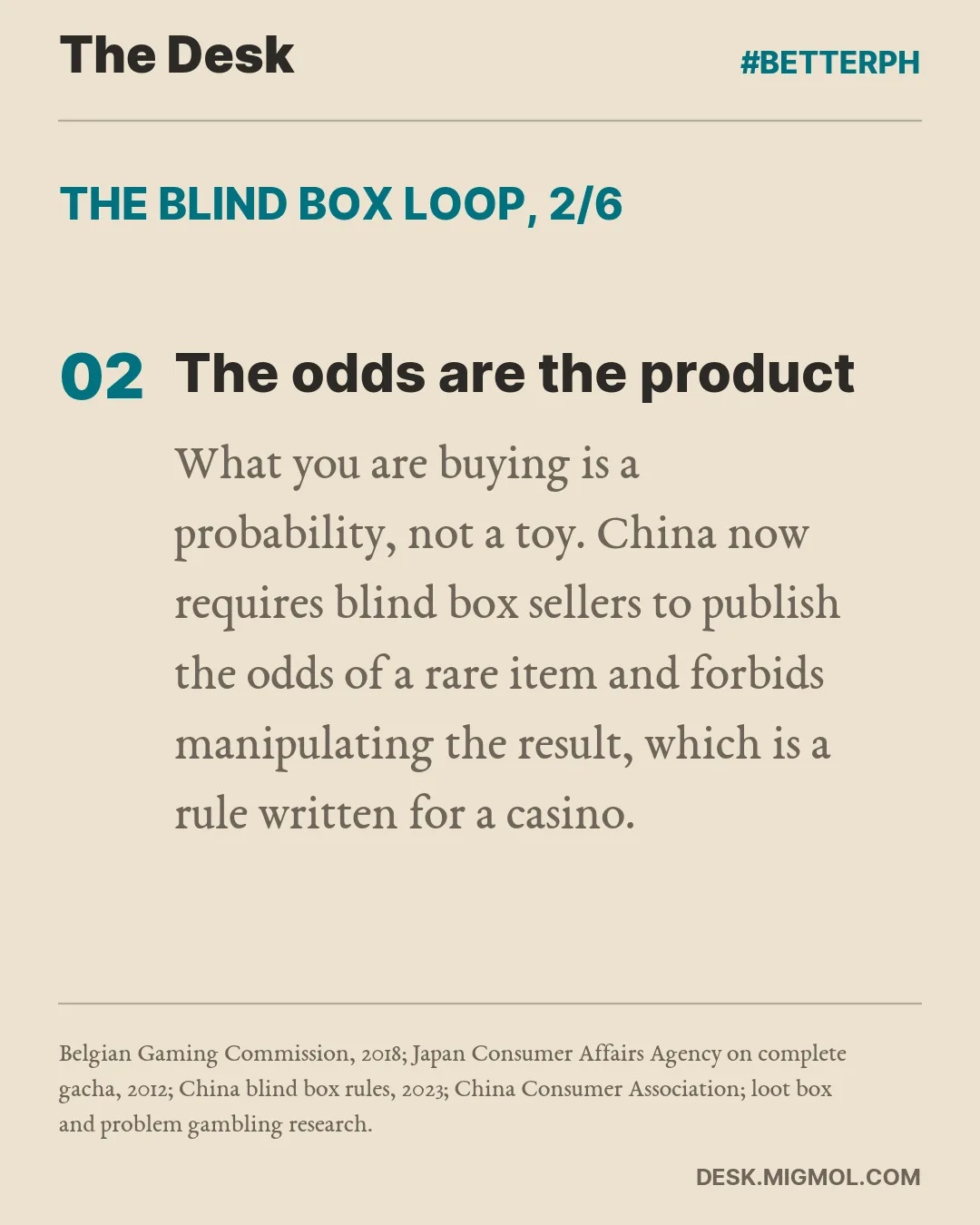
Roblox is the classroom. A 2023 class action named RBXFlip, Bloxflip, and RBLXWild as an illegal gambling operation preying on children, letting kids convert Robux into casino play and back into dollars. That fight is now a consolidated federal case with roughly 150 suits in front of one judge. Blind boxes do the same work offline. China restricted their sale to children under eight back in 2023, capped the price, and required sellers to publish the odds of a rare pull, after its own state paper called the format a commercial trap aimed at the psychological vulnerabilities of minors. The China Consumer Association reported minors spending hundreds to thousands of yuan a month without a guardian knowing.
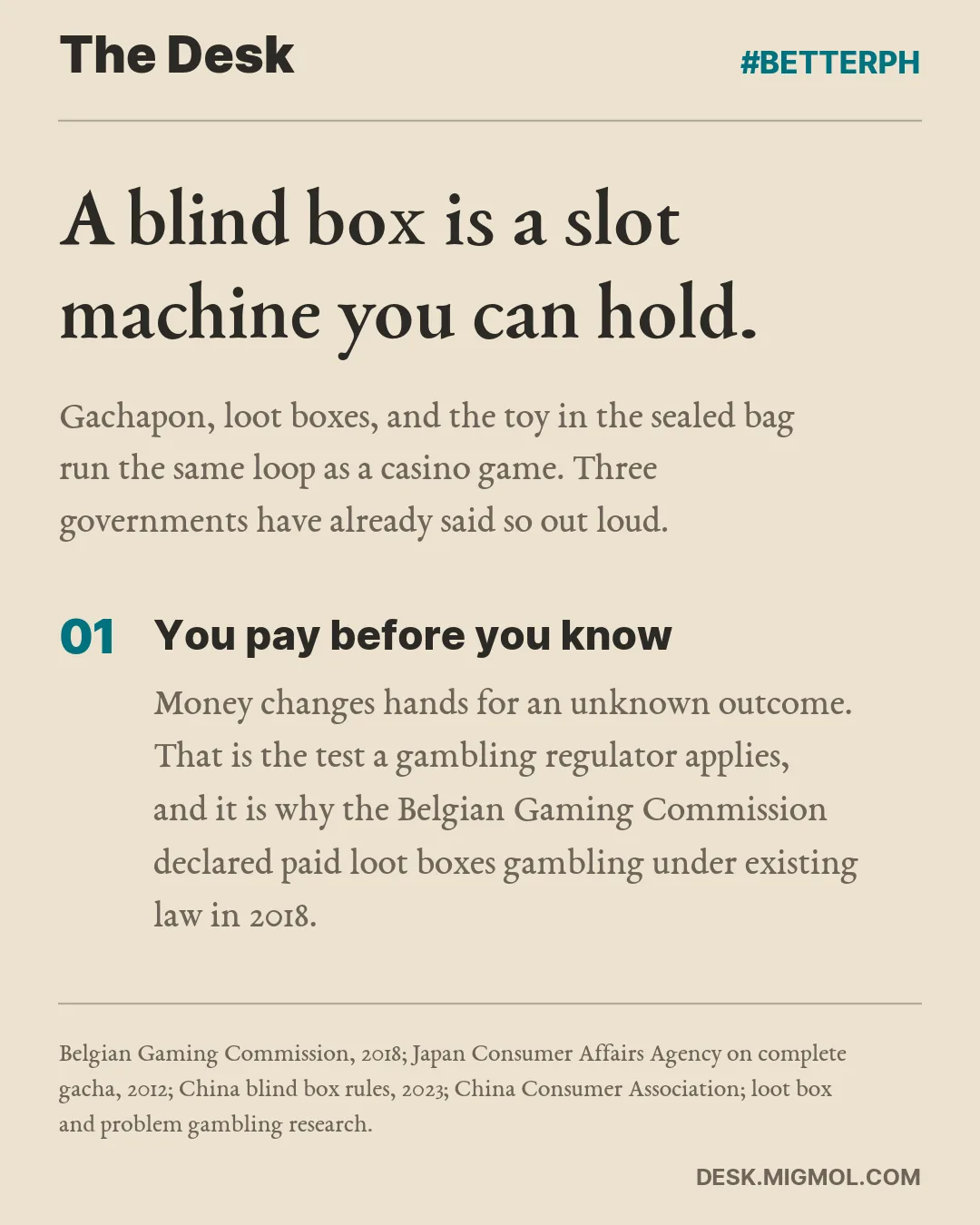
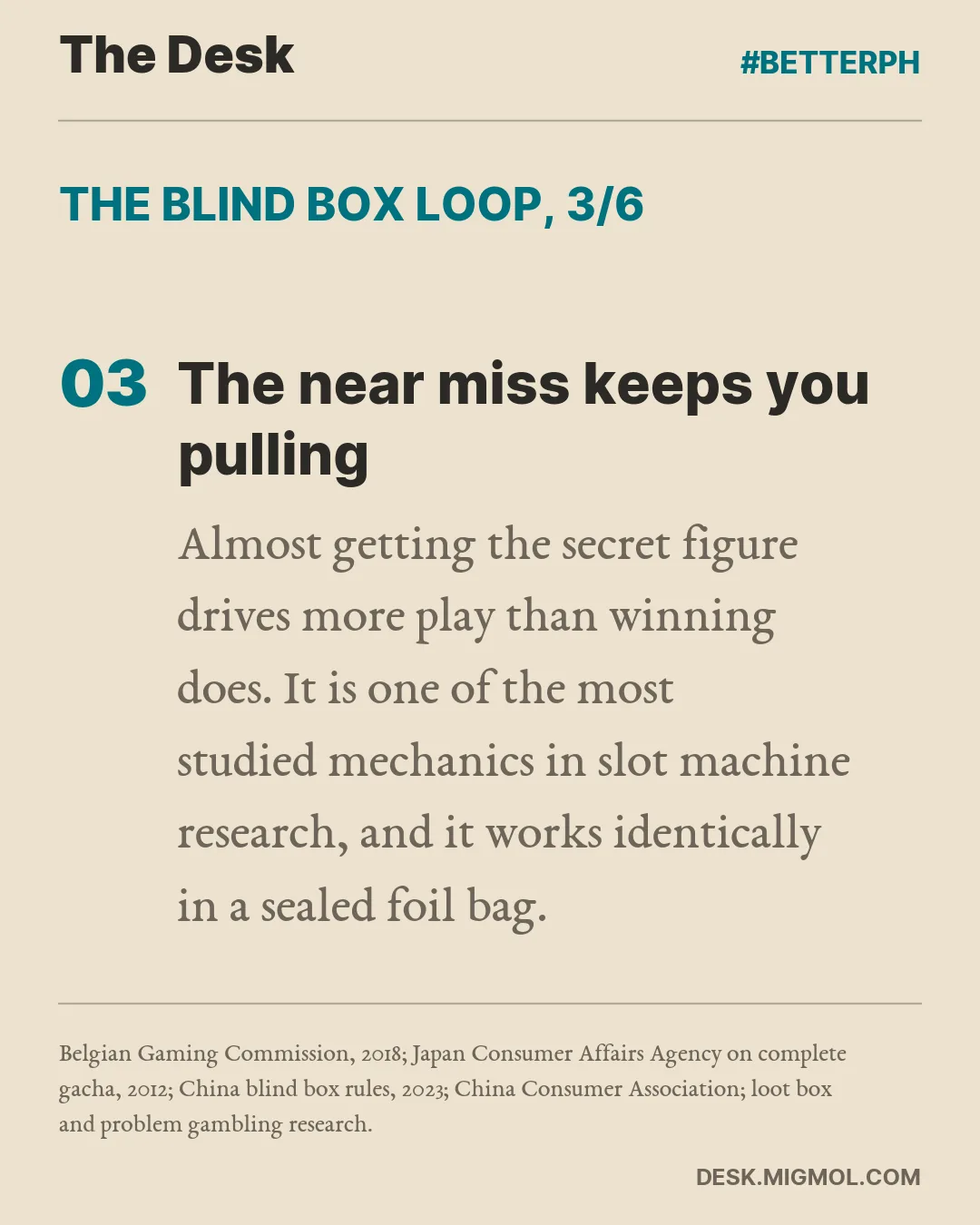
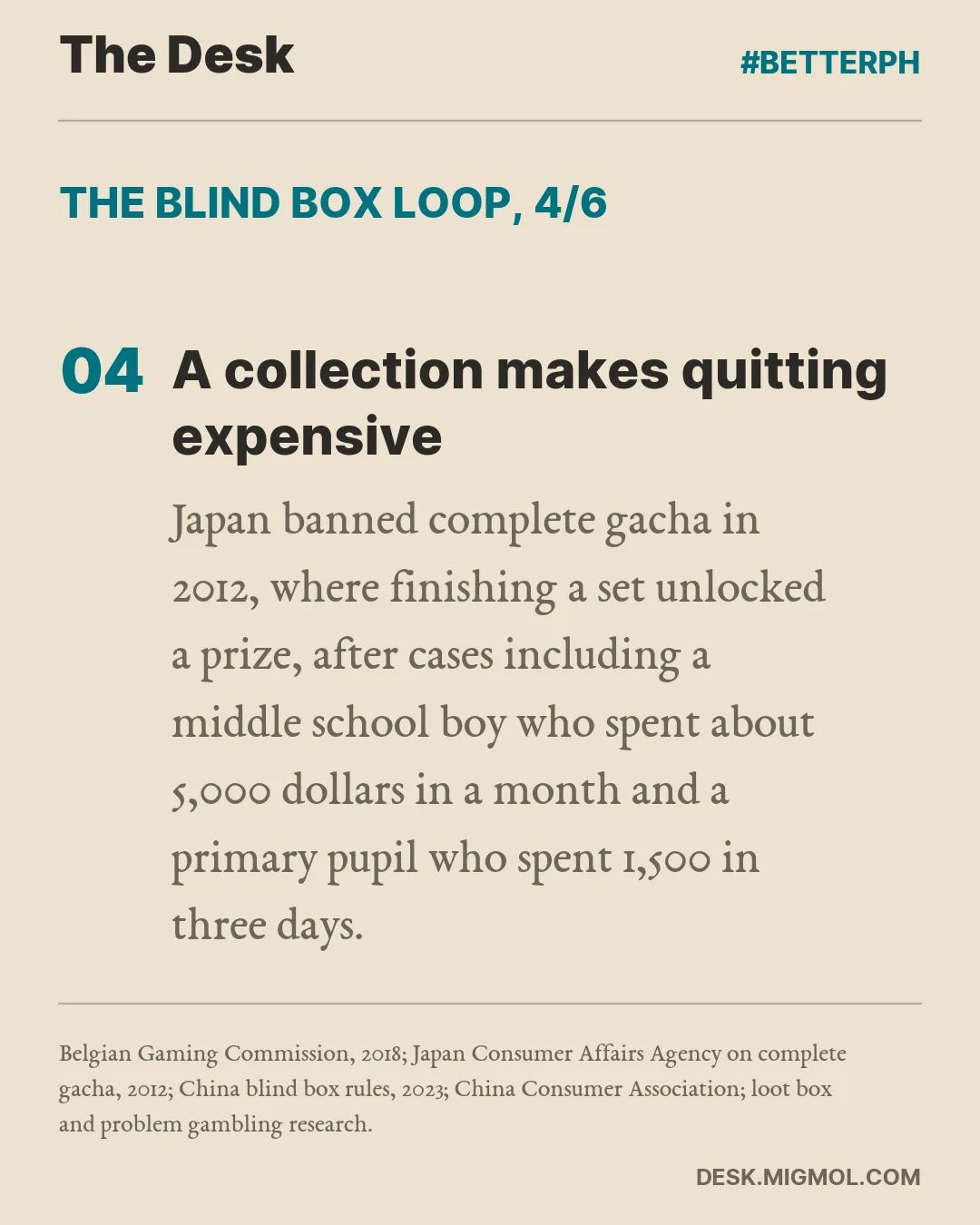
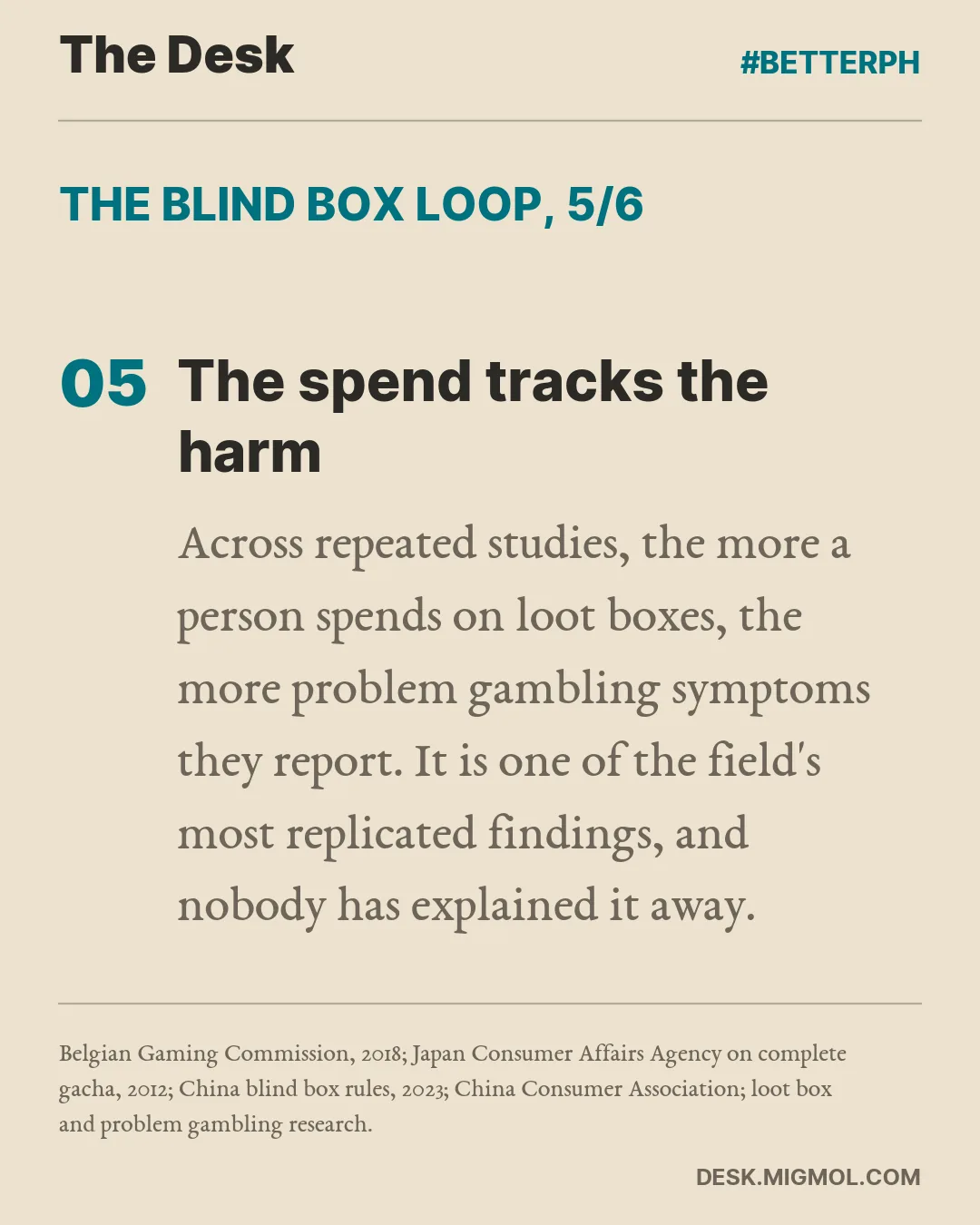
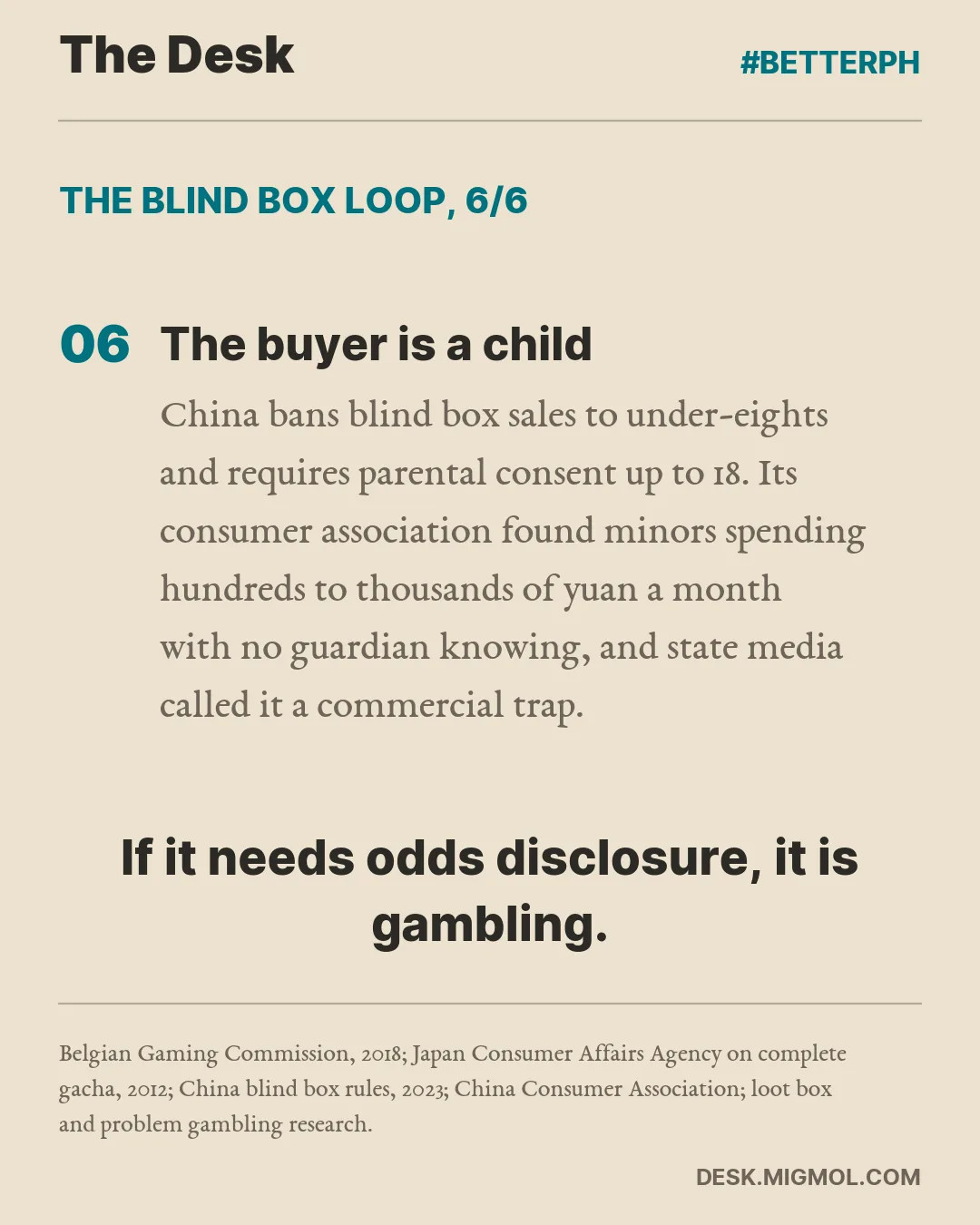
No money changes hands at a casino table in either case. What changes is the reflex. Pay, pull, mostly lose, occasionally win, pull again. By the time a betting app asks a seventeen-year-old for an e-wallet, the habit is fully formed and the app only has to supply the stakes.
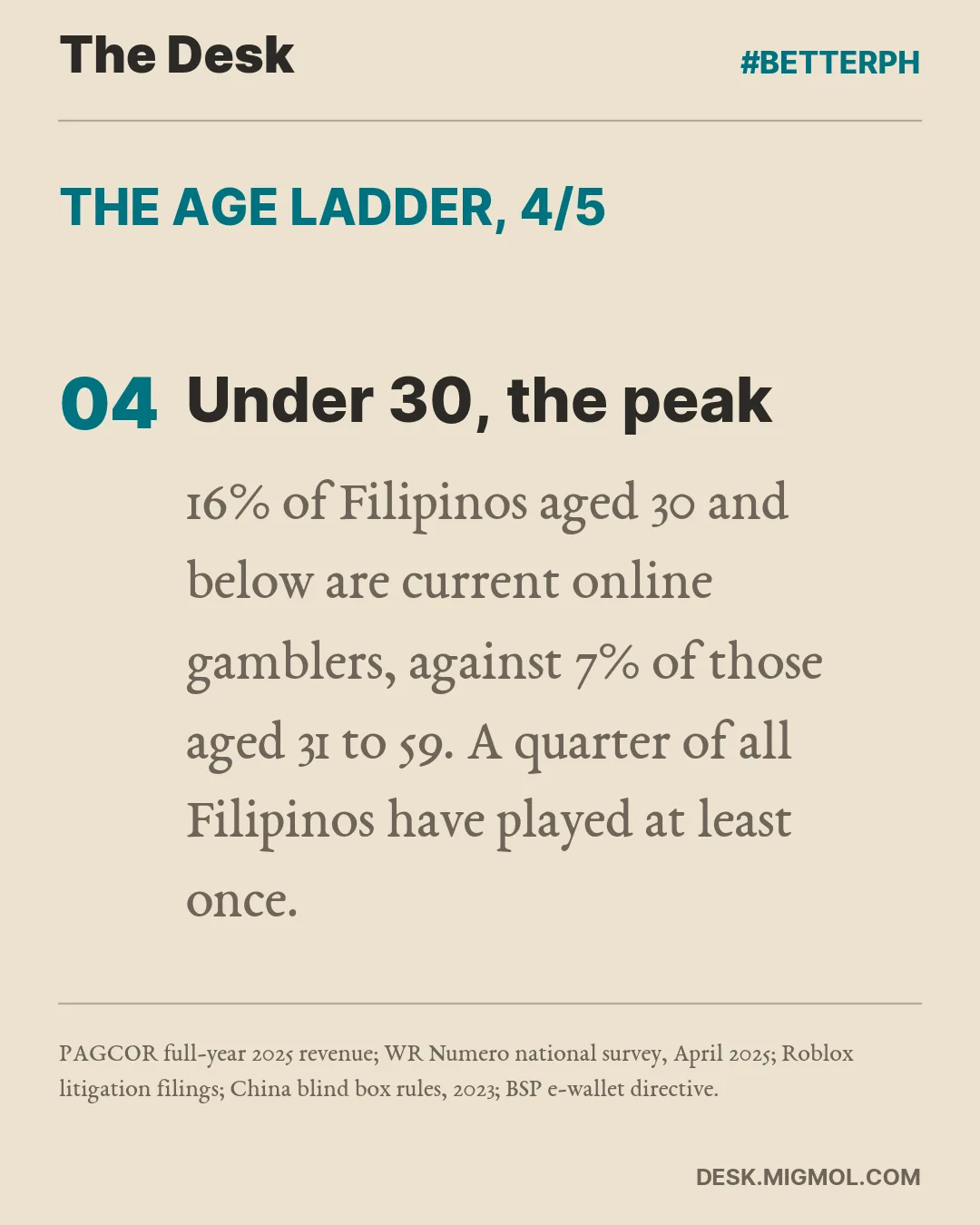
The Philippine data reads exactly like an age ladder. In WR Numero’s April 2025 poll, 16% of Filipinos aged 30 and below are current online gamblers, against 7% of those aged 31 to 59, and 3% of those over 60. A quarter of all Filipinos have gambled online at least once. Only one in ten has never heard of it.
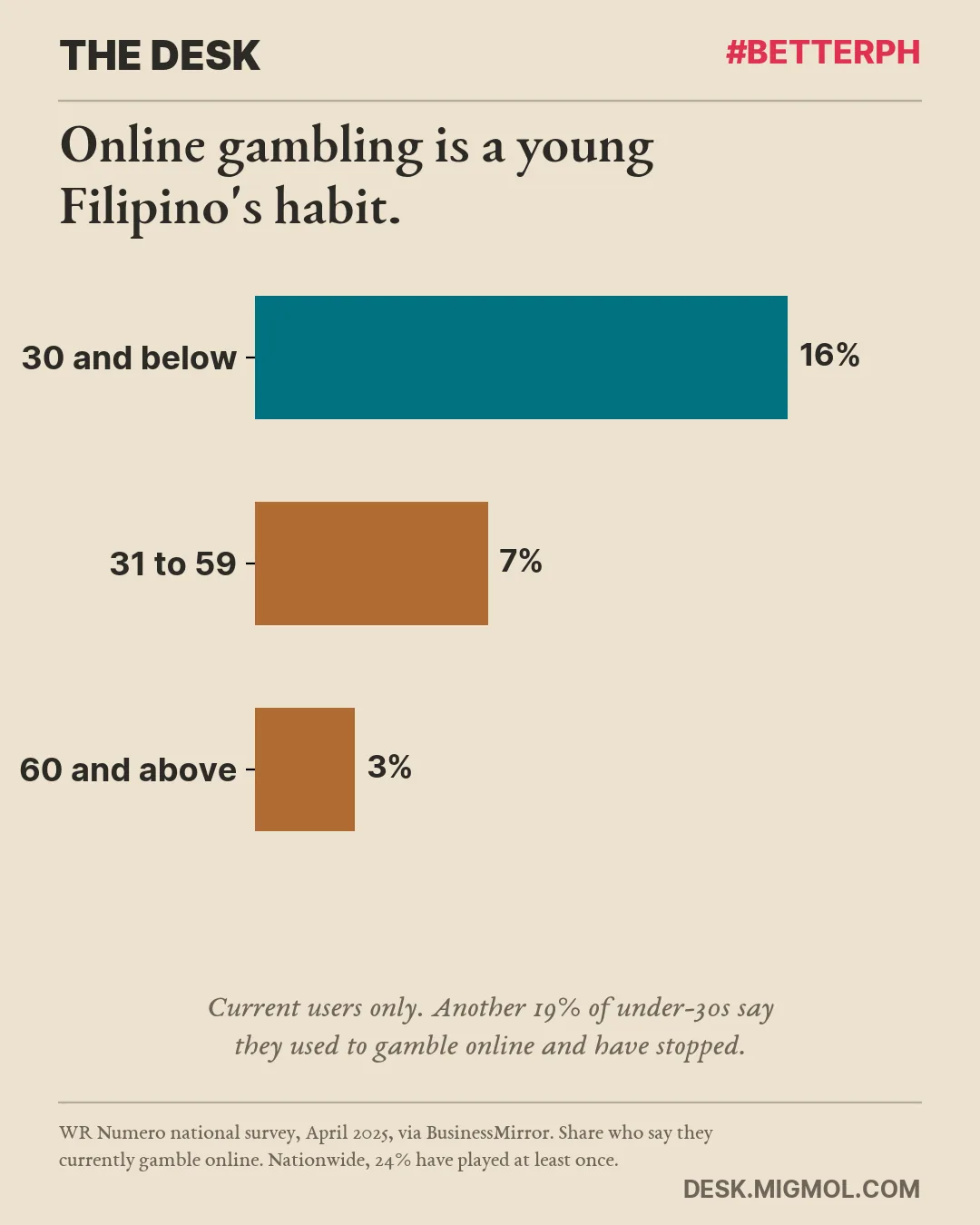
Underneath that sit the minors nobody has a number for. Senator Sherwin Gatchalian has pushed for an inquiry into youth exposure, citing the Department of Education’s own record of learner gambling incidents and the absence of a single department order addressing it. Senator Juan Miguel Zubiri filed a bill to ban online gambling outright, saying it was quietly harming minors and the poor. The bishops called it a public health crisis on the level of drugs and alcohol. The DOH agreed on the diagnosis if not the politics, classifying it as an impulse control disorder and preparing its treatment and rehabilitation centers for the caseload.
It does not stop at sixty
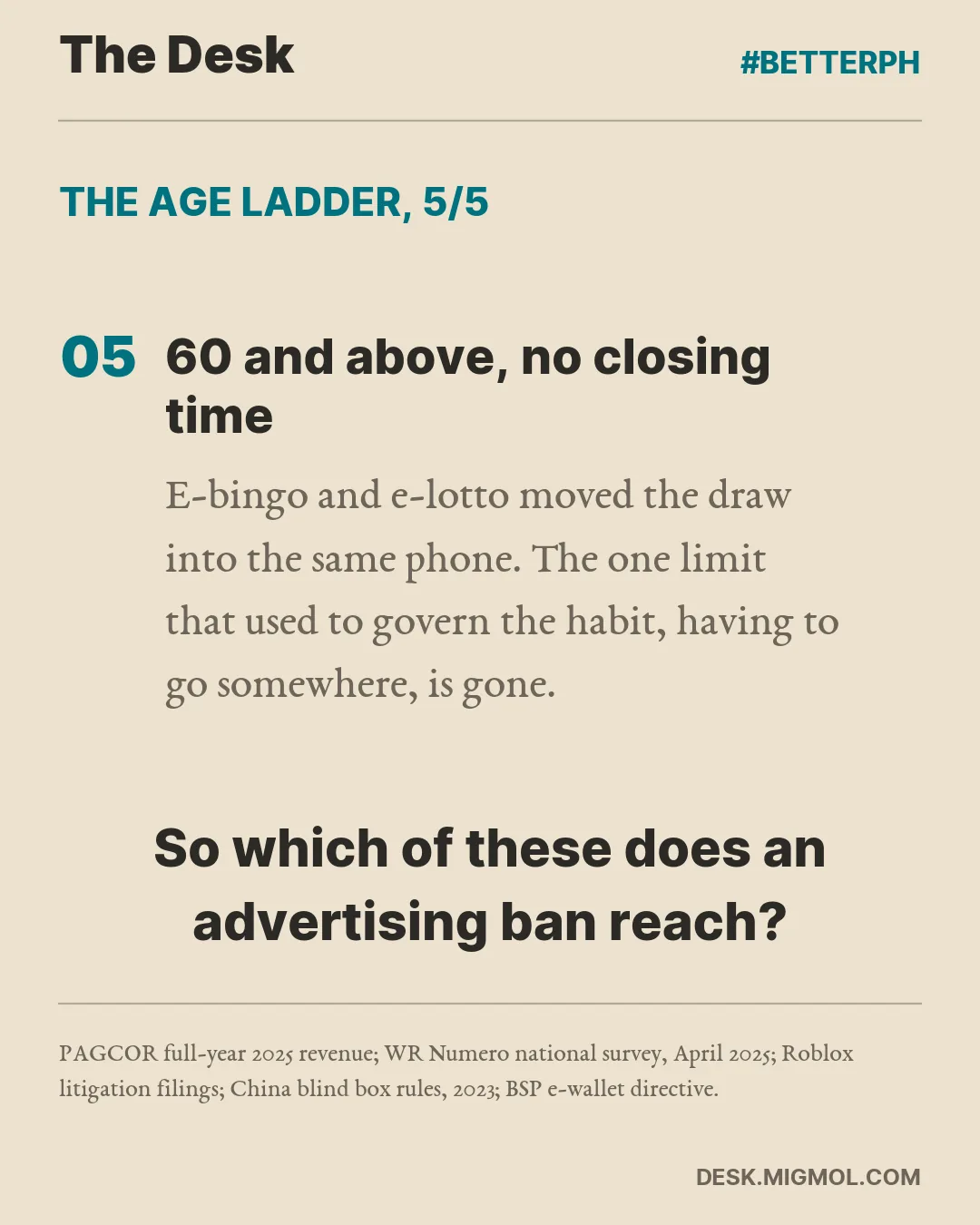
The oldest end of the ladder is the part that never gets a headline, because it looks like something we have always done. E-bingo sits in the same growth column as e-games in PAGCOR’s reporting. PCSO raised the lotto ticket from 20 to 25 pesos in February 2025 and runs an e-lotto app that puts the draw on the same screen as everything else, which removed the one piece of friction that used to govern the habit.
The tita playing e-bingo at a mall in 2015 was limited by the mall’s opening hours. Now she is not.
The billboards are gone from EDSA. The reflex is being trained on a ten-year-old’s tablet, financed through a wallet built for sending money home, and cashed out by a lola who no longer has to leave the house to play. Nobody counted it when it was on the skyline. We are certainly not counting it now.
PAGCOR’s National Problem Gambling Helpline runs 24 hours on (02) 8248-9568.
16,563 Ballots Were Shaded Before Anyone Voted
Nobody had to break a rule to reach the pre-shaded ballots in Maluso. The rule put them there. The Omnibus Election Code was written two months before EDSA, and Comelec's 963-page fix is still waiting.
Read more →
₱457 Million in Cash, and Nobody Asked
The bank filed the report. The AMLC said it had too many to read. Part 4 of 4 on anti-corruption with teeth.
Read more →
If you're above 40, this is the 2nd Iran Oil Crisis in Your Lifetime.
In 1980, a crisis in Iran pushed oil to $149 a barrel in today's dollars. Saudi Arabia had warned that prices that high would push the world to find something else, and it did. In 2026 it is Iran again, and this time the something else is already in our driveways.
Read more →
What does the world need from the Philippines? Right now, nothing it can't get somewhere else.
China refines 91% of the world's rare earths. Taiwan makes over 90% of its most advanced chips. We import 98% of our garlic and ship our nickel out as raw ore. What could the Philippines own that the world can't do without?
Read more →