What's The Next Evolution in Laptops?
From the archive. Originally published on migmol.com on 2019-05-28, recovered and republished here in 2026 at its original address. Unedited except for formatting.
Mobile phones get better year after year. We’ve reached a point where people don’t have to get a new phone after 2 years because their ‘old phone’ still works pretty well. Product evolution with regard to improvements in screen quality and processor speed is becoming less and less incremental.
Product evolution among laptops is even slower. You’re probably using a laptop right now that’s more than 5 years old but still works pretty well. In the last Consumer Electronics Show (CES) in Las Vegas, next-generation iterations of laptops weren’t so different from their predecessors. There were a few jumps in specs, but there was no compelling reason to upgrade.
Moore’s Law which states that the number of components in an integrated circuit would double every two years has been consistent since 1965 up until this decade. In the next few years, we won’t be able to get circuits to become any smaller.
Theoretical physicist, Michio Kaku, has said that we’ve reached the limit of working with silicon. We can’t get to make our computers improve exponentially anymore. Different groups around the world are already working on quantum computing, but no one has produced any significant progress.
So what does this all mean for laptops?
The evolution of mobile phones isn’t limited to faster chipsets or better displays but also stems from changing the user experience.
In the early 2000s, we switched from physical keys to touch screens. Mobile phones rendered the compact digital camera and MP3-player industries irrelevant by integrating features into the phone. In 2015, Samsung introduced a phone with a curved screen and by 2020, we’ll be seeing more foldable phones.
Mobile phone evolution isn’t limited to processor speed, but laptop evolution, for the most part, has been limited by this. The laptop industry has not been evolving as fast as the mobile phone industry. On paper, the economics of laptop sales doesn’t support the need for this evolution. Fewer people buy laptops than phones. Not everyone needs a laptop and if you do have one it will take more than at least 5 before you need to buy a new one. The price of a laptop isn’t that far from the price of a phone either so selling a phone means more turnover and better business.
However, some of the biggest businesses were created without any demand for a product. The best brand/product managers get people to buy things that they don’t know they need yet. This isn’t about consumerism but rather innovation. If Apple didn’t push and heavily market their touch screen (and haptic feedback), we could all still be using phones with number keys on them. We didn’t need touchscreens but now we can’t live without it.
The first laptop I ever bought in 2007 had a touchscreen which could swivel 180 degrees and fold onto itself to make it kind of a tablet. For the most part, however, laptops haven’t changed much in the past few decades aside from being faster and having better screens.
Lenovo’s Yoga series which has a hinge that folds 360 degrees certainly made an impact in the market. Apple and Samsung have tried to pass off their tablets as replacements for laptops, but have never been successful perhaps because of the sturdiness that people want to feel when using a laptop. Microsoft tried to play the middle ground with their Surface, but it hasn’t picked up. A lot of laptops these days have touchscreens which seems like a good idea until you realize that the screen wobbles a lot when you touch it (also, fingerprints!). Apple did come out with a MacBook Pro with a touchscreen panel above the keyboard but no one really found much function for it. So where does this take us?
Asus recently launched the ZenBook Pro Duo which has half the keyboard as an additional touchscreen. At first, I thought it was completely gimmicky until I saw how you could truly multitask with the extra screen space.
This seems like a step in the right direction as it tries to challenge the traditional form factor and usage behavior of a laptop. It’s also a change that seems more practical than gimmicky.
Laptops need to evolve in the same way mobile phones evolve. Companies need to take more risks and be willing to suggest new ways of changing user behavior.
There is definitely room for massive innovation in laptop hardware, but user experience also extends to software. So what’s next for software?
Before the 2000s, we only saw touchscreens in science fiction. People would be exploring space with just a slab where they did all the computing. And now, less than 2 decades from the first touchscreen, using a tablet is commonplace.
I think that voice is the future of IO (input/output) but it is very hard to perfect. Among everyone who is working in this space, only Google has reliable voice input. But this could very well be the future.
In Star Trek, arguably the most science-accurate pop culture franchise, people use a combination of physical input and voice input. Anyone can verbally ask the computer to do certain things in parallel to what they were already trying to make the computer do on their screens with their hands.
In 2011, Google launched Project Majel, named after Majel Barrett-Roddenberry. She was an actress in the original Star Trek series, who later married Gene Roddenberry, the creator of Star Trek. Being the ‘first lady of Star Trek’ led her becoming the voice of the computer in almost all the succeeding shows. ‘Project Majel’ has since evolved into Google Assistant.
Although voice control is continuing to gain popularity, we haven’t reached a level where you can fully maximize multitasking with voice input.
You can use Google Assistant to open apps. You can use GA to run actions within apps (i.e. play specific music in your most used music app). You can also use it to toggle certain system functions (i.e. turn on Bluetooth). But the dream of Majel was for the AI to be smart enough to understand context and help the user multitask.
For example, you could be working on a spreadsheet, and then simply ask the AI, “create another column to show Euro”. You could say that while you were filling in other cells or even shifting between applications.
This would be the dream and the end goal for what was once Majel. The good news is that we are actually slowly getting there. Gmail can already formulate email replies. You can hear and reply to messages using voice. And in the next-generation Google Assistant, understanding context is getting better and more intuitive, even across applications.
So going back to the evolution of laptops, there are of course two plays: hardware and software. The Asus Zenbook Pro Duo is a step in the right direction but product managers need to continue to take laptop innovation to the next level and match the changes we see in mobile phones. On the software side, it might still be a few years until we see voice integrated into laptop software (we’ll probably see integration into the chrome desktop browser first) but at least we’re heading in the right direction.
We use mobile phones every day both for work and our personal lives, but we use laptops every day as well albeit mostly for work. If we can have a level of innovation that we find in mobile consumer electronics reflected on our work devices as well, imagine how much that could accelerate our productivity. There is a case for laptop innovation.
And hey, I’m writing this on a 2010 Macbook Pro which still works fine. I had no plans to upgrade until I saw that new Asus. I’m willing to upgrade but is this the next new thing in laptops? Or is there is something else?
How Do You Change Someone's Mind? Tell Them You Heard Them First
If you've been following the impeachment trial, you've heard it a hundred times. Someone raises a point, and Presiding Officer Chiz Escudero answers, "Duly noted."
Read more →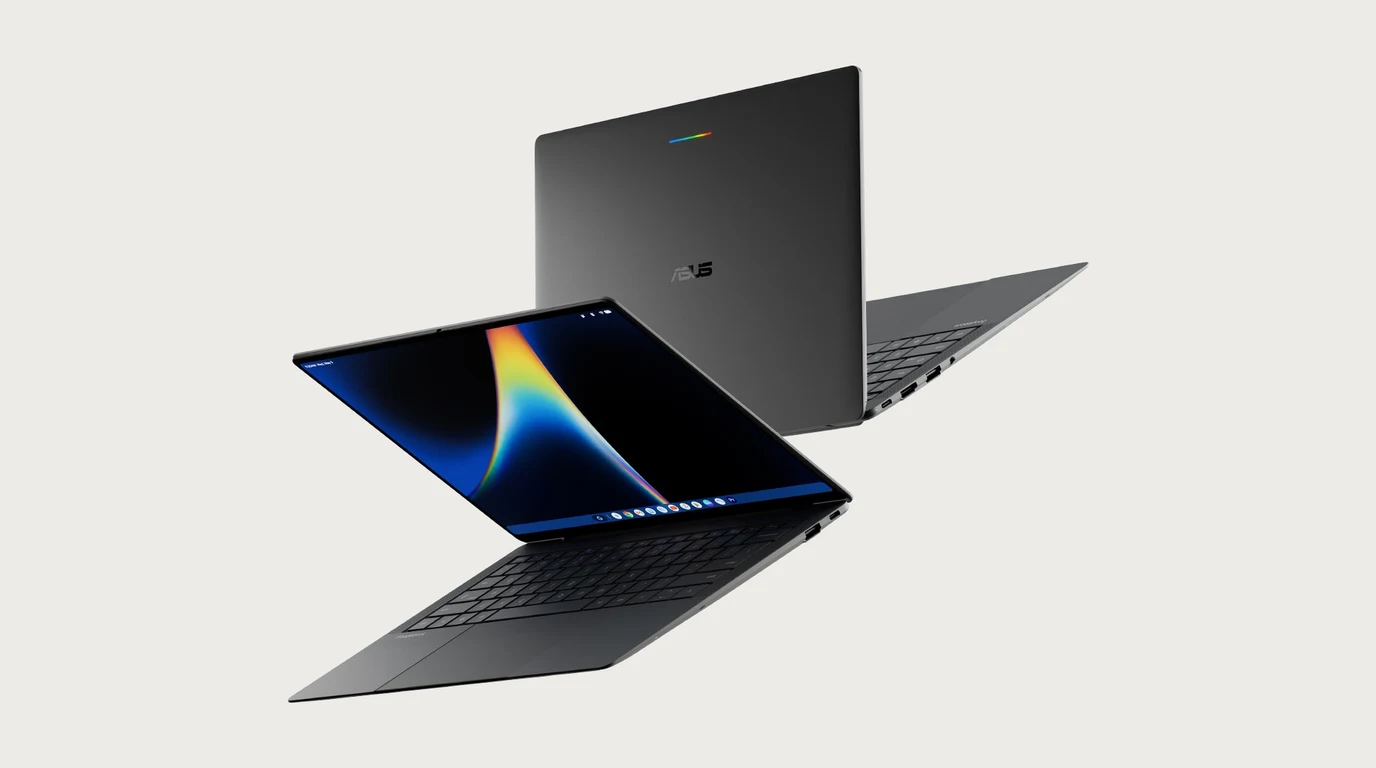
I bought a Windows laptop last year. If I were buying now, my Android phone would talk me into a Googlebook.
Google's premium laptop is no longer a Chromebook. It's an Android laptop built around the phone you already own, and ten features would have made me buy one.
Read more →
Alex Eala Doesn't Owe Us Anything
But she showed up anyway.
Read more →
What does the world need from the Philippines? Right now, nothing it can't get somewhere else.
China refines 91% of the world's rare earths. Taiwan makes over 90% of its most advanced chips. We import 98% of our garlic and ship our nickel out as raw ore. What could the Philippines own that the world can't do without?
Read more →