Who Pays for the Senior Discount Charged to Restaurants? It's Not the Government.
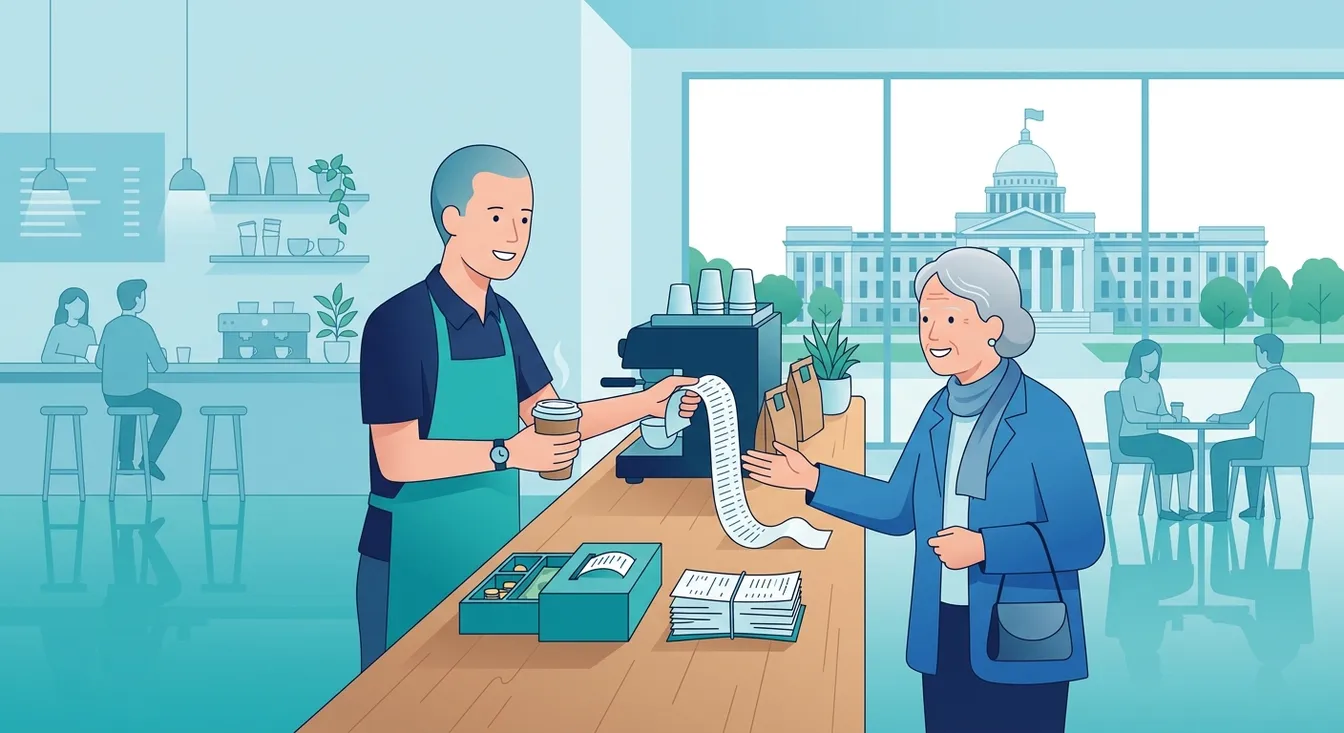
My parents are seniors. They are retired. I know how much they value the perks that come along with their age: special lines, faster screening, and lower prices on a lot of things.
My parents-in-law just became seniors a few years ago. And having a Senior Card and having the Senior Citizen discount is definitely something that most Filipinos look forward to, which is cool. It turns something that could be scary into something you’re excited to be part of.
But something that perhaps most people do not realize, at least those not working in the service or manufacturing industry, is who actually pays for those discounts, both senior citizen discount and PWD discount.
Do you think it’s the government? It should be, right? They’re the ones who give you the card. They’re the ones who are taking care of seniors.
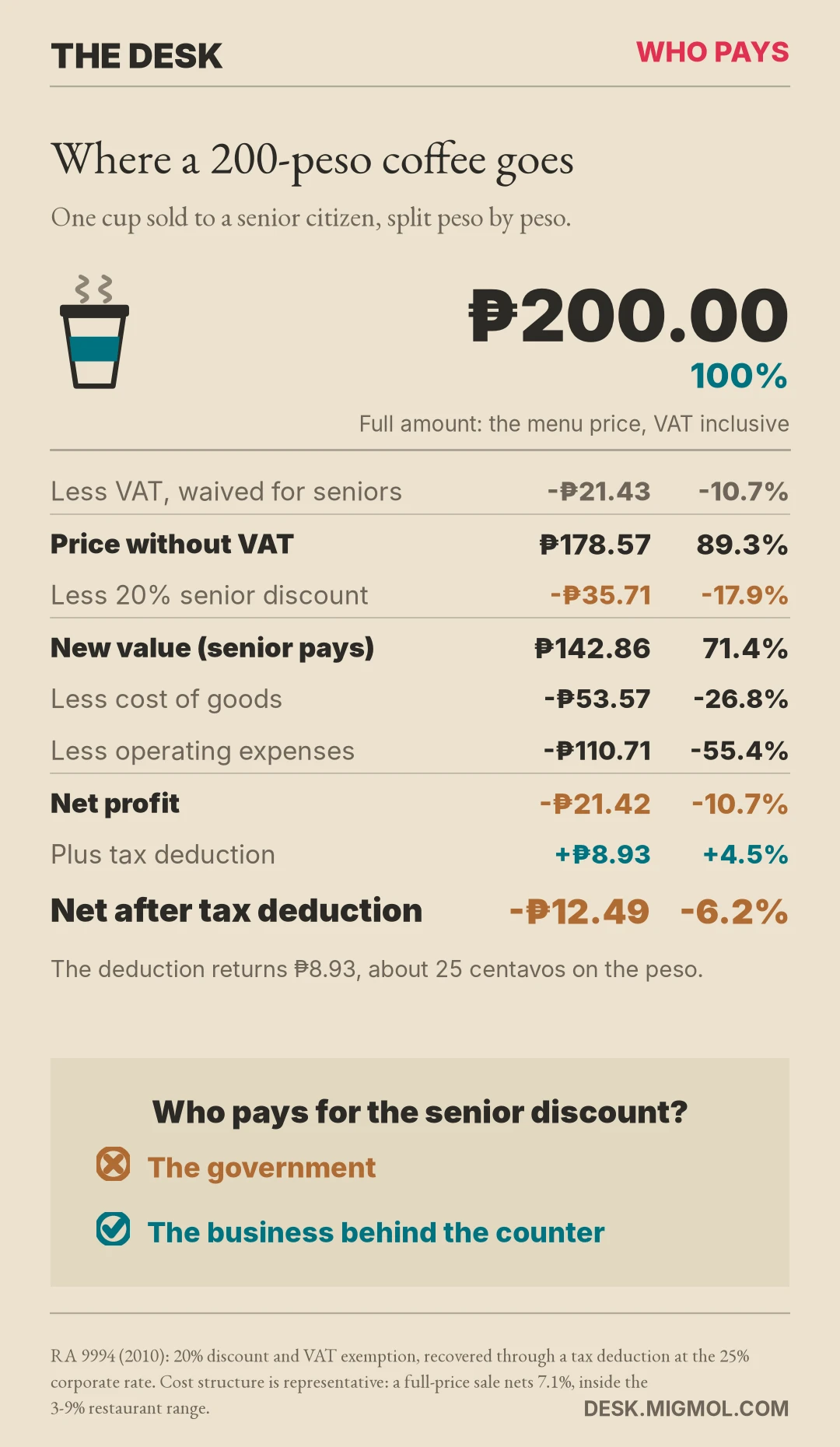
A ₱200 cup of coffee sold to a senior citizen brings the cafe ₱142.86. The government’s share of that discount is ₱8.93, and it only comes back at tax time, as a deduction.
There is no fund behind the senior citizen discount. No rebate, no reimbursement, no line item in the national budget that makes the establishment whole. Congress passed the law, the President signed it, and the 20% comes out of whoever owns the cashier. Same arrangement for the PWD discount under RA 10754. Same 20%, same VAT exemption, same silence about who funds it.
Seniors should get the discount. PWDs should get the discount. But there is something intrinsically wrong about how government makes laws and leaves the private sector to figure it out.
What the store actually loses
Let’s break down the coffee cup. The sale to a senior is VAT-exempt, so you strip the VAT first: ₱200 divided by 1.12 is ₱178.57. Take 20% off that and the discount is ₱35.71. The senior pays ₱142.86. Against a ₱200 menu price, that is an effective 28.6% off.
That ₱35.71 does not get charged to a government account. The store just collected less money. What the store gets back is a tax deduction: the discount comes off gross income, so at the 25% corporate rate the business recovers around ₱8.93 of the ₱35.71, and ₱7.14 at the 20% rate for small corporations. Call it 20 to 25 centavos on the peso. The rest is gone.
Now set that against margins. Restaurants run net margins somewhere in the 3 to 9% range. On a ₱200 cup, the entire profit at full price might be ₱6 to ₱18. The discount is ₱35.71, roughly two to six times the profit on that same cup, so the sale goes negative. For a grocery chain that averages out across millions of transactions. For a cafe in a village where half the morning crowd is retired, it does not average out at all. It is the business.
It used to work differently
RA 7432, the original Senior Citizens Act from 1992, let establishments claim the discount as a tax credit. Peso for peso against tax due. Give away ₱100, take ₱100 off the tax bill. The government was paying for its own program out of foregone revenue, which is the honest way to do it, because the cost lands on the national accounts where somebody has to look at it. In 2004, RA 9257 turned that credit into a deduction. RA 9994 in 2010 kept the deduction and added the VAT exemption on top.
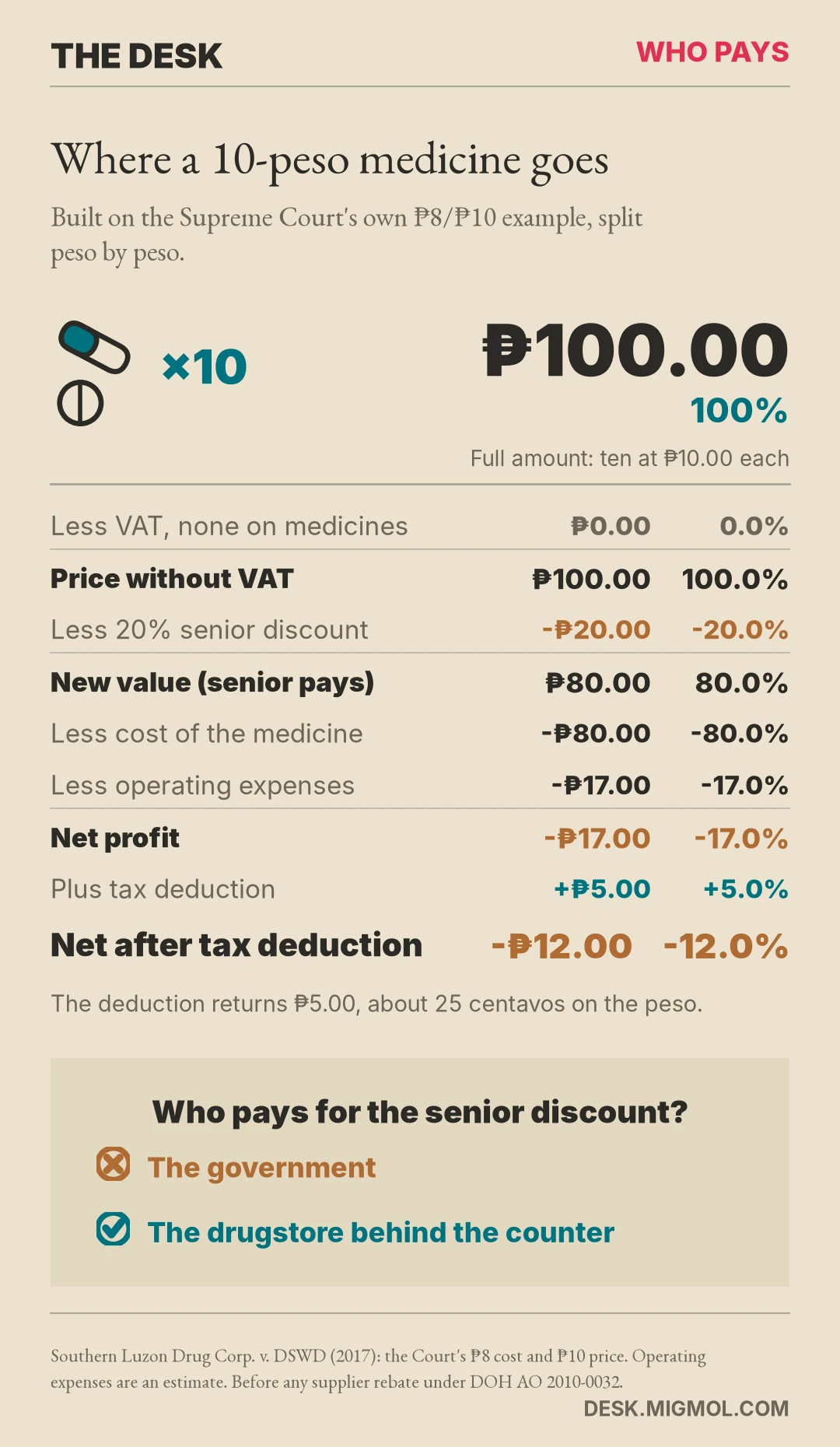
Drugstores sued. In Carlos Superdrug (2007) they told the Supreme Court that branded medicines were carrying markups of only 5 to 10%, so a 20% discount recovered at a fraction put them underwater on their own inventory. They lost. Another drugstore chain sued, and in Southern Luzon Drug (April 2017) the Court was blunt about the mechanics. “A tax deduction does not offer full reimbursement of the senior citizen discount. As such, it would not meet the definition of just compensation.” Then it upheld the law anyway, because the discount is police power rather than eminent domain, and police power does not require compensation. The Court asked whether the State “can impose upon private establishments the burden of partly subsidizing a government program,” and answered: “The Court believes so.”
Its answer to the losses was that establishments are free to raise their prices, and that “it is not the law per se which occasioned the losses in the covered establishments but bad business judgment.” The decision even walks the numbers: a drug acquired at ₱8.00 and sold at ₱10.00, with the store restoring its position by moving the price to ₱11.20.
Which tells you who is actually funding this. Raise the price to ₱11.20 and everybody who is not a senior pays the difference. That is a tax, collected by the store, from the general public, and nobody had to legislate it, budget it, or defend it in a hearing.
Nobody is too small
There is also no size threshold. Sari-sari stores, neighborhood pharmacies, carinderias, an online seller working out of a bedroom. All of them, identically, and a first offense runs ₱50,000 to ₱100,000 and two to six years in prison, plus your business permit. Compare that with the 105-day maternity leave law (RA 11210), which makes the employer cover the gap between the SSS benefit and full pay, but exempts businesses with 10 or fewer workers, micro-enterprises under ₱3 million in assets, and distressed establishments. At least a lawmaker cared enough for RA 11210. They gave a pass to a small business before issuing a blanket rule. Not all laws and lawmakers are built the same. Words matter in how a law is written.
Medicines is a category where the lawmakers did a bit more thinking. A DOH order from 2010 splits the 20% discount between the retailer that carries 30% of it and the manufacturers, distributors, and wholesalers that carry the other 70% as compulsory rebates, claimable in money or in medicines. However, there is a catch that makes it feel arbitrary for the retailer: if the supplier already gave the store a trade discount of 16% or more on that product, nothing further is owed. On deep-discount generics you are usually past 16% already, so there is nothing to claim and the store carries it. On thin-margin branded products the rebate kicks in and you push it up the chain. Same law, same store, a different answer per SKU. The tax treatment of those rebates was flagged as unresolved in 2011 and still is.
I’ve worked in pharmacies and along supermarkets. This is a real issue. The government FORCES businesses to sell at a loss. What do you think businesses will end up doing? If you’re any reasonable business person, what any finance person would say in a heartbeat: stop selling products that don’t cover the margins. And who ends up losing out? The people.
I suppose the government’s logic would be: you lose money with seniors, but you get more margin with non-seniors. Which would make sense, except for products that mostly seniors buy. How the business would adjust: raise prices. And so, we’re back to zero. All of this work to get us back to zero. It is a charade.
The franchise version
I used to work with a retailer with a lot of franchisees. The franchisee owns the store, carries the inventory, pays the rent, takes the risk.
Imagine I had launched a nationwide campaign out of head office. 20% off a list of items, every store, starting Monday. Banners, radio, the full push. And the funding line at the bottom of the deck: the franchisees pay for it.
They would have revolted. Some of them would have closed. And they would have been right, because it costs head office nothing to be generous with somebody else’s margin. Any franchisor who has done this properly knows it, which is why a real national promo comes with a funding split, a co-op budget, a rebate, something. You do not get to look generous on a P&L you do not own. But the government gets away with it.
While I never ran any ridiculous promotions and asked the franchisees to pay for it, this Senior Discount issue is real for thousands of small businesses. Franchisees have come up to me and said it flat out: they would lose money if they kept selling at 20% off. That was not a negotiating position, it was arithmetic, and the promo they were complaining about was not even mine. It was the law's.
Why it stays this way
A benefit funded out of the national budget has to survive a hearing. Somebody presents a number, somebody asks where it comes from, somebody weighs it against a road or a classroom. A benefit funded by mandate skips all of that. It is free at the moment of legislation. The press release reads exactly the same. The cost is just as real, it simply lands on a P&L that no legislator has to care about.
Even enforcement gets passed along. Asked about enforcing the senior citizen discount, the DTI said it was not part of its mandate and pointed at the Office of Senior Citizens Affairs and the National Commission of Senior Citizens. Funnily, most businesses are probably policed by the seniors themselves. In fact, seniors are very aware of which restaurants and establishments give the full discount, only a partial one, or none at all. But most of the time, they don’t even complain anymore. Once again, I am not blaming the seniors. This is their benefit to enjoy. But it is just unfortunate that a government that relies so much on the private sector to provide for the private sector doesn’t really seem to care about businesses, especially the small ones. How can we encourage SMEs and a population with an entrepreneurial mindset when the government itself is the hindrance to their success?
The fixes are not exotic:
- Restore the tax credit, and the cost goes back onto the national accounts where it can be seen and argued about.
- Set size thresholds, the way RA 11210 already does.
- Extend the medicine sharing rule to the categories that do not have one. Better yet, charge the senior discount on medicines to PhilHealth. It is sitting on about ₱309 billion in reserve funds, which is just sitting there, doing nothing.
- Means-test it, since a retired executive and a retired jeepney driver currently pull the identical 20% out of the same struggling carinderia.
Any of those, and the senior still gets the discount, the private sector isn’t penalized, and the government can stop being performative.
Coming out in a few weeks, another performative law passed by our lawmakers where they pass on all the responsibility to the private sector: RA 11898, the Extended Producer Responsibility Act.
None of Our Best Players Play Here
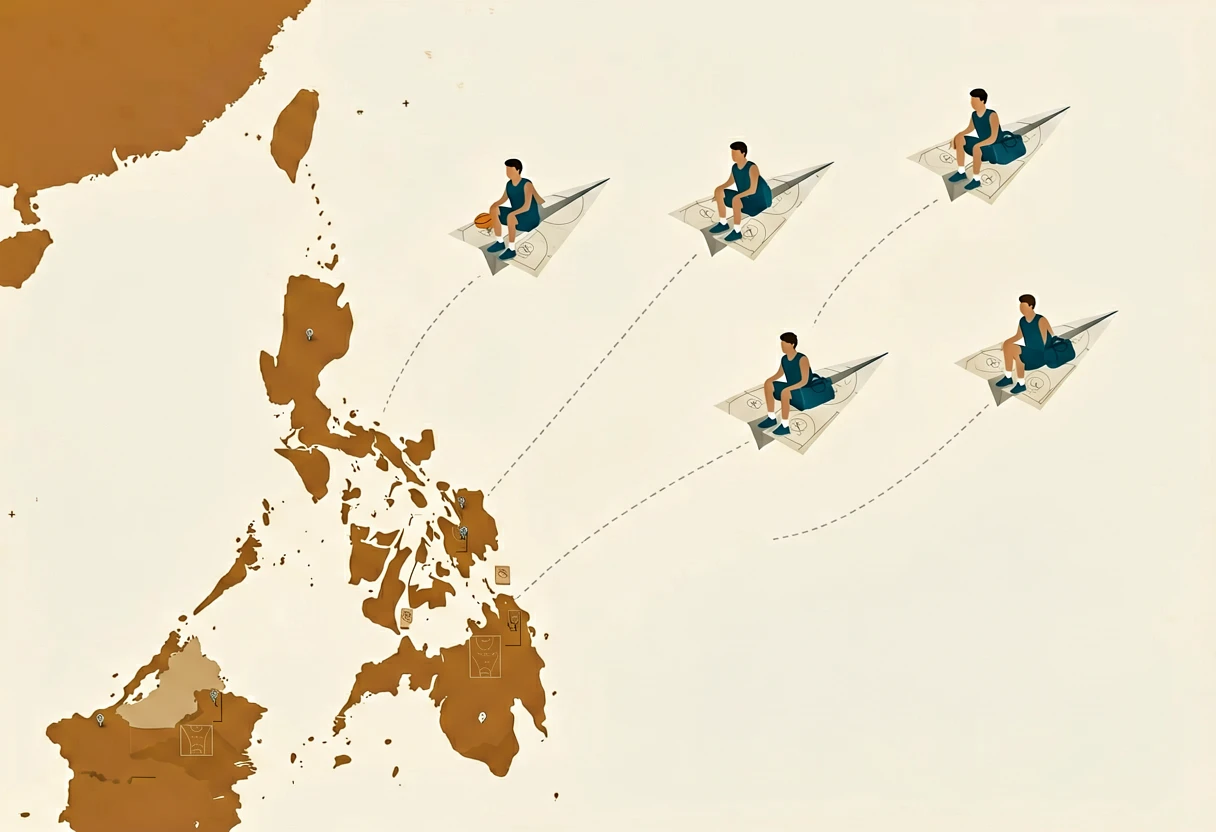
Sotto and Ramos play in Japan. Tamayo and Quiambao play in Korea. Four of our best players have all found somewhere better to work, and every reason why is structural.
Read more →
Do Our Basketball Leagues Make Sense?
China beat us by 44 points and ended our Asian Games title defense in the group stage. The reason has almost nothing to do with the twelve men on the floor.
Read more →
Yabang, High; Basketball IQ, Low
The last Philippine team to win the FIBA Asia Cup did it in 1985, coached by an American. We produce players at a rate no country can match. We have never produced coaches.
Read more →
Alex Eala Doesn't Owe Us Anything
But she showed up anyway.
Read more →