You Are Not Your Worst Day

I’ve watched people spiral over one bad interview. One presentation that fell flat. One meeting where they said the wrong thing to the wrong person and spent the whole drive home replaying it. The feeling is always the same: this one moment just told everyone who I really am.
It didn’t. And there’s actual math behind why.
There’s an idea in statistics called the Central Limit Theorem. Take almost anything messy and random, pull enough samples of it, and average those samples together. No matter how chaotic the individual data points are, the average settles into a predictable bell curve. Individual samples swing wild. The average barely moves.
Flip a coin ten times and you might land eight heads. Flip it ten thousand times and you’ll come in close to half, every single time. The coin didn’t change. The sample size did.
Your work life runs the same way. Every interview, every presentation, every awkward exchange, every ordinary Tuesday, is one sample. A rough interview is not your career. It’s one data point sitting inside a distribution you’ve been building for years, and the distribution is what actually describes you, not the outlier.
This cuts both ways, and the half people don’t want to hear is the good one. The pitch that landed, the client who called you a genius, the win everyone’s still talking about, that’s also just one sample. It feels bigger because it feels good, but it’s sitting in the exact same distribution as the bad ones. Neither extreme is the truth. The average is.
So the real question is what actually moves that average. Not the one great day, and not the one terrible one. It’s what you repeat. The presentation you redo after the one that flopped. The meeting you show up to the same way whether you’re dreading it or not. The average shifts one sample at a time, in whatever direction you keep feeding it, and it does not care how any single sample felt going in.
The bad days feel loud because they arrive dressed up as a verdict on you, when they’re really one point on a curve you’re still filling in. You don’t need a perfect quarter. You need enough samples pointing the right direction that the average takes care of itself.

Go Where the Ceiling Is Higher
What De'Aaron Fox's move to San Antonio taught me about knowing your worth and finding the right fit.
Read more →
A Few Years Out
Change is on the horizon
Read more →
On Dignity in Work
Why meaning, purpose, and employee engagement matter more than job titles — a leadership perspective
Read more →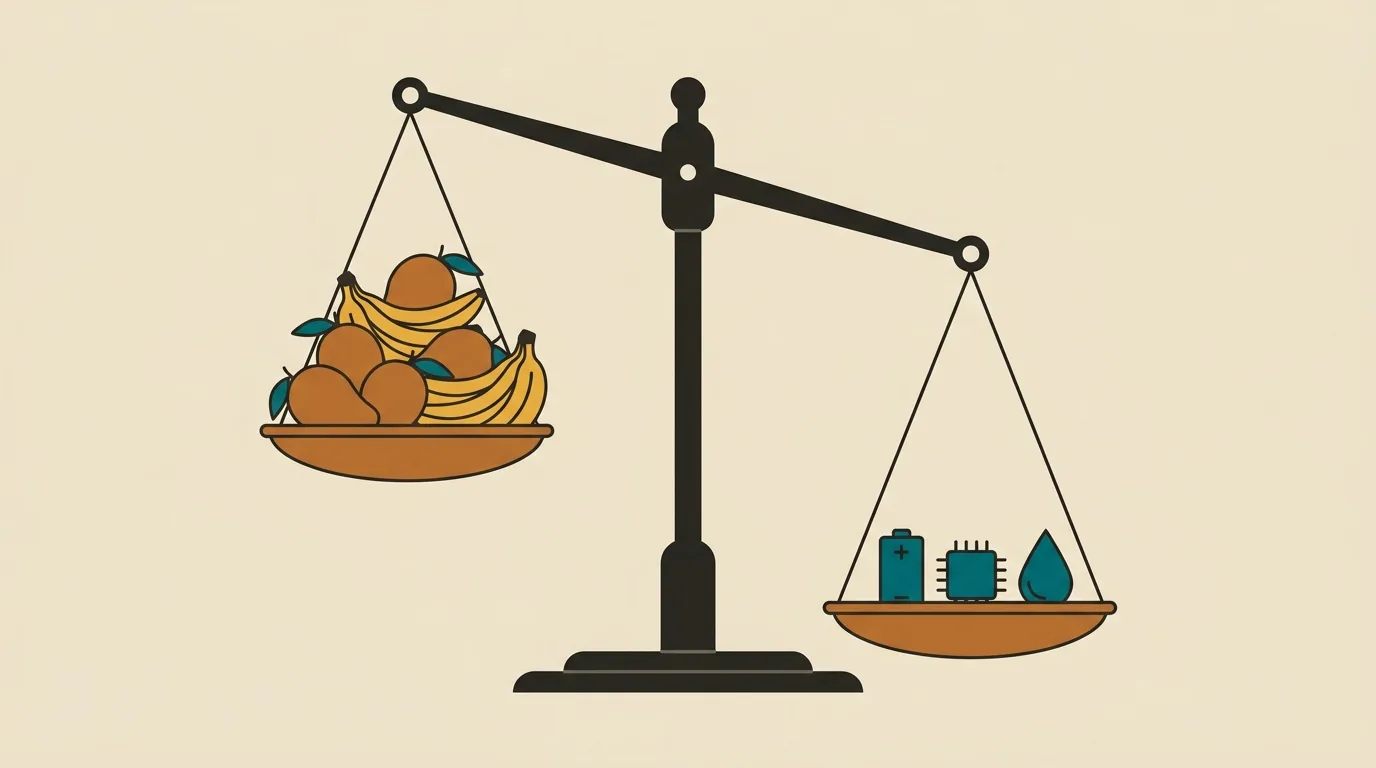
What does the world need from the Philippines? Right now, nothing it can't get somewhere else.
China refines 91% of the world's rare earths. Taiwan makes over 90% of its most advanced chips. We import 98% of our garlic and ship our nickel out as raw ore. What could the Philippines own that the world can't do without?
Read more →