You're Only As Good As Your Last Performance
Companies inherit their character and coast on it. People get judged on the last thing they did. The only reputation you really own is the one you carry between them.

Everyone in this industry has worked with everyone. If you’ve been around long enough, you haven’t just built a network, you’ve built a map. You know which conglomerate is cutthroat and which one is amiable. You know which one plays it so safe it hasn’t had a real idea in years. You know which one will work you to the bone and which one will let you coast forever. And people have reputations too, not just companies. The industry is a small town with a long memory, and we all trade these verdicts like currency.
I used to trust those verdicts more than I do now. I’ve seen a lot of these companies from the outside, the way everyone sees them, through the gossip and the brand and the reputation. Then I’ve seen some of them from the inside. And my map changed. The good guys and the bad guys I thought I had figured out, they weren’t always who I assumed. Some of the places I admired were colder up close. Some of the ones people warned me about were full of good people doing good work. Being inside changes what you see. You realize that some companies really do run on meritocracy, while others run on patronage, on internal politics, on who you know.
Once I’d been inside a few of them, I started noticing that the character of a company is rarely an accident. It usually traces straight back to whoever sits at the top. The owners, the founders, the old guard who have been there since the beginning. You can see it most clearly in the big conglomerates. One culture cuts across all of it, across completely different businesses, different industries, thousands of people who have never met each other. A company that started under martial law still carries that DNA decades later, old school, patriarchal, an org chart that’s really a hierarchy of fear with a family tree underneath it. The family-owned firms hold on to control no matter how big they get, no matter what title they print on your card, because control was the point from the start. The multinationals bury you in reports and dotted lines and endless alignment, because that’s what a global matrix does to people. The dog-eat-dog shops run forced ranking, where somebody has to be the bottom of the list even on a great team.
None of these companies woke up one day and chose to be like this. They inherited it. When you join a company, you join its history, and that history is older and more stubborn than any new mission statement they put on the wall. Culture is tough for exactly this reason. It’s shaped by whoever’s on top, the owners or the old guard, and most of the time that person is not you.
So if the character is more or less fixed, then there’s no such thing as a good company or a bad company in the abstract. There’s only fit. The place that broke your friend might be the making of you. The shop that one person calls toxic is the same shop another person calls the best three years of their career. The reputation everyone trades is a weather report. It tells you what you’re walking into, so you can ask the real question, which is whether you’re built for that kind of climate.
And this goes further than picking which company to join. Some people read all of this and realize the answer for them isn’t a company at all. Starting your own business has its own brutal weather. The uncertainty, the lack of structure, the fact that nobody is coming to save you. That life is not for everyone. And that’s okay. Knowing that about yourself is not a weakness. It’s the whole game.
You can read every company’s character perfectly, you can find your fit, and still, the only reputation that actually belongs to you is your own. Companies don’t follow you around. Your name does. In a market this small, you will sit across the table from these same people again, three jobs from now, on the other side of some deal.
And your reputation is never really banked. You are only as good as your last performance. In corporate, in sports, in life. The companies get to coast. They inherited a reputation and the brand carries them, so a place can be mediocre for a decade and still be the one everyone wants on their CV. People don’t get that mercy. One bad stretch and the whisper network updates overnight. The company is judged on its whole history. You’re judged on your last quarter, your last launch, your last game. So the one thing you own is also the one thing you can never stop earning.
All of which puts the weight back on you. You always have a choice, but a choice is only useful if you actually know yourself. The work was never about picking the right company. It starts with knowing who you are, what you actually want, and what you’re willing to tolerate. Some people thrive in the pressure cooker. Some people need air. Neither one is wrong. And a company is not the end-all-be-all of your life, even though plenty of them are built to make you feel like they are. Of course, fresh out of college, you probably don’t know who you are or what you want yet, and again, that’s okay. It’s part of the journey. But by your late 30s and 40s, you figure it out. And maybe that’s when things get exciting.
I don’t say any of that to scare anyone. I say it because if you’re still reading this, you’re already the type who introspects, who wants to understand more, who wants to expand what you know. Those are good characteristics. People like that figure it out. You’ll be fine.
So trust yourself. Trust your work ethic. Trust who you are, because that’s the part that travels with you no matter whose weather you’re standing in. Consider this your sign to take the leap and prioritize yourself.

The Position Is Not the Person
I ran into a former leader in a mall. Someone from a company I used to work with. I made sure I said hi. I went out of my way, I made sure he saw me, I did the whole thing. Then I walked away and felt the ick.
Read more →
Communication Can Outrun Intelligence
One of the most valuable skills in business, and the same skill can march a company off a cliff. Both are true.
Read more →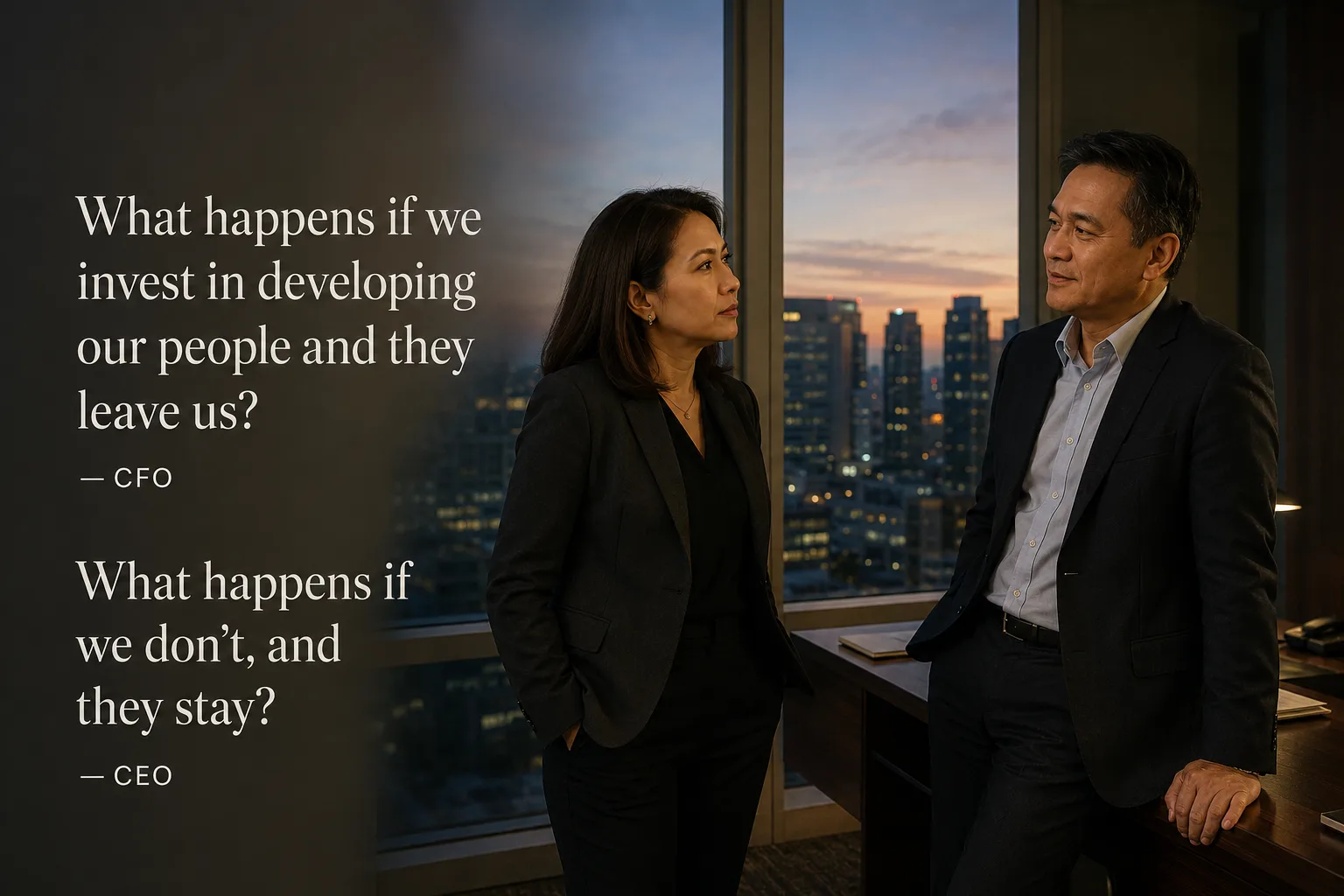
Develop Your People Anyway
The CFO's question is real. So is the CEO's answer. Twenty years on both sides of the training budget taught me which fear to respect.
Read more →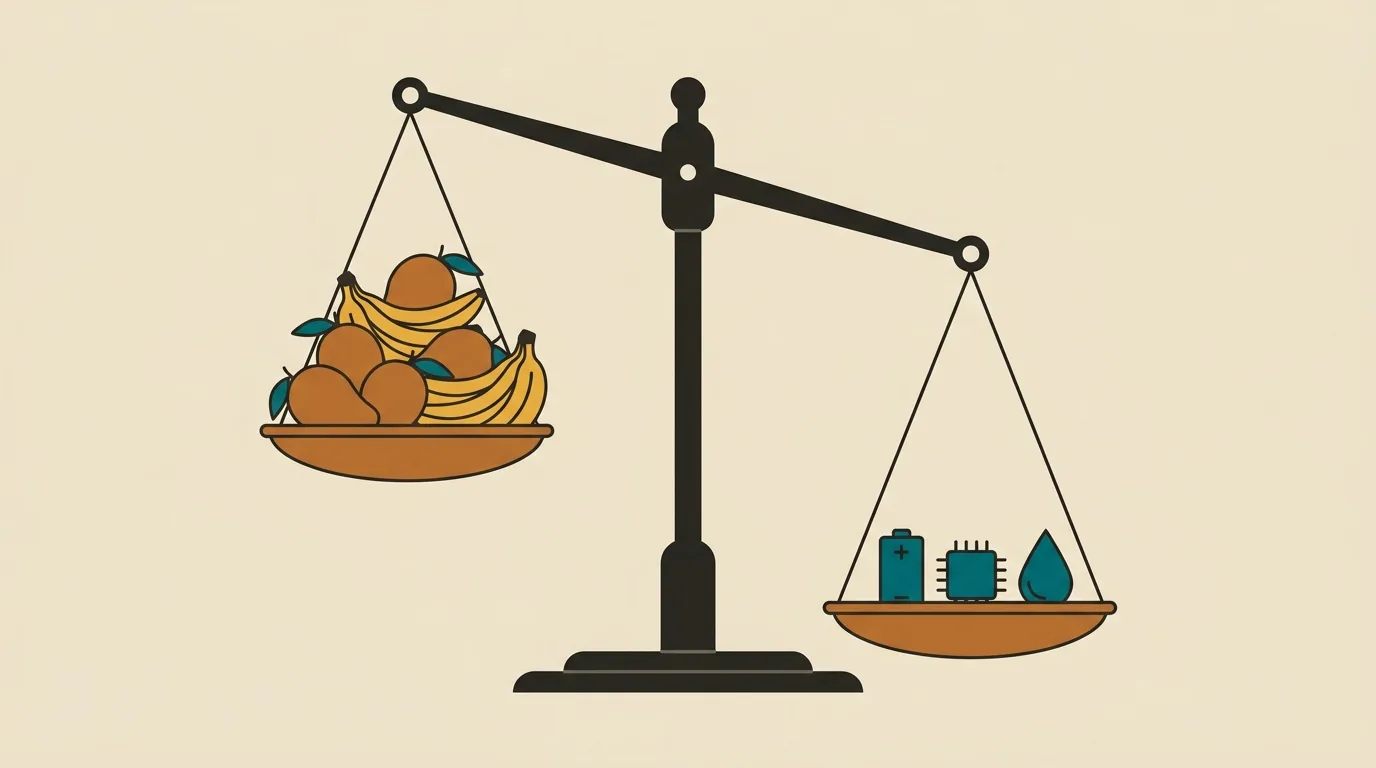
What does the world need from the Philippines? Right now, nothing it can't get somewhere else.
China refines 91% of the world's rare earths. Taiwan makes over 90% of its most advanced chips. We import 98% of our garlic and ship our nickel out as raw ore. What could the Philippines own that the world can't do without?
Read more →