Culinary Class Wars: Philippines — Dark Horses and Predictions
Who goes further than anyone expects, who cracks, and my actual call on how this ends. Part 3 of 3.

This is Part 3 of a 3-part series. Part 1 revealed the roster. Part 2 explored the challenges. Part 3 is where we stop being diplomatic and start making calls.
Forty chefs. Six challenges. One question this whole thing was built to answer.
I’ve spent the last two parts laying out the board without tipping my hand. That ends here. Below are the chefs I think would go further than anyone expects, the ones I think would crack, the wildcard who could break the entire format, and my actual prediction for how this ends.
You will disagree with some of this. That’s the point.
THE DARK HORSES
Atching Lillian is the most dangerous person in this competition
Everyone will underestimate her. She has no restaurant empire, no Michelin star, no international press clippings. She has something better: she is the last person in the room who learned burong isda from someone who learned it from someone else, with no cookbook in between.
Here’s why that wins. Five of these six challenges are built on regional ingredients that most Manila chefs have read about rather than lived with. Technique can approximate a lot of things. It cannot approximate knowing, by smell, when a ferment has gone one day too far.
Her ceiling is limited by plating. Her floor is higher than almost anyone’s. In a competition with elimination rounds, floor matters more than ceiling. She survives deep.
Nanay Beth Mortera will embarrass somebody
She taught herself to cook from books while working as a nanny in Dubai, came home, and opened a carinderia on J.P. Rizal Street. Forty years later a French tyre company gave her a Bib Gourmand and she had to ask what it was.
Here is what people miss about carinderia cooking. A tasting menu chef plates forty covers a night with a brigade. Nanay Beth has cooked hundreds of servings a day, alone, to a price point where a mistake costs her the day’s margin. That is volume, speed, consistency and cost control at the same time, which is four of the six things a competition kitchen actually tests.
Her problem is the sixth thing, which is plating for a camera. If any challenge rewards a plate rather than a dish, she’s out. If even one rewards feeding people properly, she goes a long way.
Chef Chavi Romawac wins his challenge and keeps going
He’s cast as the regional specialist in the Cordillera round, which frames him as a one-trick contestant. That framing is wrong. Baguio Mountain Man is a working kitchen with a point of view, and he’s been translating highland ingredients for lowland palates for years. That’s the exact skill this competition tests.
He beats Miko Calo. I’ll say it plainly. French technique applied to etag produces something impressive. Chavi produces something correct.
Miguel Moreno is the one nobody can score
He’s the only Tausug chef on the board, cooking the only cuisine here that most of the judges have never eaten properly. That sounds like an advantage and it is not, at least not straightforwardly.
Erwan can score him. Erwan has been to Tawi-Tawi and knows what piyanggang is supposed to taste like. Josh scores technique, which travels. But an audience raised on adobo and sinigang has no reference point for a sauce that goes black on purpose, and audience reference is what carries a chef through the middle rounds of a format like this.
He wins Challenge 5 outright. Whether he survives Challenge 1, where he has to cook a canon he was never invited into, is the more interesting question.
Ninong Ry is carrying the heaviest expectations and I think he carries them
Millions of subscribers means millions of people watching to see whether the internet’s favorite cooking teacher can actually hang with Michelin chefs. That’s a brutal thing to walk into a kitchen with, and most people would tighten up under it.
Start with the training nobody counts as training. Every year he films 20 Dishes in 1 Hour. Twenty finished plates, sixty minutes, one clock. Do the division and it comes to three minutes a dish, plating included. The year before he did nineteen. He keeps raising the number on himself, which means it stopped being a stunt he survived once and became a benchmark he trains against.
Now set that beside what a competition round actually asks: one dish, sixty minutes. He has spent years rehearsing a harder version of the same test, in public, on a timer, with the failures left in the edit. Add the weekly upload schedule on top and the volume of reps starts to look less like content and more like a training regime nobody thought to call one.
The speed is the least interesting part, though. What would make him dangerous in this format is the way he thinks about the food itself.
He has built a career on asking questions the industry treats as settled: a) why does adobo have to be pork or chicken, b) what actually makes a dish Filipino, c) why do we talk about the “one true” version of anything when Bicol puts gata in its adobo, Batangas skips the soy sauce entirely, and Bulacan will argue with you about which vinegar. He asks these casually, in a kitchen, between jokes. They are still real questions, and most of the industry has spent decades not answering them.
That habit has a name in fine dining. Deconstruct the dish, work out which elements are actually doing the work, then rebuild it somewhere unexpected. It is the exact move a Michelin-trained chef makes when they turn kare-kare into a sauce and a foam. Ninong Ry has been running the same operation the whole time, in a different register, for an audience that would tell him immediately if he got it wrong. The card-draw challenge does not test anything he has not already done on camera.
The fine dining crowd will read accessible as underambitious. I’d read it as pressure-tested by a much larger jury.
And the broader point sits underneath all of it. Filipino food gets smaller every time somebody declares what it must be. Every “that’s not real adobo” is a door closing on a version somebody’s grandmother cooked. The cuisine gets better when we experiment, when we test the definitions instead of defending them, and when we let the regions disagree in public. A cook who has spent years doing precisely that is not the underdog in a competition built to ask who owns Filipino cuisine. He is the one who has been asking it longest.
Miko Aspiras is the format’s biggest structural threat
He’s a pastry chef in a competition where five of six challenges are savory. That sounds like a disadvantage until you remember the Filipino Canon challenge has a dessert card in the deck.
Pastry chefs think in ratios, temperatures, and structural engineering. Hand a savory chef “sisig as a dessert” and you get panic. Hand it to Miko and you get a plan. If the deck breaks his way even once, he goes on a run.
WHO CRACKS UNDER PRESSURE
Jonathan Kui has the hardest psychological road here
He publicly criticized the Michelin Guide’s Philippine debut. Now he cooks for Josh Boutwood, who holds two stars from that same guide. Every plate he sends up carries an argument he already made in public.
That’s either the greatest fuel in the competition or the heaviest weight. Talent isn’t his problem. The problem is that he has to be right, and needing to be right makes people overcook their dishes and their arguments at the same time. My call is that he produces one spectacular plate early and one overthought disaster later.
The TV veterans face a format that isn’t theirs
Sandy Daza and Heny Sison have spent decades cooking on camera, which sounds like preparation. It isn’t the same thing. Television cooking is performance with retakes, a producer, and a dish you’ve rehearsed. Competition cooking is improvisation with none of that.
Both of them know more about Filipino food than most of the roster. Neither has recently been handed an unfamiliar ingredient and sixty minutes. I’d expect enormous respect from the judges and an early-to-middle exit.
Frances Tariga is the exception in that group, and it’s worth saying why. She’s the only person on this board who has already done this exact thing, on television, with a clock running, and won. Top Chef, then Morimoto’s Sushi Master. Competition cooking is its own discipline: it rewards people who can decide fast, abandon a failing dish at minute twenty, and plate something coherent at minute fifty-nine. Half this roster has never cooked with a countdown in their life. Put her in the Filipino Canon challenge with a nightmare card draw and I’d take her over three of the Michelin tier.
THE CHAOS FACTOR: JUDY ANN SANTOS
She is the single most volatile variable in this entire competition, and casting her is the smartest decision on the board.
The outcome distribution here is genuinely bimodal. She has real culinary training and a real, sustained interest in food that predates any of this. She could plate something in round one that makes the entire kitchen go quiet, and the resulting clip would be the most-watched thirty seconds of the season.
Or she draws “kare-kare as a sandwich,” has ninety percent of the country watching, and goes home in the first hour.
Both versions are must-watch. Neither is predictable. That’s what a wildcard is supposed to do.
THE ENDURANCE PICKS
These are the chefs I’d bet on to still be standing in the back half, and the reasoning is boring on purpose. Deep runs go to people with range, not people with signature dishes.
Chele González survives because his entire career has been translation. Give him an ingredient he’s never touched and he has a process for it. That process is repeatable across six wildly different challenges.
Jordy Navarra survives because Toyo Eatery is built on exactly this problem: take something ordinary and Filipino, then find the version of it nobody’s seen. That’s six challenges described in one sentence.
Stephan Duhesme survives because funk doesn’t scare him. Four of these ingredients are aggressive. Most chefs will try to soften them. He’ll lean in, and leaning in tends to score better with Erwan than politeness does.
Bruce Ricketts survives on discipline. Japanese-trained precision applied to Filipino ingredients gives him a consistent floor, and consistency is what actually wins elimination formats.
THE FINAL: MY ACTUAL PREDICTION
Here’s how I think it ends.
The finale is Jordy Navarra versus Ninong Ry.
The semifinals get you there, and both of them are the story. Jordy beats Deo “Diwata” Balbuena on the pares round, which sounds like an upset until you remember that Toyo Eatery has spent years doing precisely this: take a dish every Filipino already has an opinion about, then find the version nobody has seen. Diwata owns pares. Jordy owns the question of what else pares could be. On a scorecard, the second one travels further.
The other semifinal is the one that breaks the internet. Ninong Ry beats Chele González. Not on technique. On the card draw, which by the semifinal has stopped being a gimmick and started being the whole competition.
Then the final, and here is the shape of it.
Jordy arrives the way a favorite arrives: a) six ingredients, six translations, b) no round where he was ever in real danger, c) a restaurant behind him that has already proved the exact thesis this format is testing. He is the most complete chef left and everybody in that kitchen knows it.
And I think he loses.
Run the arithmetic on who those two men actually cook for, and do it out loud so you can argue with the assumptions. A tasting menu room of that size turns perhaps forty covers a night, six nights a week. Call it twelve thousand plates a year. Now take one Ninong Ry recipe video landing in front of two million people, and assume a brutal cook-through rate of one in a hundred, because most of us watch cooking videos the way we watch travel documentaries. That is still twenty thousand Filipino kitchens making that dish, from a single upload, in a week.
One video outruns a year and a half of the restaurant. And the restaurant is the one with the star.
That gap describes two different jobs, and neither one is the lesser trade. But six challenges deep, in front of a judge whose entire question is “would people want to eat this,” the man whose job has always been answering that question for actual people has a reference point nobody else on the board can borrow.
Josh scores it for Jordy, and by less than anyone expected, because the fundamentals turn out to be sound. Erwan scores it for Ninong Ry, and not by a little.
I’d put it at 60-40 for Ninong Ry. Which is close enough that I’d happily be wrong.
And if it happens, Part 1 pays off exactly as written: if he beats a Michelin chef, it’s a cultural moment. He’d have beaten two.
WHAT THIS COMPETITION IS ACTUALLY ASKING
I built this fantasy roster as a fun exercise. It stopped being one somewhere around the Mindanao challenge.
Because here’s what became obvious while casting it. The Philippines has a fine dining scene that is finally, genuinely world-class, with the stars and the international press to prove it. And it has a food culture that has been running for centuries in parallel, in carinderias and provincial kitchens and grandmothers’ hands, largely undocumented and almost entirely uncredited.
Those two things barely talk to each other. When they do, the conversation runs in one direction. Fine dining borrows from heritage cooking, elevates it, plates it, and gets written about. Heritage cooking gets a footnote and a thank you.
Worth separating two words we tend to use interchangeably here. Uncredited does not mean unknown. Ninong Ry has an audience most restaurants would trade a star for, and Nanay Beth has fed Project 4 for forty years. Neither of them was ever invisible to Filipinos. They were invisible to the institutions that decide what counts as cuisine, which is a different problem with a different fix, and it is the one this format actually attacks.
A format like this forces the conversation to run both ways for six rounds. It puts Gene Gonzalez and a street vendor on the same clock with the same ingredient and asks a room to score them honestly. That is closer to an audit than a cooking show, and audits are only interesting when the result isn’t known in advance.
And we already ran a version of the audit. The result is public, and it has a date on it.
On 30 October 2025, the Michelin Guide arrived in the Philippines and handed out 108 distinctions: one two-star, eight one-star, 25 Bib Gourmand and 74 Selected.
The eight stars went roughly where you’d expect. The 25 Bibs did not. Among them: Morning Sun Eatery, a carinderia in Project 4 run by a woman who taught herself to cook from books while working as a nanny in Dubai, and who had not heard of the guide when it recognised her. Palm Grill and Cabel, both belonging to Miggy Moreno, making a Tausug chef from Jolo a two-time Bib holder in a single evening. Pares Batchoy Food House in Cebu, open since 2023, whose staff found the Michelin email in their spam folder and assumed it was a scam. Abaseria in Cebu City, twenty-seven years of one woman’s home cooking. Further down, in the Selected list, Aida’s Chicken, the Makati outpost of a Bacolod inasal institution that has been grilling since the 1970s.
Not one of those rooms was built to be reviewed. Several of them didn’t know reviewing was a thing that happened to places like them.
That’s the audit coming back differently than Manila expected, with a date attached, before anyone filmed a single episode.
THE QUESTION I’M LEAVING YOU WITH
Every food conversation in this country eventually arrives at the same place, and we usually change the subject before we answer it.
If the most technically accomplished Filipino chef in the world cooks adobo, and your mother cooks adobo, and you had to pick one to represent Filipino cuisine to someone who had never tasted it before, which plate do you send?
I know which one I’d send. I’m less sure I could defend it.
But the answer matters less than the fact that we can now ask it with evidence instead of feeling. The names in this series are real, the recognitions are documented, and the gap between who cooks well and who gets written about is measurable. So the useful thing to do with all this is smaller than picking a winner: eat somewhere that has never been reviewed, learn the cook’s name, and say it out loud when you recommend the place. That’s most of what “documented” has ever meant.
Who’s your dark horse? Who am I badly wrong about? And more importantly: which plate would you send? Comments are open.
The Full Series: Part 1: The Roster (40 chefs, 2 hosts, the rivalries) Part 2: The Challenges (six ingredients, north to south) Part 3: Predictions (you’re here)

How Do You Change Someone's Mind? Tell Them You Heard Them First
If you've been following the impeachment trial, you've heard it a hundred times. Someone raises a point, and Presiding Officer Chiz Escudero answers, "Duly noted."
Read more →
I bought a Windows laptop last year. If I were buying now, my Android phone would talk me into a Googlebook.
Google's premium laptop is no longer a Chromebook. It's an Android laptop built around the phone you already own, and ten features would have made me buy one.
Read more →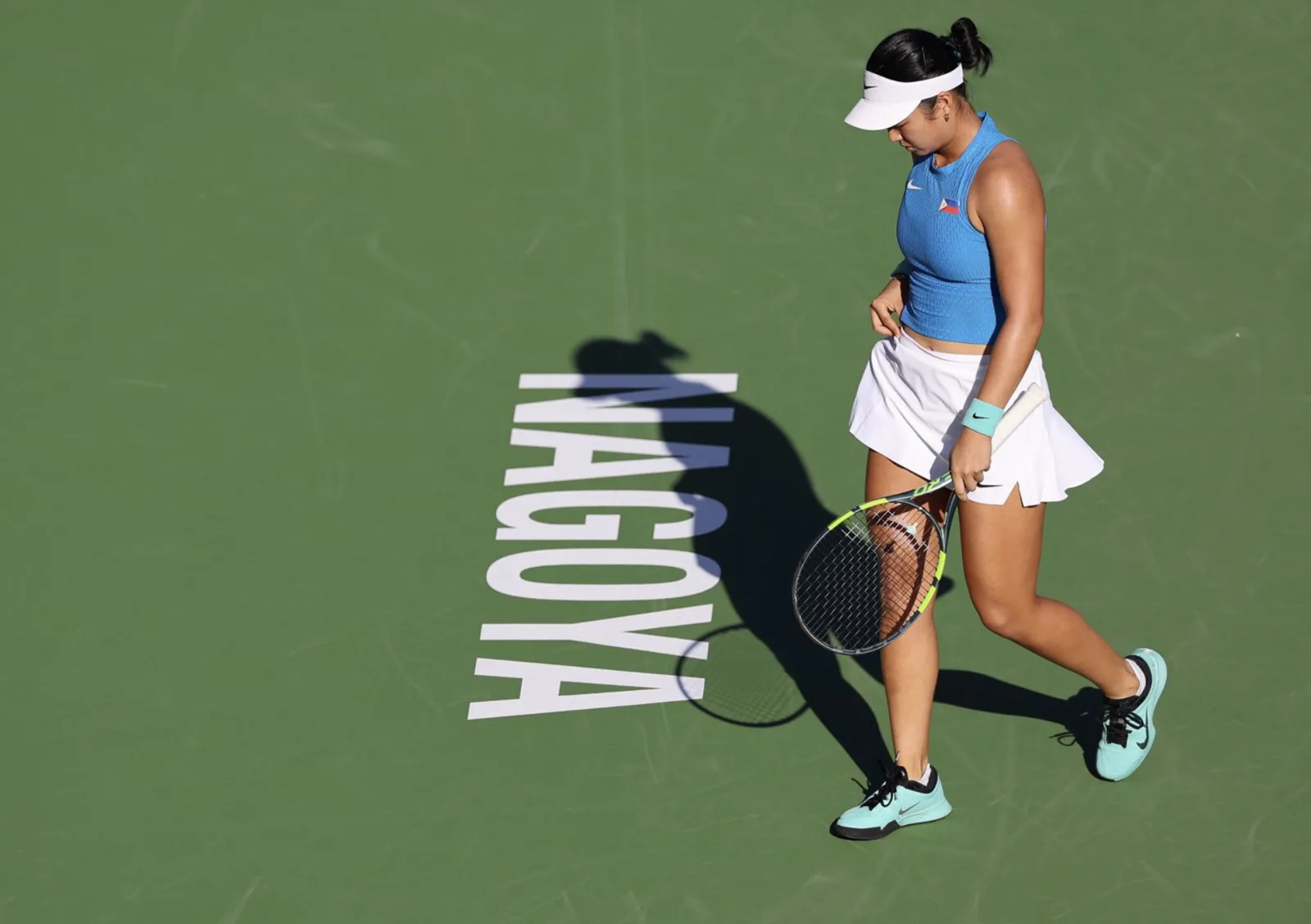
Alex Eala Doesn't Owe Us Anything
But she showed up anyway.
Read more →
What does the world need from the Philippines? Right now, nothing it can't get somewhere else.
China refines 91% of the world's rare earths. Taiwan makes over 90% of its most advanced chips. We import 98% of our garlic and ship our nickel out as raw ore. What could the Philippines own that the world can't do without?
Read more →