What If We Paid the People Running the Country Like the People Running a Company?
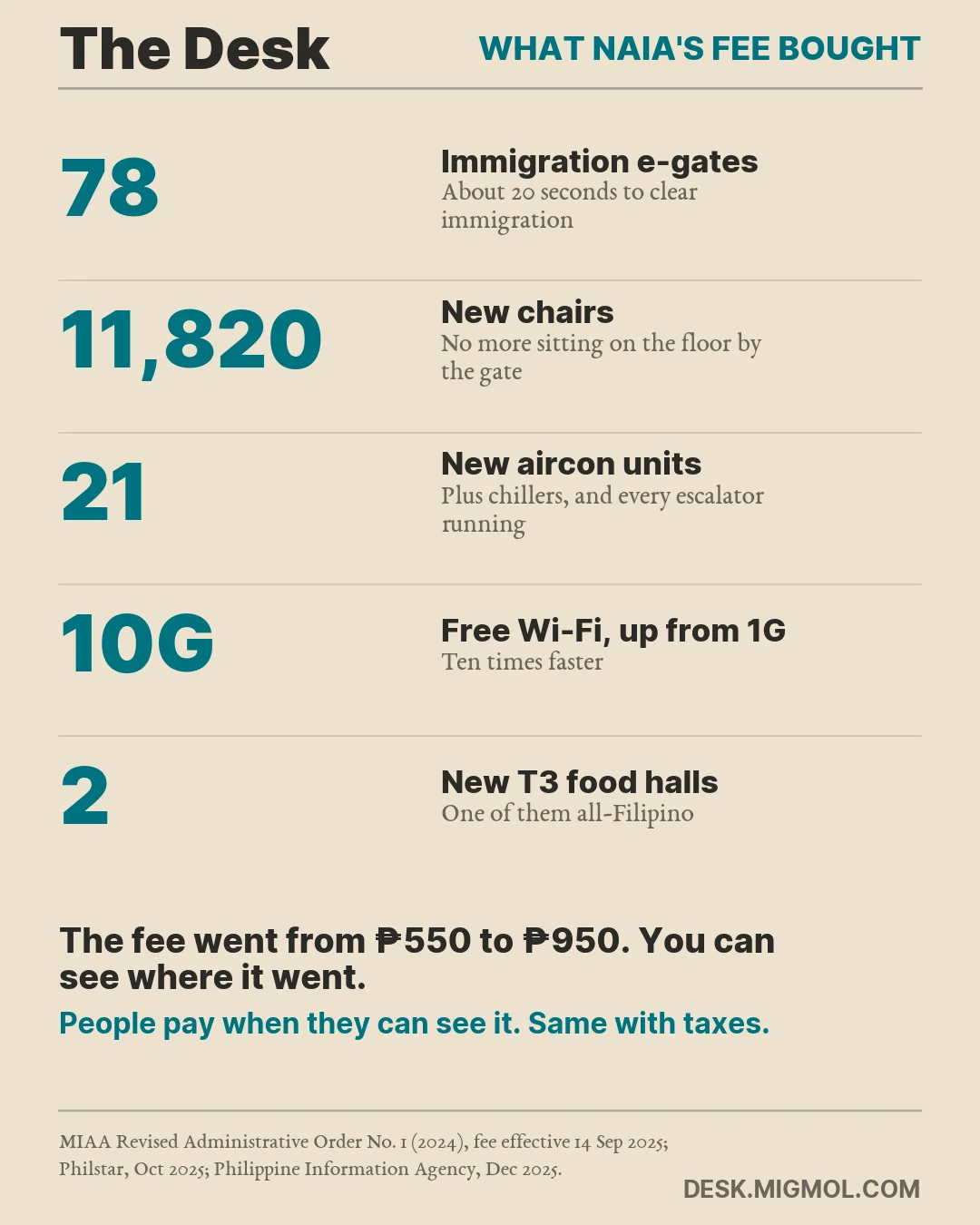
In September 2024, the government handed NAIA to a San Miguel-led group. If you’ve flown out of Manila since, you’ve felt the difference. There are 78 biometric immigration e-gates that clear you in about 20 seconds, 11,820 new chairs so nobody sits on the floor by the gate anymore, 21 new air-conditioning units and chillers, and every escalator, walkalator, and elevator actually running. The free Wi-Fi went from 1G to 10G. Terminal 3 has two new food halls, one of them all-Filipino, there are 586 new flight information screens, renovated restrooms, a lounge for OFWs, and 20 new shuttle buses between terminals. The tollways tell the same story. Hand something to a private operator and, more often than not, it starts running better.
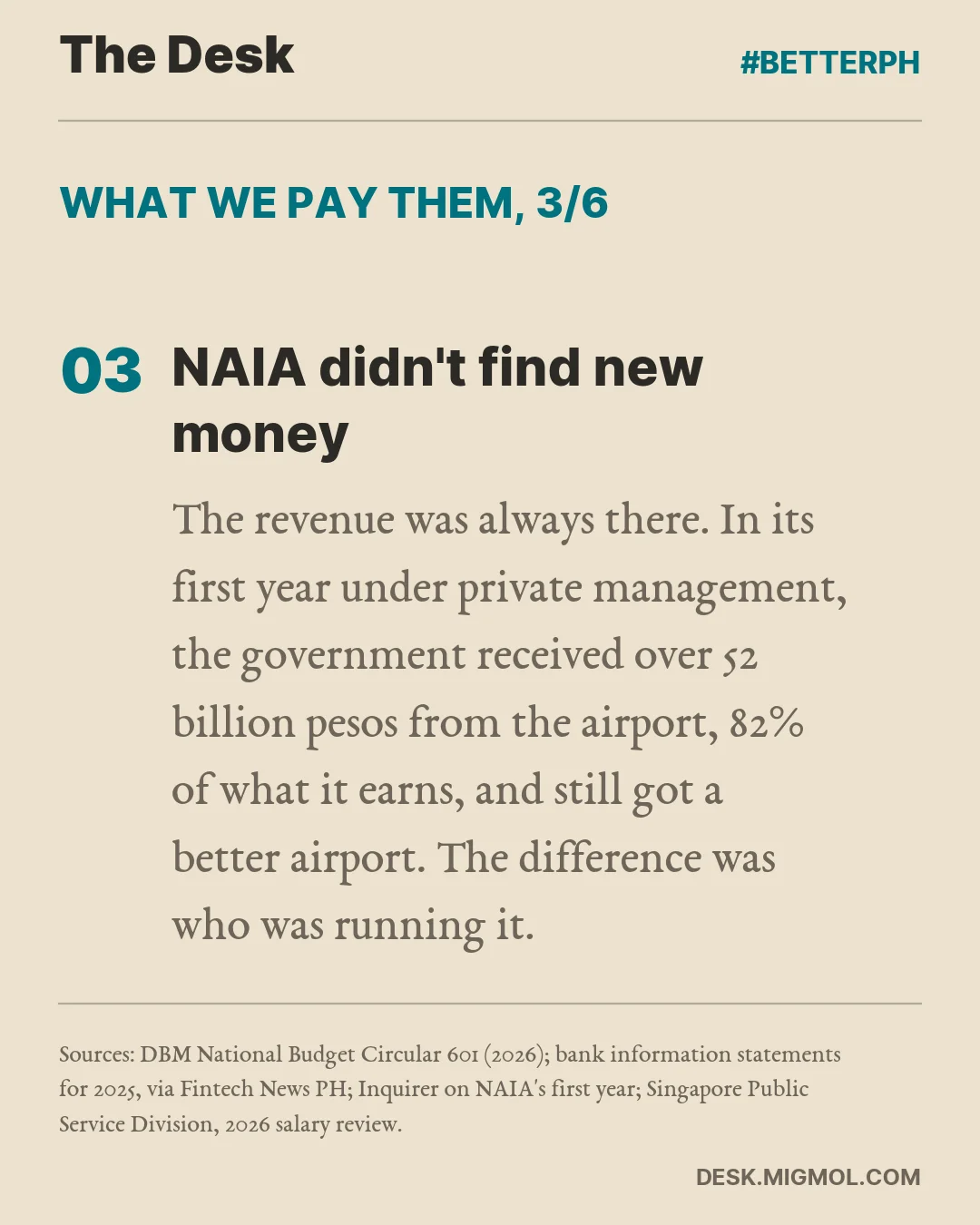
So what do they have that the government doesn’t? Money? Not by a long shot. In NAIA’s first year under private management, the government received over ₱52 billion from the airport, including a ₱30 billion upfront payment, and it keeps 82% of what the airport earns. The revenue was always there. What changed was who was running it, and whether they were paid to care if it worked.
It did cost us something. In September 2025 the terminal fee went from ₱550 to ₱950 for international flights and from ₱200 to ₱390 for domestic, the first government-mandated increase in over 20 years. Lawmakers called for a probe and a group asked the Supreme Court to void the deal. But walk through Terminal 3 now and ask yourself whether you’d go back to the old fee and the old airport. People will pay more when they can see what they’re paying for. The same is true of taxes: nobody resents a fee that visibly comes back to them, only one that disappears.
What we actually pay
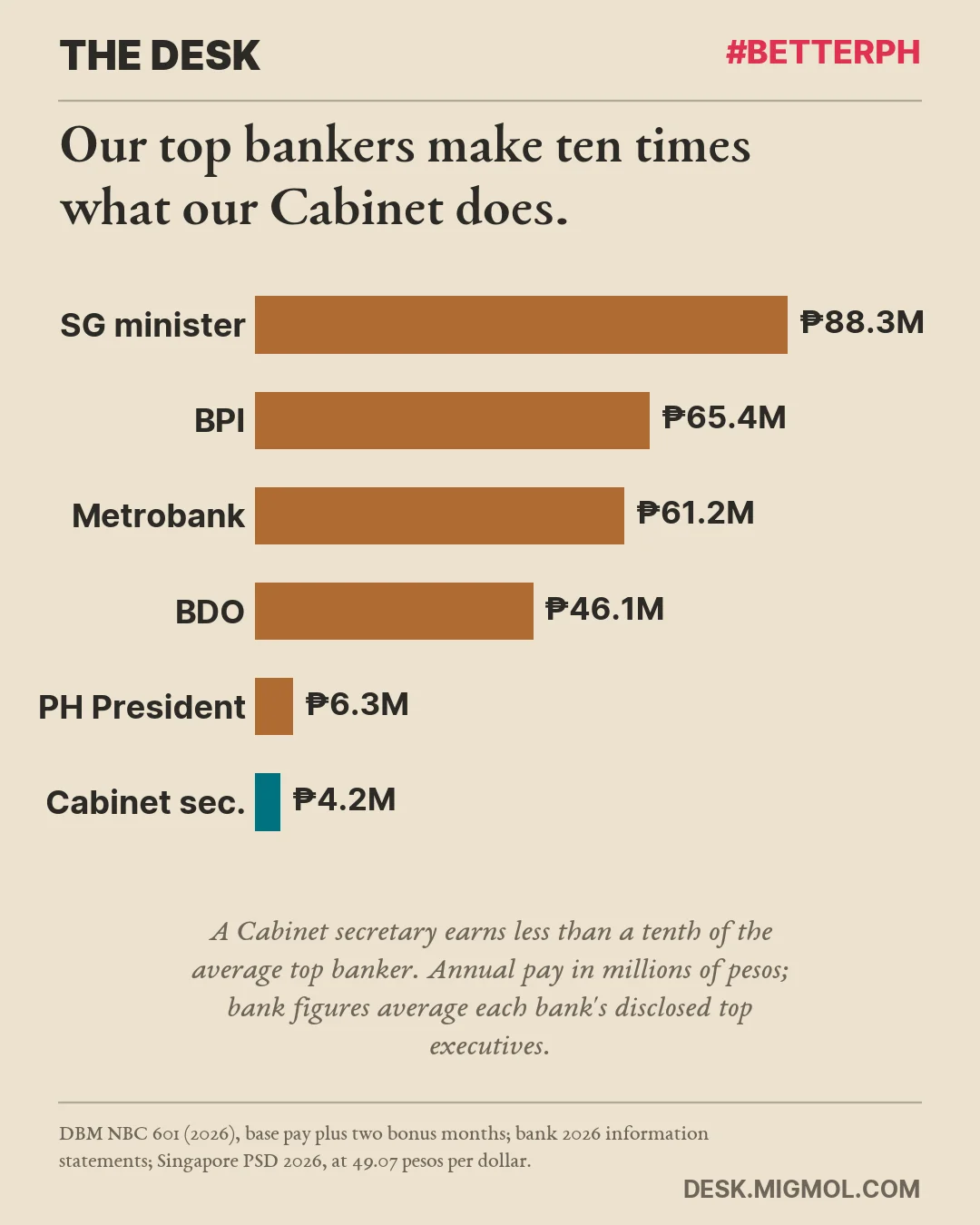
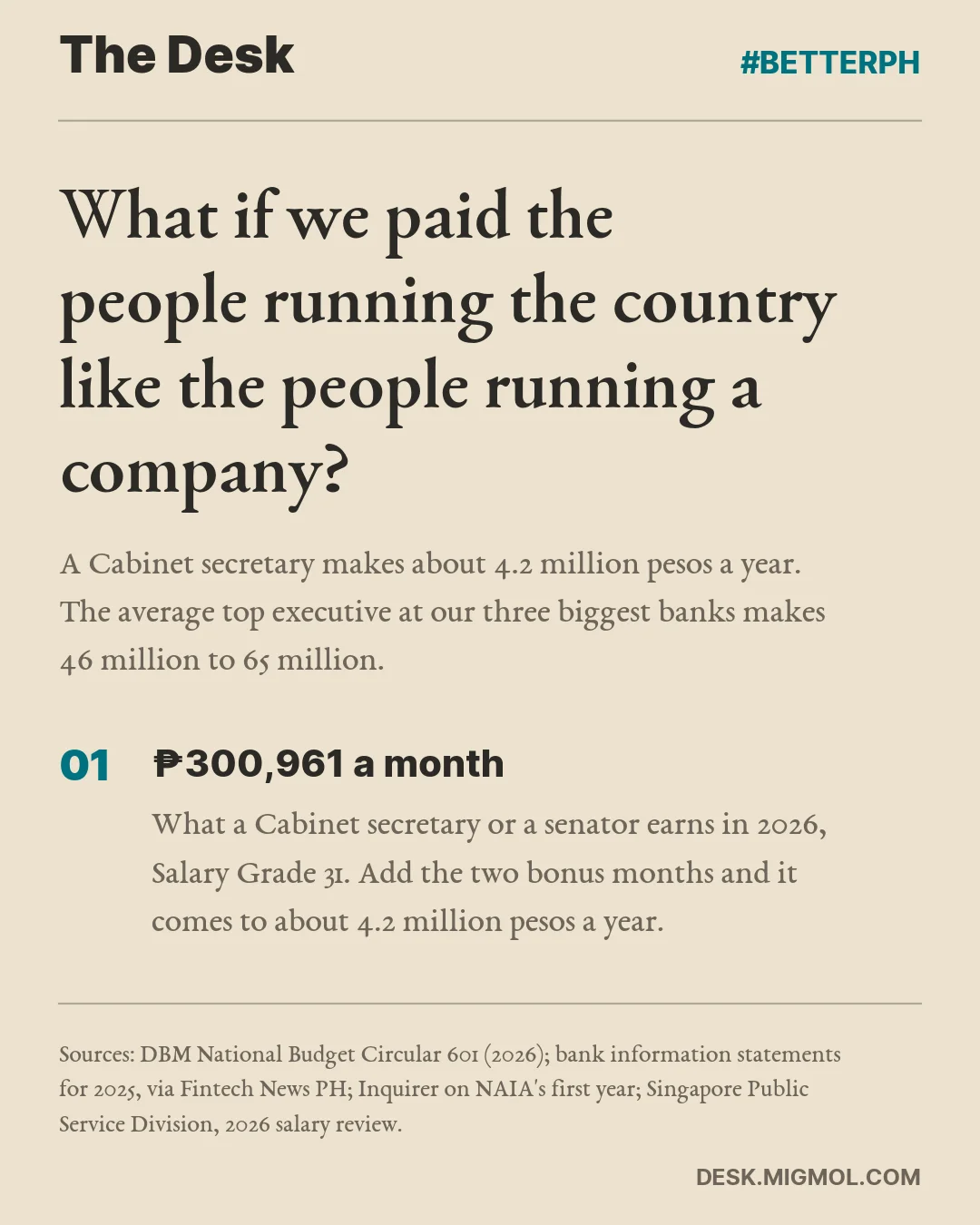
A Cabinet secretary, like a senator, sits at Salary Grade 31. In 2026 that is ₱300,961 a month, or about ₱4.2 million a year once you add the mid-year and year-end bonuses. The President, at the very top of the scale, makes ₱449,157 a month.
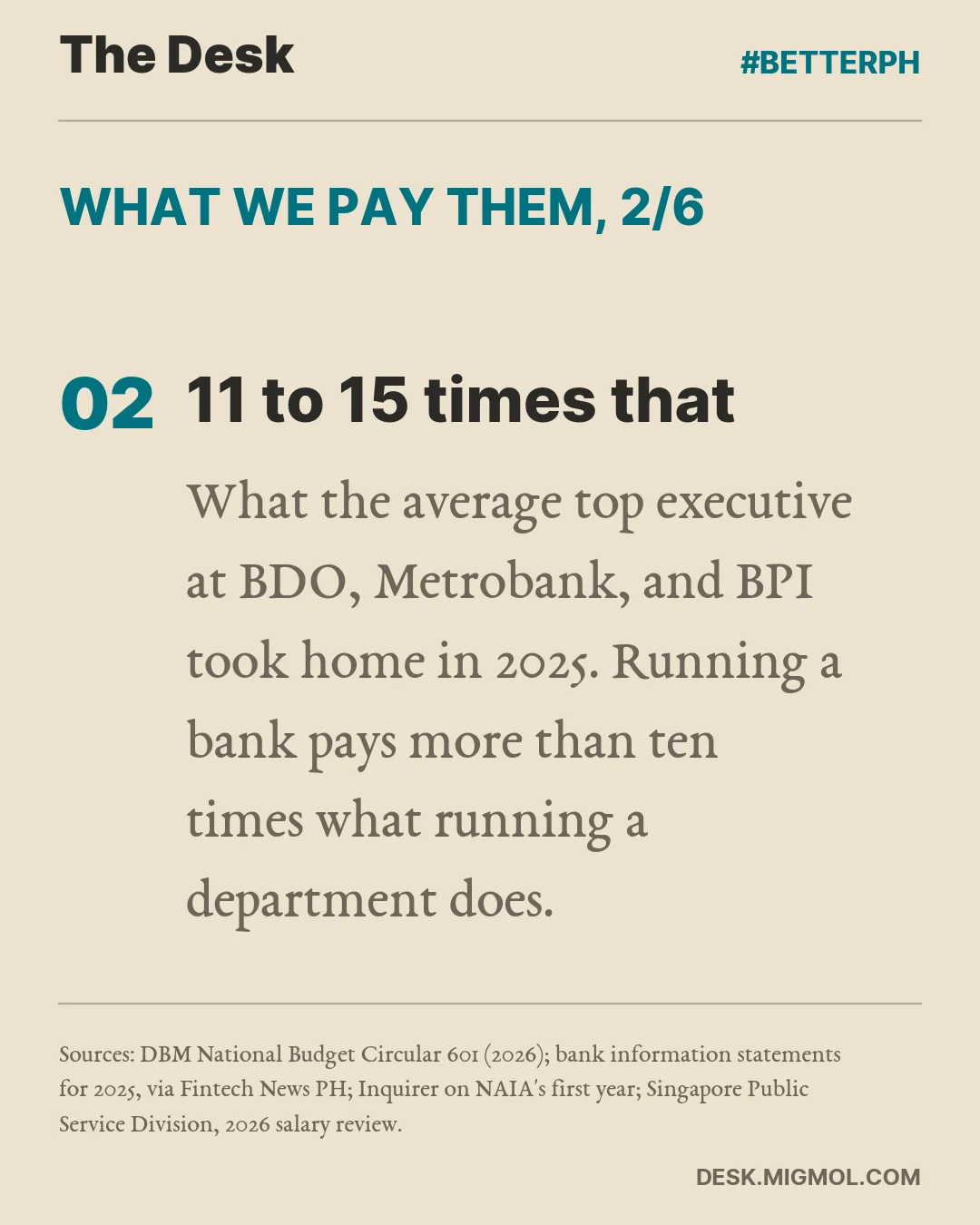
Now compare that with the people who run our biggest companies. In their 2026 filings, BDO, Metrobank, and BPI disclosed what their top executives took home in 2025. The averages came to ₱46.1 million, ₱61.2 million, and ₱65.4 million per person. That is 11 to 15 times what we pay the person running a department of the national government.
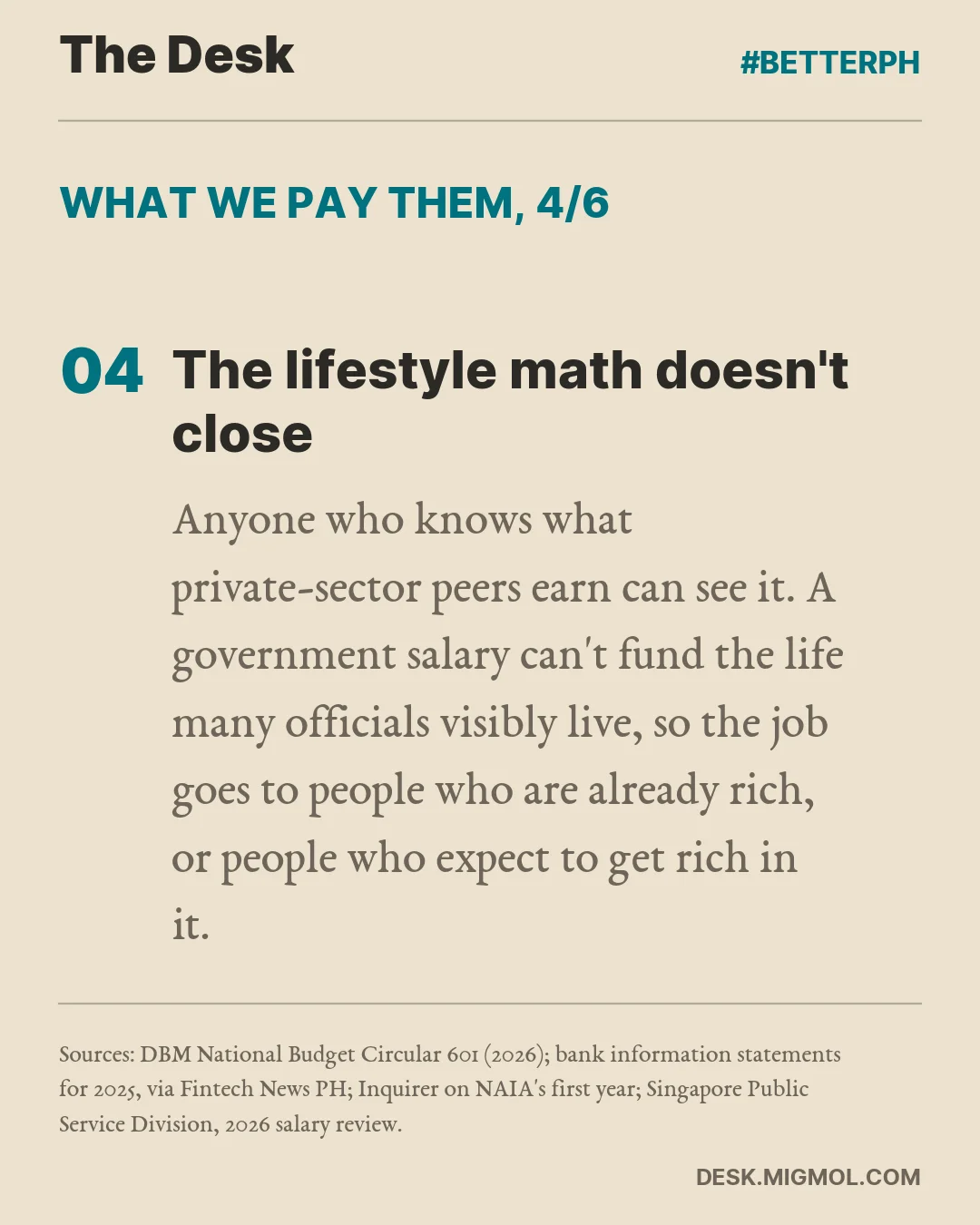
I know what my peers in the private sector earn. I know what government heads earn. None of them could keep their lifestyle on a government salary alone. It is impossible.
So where does the money come from? It can be corruption. It can also be other things, so let’s be fair and go through them. Some officials come from old money. Some have a family business that kept running while they served, or a spouse with a big private-sector salary, or an inheritance. But not everyone has a family business. Not everyone married rich. When none of those explain it and the lifestyle is still there, the house, the cars, the trips, then the money is coming from somewhere the salary isn’t, and that is exactly what our corruption watchdogs are supposed to catch, if we gave them the budget and the independence to do it.
Either way, the salary tells you who the job is built for: people who are already rich, or people who expect to get rich in it. Neither group is the best manager available.
Don’t say love of country
The usual answer is that public service should be its own reward. Don’t say love of country unless you’re naive. Perhaps our naivete is what keeps us down. We ask people to run the most important jobs in the country as charity, then act surprised when they’re run like side hustles.
Yes, it’s chicken and egg. Nobody wants to give a raise to the people already under investigation. But why would a capable private-sector executive take a 90% pay cut to walk into a Senate hearing? The ones who can afford to are already rich. The rest have a reason we don’t want to think about.
Singapore pays for it on purpose
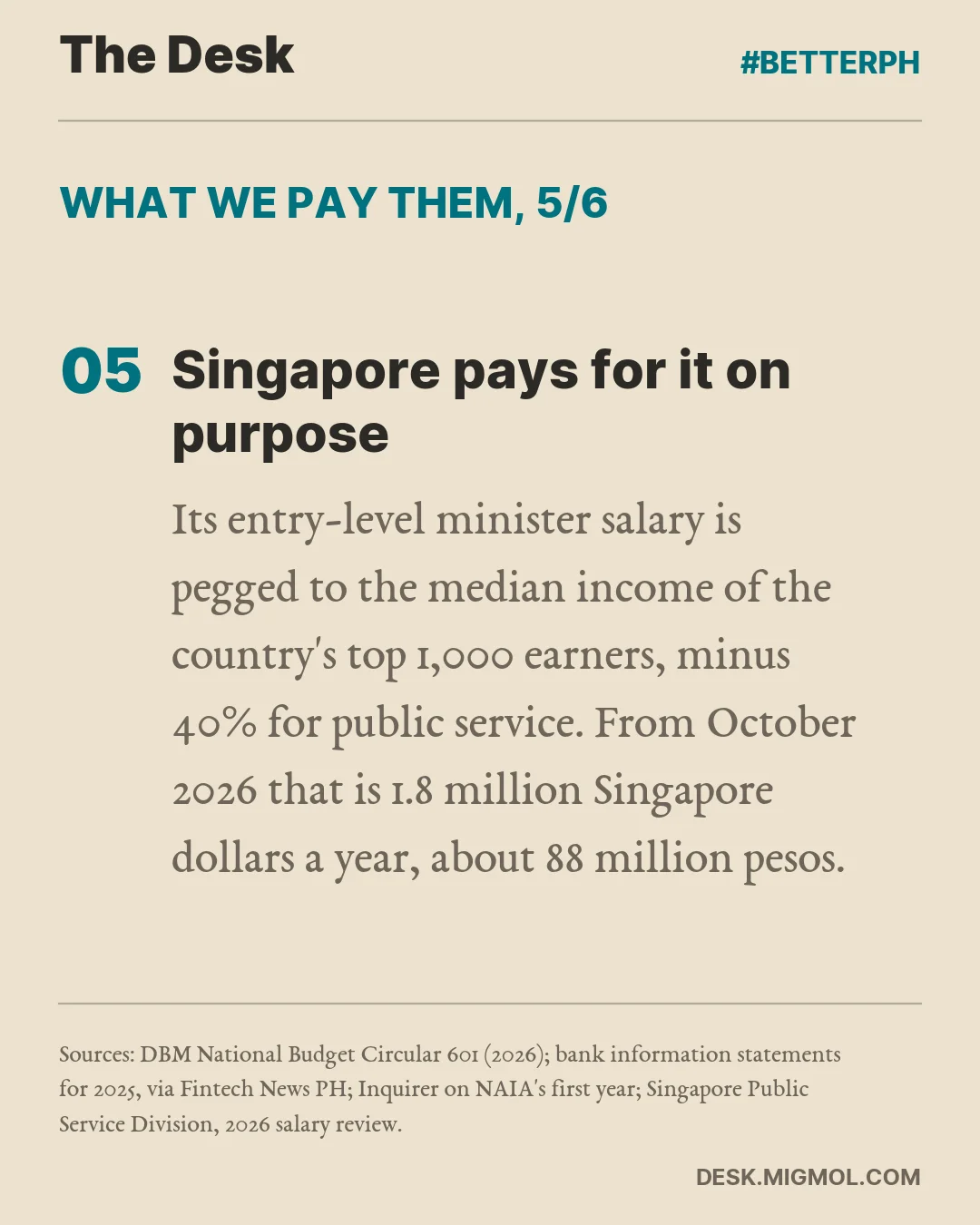
Singapore made the opposite bet decades ago, and just doubled down. From 15 October 2026, its entry-level minister salary is pegged to the median income of the country’s top 1,000 earners, minus a 40% discount for public service. That works out to 1.8 million Singapore dollars a year, about ₱88 million. Prime Minister Lawrence Wong put it plainly: “This is not just a matter of pay. It is about whether Singapore will continue to have the quality of political leadership we need to take our country forward.”
Pay alone isn’t the fix
Singapore didn’t just raise salaries. It also made stealing expensive. Under its Prevention of Corruption Act, a gift to an official from anyone dealing with government is presumed corrupt unless he proves otherwise, and wealth beyond an official’s known income can be used against him in court. A raise without that kind of enforcement only pays the wrong people more. Raise the salary, then make sure the people who watch the money aren’t funded and confirmed by the people they’re watching.
What it would take
- Benchmark the top posts to the private sector, with a public-service discount, set by an independent body rather than by the people receiving the raise. Our Constitution already guards the door: a raise for Congress only takes effect after the terms of the members who approved it.
- Tie the raise to scrutiny. Open SALNs, lifestyle checks that someone actually runs, and a burden of proof that shifts when an official’s wealth outruns his pay.
- Pay for outcomes, not for showing up. If NAIA’s operator is measured on passengers, routes, and complaints, a department can be measured too.
We already pay for corruption. We just pay for it off the books. Love of country is not a compensation plan.
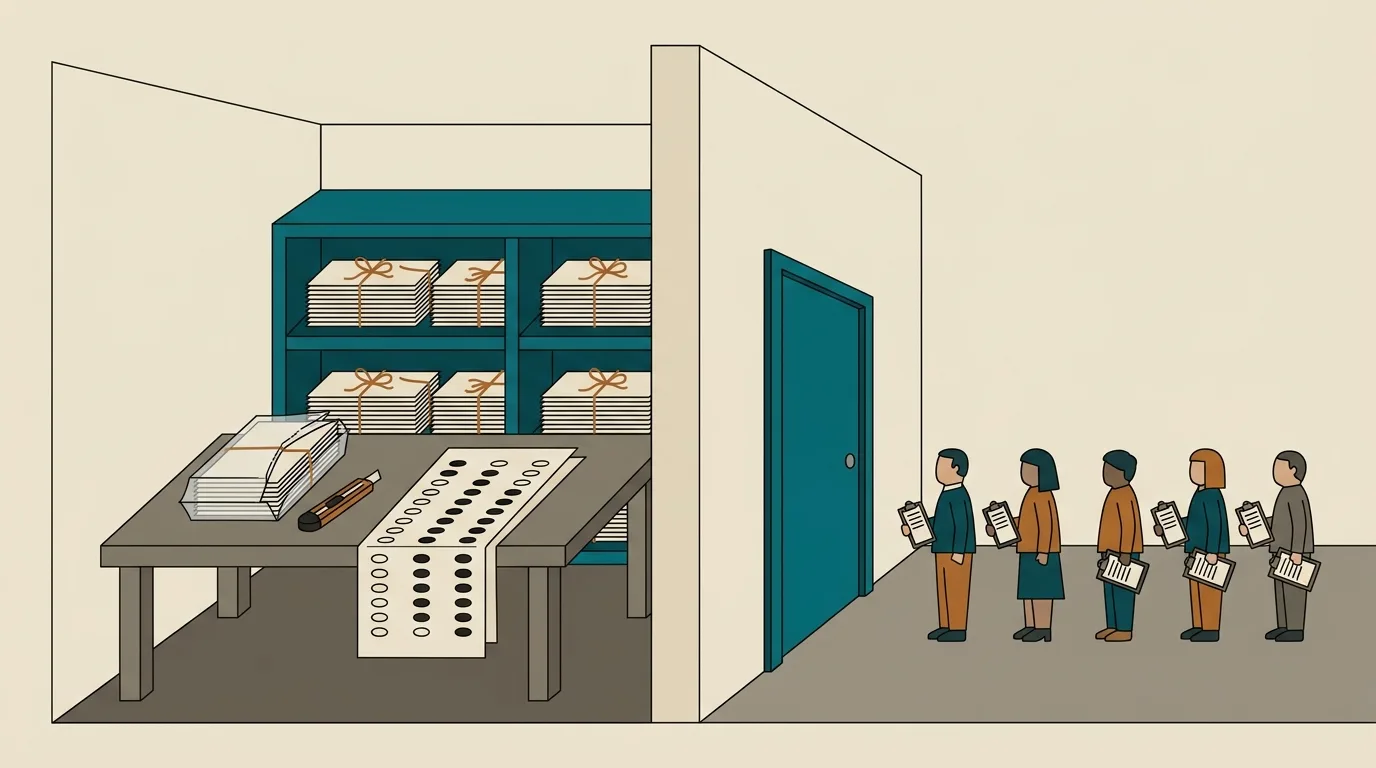
16,563 Ballots Were Shaded Before Anyone Voted
Nobody had to break a rule to reach the pre-shaded ballots in Maluso. The rule put them there. The Omnibus Election Code was written two months before EDSA, and Comelec's 963-page fix is still waiting.
Read more →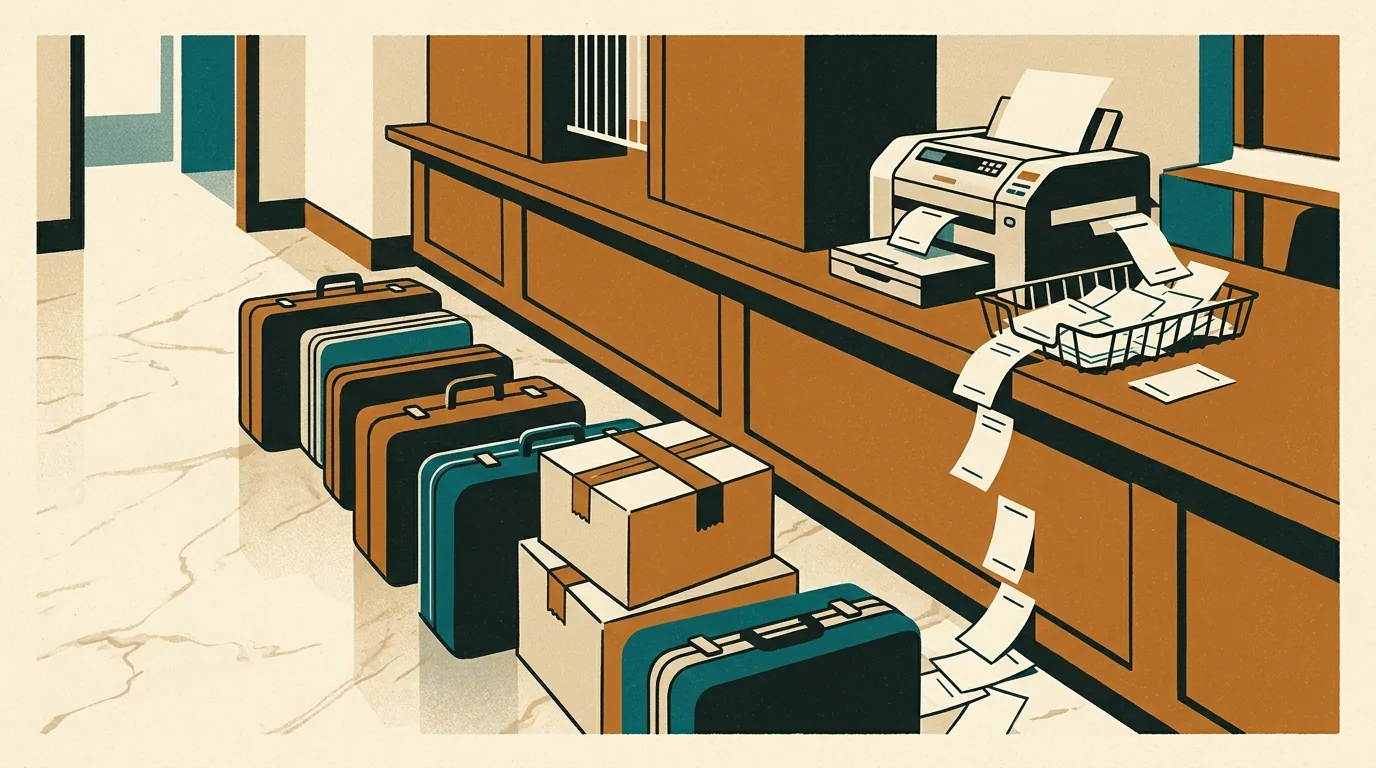
₱457 Million in Cash, and Nobody Asked
The bank filed the report. The AMLC said it had too many to read. Part 4 of 4 on anti-corruption with teeth.
Read more →
If you're above 40, this is the 2nd Iran Oil Crisis in Your Lifetime.
In 1980, a crisis in Iran pushed oil to $149 a barrel in today's dollars. Saudi Arabia had warned that prices that high would push the world to find something else, and it did. In 2026 it is Iran again, and this time the something else is already in our driveways.
Read more →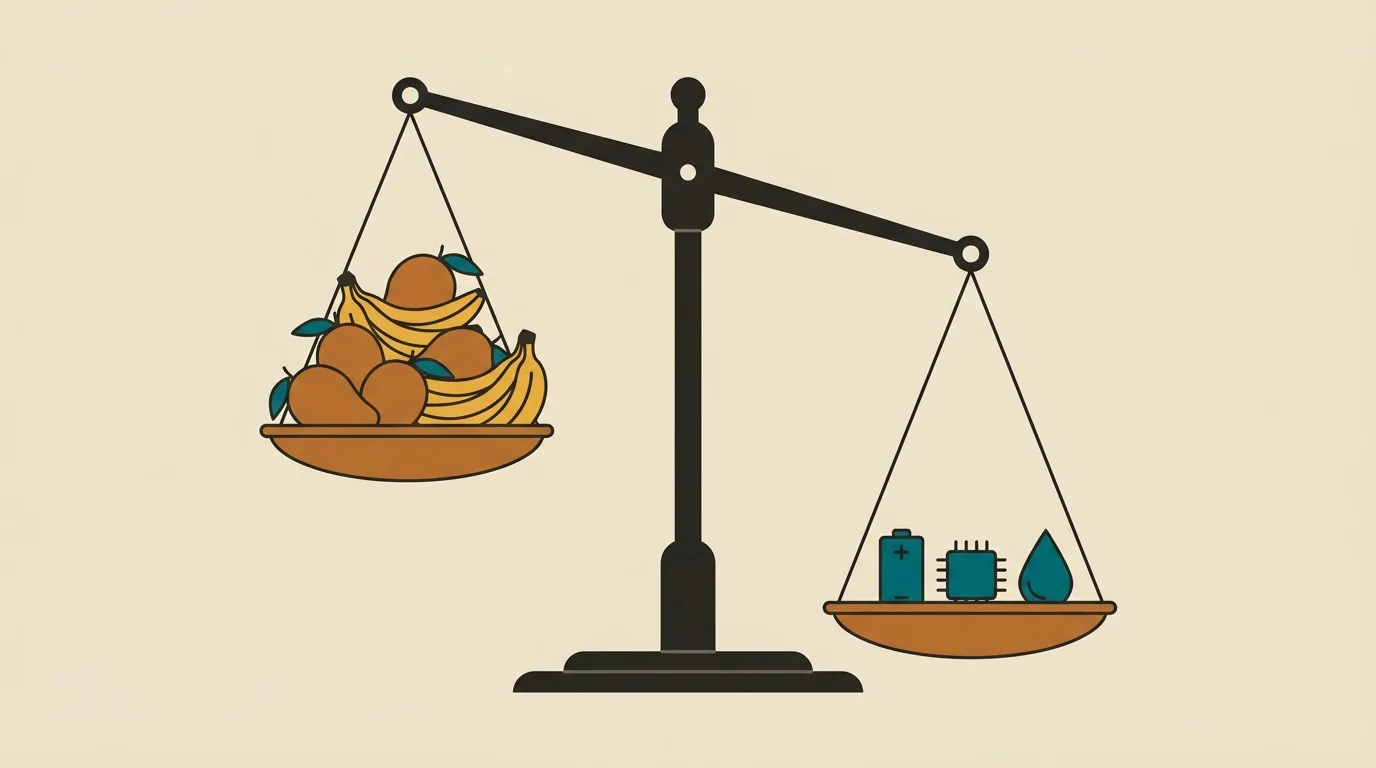
What does the world need from the Philippines? Right now, nothing it can't get somewhere else.
China refines 91% of the world's rare earths. Taiwan makes over 90% of its most advanced chips. We import 98% of our garlic and ship our nickel out as raw ore. What could the Philippines own that the world can't do without?
Read more →