Who Funds the Watchdog? The People It Watches.
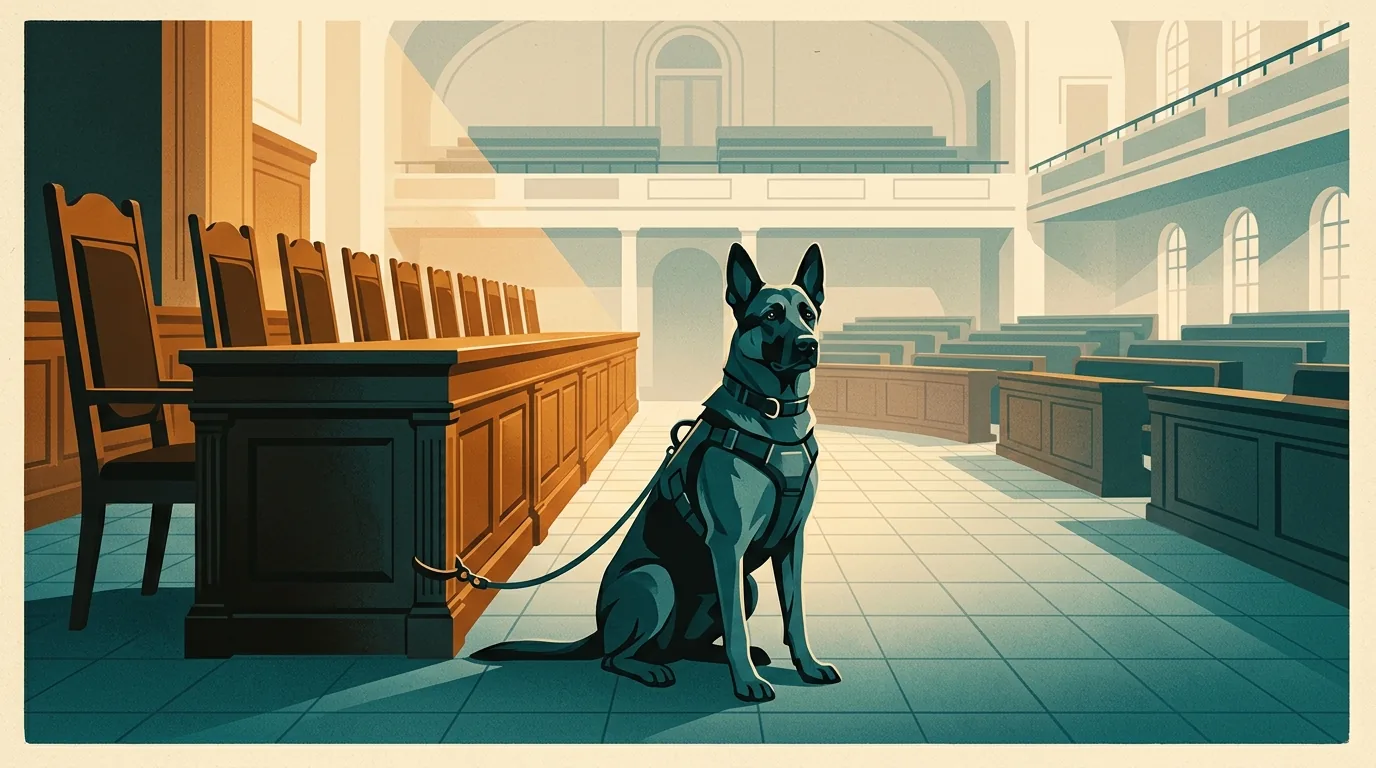
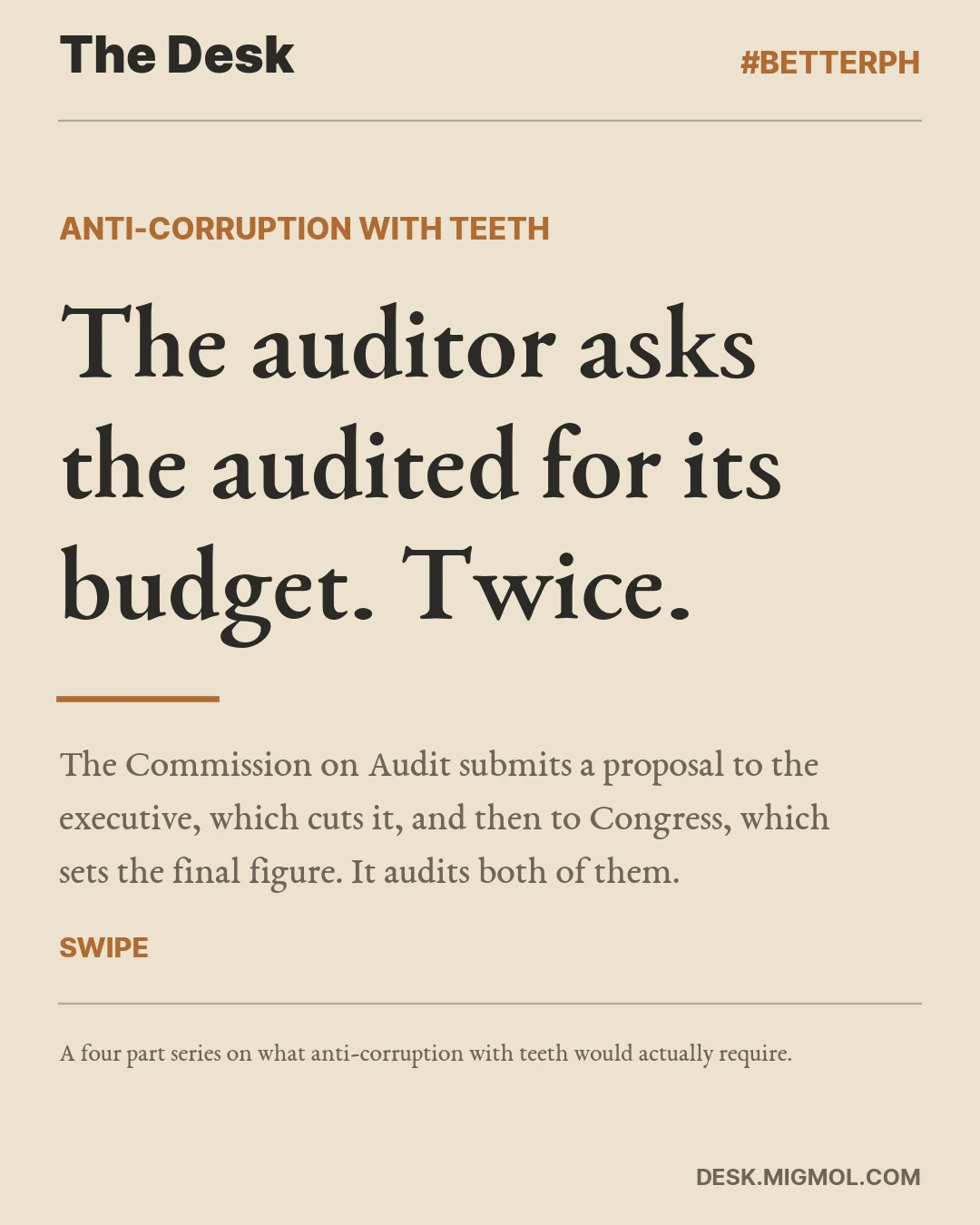
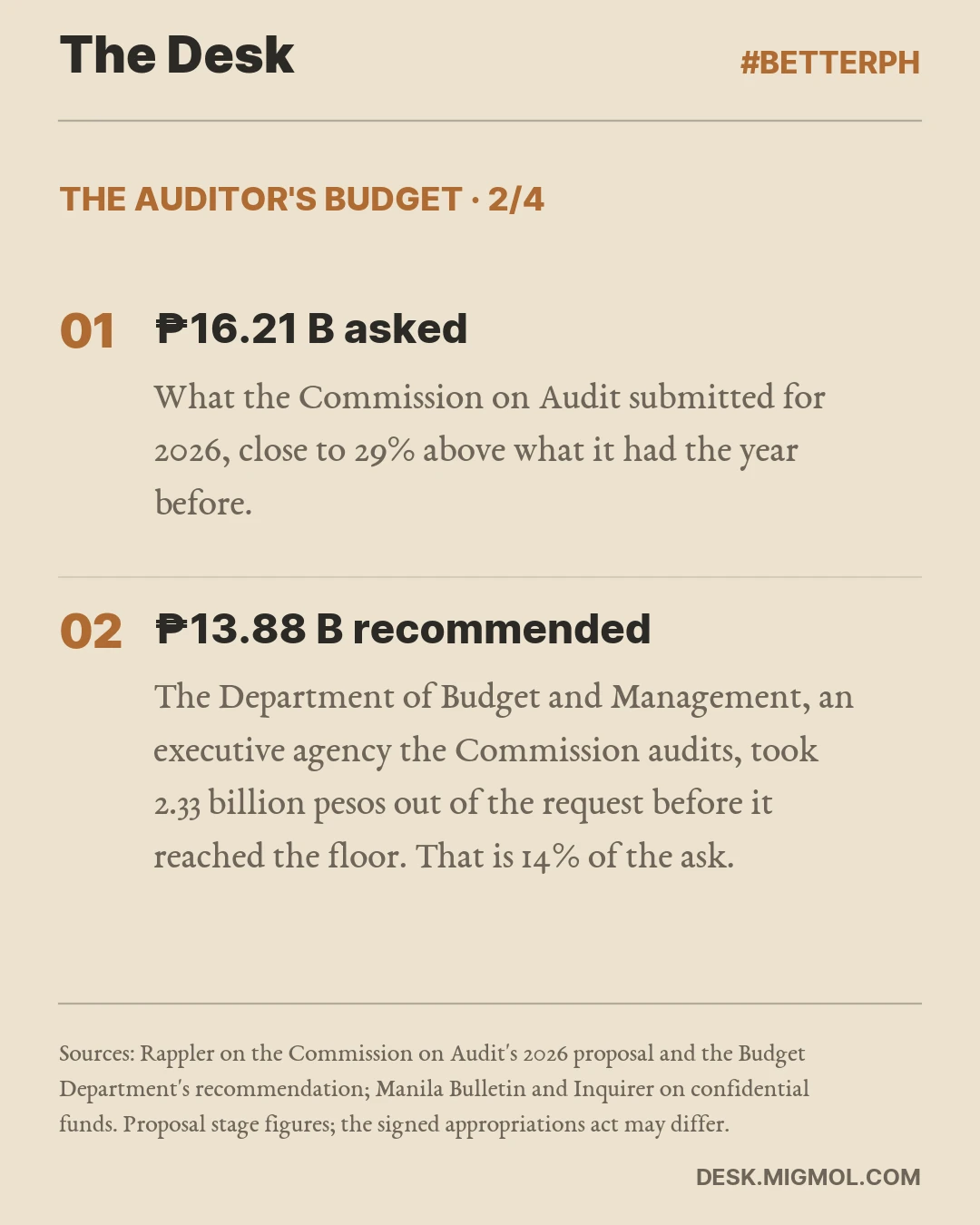
The Commission on Audit asked for ₱16.21 billion to run itself in 2026. The Department of Budget and Management, which COA audits, recommended ₱13.88 billion instead. That proposal then went to Congress, which COA also audits, and Congress set the final figure.
So the agency that checks how public money gets spent has to ask the people it checks for the money to do the checking with. Twice.
Someone will tell you this is already solved. The Constitution does say so. Article IX-A, Section 5 gives the constitutional commissions fiscal autonomy, and says their approved annual appropriations “shall be automatically and regularly released.” The Ombudsman gets the same guarantee under RA 6770, plus a seven-year term and removal only by impeachment.
Read the words again though. What is protected is the release of the money, and only after it has been approved. Not the amount. The amount still goes through the Budget Department’s pen and then through a vote in Congress, and by the time anything is automatic, somebody else has already decided how much there is to release.
A thousand pesos
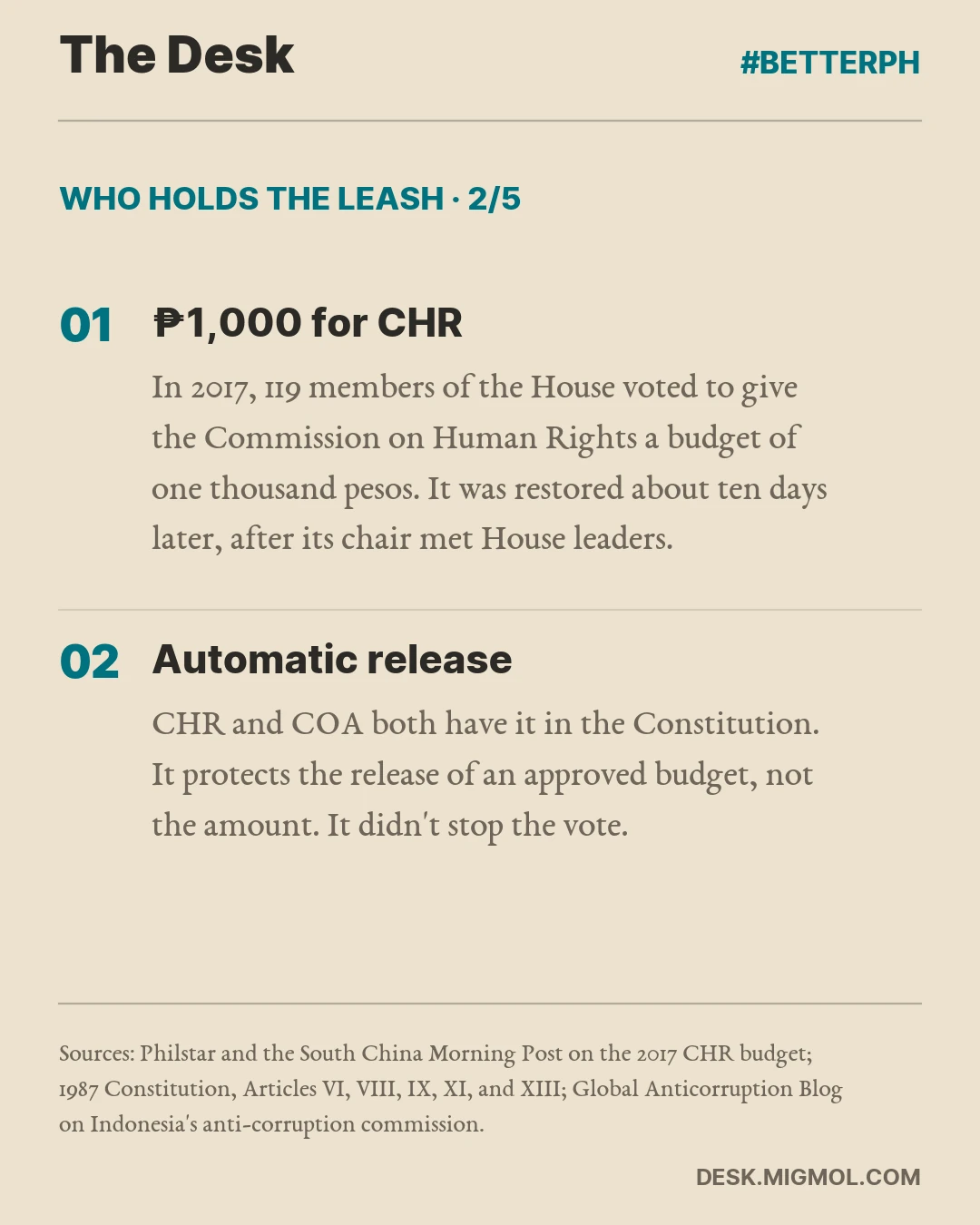
If you want to see what that gap is worth, look at the Commission on Human Rights in 2017. CHR has the same constitutional guarantee COA has: its approved budget is automatically released. In September that year, 119 members of the House voted to give it ₱1,000 for 2018. The Budget Department had proposed ₱678 million.
One thousand pesos, for a constitutional commission.
About ten days later the budget was restored, after the CHR chair met House leaders. The House leaders said they had extracted an agreement from the commission to look at issues other than the drug war. That is the power of the purse being used as a leash.
CHR isn’t an anti-corruption agency. But the mechanism is the same one COA and the Ombudsman face every budget season, and it is not a stretch to think every office that audits or investigates members of Congress keeps 2017 in mind when its budget comes up. I get that this is meant to be checks and balances, co-equal branches keeping each other honest. But a check only works when the one being checked can’t turn off the checker’s funding.
Who picks the watchdog
The money is half of it. The other half is who gets the job.
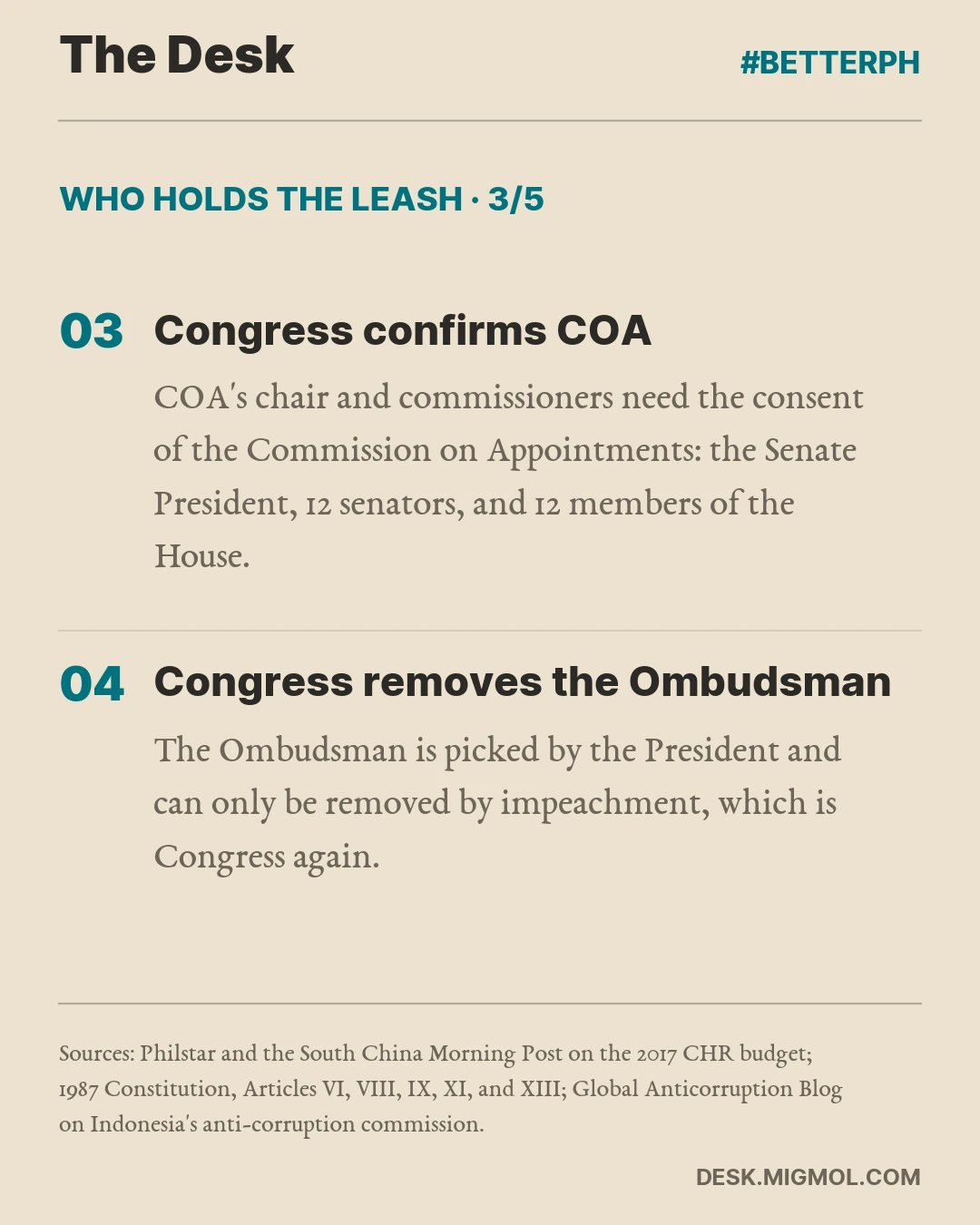
COA’s chair and its two commissioners are appointed by the President with the consent of the Commission on Appointments. The Commission on Appointments is the Senate President, 12 senators, and 12 members of the House. Congress confirms its own auditor.
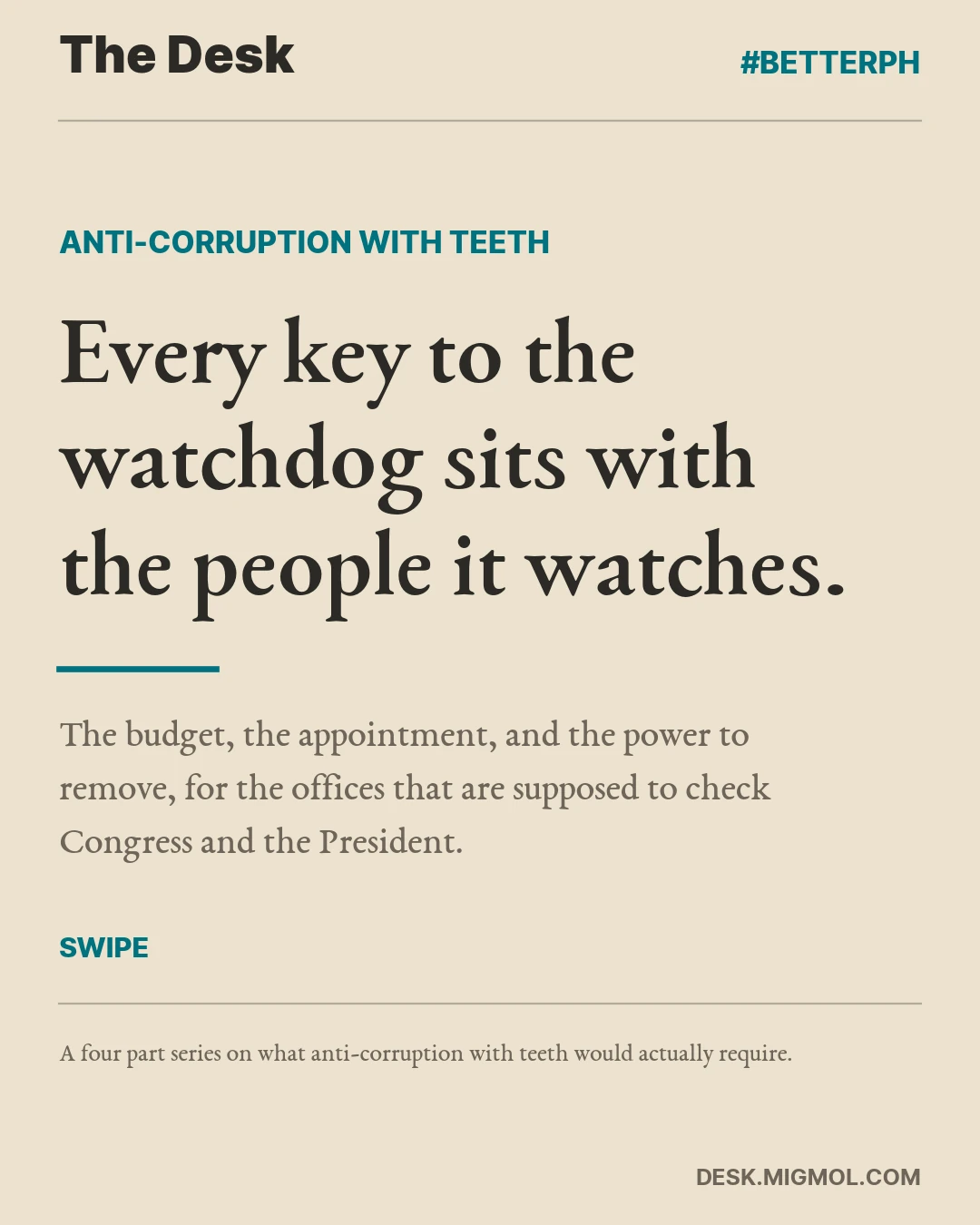
The Ombudsman is picked by the President from a shortlist, and can only be removed by impeachment, which is Congress again. So every key to these offices sits with the people they are supposed to check: the President who appoints, and the Congress that confirms, funds, and can remove.
What the numbers actually look like
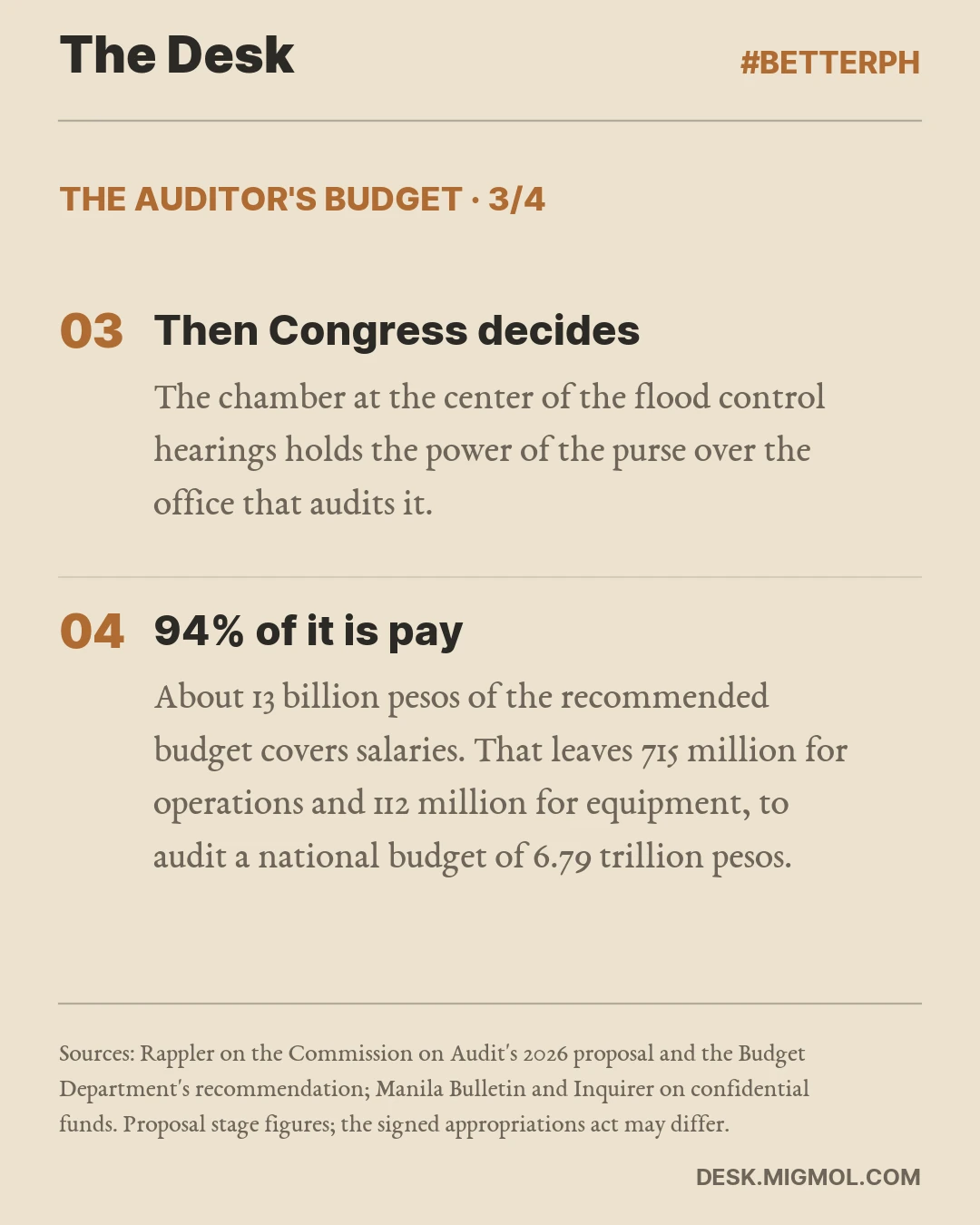
Of the ₱13.88 billion recommended for COA, about ₱13 billion is salaries. That is 94%. What is left is ₱715 million for operations and ₱112 million for equipment, to audit a national budget of ₱6.793 trillion.
The Office of the Ombudsman runs on ₱6.42 billion for 2026. Its Anti-Corruption Investigation Program, the part that actually investigates public officials, gets ₱899.76 million. The Sandiganbayan, the anti-graft court, gets ₱2.723 billion.
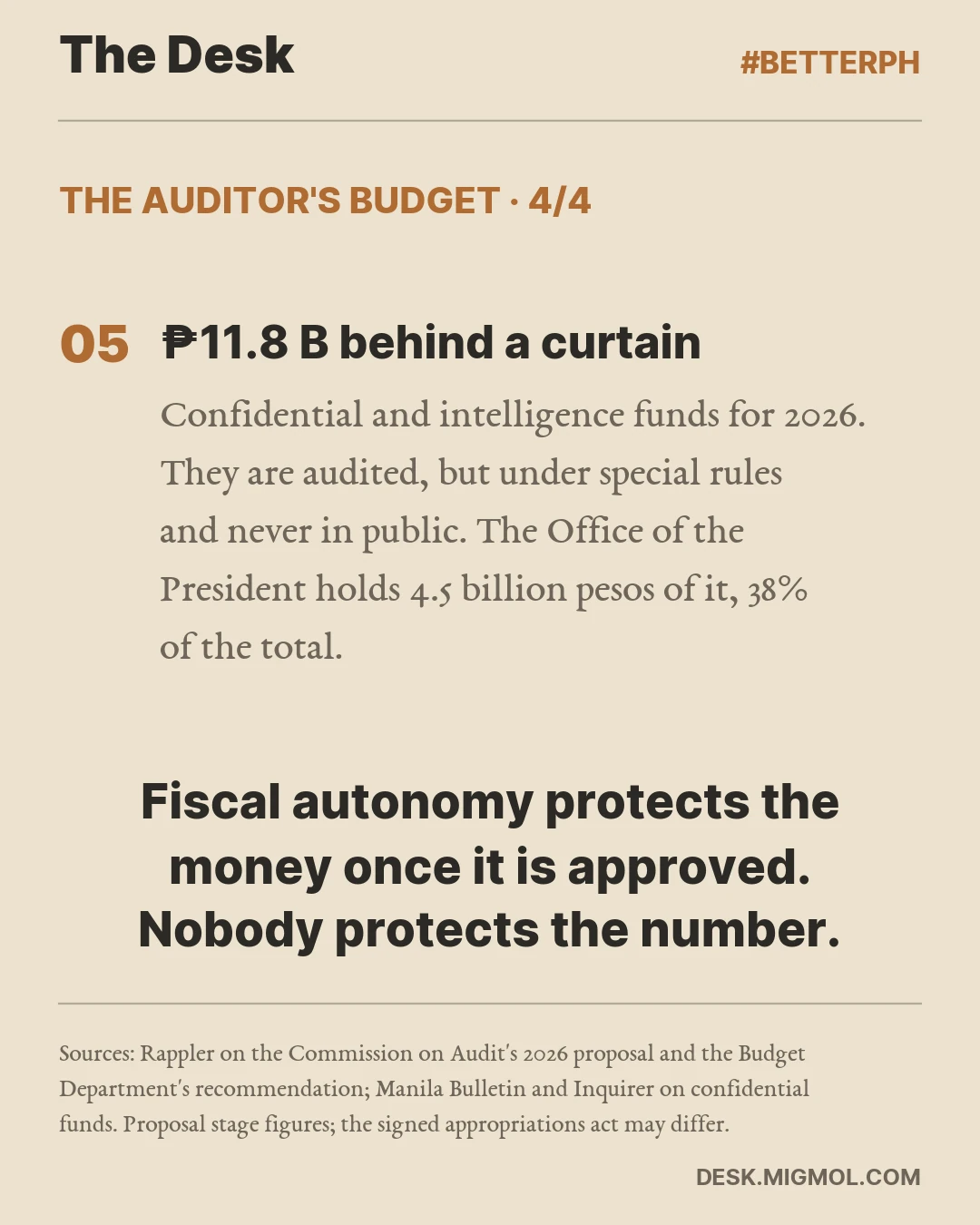
Confidential and intelligence funds for 2026 total ₱11.8 billion. The Office of the President holds ₱4.5 billion of that, 38% of the whole pot.
I get why some of that money has to be secret. Intelligence work is real work and you can’t run it on a public ledger. But add up the Ombudsman’s investigation arm and the entire anti-graft court and you get ₱3.62 billion. We budget more than three pesos of money the public will never see for every one peso spent investigating and trying the people who take it.
What happens when the watched hold the keys
Indonesia already ran this experiment for us. Its Corruption Eradication Commission, the KPK, had its own investigators and prosecutors, the power to wiretap, and a dedicated court. For years it convicted nearly everyone it charged, including top officials in every branch of their government, legislators among them.
In 2019 Indonesia’s legislature passed a law that made KPK staff ordinary civil servants and put its wiretaps under an oversight board. It is hard to read that as anything other than the people the KPK had been jailing taking its teeth out. They could, because they held the keys.
What Singapore does
Singapore’s Corrupt Practices Investigation Bureau sits under the Prime Minister’s Office, which sounds like the same problem. The difference is a backstop. If the government of the day refuses to let an investigation proceed, Singapore’s elected President can overrule that refusal and let CPIB carry on. Independence there is a second key, and it is held by somebody else.
It works upward too. In October 2024, former Transport Minister S. Iswaran was jailed for 12 months. The judge gave him more than the prosecution asked for. Transparency International’s 2025 index puts Singapore 3rd in the world. The Philippines sits 120th of 182, our lowest score since the current method started in 2012.
So how do we fix this? Three things.
Put a floor under the watchdog’s budget. We already do this for the courts. Article VIII, Section 3 says appropriations for the Judiciary “may not be reduced by the legislature below the amount appropriated for the previous year.” Give COA, the Ombudsman, and CHR the same floor, let them submit straight to Congress, and make the Budget Department publish any cut it wants with the reason attached.
Take Congress out of confirming its own auditor. COA’s commissioners should come from an independent shortlist the way judges and the Ombudsman do, with fixed terms that don’t line up with any administration. That needs the Constitution amended. I think it is worth it.
Make the leash visible. Any cut to an anti-corruption office’s budget while it has an open case against members of the body doing the cutting should be explained on the record and voted on by name. If 119 people want to give an independent commission a thousand pesos, the public should know exactly who they are.
None of this needs a new agency. We have the auditor, the investigator, and the court. What we haven’t done is let any of them hold their own leash.
Every administration campaigns on corruption. The next one will too. The test is whether they will give up the keys. Fund the watchdog, shield it, then get out of its way.
Part 1 of Anti-Corruption With Teeth, a four-part #BetterPH series. Next: The Aide Goes to Jail. The Senator Goes Home..
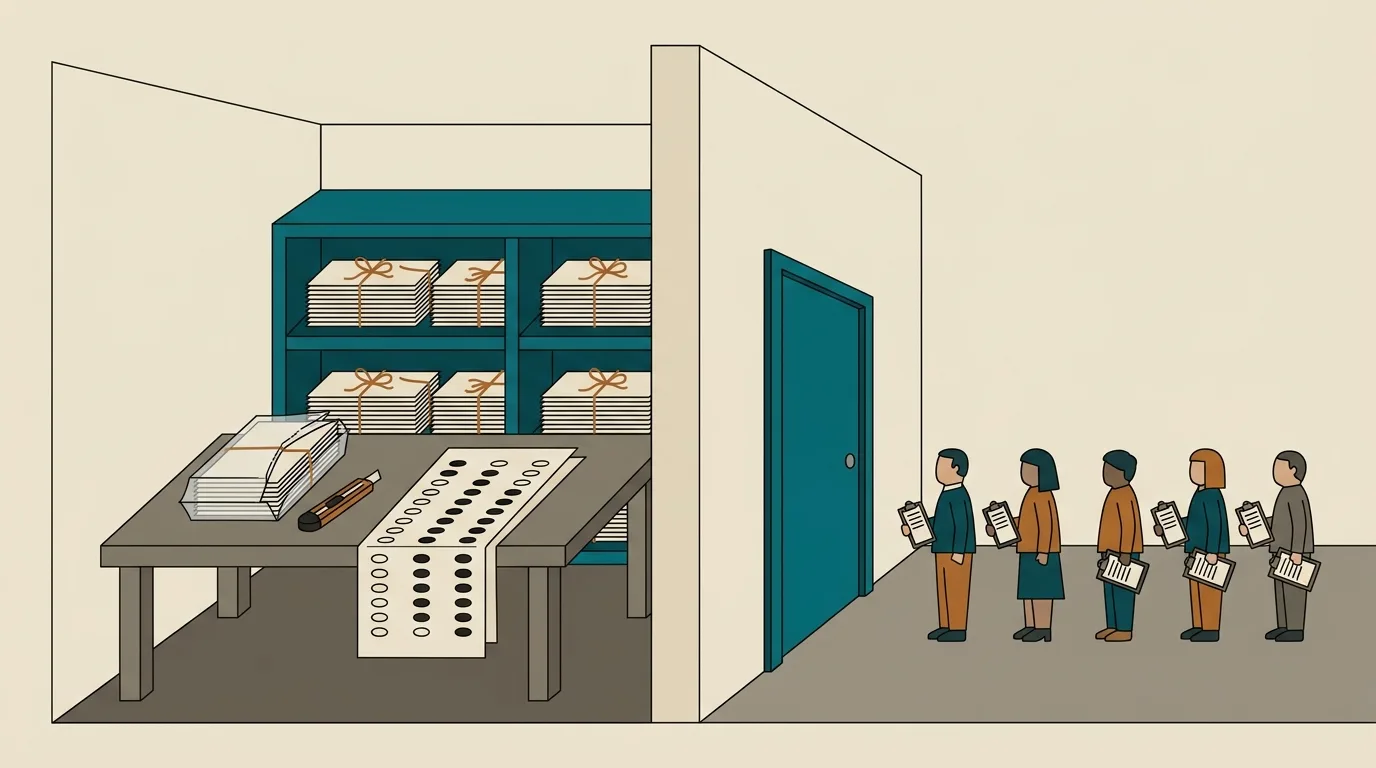
16,563 Ballots Were Shaded Before Anyone Voted
Nobody had to break a rule to reach the pre-shaded ballots in Maluso. The rule put them there. The Omnibus Election Code was written two months before EDSA, and Comelec's 963-page fix is still waiting.
Read more →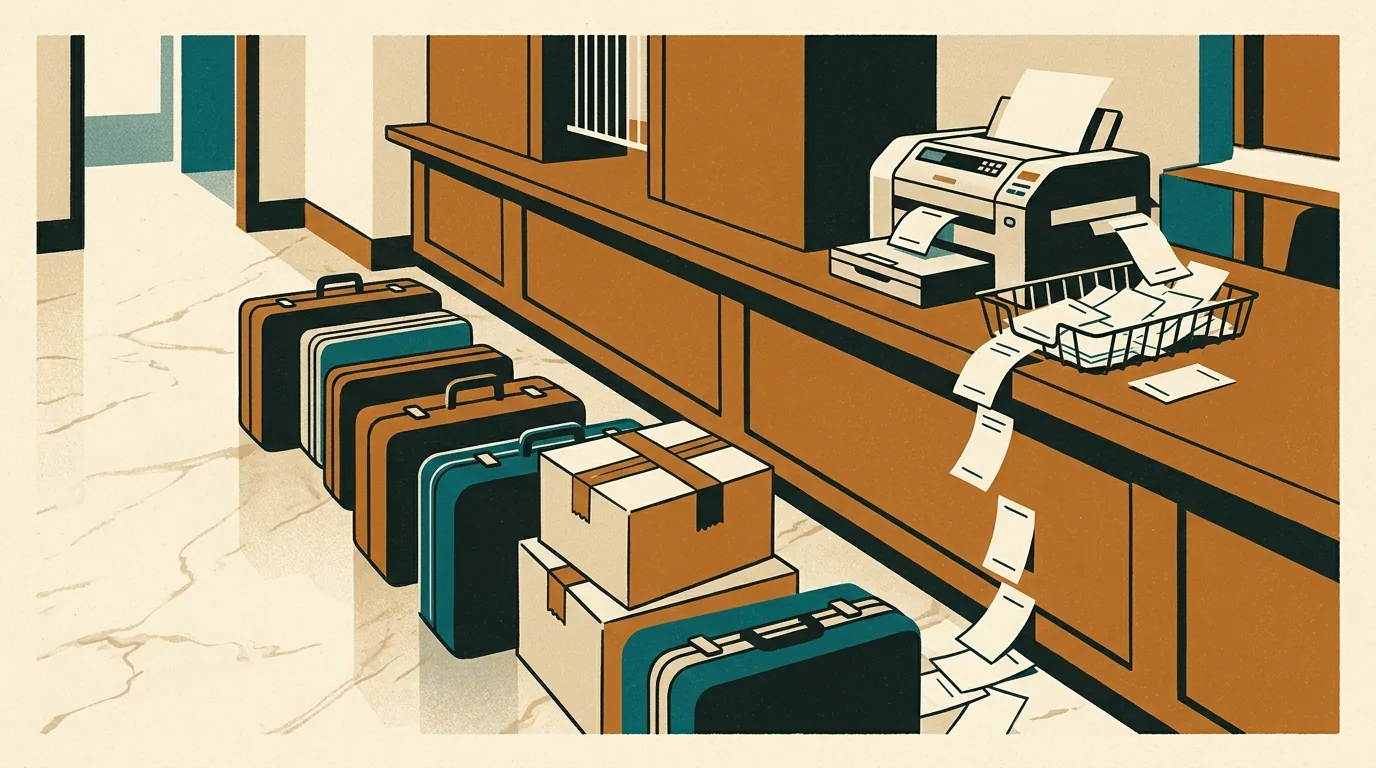
₱457 Million in Cash, and Nobody Asked
The bank filed the report. The AMLC said it had too many to read. Part 4 of 4 on anti-corruption with teeth.
Read more →
If you're above 40, this is the 2nd Iran Oil Crisis in Your Lifetime.
In 1980, a crisis in Iran pushed oil to $149 a barrel in today's dollars. Saudi Arabia had warned that prices that high would push the world to find something else, and it did. In 2026 it is Iran again, and this time the something else is already in our driveways.
Read more →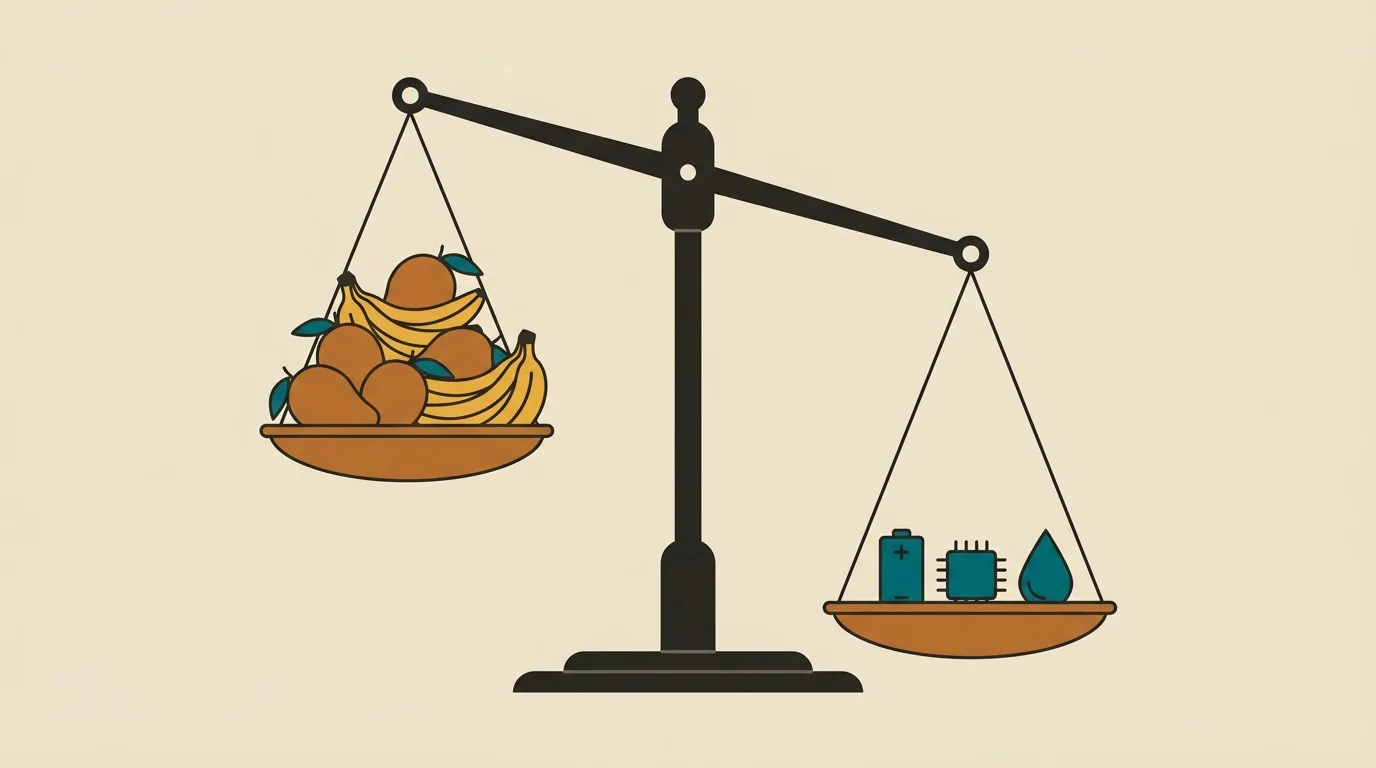
What does the world need from the Philippines? Right now, nothing it can't get somewhere else.
China refines 91% of the world's rare earths. Taiwan makes over 90% of its most advanced chips. We import 98% of our garlic and ship our nickel out as raw ore. What could the Philippines own that the world can't do without?
Read more →