We Pay the Most and Feel It the Least: What the Government Owes the Middle Class on Healthcare

Somewhere in my 40s, the stories started sounding different. People I know, in the same income band, with stable jobs and kids in decent schools, get one diagnosis and the whole thing tips over. Sometimes it’s cancer, sometimes it’s something newer that nobody has a clean name for yet. The treatment runs for months, the savings go first, then the car, then the house, and a family that looked secure is suddenly counting pesos.
One illness. That’s the distance between a comfortable Filipino family and poverty.
We already have a system that’s supposed to catch exactly this. It’s called PhilHealth, and the salaried middle class pays for most of it. In 2024, working members put in 83% of the premiums and drew 47% of the claims. If you’re a private or government employee, you got back about 21 centavos for every peso you paid. We fund PhilHealth the most and feel it the least, and fixing that is the job of a short list of people with names.
What we pay in
Look at your payslip. PhilHealth takes 5% of your monthly basic salary, split with your employer, on a salary band that floors at ₱10,000 and caps at ₱100,000. Your share runs from ₱250 to ₱2,500 a month, deducted before the money ever reaches you, with no opt-out. It works the same way as income tax, where 82% of personal income tax comes from salaried workers whose money is taken at the source.
Stretch that across a career. At ₱30,000 a month you pay about ₱750, roughly ₱9,000 a year, and close to ₱270,000 over 30 years before any raise. At ₱50,000 it’s about ₱450,000. At the ₱100,000 ceiling it’s around ₱900,000 from your side alone, without your employer’s matching half. Close to a million pesos, quietly, over a working life.
What comes back
PhilHealth collected around ₱240 billion in premiums in 2024. Working members, the ones who pay from salary, put in 83% of it and drew back 47% of all the claims it paid. Across every member who pays directly, that works out to about 38 centavos back per peso in the same year.
Break it open by category and it gets worse. Private-sector employees put in ₱138.1 billion and drew ₱29.0 billion. Government employees put in ₱52.3 billion and drew ₱11.1 billion. Both come out at about 21 centavos on the peso. The 38-centavo average is propped up by retirees who finished paying years ago and by the informal sector. If you’re salaried, 21 centavos is your number.
And when PhilHealth does pay, it pays hospitals. Of the 15.65 million claims in 2024, hospitals took 81% of the count and 85% of the money. PhilHealth shows up when you’re admitted: surgery, a delivery, a dialysis run. In a normal year of check-ups, maintenance meds, and your kid’s vaccines, you barely feel it. You pay every month and use almost nothing until the one bad year when you need everything.
The poor are not who I’m arguing with
The sponsored members drawing the bigger share of claims are the whole point of a public health system. A country takes care of the people who can’t pay for care, and I’d fund that again tomorrow without blinking. Our contributions carry people who need carrying, and I get that.
My argument is about the middle. We quietly finance the promise, and we have no cushion when it’s our turn. Too “rich” for the rescue programs, not rich enough to absorb a million-peso hospital run. One disease should not be able to erase a family that did everything right and paid into the system its whole working life.
The money was never the problem
PhilHealth isn’t broke. In 2024 the government tried to move ₱60 billion of its reserves into the national treasury, calling the money idle. In December 2025 the Supreme Court unanimously ruled the transfer unconstitutional and ordered the money returned. Since then PhilHealth has started spending, and payouts reached close to ₱300 billion in 2025.
So the fund has money and is paying out more than ever. It’s still paying for the wrong things, mostly hospital stays, and a lot of what we put in never becomes care at all.
Where it leaks
A former boss of mine once found out that someone had claimed maternity benefits on her PhilHealth. She doesn’t have children. Somebody used her membership to pull money out of the fund, and she only knew because it happened to surface.
That’s one case. Investigators have flagged more than 8,000 fraudulent cases, and losses to upcasing, padded claims, and overbilling have been estimated at around ₱150 billion since 2013. One dialysis center billed PhilHealth for sessions on patients who were already dead. Dead patients, real claims, and real payouts, from the fund we feed every payday.
The corrupt are creative. Years ago, in my time in the drugstore business, a company with ties to the Department of Education came to us with a plan to get funded per head for every student and every teacher, upfront, and dispense medicine on demand after. A grade school class has 50 students to one teacher. You get funded for 51 heads, spend a trickle on one healthy 20-year-old teacher and almost nothing on kids who rarely claim, and keep the gap. The project never came to fruition, and I’m glad, because it reeked of corruption. I hated it so much. But somebody thought it up and pitched it with a straight face, and that’s the appetite we’re up against.
Then there’s the leak that looks like kindness, part of the rot we’ve learned to step around. Someone gets sick, the bill is impossible, and the family lines up outside a politician’s office for a guarantee letter. The mayor’s name is on it. Bigay ni mayor. The congressman gets thanked, remembered, and voted for.
That money isn’t even PhilHealth’s. It comes from the Department of Health’s medical assistance fund, ₱51.6 billion this year, and from the social welfare department and the PCSO. It’s our taxes. So whether it’s the premium off my payslip or the tax off my income, none of it came from cong. It came from me. It came from you. Care we already paid for gets handed back to us as a personal favor, with utang na loob attached.
The 2026 budget law finally bars politicians from issuing guarantee letters with public funds. Good. It took this long because the letters worked exactly as designed, for the people signing them.
Who answers for it
“The system” is too vague to hold to account, so start with what PhilHealth is. It’s a government corporation attached to the Department of Health (DOH), created by RA 7875 and rebuilt by RA 11223, the Universal Health Care Act of 2019, which made every Filipino a member automatically. It has its own board and its own power over the fund, the benefits, and the contracts with hospitals.
Its owners have names, and two of them changed in August. Dr. Edwin Mercado, who was running PhilHealth, became Secretary of Health, which also makes him chairman of PhilHealth’s board. His old seat went to Dr. Beverly Lorraine Ho, who came from Ayala Healthcare Holdings and, before that, was a DOH undersecretary who helped build the Universal Health Care package. She has said she wants members to actually feel the reforms already on paper. Those are the right words.
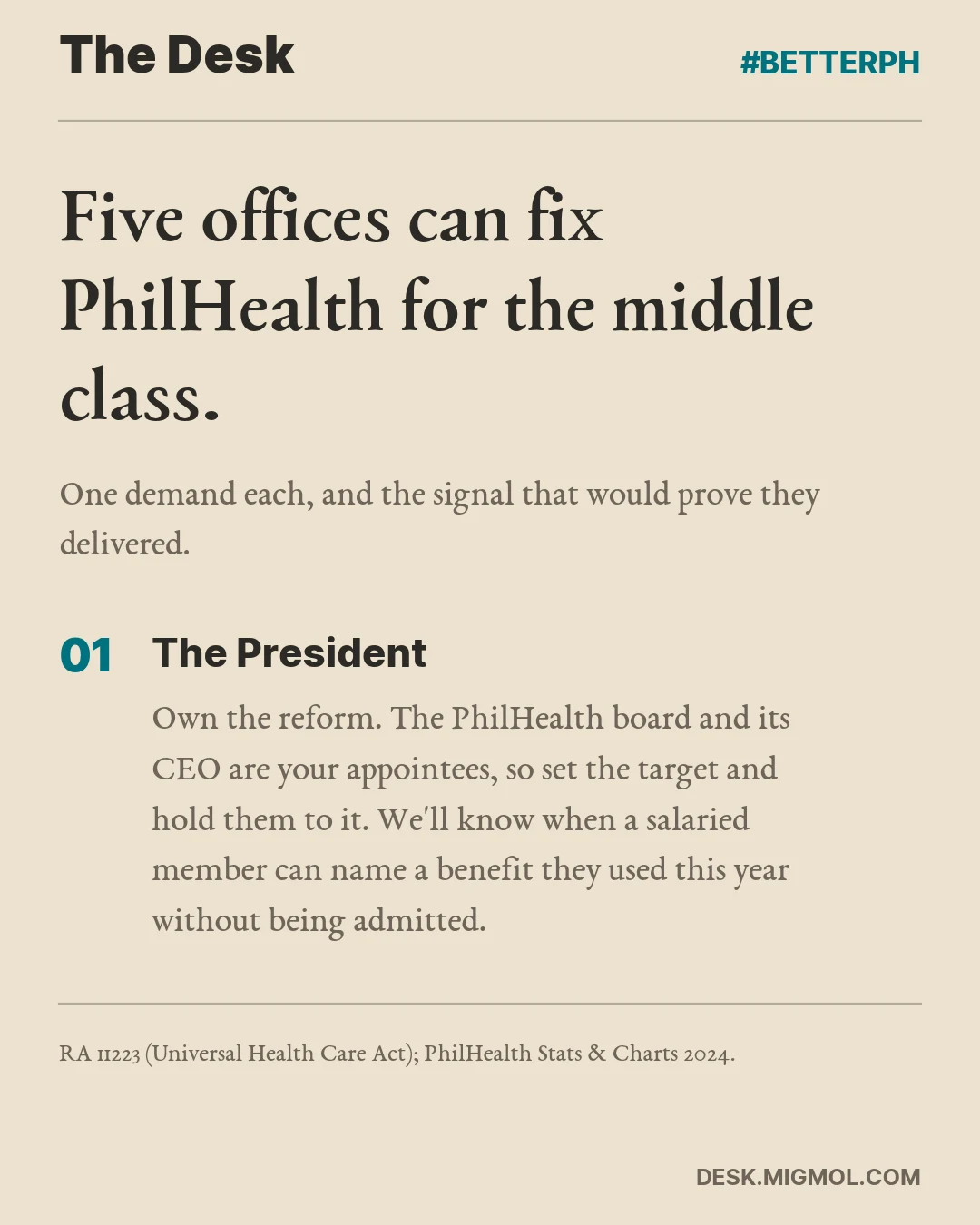
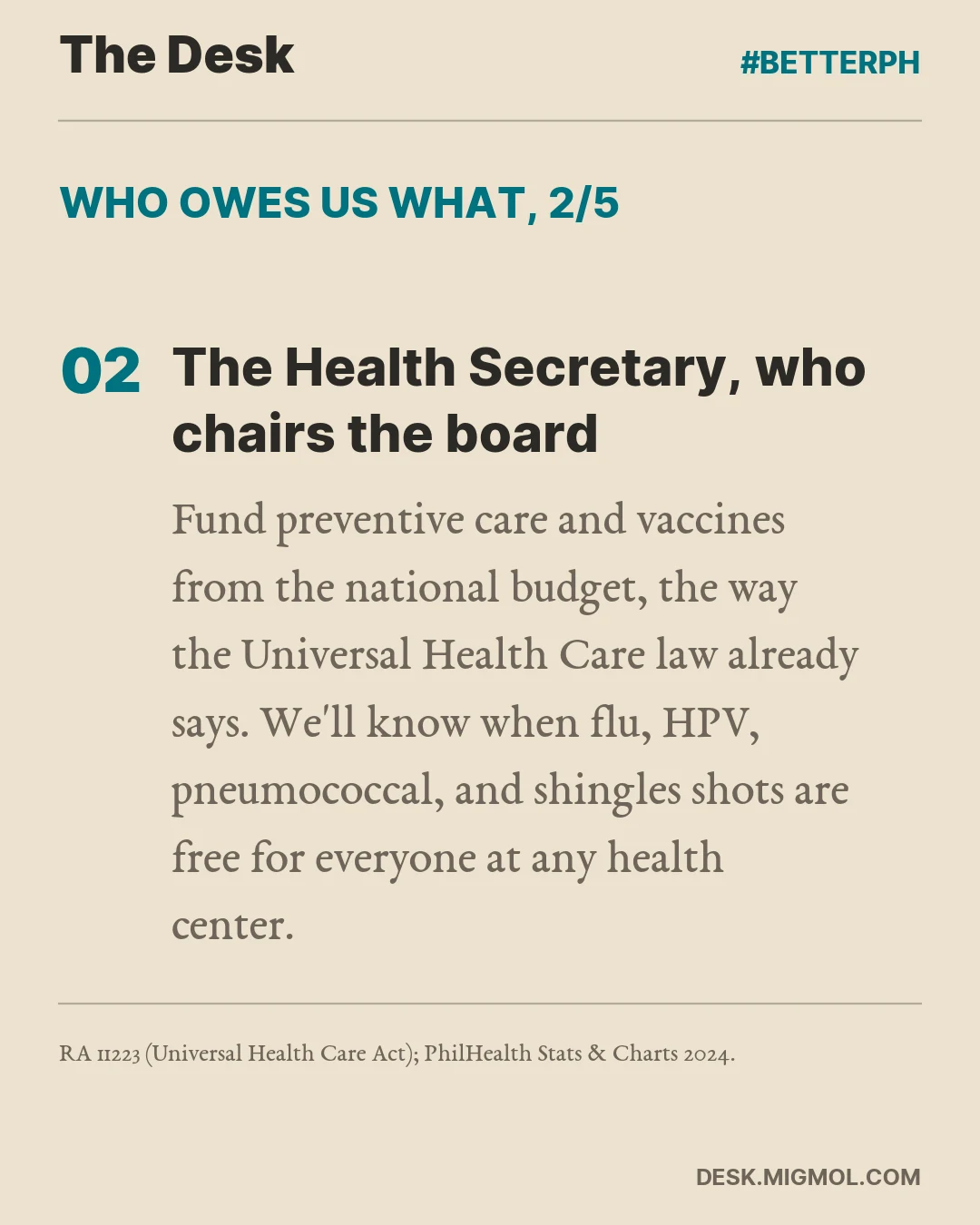
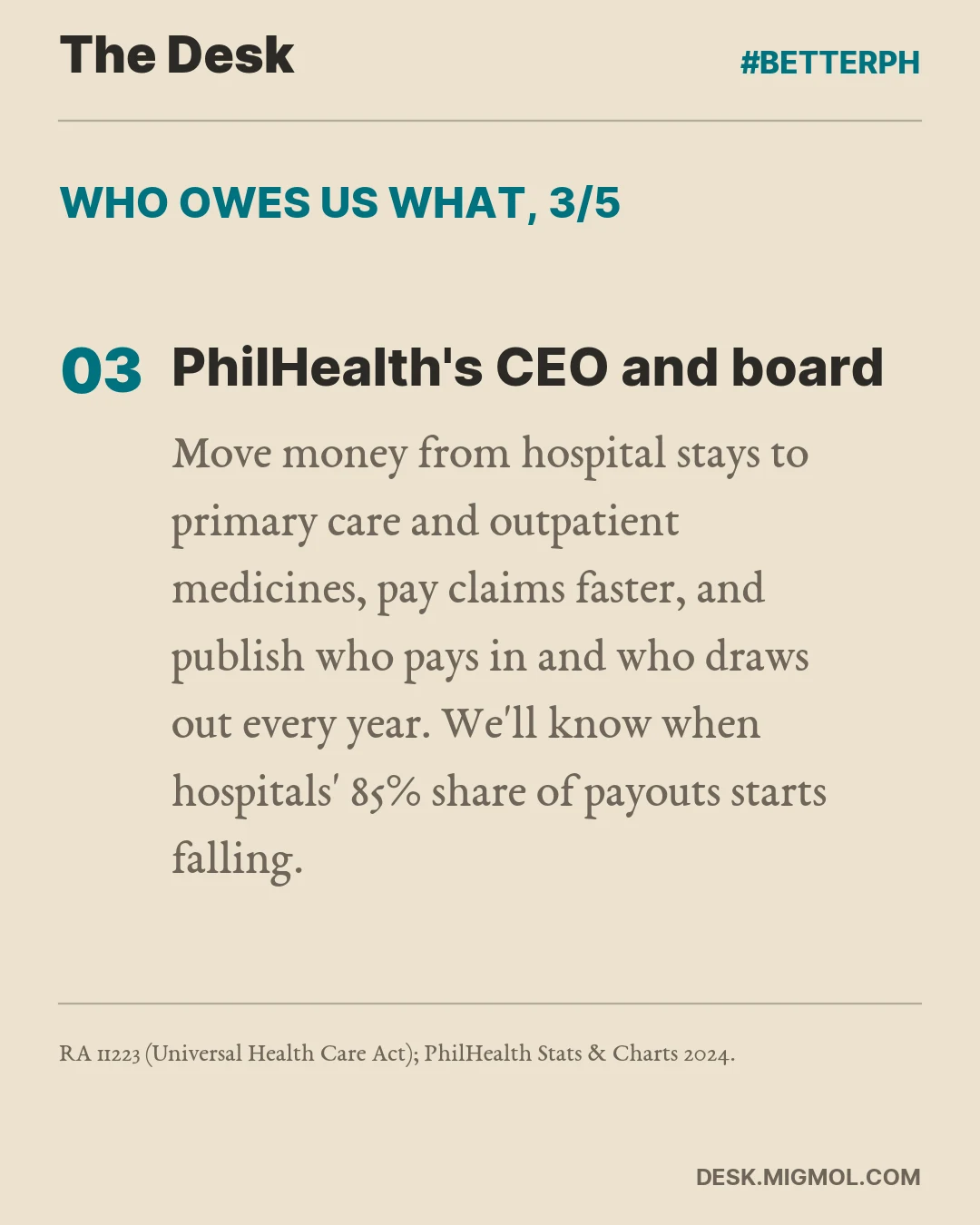
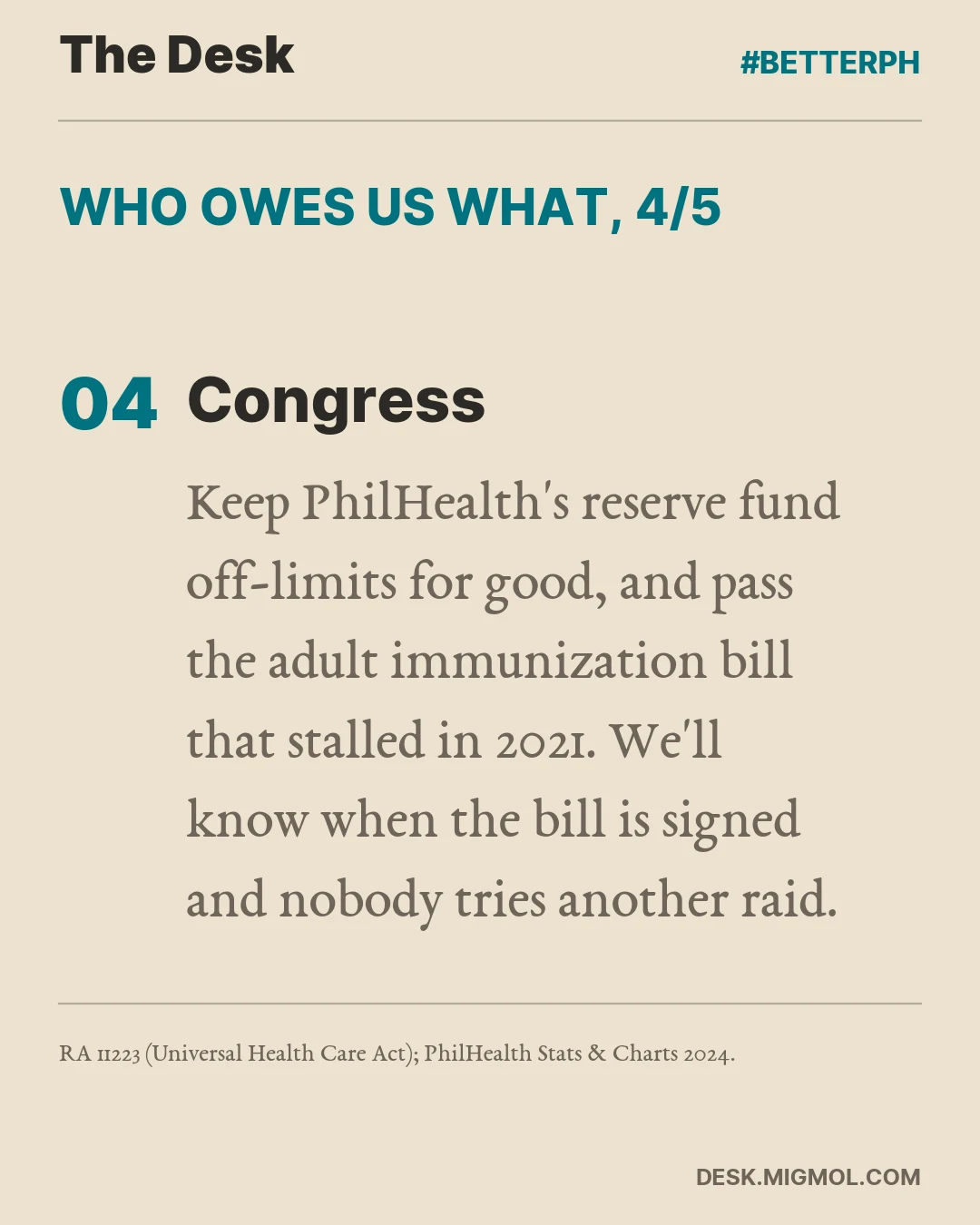
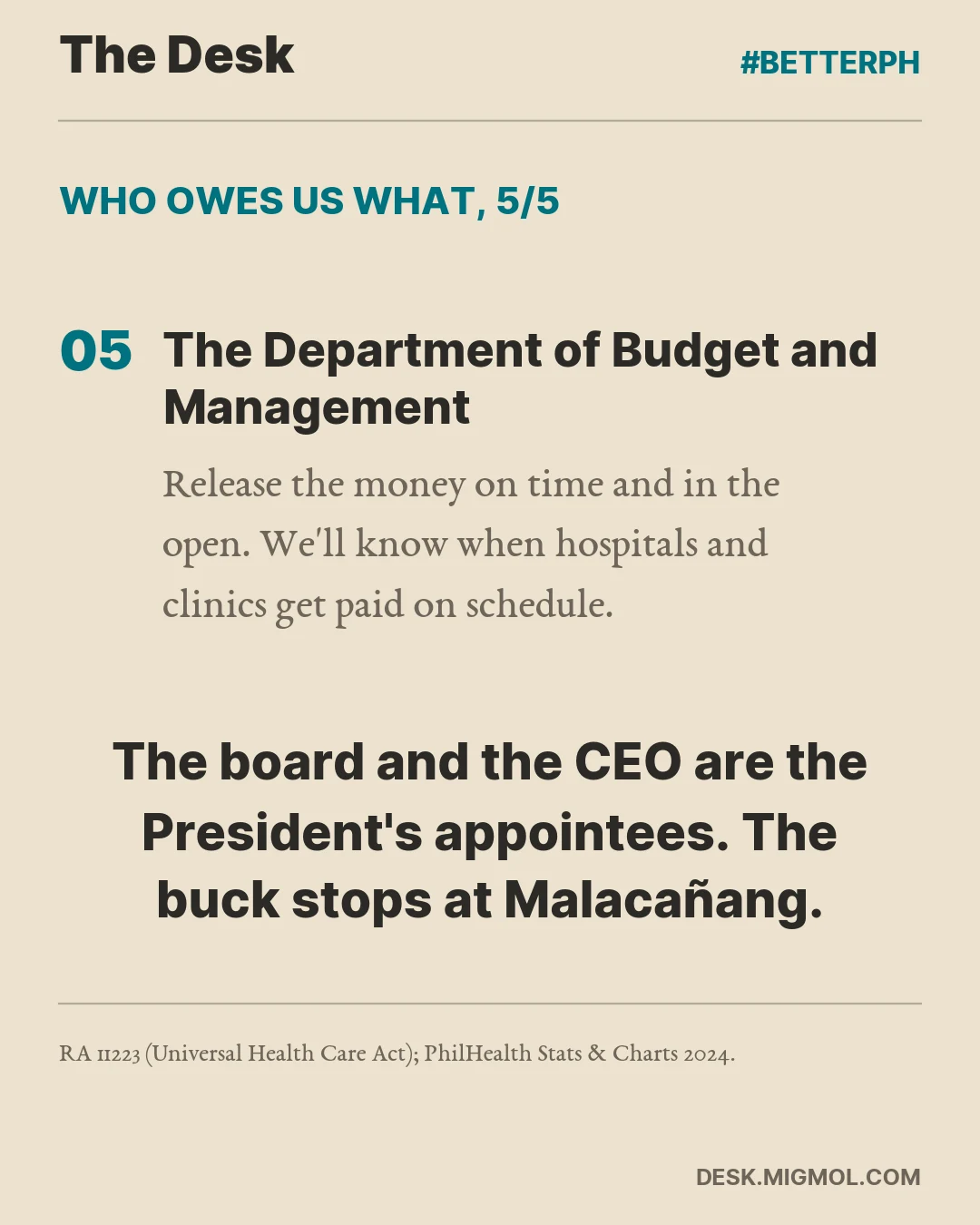
Under the law, the President appoints PhilHealth’s board and its president, so both of August’s changes were his call. Congress holds the purse and writes the law, and real reform needs them too, but leadership accountability runs up one chain and ends at Malacañang. This is what each office owes us, and the signal that would prove it delivered.
Before the worst day, not after
The money comes in every payday, ours first. The law is there too, more generous on paper than anything most of us have felt at a clinic counter. What’s missing is the decision to make a working Filipino feel covered before the worst day of their life instead of after. That decision belongs to a short list of people with names, offices, and mandates. The least they owe the people funding all of it is to use them.
Next week: the benefits that already exist on paper, and the four offices standing between a working Filipino and any of them.
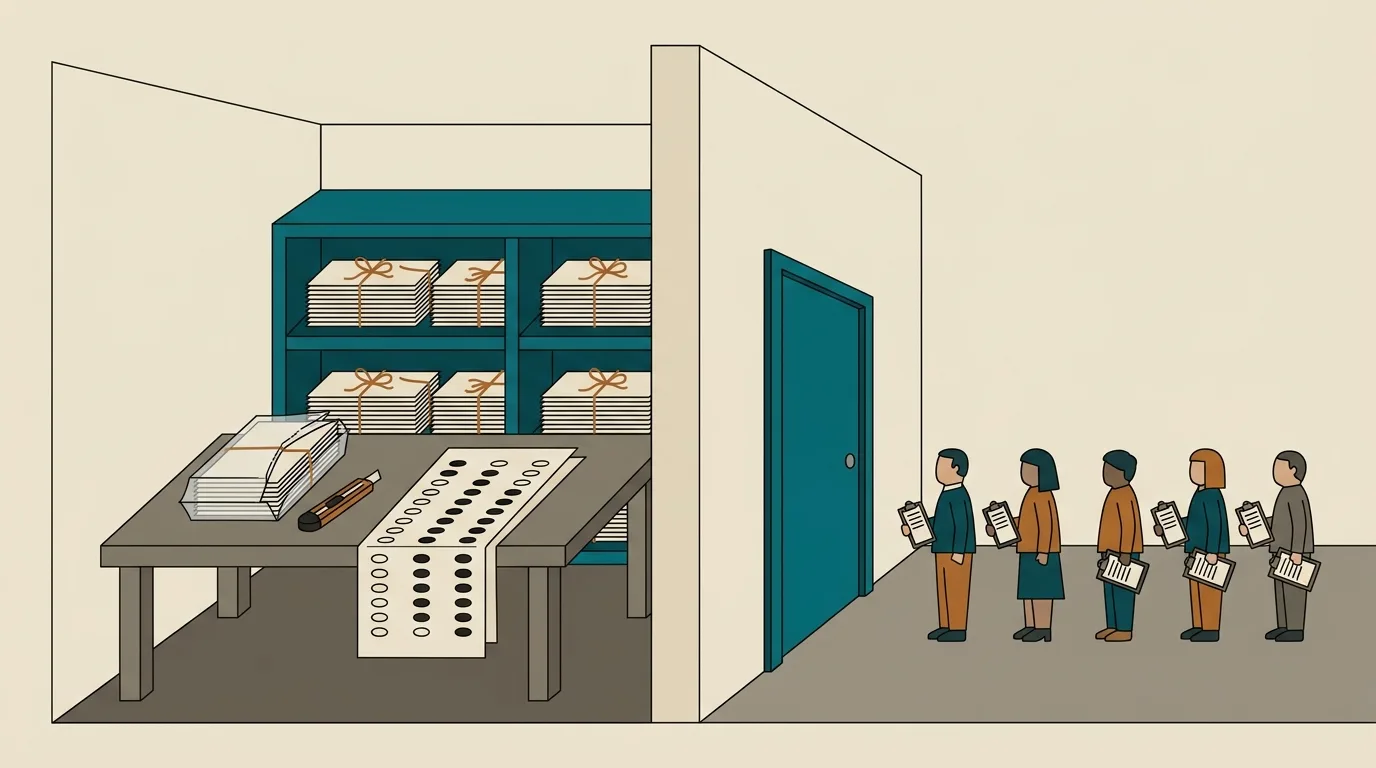
16,563 Ballots Were Shaded Before Anyone Voted
Nobody had to break a rule to reach the pre-shaded ballots in Maluso. The rule put them there. The Omnibus Election Code was written two months before EDSA, and Comelec's 963-page fix is still waiting.
Read more →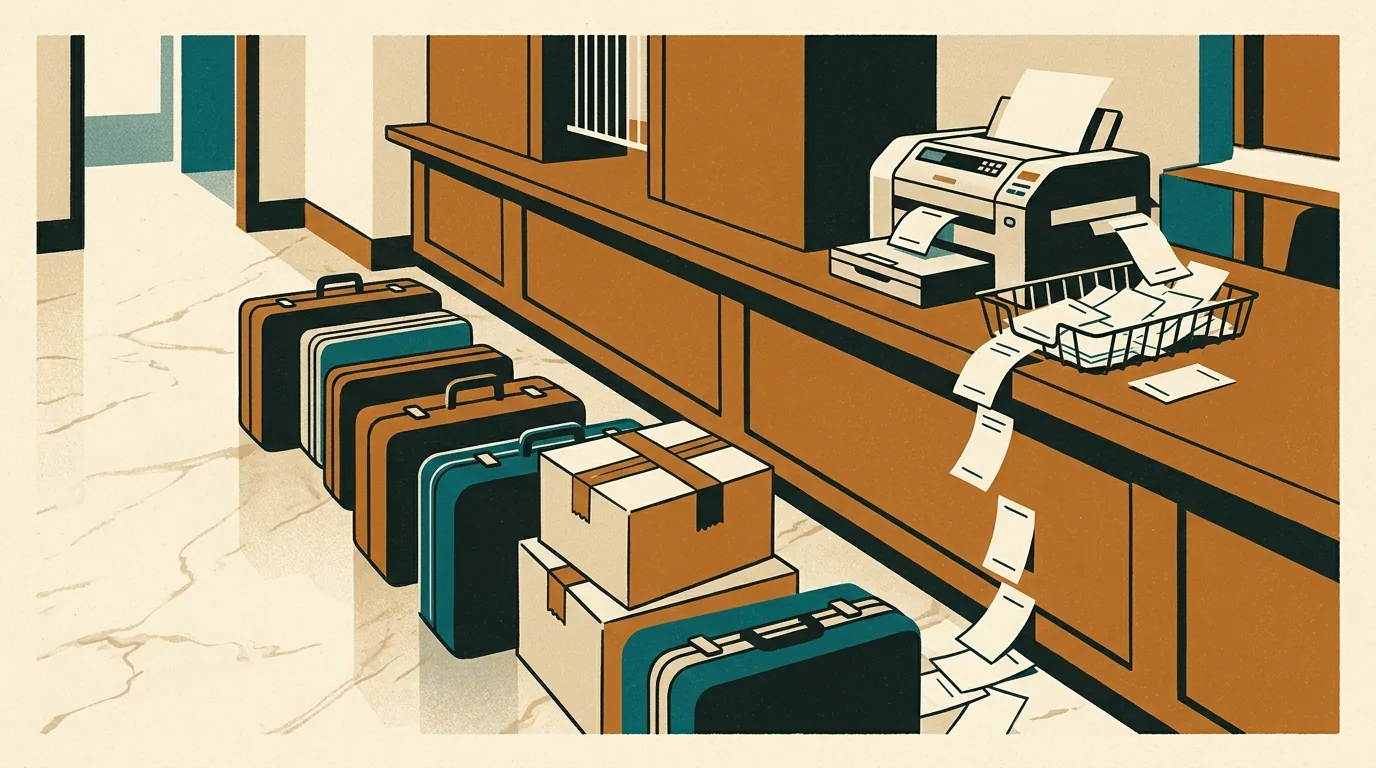
₱457 Million in Cash, and Nobody Asked
The bank filed the report. The AMLC said it had too many to read. Part 4 of 4 on anti-corruption with teeth.
Read more →
If you're above 40, this is the 2nd Iran Oil Crisis in Your Lifetime.
In 1980, a crisis in Iran pushed oil to $149 a barrel in today's dollars. Saudi Arabia had warned that prices that high would push the world to find something else, and it did. In 2026 it is Iran again, and this time the something else is already in our driveways.
Read more →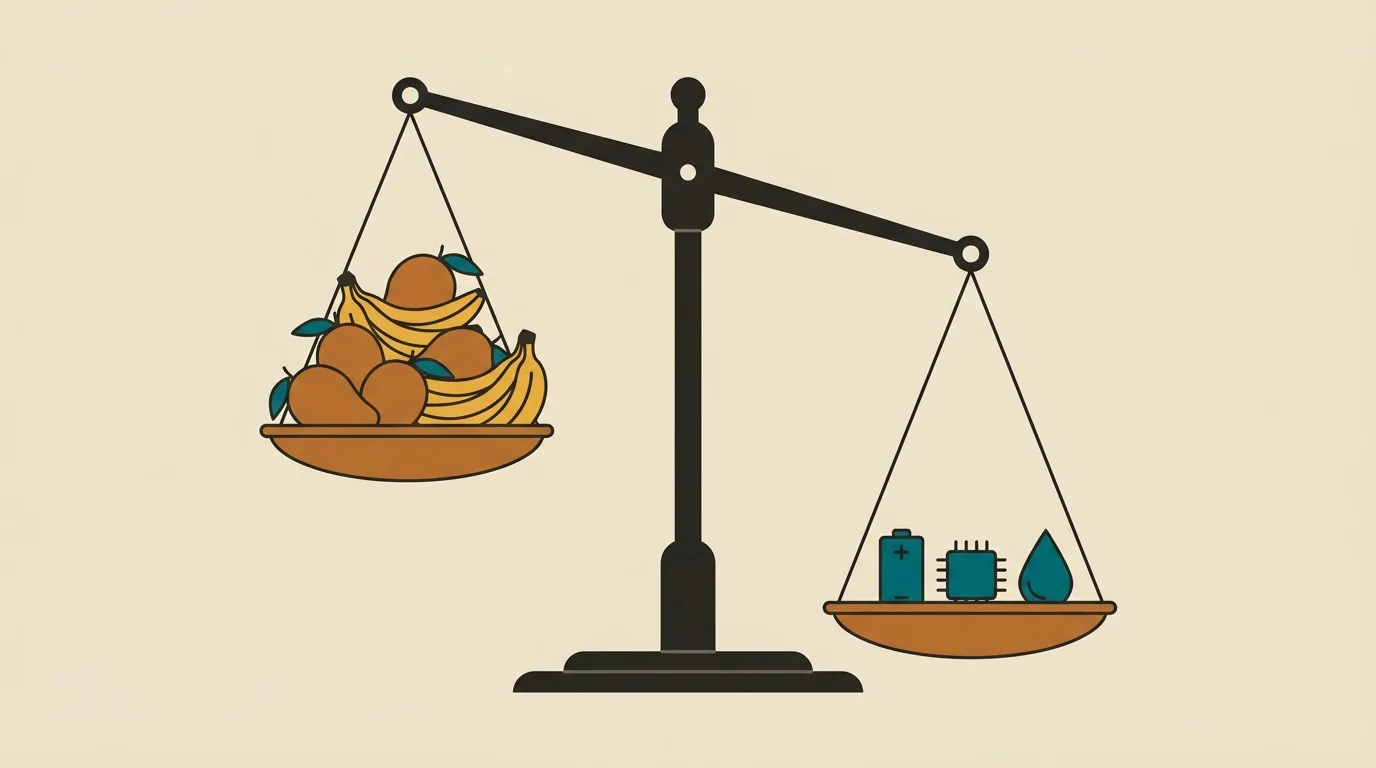
What does the world need from the Philippines? Right now, nothing it can't get somewhere else.
China refines 91% of the world's rare earths. Taiwan makes over 90% of its most advanced chips. We import 98% of our garlic and ship our nickel out as raw ore. What could the Philippines own that the world can't do without?
Read more →