What Grassroots Could Look Like
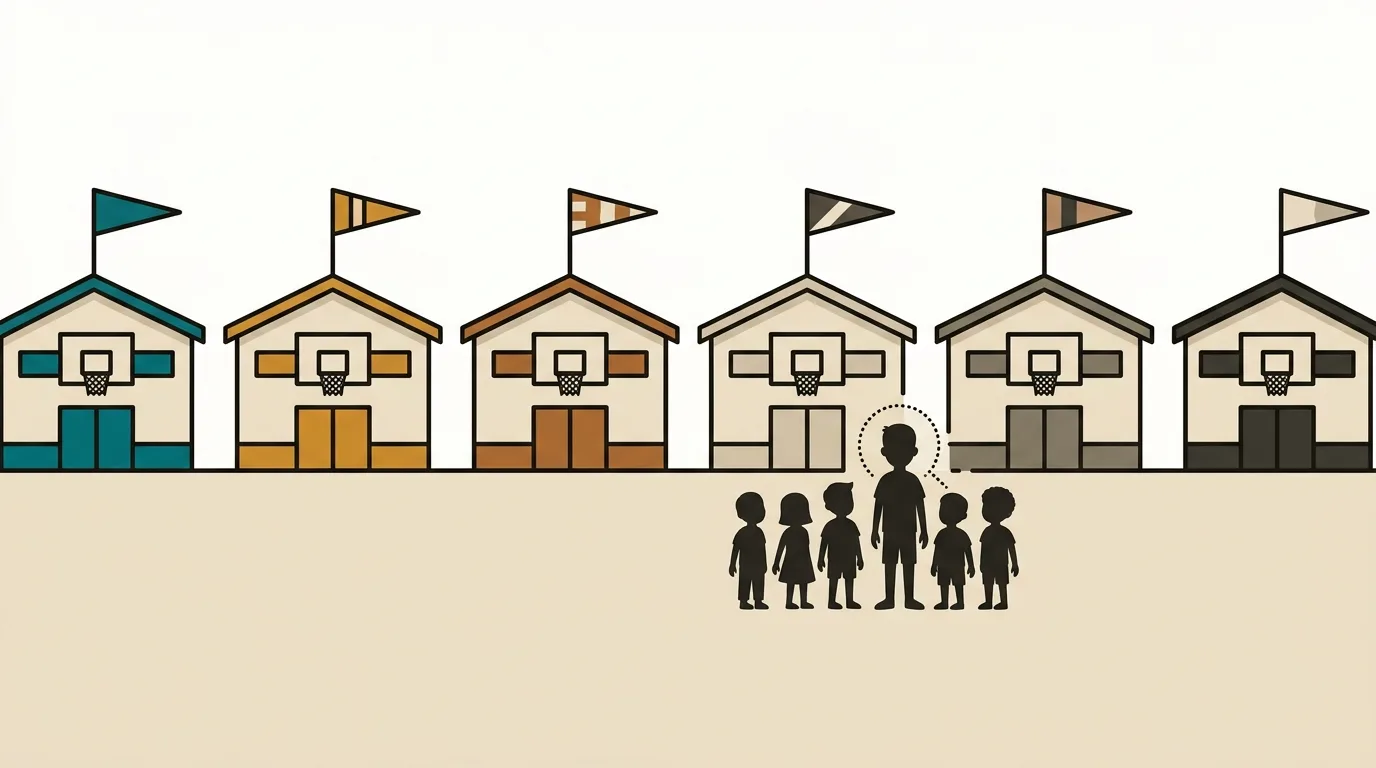
On the 30th of August, Gilas beat Iran 68-56 at the Mall of Asia Arena, and June Mar Fajardo played his last game for the national team.
Seven minutes, six points, two rebounds. The team gave him the game ball in a huddle at center court and the crowd chanted MVP. Thirteen years and seventy FIBA appearances, ending in the same building where it started in 2013. He handed the baton to Kai Sotto on the floor.
He’s a national treasure and the best big man this country has produced. Two weeks later we lost by 44 to China without him, which is its own argument and I made it in Part 3.
In his farewell he kept coming back to the same idea: that God gave him the gift of height, and that’s what started all of it.
He’s right, and it’s the most damning thing anyone has said about Philippine basketball this year.
He’s describing a system whose entire contribution to his career was to notice him. We did not find June Mar Fajardo. He turned out to be 6’10” in Cebu and we got lucky.
So: how many are we not finding?
A country that turns up a player like this once every fifteen years doesn’t have a scouting system. It has a lottery.
I was the kid one notch down
I loved basketball growing up. Looking back now, I feel like it was a default. I wasn’t a football kid or a tennis kid. It was basketball by default.
It helped that I’m pretty tall for a Filipino, so my introduction to the game was really when a PE coach told me I’m a rebounding machine. But I’m below six feet, and I never made it to any school team. Thirty years on, I can’t help thinking that maybe I could have gone further with the proper tools and training from a young age.
That’s not a complaint about my own career, which was never going to be a career. It’s a description of where the system actually breaks.
Fajardo was tall enough that being noticed was sufficient. One notch down the height curve, being noticed was worth nothing, because there was no next step. A PE coach identified a trait and then nothing happened, because identifying is all anyone is equipped to do.
Which is why the PE argument in Part 2 isn’t a soft ask. A PE teacher is the first and often the only scout a Filipino child will ever meet. We’ve handed them the entire front door of our talent system and given them nothing to work with.
Every school declares how it plays
This proposal is borrowed from how football academies work everywhere they work.
Every school program declares a style of play, set by a named program director. This school is a three-point team. That one is a defensive team. That one plays fast. Everybody in the school learns the game inside that system, from the youngest age group up.
It sounds almost like a video game roster, and that’s fine. It produces two things we don’t have.
The first is buy-in. A kid knows what he’s being asked to do and why, which is a completely different experience from being told to go play and hoping someone notices you.
The second is regional character. When ten schools in Bicol split into three that play one way and seven that play another, South Luzon starts to have a recognizable game. Do that for fifteen years and you can tell where a player is from by how he plays, the way you can in Serbia or Lithuania. That’s not a romantic detail. It’s what a development identity actually looks like from the outside.
And free movement is the release valve. A shooter buried behind four better shooters can move to a school that needs him. The conversation about fit starts at fourteen instead of twenty-four, which is roughly twenty thousand wasted repetitions earlier.
Find the tall kids, and then actually do something
The tall-player program is the central ask of this part.
Identify children projected to reach six feet, early. Then build a real program around them: nutrition, skills development, and a named person responsible for each kid, for years.
Two things have to be said about it immediately.
It is not a guarantee and it shouldn’t be sold as one. Most of these children won’t play professionally. What they’re owed is the opportunity, including the opportunity to learn to love the game rather than be assigned to it because of their body.
And it has to be owned by government. A program that identifies children by projected height, feeds them, monitors them for years, and follows them across provinces needs school records, public health infrastructure, and a budget line that survives an administration. Run privately, it becomes a recruitment pipeline for whoever paid for it, which is the opposite of a national program. This is the one item in the whole series where I don’t think there’s a private alternative worth discussing.
The women’s game, and the format we’re ignoring
Everything above applies to the women’s game identically. Same school system, same declared styles, same regional divisions, same tall-player program.
I’m not putting that in for fairness. I’m putting it in because of the ranking I closed Part 1 with.
The men’s 5-on-5 team is 40th in the world. The men’s 3x3 team is 43rd. The women’s 3x3 team is 19th.
Our best basketball team plays the format nobody funds, in the half of the sport nobody covers. If the argument of this entire series is that we have a system problem rather than a body problem, then running that argument for only half the population is incoherent.
The professional end of this has an answer too, and I made it in Part 4: a PBA Women’s League, with every franchise fielding a sister team under its own name, one conference, a short season. The women’s national team went further than the men’s at this year’s Asian Games, with a thinner roster. It’s the half of the sport that has never had a top flight. The grassroots argument and the professional one meet in the middle, which is the point of building a system rather than a program.
3x3 deserves its own line here too, because it connects to the next part in a way I didn’t expect when I started writing this. A 3x3 court is half a court with one ring. It’s Olympic. It’s faster and more confined, so height counts for less. And it is the cheapest piece of basketball infrastructure that exists.
Which turns out to be the same proposal as the one about courts.
Nobody can scout what nobody can see
One more thing, and it’s the cheapest item in this part.
Put every tier on camera. A dedicated channel or streaming home where school, college, and regional games are watchable.
This isn’t marketing. It’s the precondition for scouting. Luka Dončić was found young because somebody could see him. A prodigy in a province here is invisible by default, and no identification program works if the only people who can evaluate a player are the ones standing at that particular court on that particular Saturday.
Three things to start with
A declared style of play and a named program director for every school program. Published, so parents and players can choose on the basis of fit.
A government-owned tall-player identification and nutrition program, with a named agency accountable for it and a budget line that isn’t court construction.
Put every tier on camera. You cannot scout what nobody can see, and you cannot build a national pipeline out of games nobody recorded.
Next: the barangay court, what it costs, and what it could have been.
Part 6 of Pilipinas Basketball 2039. Part 1 · Part 2 · Part 3 · Part 4 · Part 5. Next: The Government Plays the Biggest Part
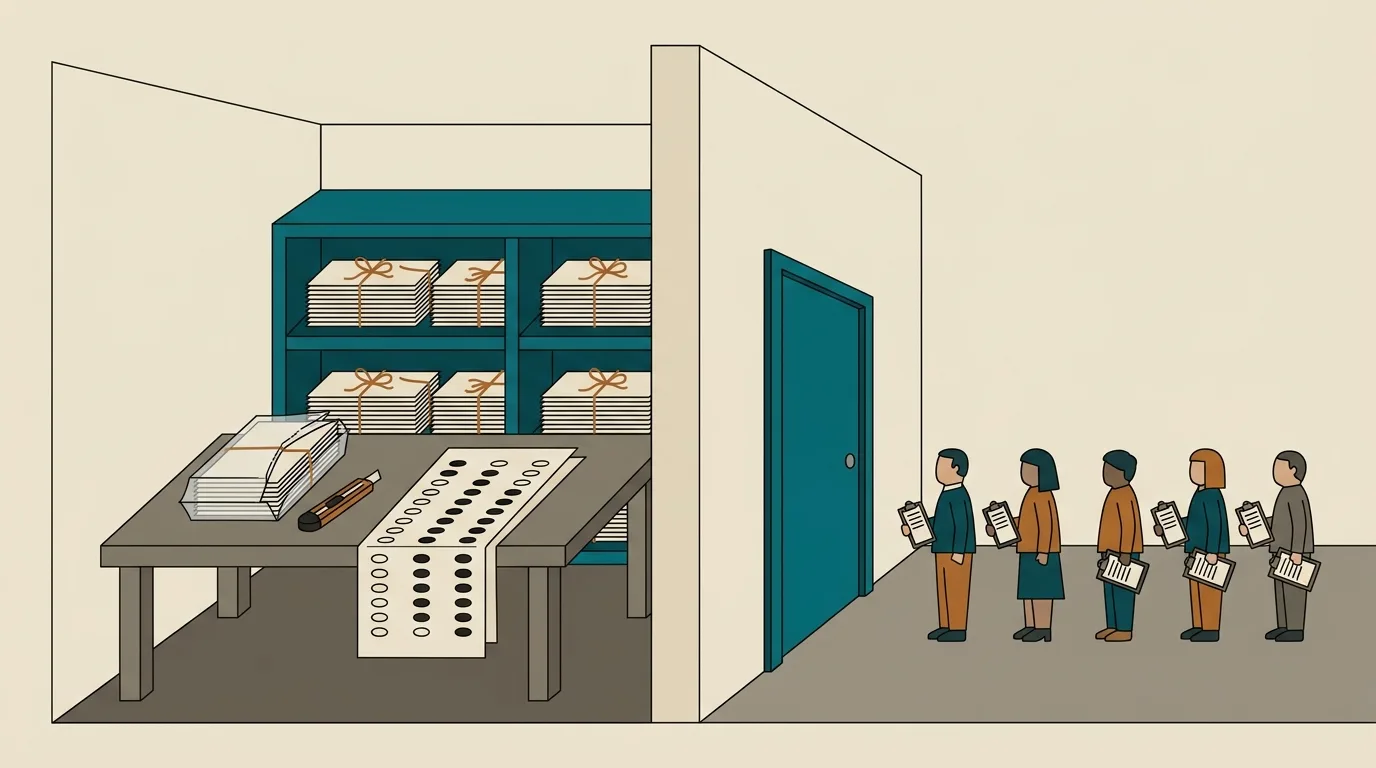
16,563 Ballots Were Shaded Before Anyone Voted
Nobody had to break a rule to reach the pre-shaded ballots in Maluso. The rule put them there. The Omnibus Election Code was written two months before EDSA, and Comelec's 963-page fix is still waiting.
Read more →
₱457 Million in Cash, and Nobody Asked
The bank filed the report. The AMLC said it had too many to read. Part 4 of 4 on anti-corruption with teeth.
Read more →
If you're above 40, this is the 2nd Iran Oil Crisis in Your Lifetime.
In 1980, a crisis in Iran pushed oil to $149 a barrel in today's dollars. Saudi Arabia had warned that prices that high would push the world to find something else, and it did. In 2026 it is Iran again, and this time the something else is already in our driveways.
Read more →
What does the world need from the Philippines? Right now, nothing it can't get somewhere else.
China refines 91% of the world's rare earths. Taiwan makes over 90% of its most advanced chips. We import 98% of our garlic and ship our nickel out as raw ore. What could the Philippines own that the world can't do without?
Read more →